Your cookie preferences
We use cookies to remember your preferences and understand how shoppers use our site, helping us improve your shopping experience.
Read our privacy policy

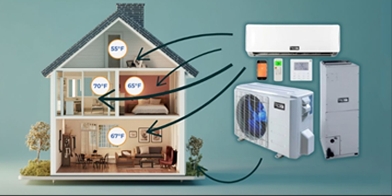
If you're looking to transform your garage into a comfortable, usable space year-round, a ductless mini split is hands-down the best HVAC choice. Unlike central systems that require expensive ductwork, mini splits deliver powerful heating and cooling through a simple wall-mounted unit—ideal for garages that weren’t built with HVAC in mind.
They’re especially effective in 2-car garages, where maintaining consistent temperature can be tough due to poor insulation and limited airflow.

Absolutely. Mini splits are designed for spaces just like this. Even if your garage has no ductwork, installation is straightforward and minimally invasive. Most systems only need a small hole in the wall for the line set, making them perfect for retrofit applications.
While DIY kits exist, installation isn't always beginner-friendly—especially when it comes to electrical and refrigerant handling. A licensed HVAC installer can help you avoid costly mistakes and make sure the unit is properly sized and mounted
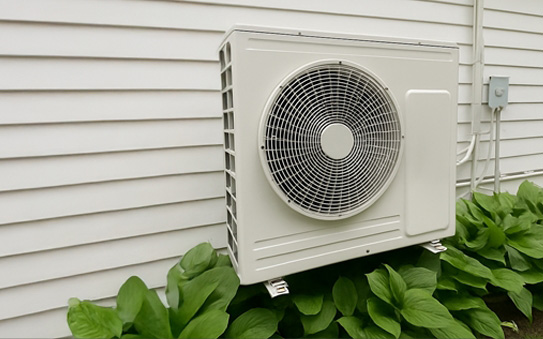
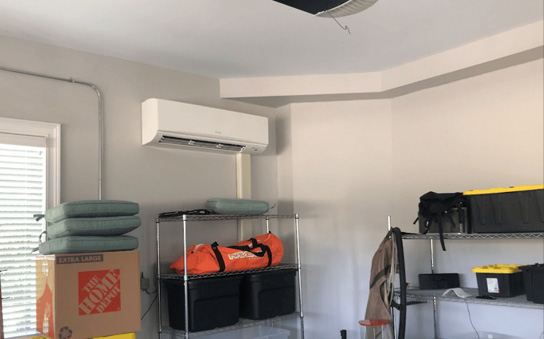
Costs vary, but most homeowners spend between $1,500 and $4,000 to fully install a mini split in a 2-car garage. While the upfront investment is higher than a window unit or space heater, the long-term efficiency and performance more than justify the cost.
The good news? Mini splits pay off fast. Their energy-efficient operation helps cut utility bills, especially in garages where heating or cooling isn’t constant. Look for models with ENERGY STAR certification and SEER ratings of 20 or higher for best results.
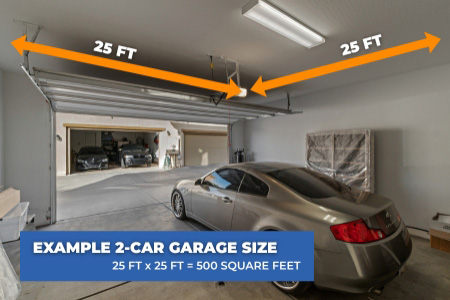
Getting the size right matters. A mini split that's too small will constantly run, trying to catch up. Too big, and it’ll short cycle, which wastes energy and wears out components prematurely.
Most 2-car garages fall between 400 to 700 square feet, which typically
requires:
Ceiling height, sun exposure, and how often you open your garage doors can also affect your BTU needs
In most cases, a single-zone system is more than enough. It’s designed to heat and cool one open area—perfect for garages without partitions
However, if your garage includes a workspace, storage loft, or separate office, a multi-zone setup might be worth considering. This lets you control temperatures in each space individually without compromising comfort or efficiency.
Mini splits are flexible enough to scale with your needs, so you don’t have to overcommit upfront.
FAQ Answer 1 Here
FAQ Answer 2.1 Here
FAQ Answer 2.2 Here
FAQ Answer 3 Here