Your cookie preferences
We use cookies to remember your preferences and understand how shoppers use our site, helping us improve your shopping experience.
Read our privacy policy


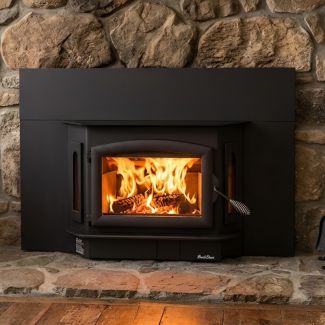


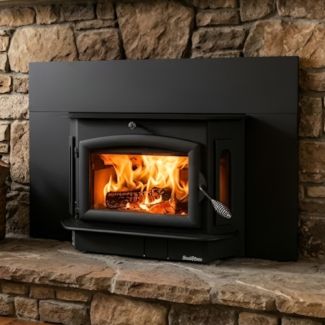

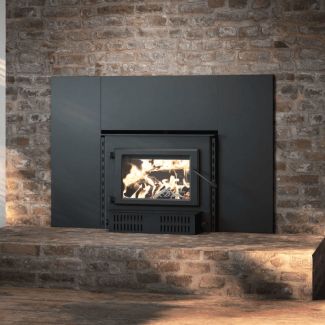

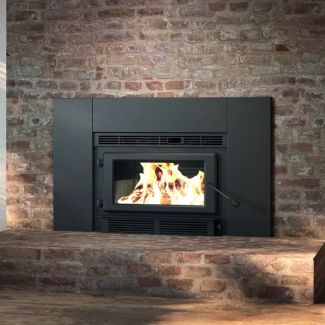


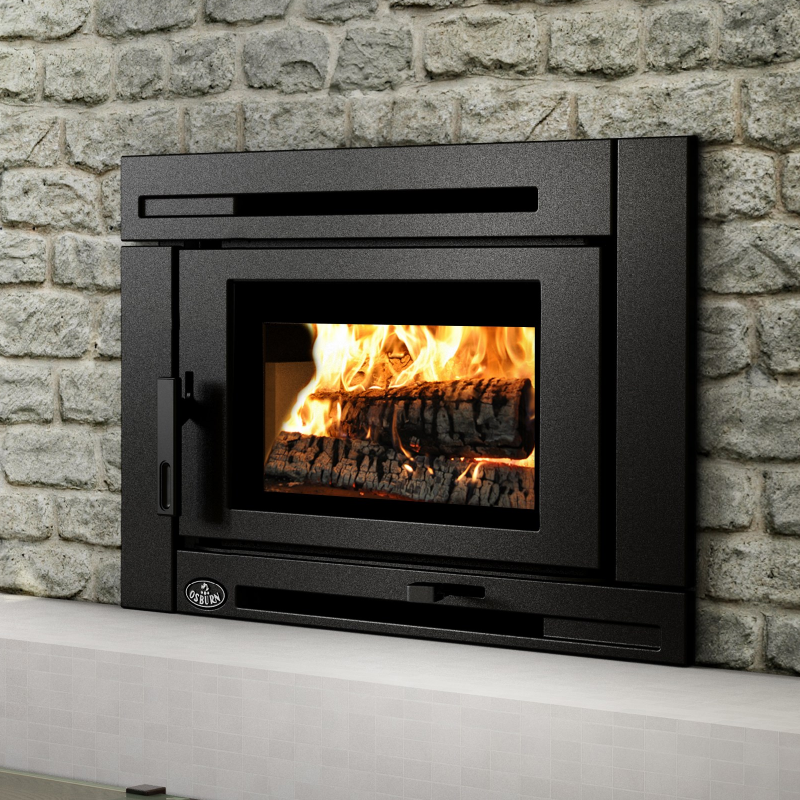
A fireplace insert is a self-contained indoor heating unit sized to fit an existing fireplace opening. It is powered by wood, gas, pellets, or electricity and can be used as a supplemental or primary heat source, aesthetic upgrade, or both.
Fireplace inserts work by generating heat inside a contained firebox and transferring that heat into the surrounding room. Depending on the model, heat may radiate directly from the unit or be circulated into the room with a built-in blower. Wood, gas, and pellet inserts generally require venting to safely remove combustion gases, while electric inserts do not produce combustion gases and therefore do not require a chimney or flue.
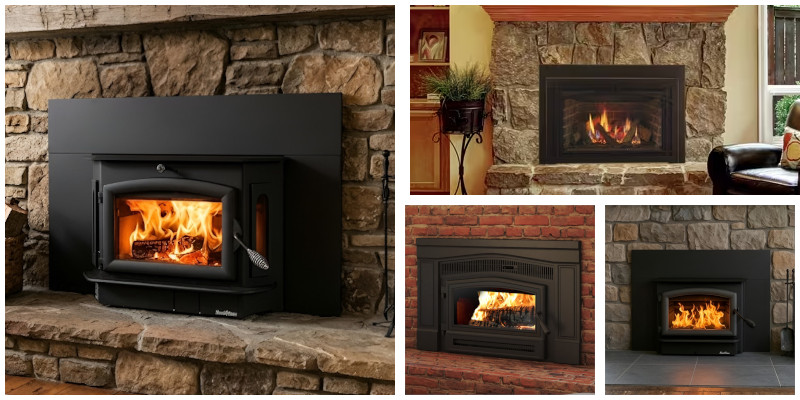



A fireplace insert is a self-contained indoor heating unit sized to fit an existing fireplace opening. It is powered by wood, gas, pellets, or electricity and can be used as a supplemental or primary heat source, aesthetic upgrade, or both.
Fireplace inserts work by generating heat inside a contained firebox and transferring that heat into the surrounding room. Depending on the model, heat may radiate directly from the unit or be circulated into the room with a built-in blower. Wood, gas, and pellet inserts generally require venting to safely remove combustion gases, while electric inserts do not produce combustion gases and therefore do not require a chimney or flue.
The main benefits of a fireplace insert are higher heating efficiency, lower heating costs, cleaner operation, and less maintenance:
Improved Heating Efficiency and Heat Loss: Traditional open wood-burning fireplaces lose a significant amount of heat through the chimney. Inserts can raise efficiency to roughly 76% to 83% by sealing the firebox and using a blower to circulate warm air.
Lower Heating Costs: Most fireplaces are used as a supplemental heat source to take pressure off the main HVAC heating source during cold weather seasons. Heating one room with an insert lets you turn down your central thermostat and cut furnace runtime during winter, which can lower seasonal heating bills.
Cleaner Operation: Because inserts employ sealed fireboxes with advanced combustion technology, they burn fuel more completely, producing less smoke, ash, and buildup than an open fireplace. EPA-certified wood and pellet models must meet the EPA’s particulate limit of between 2.0 and 2.5 grams per hour, depending on the type of wood used.
Improved Appearance: With numerous styles and designs to choose from, such as modern, contemporary, and traditional, fireplace inserts are a simple yet effective way to give your living space a fresh look and feel. This is also a more cost-effective alternative to a full remodel.
Less Maintenance: Because fireplace inserts burn cleaner and more efficiently, there is less upkeep involved. This means less time, energy, and money spent keeping your chimney and hearth clean.
Easier to Operate: Gas, pellet, and electric inserts start with a remote, thermostat, or switch, and pellet hoppers can hold hours of fuel. With reliable controls in various formats, these inserts are much more convenient to use and deliver more consistent heating you can count on. Wood inserts still need manual loading but hold heat longer than an open fire.
Overall, inserts deliver the biggest payoff in homes with an inefficient masonry fireplace and a sound chimney, but even homes with no chimney can benefit from a brightened atmosphere and a clean, effective means of supplemental heating
Homeowners often use fireplace inserts to revitalize existing fireplaces in their home, making them safer and cleaner to operate, providing supplementary room heating, and improving the aesthetic appearance of a space:
Primary and Supplemental Room Heating: Inserts can be used for primary or supplementary heating due to the wide range of square footage they can cover. Depending on the model and BTU capacity, a single insert can effectively heat up to 3,200 sq. ft.
Fireplace Conversion and Renovation: Whether you’re totally repurposing a space or simply want to modernize, a fireplace insert could be just what you need. Pairing an insert with a new surround, mantel, or masonry facing updates the look of an outdated fireplace at a fraction of the cost of a full remodel.
Zoned Heating: Installing an insert into an unused fireplace is a clever way to incorporate zoned heating in a room or living space in need of supplemental heat. Electric inserts can help keep bedrooms warm in the winter, and inserts of any variety are commonly used in small cabins or vacation homes that don’t require year-round central heating and cooling.
Ambiance Enhancement: A visible flame adds warmth and a cozy atmosphere to a home or vacation rental. Alternatively, electric inserts provide the same look without a chimney or fuel supply. Many electric models allow you to adjust the specific color, flame height, and flame appearance to your preference.
If you don’t have an existing chimney, you can choose an electric or ventless gas model (check local codes, since ventless gas is restricted in some areas) or browse HVACDirect.com’s indoor fireplaces and stoves.
The best spaces for fireplace inserts are rooms with an existing masonry fireplace and sound chimney, such as living rooms, family rooms, bedrooms, basements, smaller homes, or dwellings without central heating, such as cabins. Electric and ventless gas models also suit rooms with no chimney.
Existing Fireplaces: Whether you’re looking to reclaim a drafty or inefficient fireplace or do a complete overhaul, there are numerous insert options to choose from. From modern to traditional styles, gas logs to electric models, and everything in between, there’s something to fit any desired aesthetic and function.
Living Rooms and Family Rooms: Whether standard or open-concept, living room or family room spaces can benefit from a fireplace insert as a source of secondary or primary heat, as well as a focal point where family can gather to visit or entertain. This type of application requires accurate BTU sizing to ensure sufficient heating performance.
Bedrooms: Electric inserts are the simplest choice for bedrooms. Vented gas, wood, and pellet models need an existing chimney, and ventless gas is restricted in sleeping rooms in many codes.
Basements: If your basement has an existing fireplace but the chimney is not usable, electric or vent-free gas inserts may be suitable options because they do not require a functioning chimney. Direct-vent gas inserts can also work in some installations when the unit can be properly vented to the outdoors according to manufacturer requirements and local codes. Keep in mind that open stairways and poor insulation can also make it difficult to keep a basement warm, even with the help of a fireplace insert.
Cabins: Many cabins already have a masonry fireplace, and an insert can raise its efficiency to 70% or more, cutting wood use and improving comfort for owners and renters alike. In addition, an insert can further improve the aesthetic appeal and give the cabin a fresh, refined look.
Remember that certain types of inserts, including all wood-burning models, are only compatible if the space has an intact, functioning chimney or similar means of ventilation. Before buying, have a certified chimney sweep inspect your flue if you plan to utilize it.
The main fireplace insert types are gas, electric, wood-burning, pellet, direct vent, ventless, and gas logs, and the right one depends on your fuel source, venting setup, and efficiency needs:
Gas Inserts: These inserts are fueled by natural gas through your utility line or propane from a tank outside your home and give off real flames steadily and efficiently. They also come equipped with thermostatically controlled blowers that help keep the majority of heat generated inside the dwelling, instead of letting most of it escape up the chimney flue.
Electric Inserts: These are among the simplest, safest, and most convenient inserts to install and operate. The ease of installation makes them popular, as most just need to be properly fitted to the space and then plugged into a household electrical outlet. Since the “flame” is artificial and separate from the heating element, you can turn heating off when needed while still enjoying the added ambiance of a fire-lit atmosphere. Electric inserts also require less maintenance and don’t require fuel storage or cutting wood.
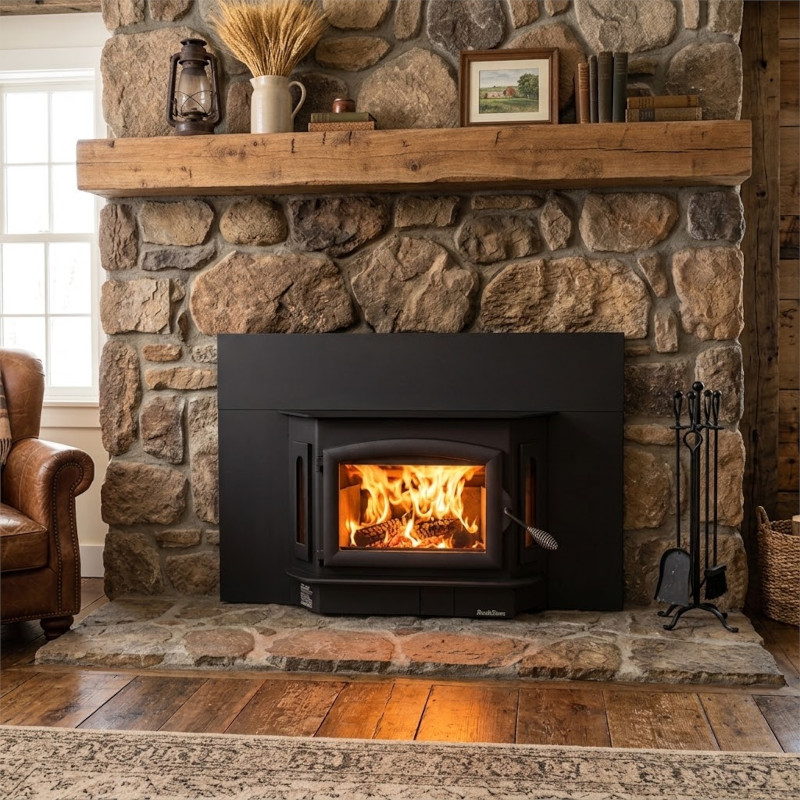
Wood Burning Inserts: If you prefer wood-burning to other fuel sources, you can upgrade your existing masonry fireplace by placing a wood-burning fireplace insert inside and ensuring proper ventilation up the existing chimney. This not only gives your fireplace a fresh appearance, but also employs advanced technology to burn wood cleaner and more efficiently, improving your fireplace’s functionality.
Pellet Inserts: A highly efficient, eco-friendly heating option, these inserts use compressed recycled wood pellets that are continuously fed into the insert via an auger-driven hopper. Pellet inserts are 70% to 90% efficient, hold hours of fuel in the hopper, and require electricity to run the auger and blower. However, the pellets used to power these inserts are also among the most expensive fuel options available.
Direct Vent Inserts: Direct vent inserts use a sealed system with a liner in an existing chimney and typically reach 70% efficiency or more. They’re also useful for maintaining clean indoor air quality because of the sealed combustion system.
Ventless Inserts: Ventless inserts need no chimney and lose almost no heat, but they release water vapor and small amounts of combustion byproducts indoors. Most use an oxygen depletion sensor to shut off automatically, and they are restricted in some areas.
A fireplace insert may not be suitable for all existing fireplace setups, especially if the chimney has structural damage, severe creosote buildup, or improper venting. Factory-built, also called zero-clearance, fireplaces accept only inserts specifically listed for that fireplace model. If unsure, have a certified chimney sweep inspect the flue before buying.
The six features that matter most are remote control, variable flame control, adjustable heat output, a built-in blower, thermostat control, and electronic ignition. Most features are specific to one or more fuel source types, rather than universal to all inserts:
Remote Controls: Many gas and electric inserts can be adjusted at the touch of a button with a handheld remote or smart device app. These remote controls let you adjust the flame and heat from across the room, and they can be added to a traditional hearth through a compatible insert.
Variable Flame Control: Available only on gas models, variable flame control lets you adjust flame height and intensity with a knob or electronic setting, which changes the amount of fuel reaching the burner. Using this feature can deliver enhanced comfort control and potential energy savings, as well as a more aesthetically appealing physical flame.
Adjustable Heat Output: This feature is available on many electric and gas inserts and allows you to change the amount of heat the fireplace produces, typically by changing the target temperature. On gas models, heat output and flame height rise together. Electric models typically offer separate heat settings and flame controls.
Built-In Blower: The presence of a built-in blower can significantly increase the heating efficiency of a wood-burning or gas-fueled fireplace insert. This works by pulling in cold air through an intake vent at the bottom of the insert, moving room air across the heated firebox surfaces, and blowing it back into the room through an upper vent. This function can raise efficiency, reduce heat buildup around the mantel, and keep your living space warmer.
Thermostat Control: A fireplace insert outfitted with thermostat control continuously measures the ambient air temperature in the room and automatically adjusts the insert’s heat output to maintain a steady, comfortable temperature. In electric inserts, the control can switch the internal heating coils on/off to regulate temperature, while gas inserts communicate with gas valves to cycle the main burner and/or adjust blower fan speeds.
Electronic Ignition: Also known as intermittent pilot light (IPI), this gas fireplace insert feature involves an electronic switch that automatically lights the pilot light, which then signals the fireplace to ignite the main burner. Unlike a standing pilot, which burns gas continuously, IPI lights only when the fireplace is on. Electronic ignition, which requires a small battery to power on, avoids unnecessary energy consumption and saves you on utility costs.
Most of the value-added features above don’t apply to wood-burning fireplace inserts, although blowers can be integrated to increase efficiency and improve heating performance in more traditional hearth setups.
Six factors determine whether an insert fits your home: fireplace dimensions, venting requirements, fuel availability, heating capacity, electrical requirements, and installation clearances.
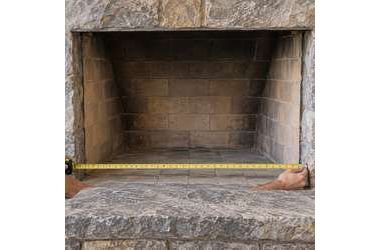
Fireplace Dimensions: In general, standard masonry fireplace openings compatible with inserts are typically 22 to 40 inches wide, 18 to 30 inches tall, and 15 to 25 inches deep, although they can be bigger or smaller. Measure front width, rear width, height, and depth, since vented inserts usually need more room than ventless models for clearances and the flue connection.
Venting Requirements: These inserts come in both ventless and direct vent styles. Consider the characteristics of your living space, including clearances, the presence or absence of a chimney, and any structural modifications needed to accommodate proper venting. If you have an existing fireplace and chimney, check if there is a functioning damper that can open and close, as this is required for some models.
Fuel Availability: Wood-burning and pellet inserts require real wood or compressed wood pellets to operate, and gas models need a natural gas line or propane tank. Many gas inserts can be converted between natural gas and propane with a manufacturer conversion kit. Because electricity is standard in most homes, electric inserts can be used in nearly any setup.
Heating Capacity: If you’re hoping to use your fireplace as a primary or secondary heat source, be sure to examine the heating capacity for the inserts you’re considering. HVACDirect.com offers inserts able to cover up to 3,200 sq. ft. and up to 110,000 BTUs. Wood-burning, gas, pellet, and electric can all provide supplemental heat, albeit at varying levels of efficiency. Gas logs, however, are primarily used as a decorative element since they don’t usually produce enough heat on their own.
Electrical Requirements: Electric inserts usually need a standard 120V outlet or a dedicated 240V circuit for higher output. Gas and pellet models also need power for ignition, blowers, or augers.
Installation Clearances: All fireplaces, including those outfitted with an insert, must have a building code-specified clearance to combustibles, which is the minimum space required between heat-producing appliances and any material that can burn. For standard masonry fireplaces, combustible trim within 12 inches of the opening may project no more than 1/8 inch per inch of distance from the opening, and you must keep the mantel clear of the opening as specified by the manufacturer. Hearth extensions must extend 16 to 20 inches in front of the opening, depending on opening size. This ensures the mantel, floor, and any nearby finishes do not ignite or break down from excess heat, so be sure that your chosen insert and the space you’re placing it in can abide by these restrictions.
Safety features are also important to consider when choosing a fireplace insert. Depending on the fuel type and model, look for automatic shut-off valves, oxygen depletion sensors (ventless gas), sealed glass with a safety barrier, and a UL or CSA safety listing.
The best fireplace inserts belong to brands that have integrated advanced technology, quality construction, and modern efficiency standards. Here are some top examples:
Buck Stove: American made for over 50 years, Buck Stove has a strong reputation for producing durable, high quality heating appliances. At HVACDirect.com, you can choose from gas and wood-burning Buck Stove fireplace inserts, including EPA certified clean wood-burning models.
Osburn: Founded in 1979 in Victoria, British Columbia, Osburn was one of the first North American manufacturers to champion high efficiency, low emissions combustion technology in indoor heating solutions. Clean burning with strong heat output, Osburn fireplace inserts are constructed with ultra durable heavy-gauge steel and finished with premium materials for a polished aesthetic. Most Osburn inserts are 77% efficient or higher and meet EPA emissions standards.
Empire: Known for producing top quality gas fireplace inserts, Empire specializes in energy efficient inserts that realistically mimic real flames without the mess. Its patented TruFlame technology utilizes curved burners, hand-painted ceramic logs, and deep ember beds to give its inserts an authentic look and feel. Value-added features include convenient multi-functional controls, accent lighting, and up to 99% efficiency in some models.
Drolet: Durable and energy efficient, Drolet’s wood-burning fireplace inserts are a practical, cost-effective alternative heating solution to more expensive, premium options. Most inserts come with a built-in blower to push warm air out of the firebox and into your living space, and Drolet’s limited lifetime manufacturer’s warranty is a nice plus for added peace of mind.
Majestic: Specializing in direct vent gas fireplace inserts, Majestic offers an attractive heating solution designed to transform drafty, unused wood-burning fireplaces into clean, functional heating sources again. Reliable and easy to install, these inserts typically have 70% heating efficiency or more, and their sealed combustion system makes them ideal for improving indoor air quality. In addition, advanced smart controls and realistic flame aesthetics offer modern convenience and stylish flair.
SimpliFire: SimpliFire specializes in electric fireplace inserts that can be easily installed and enjoyed in practically any kind of living space for supplemental warmth, year-round ambiance, and flexible versatility. These inserts do not require a gas line, chimney, or complex venting but need only a standard electrical connection via a plug-in outlet or hardwire connection. With slim-profile and compact framing options available, SimpliFire inserts can safely fit into tight spaces that most other inserts can’t.
Kingsman: A trusted manufacturer specializing in direct vent gas heating solutions, Kingsman produces affordable quality fireplace inserts that are energy efficient, durable, and certified for safety and performance. Most models include a heat-activated, variable speed blower to push warmth into the living space, and having a choice between millivolt pilot systems and IPI systems is another unique benefit.
A one-stop shop for all things heating and cooling, HVACDirect.com offers multiple fireplace insert models in each of the brands described above and beyond, which you can filter by brand, size, fuel type, and more for easier browsing.
The cost of a fireplace insert depends heavily on the fuel source being used, and the current setup in your home will likely dictate the fuel type of your fireplace insert. Assuming your choice of insert doesn’t require significant structural modifications to your living space, here are some general cost estimates to expect:
Insert Cost: On average, a fireplace insert typically costs between $1,000 and $5,000 for the unit alone. Electric and standard wood-burning inserts tend to be on the lower end of this range while gas, pellet, and efficient wood-burning are usually on the higher end.
Installation Costs: Labor costs to have a professional HVAC contractor install your fireplace insert can vary widely based on the type of insert and type of modifications needed for your existing fireplace and chimney. An estimated range for this cost is $200 to $2,200.
Operation and Maintenance Costs: Wood-burning inserts require regular maintenance, including disposing of ashes and cleaning, as well as a supply of wood as needed. Natural gas inserts cost around $13 per month to operate, whereas electric ones are more expensive, around $135 per month.
The equipment prices referenced above are based on HVACDirect.com’s pricing at the time of publishing, but keep in mind that these prices can fluctuate often. Also, you may want to budget an additional $150 to $500 for the chimney liner, permit(s), and inspection of your current chimney flue.
As an HVAC-specific online retailer, HVACDirect.com offers a supportive buying experience with real HVAC experts to help you every step of the way. Top benefits our customers appreciate include:
Technical Support: You can reach out directly to our experienced team of HVAC experts at 1-888-551-2443 for help with troubleshooting, warranty claims, and questions before, during, or after installing your fireplace insert.
Excellent Customer Service: Whether you need assistance with sizing or capacity, selecting the right type of fireplace insert for your home, or deciding which brands to consider, HVACDirect.com’s customer service team is dedicated to making your buying experience a positive one. In fact, 96% of our customers rate us 4/5 or 5/5 stars on HVACDirect.com.
Fast Lead Times: Because we have warehouses strategically located throughout the continental U.S., most in-stock fireplace inserts can be shipped within a few days. We can also quickly ship any accessories or replacement parts you may need down the road.
Free Shipping: Many items on HVACDirect.com are eligible for free shipping or related discounts, including several fireplace insert models. This can help lower your upfront costs and maximize your investment.
110% Price Guarantee: HVACDirect.com will not only price match any identical, in-stock product being sold for less elsewhere, we’ll actually beat the lower price by 10%. That’s how confident we are in our wholesale pricing.
Contractor Focused: With programs and resources tailor-made to support HVAC contractors, HVACDirect.com is proud to partner with experienced professionals across the country by supplying a wide range of equipment at competitive prices. Click here to learn more.
Overall, HVACDirect.com offers advantages and industry-specific expertise that most generic retailers can’t match.
A licensed HVAC technician or certified chimney professional should install gas, pellet, and wood inserts. Many electric models can be installed by the homeowner if no structural or electrical changes are needed. If you need assistance in finding a qualified installer in your area, HVACDirect.com can help you get started here.
Yes, inserts are designed to fit inside an existing masonry fireplace. Measure the opening’s width, height, and depth before buying. Choose a surround or trim kit that overlaps the opening by the amount the manufacturer specifies, typically an inch or more on each side.
Fireplace inserts are safe when professionally installed, inspected annually, and operated per the manufacturer’s instructions. An insert with a full stainless steel liner reduces creosote buildup and chimney fire risk compared with an open fireplace. Additionally, be sure all smoke and carbon monoxide detectors are working.
Yes, fireplace inserts are worthwhile if your goal is to convert an inefficient wood-burning fireplace into a safe, functional, efficient heat source. Open masonry fireplaces typically operate at 15% to 25% efficiency, while installed inserts reach 76% to 83%, roughly tripling the heat delivered per unit of fuel. Other positive outcomes include cost savings, increased safety, and improved aesthetic appeal.
Fireplace inserts typically last between 10 and 25 years, depending on the fuel source, quality, and maintenance. Electric inserts tend to have the shortest lifespan, roughly 10 to 20 years, while pellet, gas, and wood-burning inserts often last around 15 to 25 years if well maintained.
Yes, it’s possible to install certain types of inserts with no chimney present. Electric inserts don’t require a chimney, flue, or venting, and ventless gas inserts are designed to operate without an exterior vent. Direct-vent gas inserts still need venting, which a professional can route through an exterior wall or roof. Check local codes before choosing a ventless gas model, since some areas restrict them.
Gas, pellet, and wood inserts require professional installation for code compliance, safe venting, and to keep the manufacturer warranty valid. However, electric inserts are often an exception, as many models simply involve plugging into a standard wall outlet.
Turn off wood-burning and gas inserts before bed. Electric inserts can run overnight if they have automatic shutoff, and flame effects alone are safe to leave on. Most fire safety authorities advise against sleeping with a fire burning. Follow your manufacturer’s overnight burn instructions, and use one only with a clean flue and working carbon monoxide detectors. For any type of fireplace use, it’s important to make sure you have fully functional carbon monoxide and smoke detectors to alert you promptly if any issues arise.
It depends on the fuel: wood-burning inserts work during a power outage, gas inserts work with millivolt ignition or battery backup, and electric and pellet inserts do not.
Yes, most wood-burning and gas fireplace inserts require a full chimney liner that runs from the top of the chimney stack all the way to the insert. Without a liner, poor draft reduces efficiency and can let carbon monoxide enter the home. Creosote can also build up in the chimney and start a chimney fire.
Electric inserts are an exception and don’t require chimneys.
Yes, electric inserts can be removed in minutes by unplugging them, but gas, pellet, and wood-burning inserts should be removed by a professional.
Yes, most gas, pellet, and wood-burning insert installations require a building or mechanical permit. Confirm requirements with your local building department, since they vary by jurisdiction. Plug-in electric inserts (120V) usually need no permit. A new dedicated 240V circuit typically requires an electrical permit and a licensed electrician.
Yes, any style of insert can be placed inside a masonry fireplace as long as it’s sized properly and complies with applicable building code requirements.



