Your cookie preferences
We use cookies to remember your preferences and understand how shoppers use our site, helping us improve your shopping experience.
Read our privacy policy| Air changes / hour | Air changes / hour | |
|---|---|---|
| Ventilation, Heat / Fume Removal | Air movement, Cooling effect | |
| Pole Barn, Work shop | 6 | 15 |
| Warehouse | 4 | 12 |
| Machine Shop / Manufacturing | 6 | 15 |
| Garage | 6 | 15 |
| Compressor Room | 20 | 20 |
| Boiler Room | 30 | 30 |
| Assembly Halls | 8 | 18 |
| Basements | 3 | NA |
| Pool Rooms | 12 | NA |
| Cigar Lounge | 20 | NA |
(W x L x H) / 60 x (number of air changes per hour) = CFM
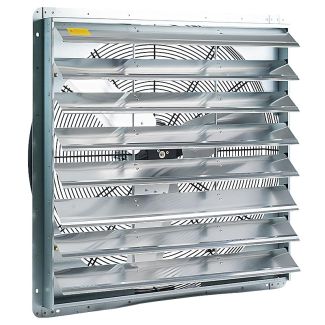


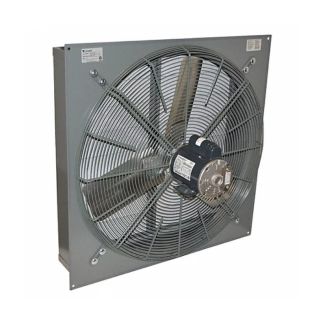
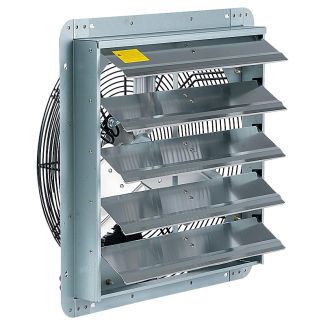
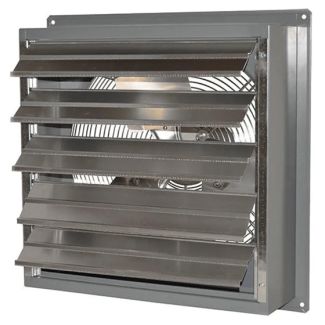

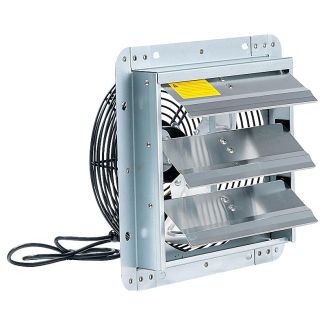
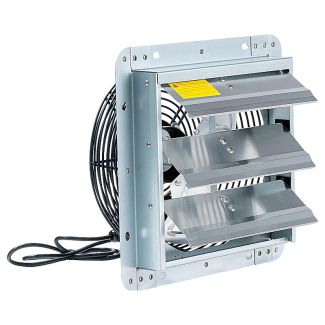
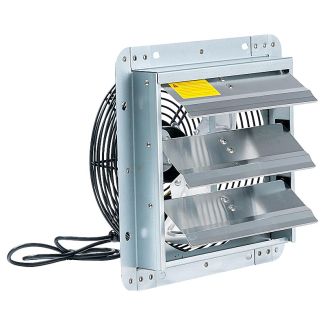
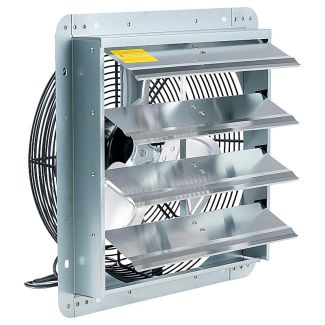
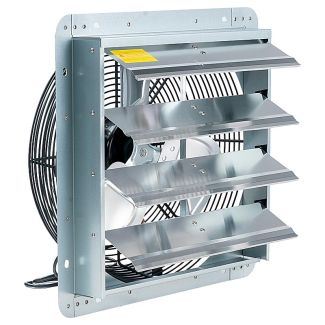
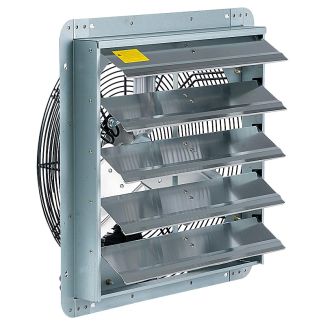
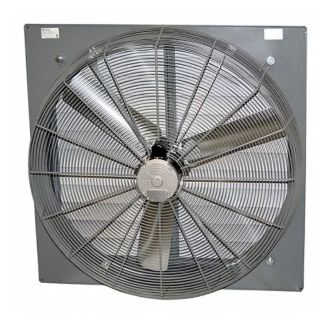
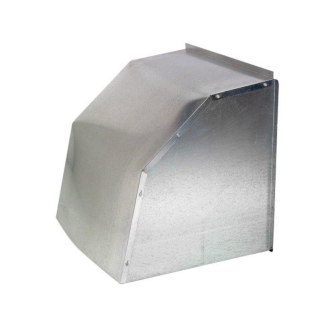

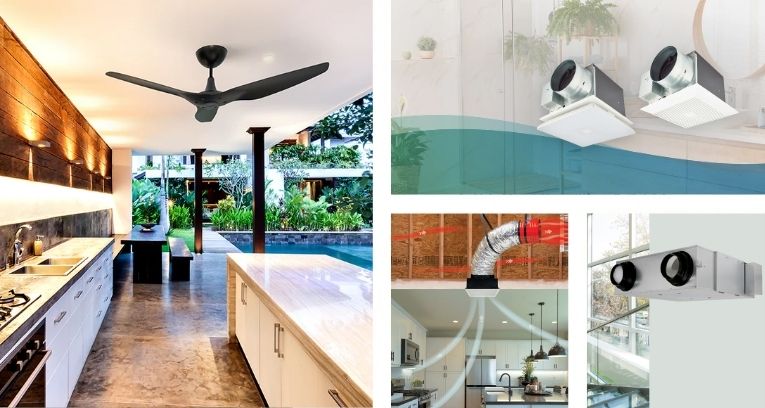
A wall mounted exhaust fan is a ventilation system designed to install directly into an exterior wall. They provide a space-saving way to remove stale air, heat, humidity, odors, and airborne contaminants from commercial, industrial, agricultural, or residential spaces without requiring ceiling or roof-mounted ventilation.
These systems work by using an electric motor to rapidly spin fan blades, which pulls stale air, humidity, heat, and airborne pollutants out of an indoor space and expels them through an external vent. Depending on the model, wall exhaust fans may use direct-drive or belt-drive operation, making them a practical choice for maintaining ventilation in warehouses, workshops, garages, barns, greenhouses, kitchens, and other spaces that need reliable air removal.




Wall mounted exhaust fans are best for commercial and industrial spaces that need strong exhaust ventilation and do not have roof access. These fans are especially useful in areas with air exchange turnovers, excess heat, humidity, fumes, odors, dust, or airborne contaminants that need to be removed quickly and efficiently.
Commercial Warehouses: Large storage facilities require massive airflow displacement to remove trapped heat, improve air circulation, and help protect stored inventory from stagnant, humid air.
Manufacturing Plants: Production floors use heavy-duty direct-drive fans to rapidly remove hazardous fumes, assembly smoke, and airborne debris generated during daily processing.
Commercial Kitchens: Food service facilities use wall exhaust ventilation to help clear grease-laden steam, heavy cooking heat, and intense gas appliance odors away from active preparation and cooking areas.
Agricultural Greenhouses: Barns, grow rooms, and greenhouse spaces rely on wall mounted fans to manage moisture, reduce heat buildup, and support better air exchange for plants, animals, and stored materials.
Automotive Workshops: Vehicle repair bays install shutter-mounted exhaust fans to clear out heavy engine emissions, chemical vapors, and dangerous welding gas accumulation.
Selecting the right industrial fan depends heavily on your total cubic footage and matching the system voltage to your building infrastructure. Correct sizing helps control moisture, heat, air quality, and employee comfort.
The right wall mounted exhaust fan depends on your building's overall space, airflow needs, wall construction, and exposure to weather. Some spaces need a simple shutter-mounted fan for general air removal, while others may require a more enclosed or heavy-duty design for added protection, noise control, or easier installation, both of which are available on HVACDirect.com. Wall mounted exhaust fans are commonly available in four main styles: shutter-mounted, cabinet-mounted, centrifugal, and panel-mounted.
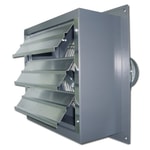
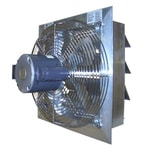
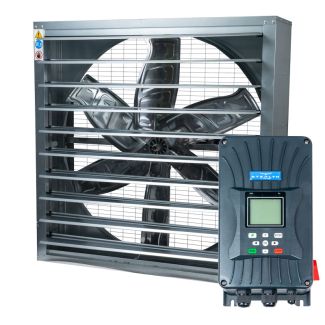
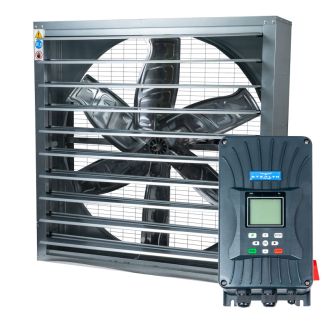
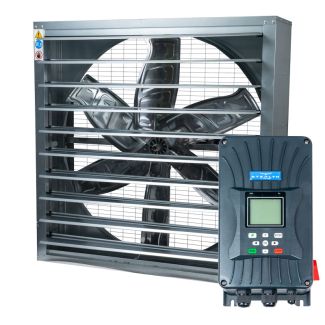
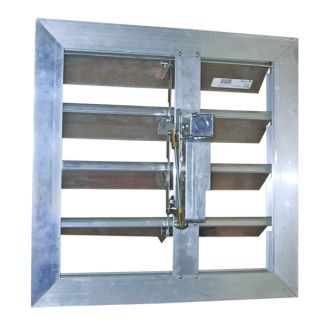
Shutter-mounted wall exhaust fans provide an automatic, weather-resistant ventilation solution. Their gravity-actuated louvers open when the fan runs and close when it stops to reduce cold drafts, pest ingress, and rain infiltration. Integrating an adjustable speed regulator allows building managers to adjust airflow without incurring high operational costs. This design helps exhaust heat, humidity, odors, and stale air while helping block outdoor air, rain, debris, and drafts when the fan is not in use. Shutter-mounted fans are a practical choice for warehouses, garages, barns, greenhouses, and general ventilation applications.
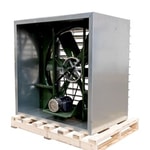
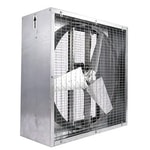
Cabinet-mounted wall exhaust fans provide a self-contained, high-volume ventilation solution and may house the entire motor and deep-pitched propeller configuration completely inside a protective, heavy-gauge galvanized steel wall box enclosure, depending on the kind of fan, manufacturer, and model. This cabinet design can improve protection and weather resistance, depending on the louvers, installation, and accessories. Cabinet construction can help reduce noise from operational vibrations and miscellaneous mechanical sounds, but that also varies significantly by fan size, motor type, RPM, and installation. This design helps exhaust heat, humidity, odors, and stale air while helping block outdoor air, rain, debris, and drafts when the fan is not in use.
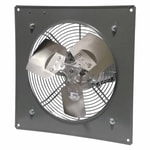
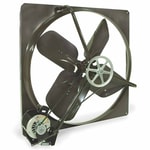
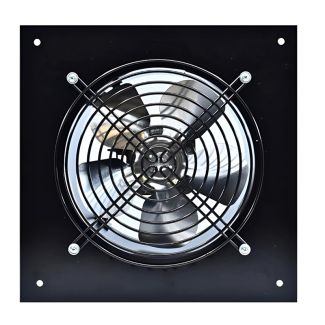
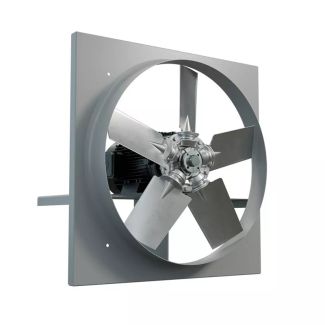
Panel-mounted wall exhaust fans are a compact option for workshops, utility rooms, and light commercial spaces where reliable exhaust airflow is needed without a bulky cabinet or full shutter assembly.
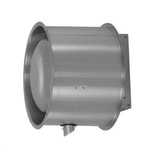
Centrifugal wall exhaust fans provide a high-static pressure ventilation solution that utilizes a scroll-type centrifugal impeller that pulls stale air in and discharges it at a 90º angle to enhance its performance. This aerodynamic design allows the fan to maintain consistent airflow while enduring increases in static pressure.
Hazardous location wall exhaust fans are specialized exhaust systems built for environments where flammable gases, vapors, or combustible dust may be present. These fans use explosion-proof motors and spark-resistant construction to help reduce ignition risk in high-risk commercial and industrial spaces. They are commonly used in chemical storage areas, paint spray booths, fuel handling spaces, grain facilities, battery charging rooms, and other classified environments. These fans should be selected based on the facility’s hazard classification and electrical code requirements.
Agricultural duty wall mount exhaust fans are built for barns, poultry houses, livestock facilities, greenhouses, and other farm environments exposed to moisture, dust, odors, and temperature swings. These fans are designed with rugged materials and heavy-duty components to withstand harsher operating conditions than many standard wall exhaust fans. Agricultural wall exhaust fans help remove hot, humid, and stagnant air while supporting better air exchange for animals, crops, and stored materials. In livestock and greenhouse applications, proper ventilation can help reduce odor buildup, manage moisture, limit mold risk, and create a more stable indoor environment.
Selecting the proper wall mounted exhaust fan diameter depends on the total cubic volume of your facility and the specific air exchange rates mandated by the industrial operations being performed. Fan sizing generally depends on CFM requirements, room volume, ceiling height, and application, in addition to square footage. A properly selected fan is designed so the motor operates within its rated load, though motor overload is not something solely determined by matching fan diameter to building size. Speaking with a licensed professional at HVACDirect.com is advised to help guide you in finding your best options for your commercial and industrial air delivery solutions.
The standard commercial sizing frameworks for choosing a specific fan diameter on HVACDirect.com conform to the following space configurations:
7- to 18-Inch Fans: Small commercial spaces are ideal for compact direct-drive shutter assemblies. These fans refresh light commercial workshops, multi-car residential garages, and small greenhouse footprints by safely turning over the internal air volume every few minutes.
24- to 36-Inch Fans: Medium industrial environments require expanded propeller designs to maintain safe moisture and particulate clearance metrics. These mid-sized configurations remove heat buildup inside automotive repair bays, localized manufacturing assembly zones, and medium storage warehouses.
42- to 60-Inch Fans: These maximum diameters are specifically engineered to handle intensive air changes inside distribution centers, multi-line commercial production plants, and large livestock agricultural barns.
A licensed contractor can confirm the correct size and code requirements.
When purchasing a wall mounted exhaust fan, the most important features are airflow, power, shutter design, noise, controls, and weather resistance. Facility managers must audit these key physical components to ensure long-term mechanical reliability and code compliance across high-demand industrial spaces.
Air Direction: Building systems must be ordered specifically as exhaust configurations that pull contaminated air out of the building or as supply units that pull fresh outside air inward to maintain safe atmospheric balance.
Shutter Design: Gravity-actuated or automated motorized aluminum louvers must align precisely with operating cycles to seal the structural wall when the fan motor powers down.
Airflow Capacity / CFM: Cubic feet per minute, or CFM, is how much air a fan can move in one minute. More specifically, it is the amount of air that a fan can pass through a particular space or area in that time. The CFM range is 0 to 60,000 for fan performance ratings, and each individual fan rating varies by fan size and application.
Noise Level: Operating sound output varies significantly by fan size, motor type, RPM, and installation.
Power Requirements: Electrical voltage and motor phase layouts must match existing facility infrastructure by utilizing standard 120V single-phase lines for light workshops or heavy-duty multi-phase 230V and 480V lines for massive industrial props.
Weather Resistance: Structural enclosures are commonly manufactured using resilient materials, including heavy-gauge steel, high-grade aluminum, or specialized fiberglass frames to resist rapid oxidation from high internal humidity and exterior climate exposure. Material selection depends on application and environment.
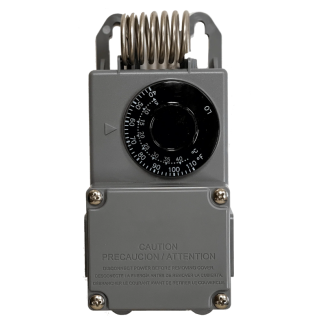
Speed, Thermostat, or Humidity Controls: Control options allow the fan to run only when needed or adjust performance based on conditions inside the space. Variable speed controls, thermostats, timers, and humidity sensors can improve comfort, reduce unnecessary runtime, and help manage energy use.
Carefully matching these exact product elements to your architectural footprint eliminates the risk of rapid motor overheating or poor indoor vacuum pressure. Choosing the right specifications helps support code compliance and better air quality for your active facility team.
The best wall mounted exhaust fan brands, including ACiQ, Coolair, and others, offer dependable airflow performance, durable construction, and product options for a wide range of commercial, industrial, and agricultural applications. When comparing brands, look for manufacturers that offer the right fan style, CFM range, motor configuration, material quality, and control compatibility for your specific space. Selecting a verified brand ensures that your building ventilation infrastructure complies with local structural safety codes and benefits from factory-tested motor performance metrics.
The top manufacturing brands leading the commercial and industrial wall ventilation sector include the following market suppliers:
ACiQ: This manufacturer specializes in producing high-efficiency direct-drive shutter assemblies and advanced cabinet ventilation systems that are in-stock and ready to ship.
Canarm: Canarm manufactures a wide selection of commercial and industrial ventilation products, including shutter-mounted, panel-mounted, and agricultural fan options. These fans are commonly used in warehouses, workshops, garages, production areas, barns, and greenhouse environments.
Triangle Engineering: Operating with over 70 years of manufacturing experience, this specialized brand designs premium all-welded steel direct-drive and belt-driven fans to maximize aerodynamics. This brand is a good choice for facilities that need rugged airflow equipment for demanding commercial, manufacturing, agricultural, or industrial environments.
J&D Manufacturing: This heavy-duty agricultural and industrial specialist produces rugged configurations that sometimes utilize galvanized steel frame housings and dust-tight motor casings to withstand continuous exposure to chemical gases and animal waste. Improved airflow and odor removal are also additional positives with J&D fan products.
Coolair: With fans that are built to order and engineered for long life, dependable performance, and notable value, Coolair designs its fans for ventilation in warehouses, livestock facilities, factories, and other demanding environments.
Investing in a system from an authorized catalog supplier secures crucial factory warranty support and guarantees that internal balancing components remain structurally stable under prolonged peak velocity operations. Reviewing wiring and mounting requirements helps ensure proper installation with your facility control grid.
Wall mounted exhaust fans typically cost more upfront for larger or specialized models, with operating cost driven by motor size and runtime. Purchasing through specialized HVAC distributors such as HVACDirect.com can provide access to competitive commercial pricing, product specifications, and application support.
The total financial investment for integrating wall mounted exhaust ventilation breaks down into two primary cost tiers:
Physical Product Cost: Initial equipment expenditures range from $80 to $10,000+, all depending on light-duty to heavy-duty needs. High-end variations like explosion-proof systems or agricultural-grade fiberglass housings fall on the higher end of this range due to specialized engineering and safety certifications.
Operational Cost: Routine electrical expenses scale directly with the motor horsepower and drive design.
The final economic impact of your ventilation upgrade depends heavily on local installation costs concerning framing changes, masonry cuts, wiring, and labor. For finished workspaces or heavy masonry installations, professional labor and electrical integration can frequently add another $400 to $1,500 to the total budget.
Wall mounted exhaust fans are a great benefit to high-activity industrial spaces for production and health purposes. A few critical reasons to source your wall mounted exhaust fans through our specialized catalog, include the following:
Comprehensive Application Subcategories: Rather than offering generalized ventilation hardware, our online inventory is explicitly cataloged into precise subcategories, including shutter-mounted, deep galvanized cabinet, flush-fit panel, high-pressure centrifugal, agricultural-duty, and explosion-proof hazardous location setups, allowing facilities managers to isolate the exact structural design required for their floor plan.
Access to Premium Direct-Drive Technologies: We stock advanced ventilation systems, which can deliver a massive air output at a quiet 65 dBA. However, Noise depends heavily on fan size, RPM, airflow, installation, and distance measured.
Pre-Assembled and Factory-Tested Shipments: Major industrial inventory options, such as our Triangle Engineering and Maxx Air heavy-duty exhaust fan assemblies, are shipped fully assembled with pre-drilled frames and pre-balanced propellers straight from the factory floor. This structural readiness drastically reduces field assembly time and immediate labor installation costs.
Flexible Multi-Voltage Configurations: Our inventory is tailored to complex commercial power grids, allowing you to filter system choices by exact facility infrastructure requirements, including standard 110V/120V single-phase lines for light workshops, or heavy-duty 208V/230V and 460V/480V three-phase configurations for massive industrial deployment.
Direct Manufacturer Warranty Support & Pricing: As an authorized premier dealer for top-tier ventilation brands like Canarm, J&D Manufacturing, and Triangle Engineering, we back every product with official factory warranty protections, commercial pricing, and dedicated phone-in quotes from certified project specialists.
Experienced customer service, pricing, variety of products, and fast products are also strong reasons to consider purchasing your commercial or industrial ventilation equipment directly from HVACDirect.com. These distinct advantages are tailored specifically to large-scale structural air clearance.

Our team is here to make your buying experience simple and stress-free. Every project is different. Request a free quote and our HVAC experts will recommend the right size, efficiency, and system —helping you avoid costly mistakes. We’ll only send what matters.
You may also qualify for our VIPro Program, which provides exclusive contractor-level pricing, personalized project support, and priority service. Even if you are not VIPro qualified, we are still ready to help! You can sign up to receive exclusive email offers and promotions as well as unlock benefits.
Simply tell us about your space and requirements, and our specialists will guide you every step of the way. No commitment. Just better answers.
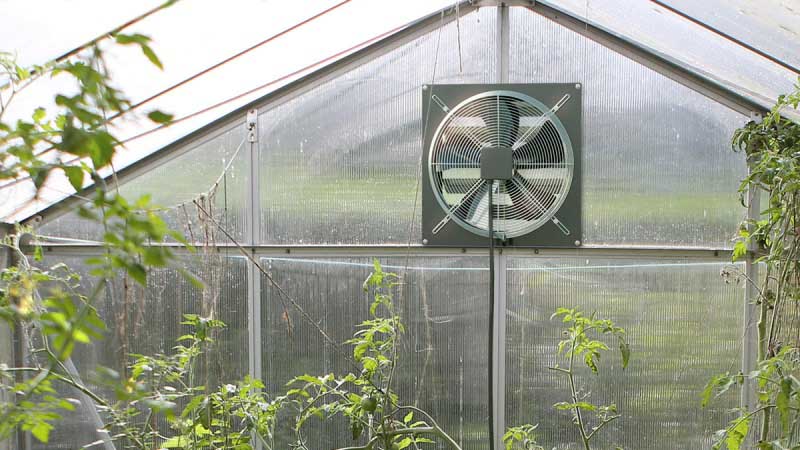
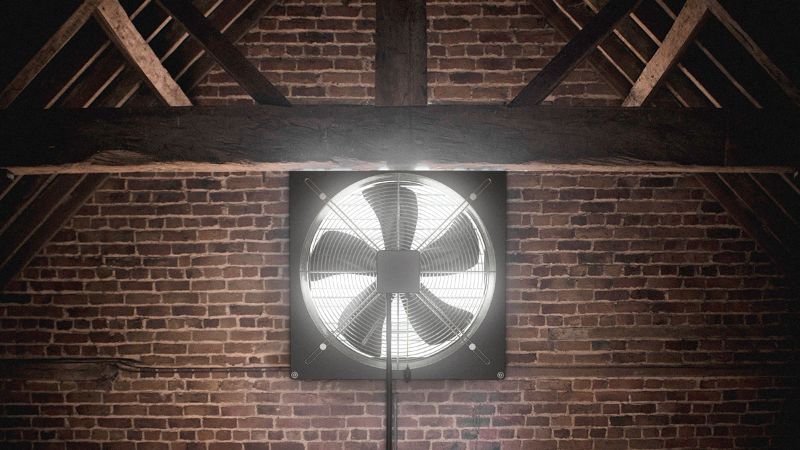
Yes, installing an exhaust fan is not only possible, but is also a highly efficient way to ventilate a building when ceiling or rooftop access is unavailable. Sourcing a dedicated shutter or cabinet-mounted fan through our specialized HVACDirect.com catalog allows you to discharge heat, moisture, and pollutants straight out of the building envelope. This installation maximizes your volumetric airflow (CFM) by eliminating restrictive ductwork. This direct ventilation setup uses heavy-gauge galvanized steel frames and built-in weatherized louvers to create a clean, flush-fit installation that securely seals your facility against backdrafts and pest invasion when the motor turns off.
If your commercial restaurant kitchen setup rests against an exterior wall, yes, routing a commercial kitchen exhaust fan or range hood straight through that wall is the most efficient path to discharge heavy cooking smoke, airborne grease, and intense heat out of your home. Sourcing a dedicated ducted wall-mount package through our HVACDirect.com ventilation catalog eliminates the need for long, restrictive vertical duct runs, keeping static pressure low so your fan operates at its maximum CFM performance. This setup should end with a weatherized wall cap and a built-in backdraft damper to securely block incoming rain, freezing winter air, and pests when the motor cycles off.
Wall mounted exhaust fans are excellent for large garages because they rapidly pull out toxic vehicle emissions, paint fumes, sawdust, and trapped summer heat straight through an exterior wall without the need for expensive ceiling ductwork. Sourcing a compact 12-inch to 18-inch direct-drive shutter fan from HVACDirect.com provides a high-airflow solution that secures your workspace against stagnant air pockets while utilizing automatic, gravity-assisted aluminum louvers to seal out rain, pests, and winter drafts when the motor is turned off. Installing the unit high on an exterior wall near the roofline ensures it immediately captures rising hot air and chemical vapors, safely exhausting them completely outside the building envelope to maintain a clean, comfortable, and hazard-free environment.
Yes, some wall mounted exhaust fans need shutters or dampers, because they can act as a physical barrier to protect your indoor climate from the outdoor environment when the system is powered down. Sourcing a shutter-mounted or cabinet-enclosed fan directly from HVACDirect.com ensures your building envelope is protected by gravity-actuated or automated motorized aluminum louvers that blow open under forced airflow and often close by gravity. This mechanical barrier is critical to block severe outdoor weather, driving rain, freezing winter backdrafts, and destructive pests from invading your indoor space through the structural wall penetration.
It depends entirely on the design, but wall mount exhaust fans normally operate between 50 to 80 dBA, which is at the level of a sweeper or food blender. While standard industrial-grade prop fans are built primarily for raw power and naturally produce noticeable blade rush and motor noise, premium residential and commercial configurations can operate remarkably quiet. For residential bathrooms or office spaces, choosing multi-speed configurations ensures your fan extracts dampness and odors smoothly without creating annoying background hums.
Wall mount exhaust fans that are produced with direct-drive assemblies can reduce maintenance and may use less energy than belt-driven models, so yes, they are energy efficient. However, not all fans are equally efficient, so it depends on the motor and drive configuration you choose. While older, traditional belt-driven models incur energy losses through friction, modern direct-drive wall mounted exhaust fans can be incredibly energy efficient.
Yes, every wall mounted exhaust fan sold through our catalog on HVACDirect.com is backed by official manufacturer warranty coverage to guarantee physical quality and functional operation. Standard equipment lines from premier ventilation brands like Maxx Air and J&D Manufacturing carry a baseline 1-year limited warranty covering any defects in manufacturing materials or operational workmanship from your original retail purchase date. Additionally, ACiQ industrial shutters and cabinet fans offer an extended 5-year warranty program at no additional cost when you register the exhaust system online (within the manufacturer's specified installation window).