Your cookie preferences
We use cookies to remember your preferences and understand how shoppers use our site, helping us improve your shopping experience.
Read our privacy policyEnhance your ventilation setup with Inline Fans designed to deliver reliable, high-quality airflow through duct systems of all sizes. Whether you’re improving air circulation, controlling humidity, or optimizing indoor air quality, inline fans provide consistent performance in residential, commercial, and industrial applications. Browse by fan type to find dependable inline fans suitable for multiple applications at the lowest prices online.
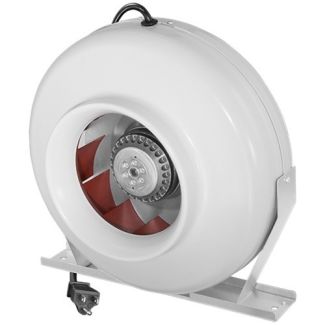
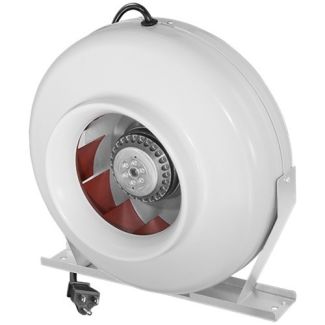
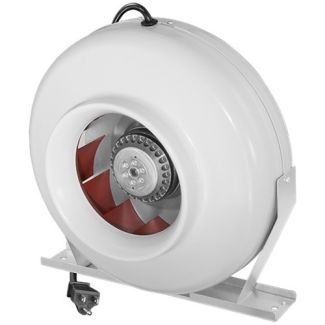
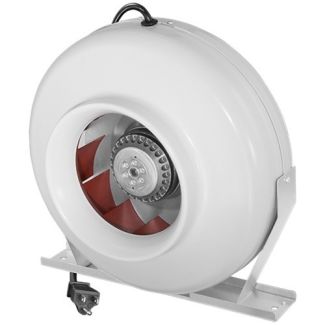
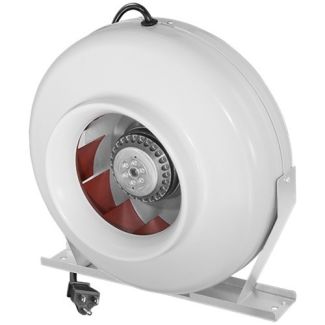
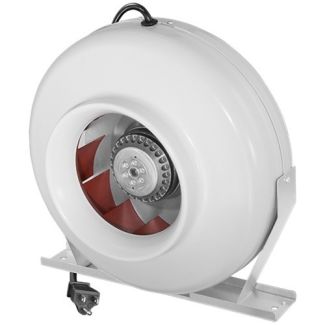
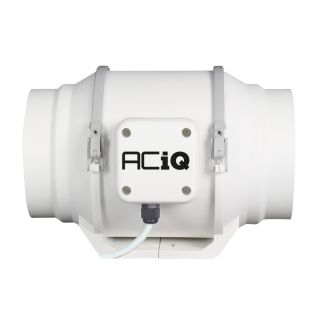
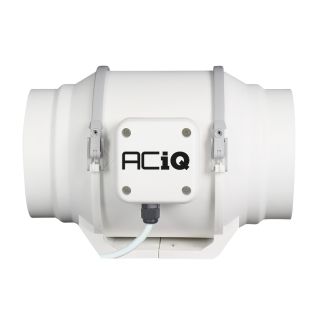
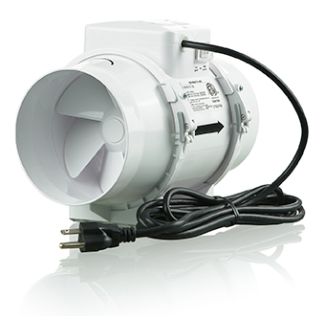
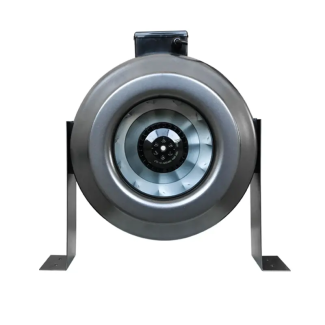
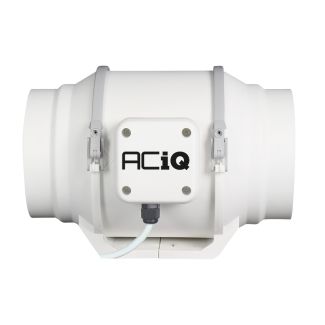
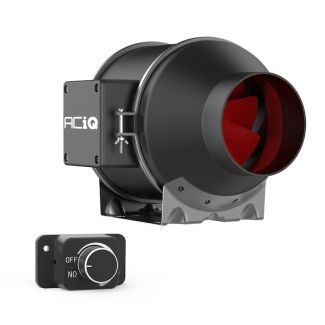
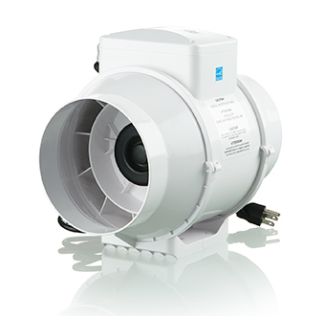
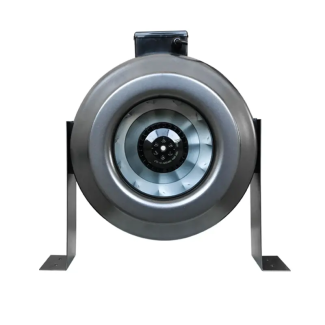
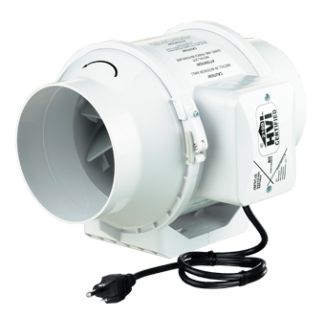
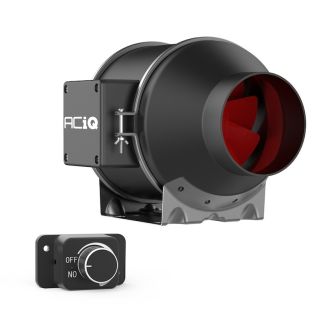
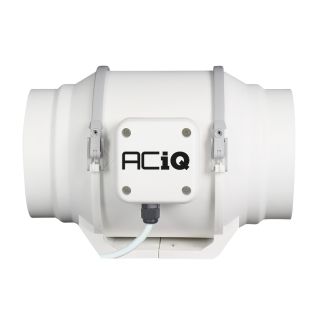
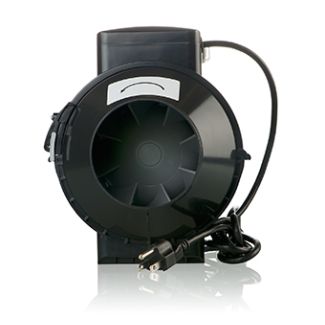
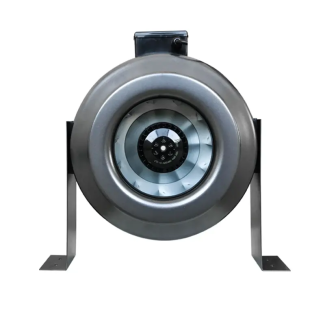
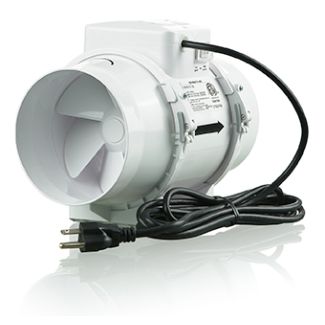
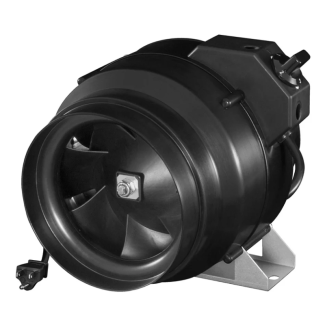
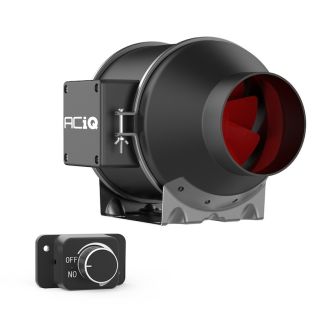
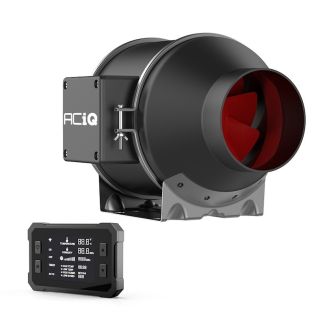
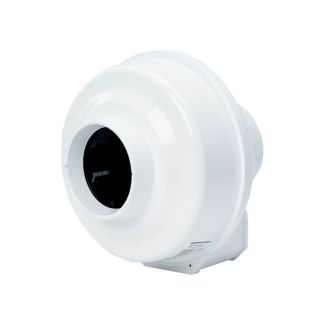
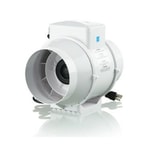
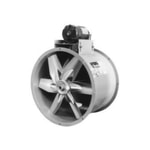
An inline fan is a specialized ventilation device engineered to be installed directly inside a duct run rather than mounting to a ceiling or wall surface. This design features an internal motor and axial, mixed-flow, or centrifugal impeller to move air through the connected ductwork.
The inline fan’s motor spins its impeller to move air through connected ductwork. Select the fan using its required CFM and total static-pressure performance because long ducts, bends, filters, and grilles add resistance.
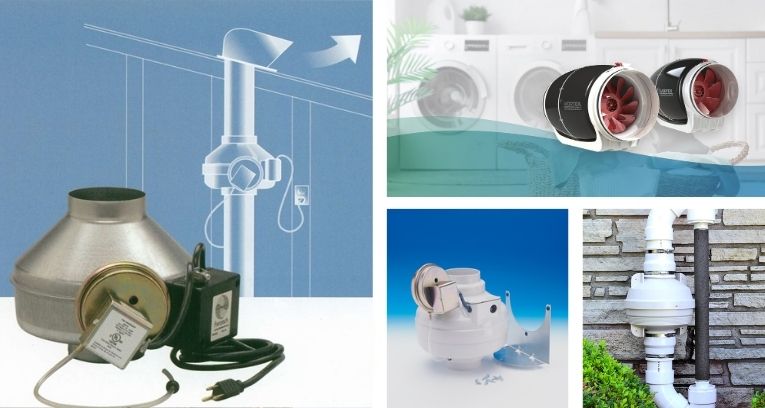

Inline fans can support ducted airflow, exhaust, and air balancing in applications such as grow tents, bathrooms, duct boosting, and carbon-filter systems when the selected fan matches the required CFM and static pressure. These versatile systems excel at boosting airflow through complex ductwork and regulating environments in enclosed spaces. For kitchen grease exhaust, laser-process exhaust, and other hazardous-air applications, use equipment specifically approved for the air being exhausted and follow applicable installation requirements. You can explore full product options at HVACDirect.com to find the right fit for your project.
Grow tents require inline fans to provide continuous air exchange and regulate temperature and humidity levels for optimal plant development. Choose a fan that delivers the required airflow after accounting for duct length, bends, carbon-filter resistance, and heat from grow lights. Mixed-flow inline fans are one option for ducted grow-tent ventilation. Air exchange can help manage heat and humidity, but plant conditions also depend on lighting, temperature control, humidity control, airflow design, and the selected control equipment.
Bathrooms benefit significantly from inline fans because they extract high volumes of moisture and odors through long duct runs without creating loud noise inside the living space. A remotely mounted inline fan can be connected to one or more bathroom grilles when its published airflow performance and the duct layout support the required ventilation rate. This setup helps remove excess moisture so bathroom humidity can return to desired settings.
Commercial kitchen exhaust that handles grease-laden vapors requires equipment rated for that application, such as a UL 762-rated restaurant grease fan. Do not use a general-purpose inline fan for grease-laden exhaust. These fans must connect to specialized ductwork that handles high temperatures and prevents grease accumulation along the path. For residential cooking odors or heat, select an exhaust system that meets the appliance, duct, airflow, and installation requirements. For commercial grease exhaust, use the required listed equipment and grease-duct construction. A general-purpose mixed-flow fan should not automatically be recommended for smoke and grease exhaust.
Ductwork and HVAC boosting applications rely on inline fans to solve airflow deficiencies in rooms located far away from the central heating and cooling equipment. Booster fan operation depends on the selected control method, which may include a relay, pressure switch, thermostat, or dedicated fan controller. Before adding a booster fan, check for duct leaks, blocked registers, poor balancing, incorrect damper settings, and undersized or damaged ductwork.
Laser cutters and engravers usually require inline fans to safely evacuate toxic fumes, smoke, and fine particulate matter generated during the cutting process. A high static pressure centrifugal fan is advised to pull these hazardous airborne byproducts out of the machine cabin and vent them directly outdoors. Operate the exhaust system as directed by the laser manufacturer and follow applicable safety requirements for fumes, smoke, particulates, and material-specific laser optics hazards.
Carbon filtration setups depend entirely on inline fans to pull contaminated air through a dense bed of activated carbon to scrub odors and volatile organic compounds. The fan must deliver the required CFM at the total static pressure created by the carbon filter, ductwork, fittings, and grilles. A properly sized fan and compatible carbon filter can help reduce odors, but results depend on the contaminant, filter design, filter condition, airflow, and installation.
HVACDirect offers five primary inline-fan configurations for different airflow, static-pressure, duct-layout, and application requirements. These configurations range from high-volume axial models to heavy-duty commercial centrifugal systems and specialized hazardous gas mitigation units.
Centrifugal and Mixed Flow Fans: These duct-mounted fan categories are used where the system requires more pressure capability than a basic axial fan may provide. Compare each model’s CFM and fan curve. Centrifugal and mixed flow fan types are optimal for general residential and commercial duct boosting.
Axial Inline Duct Fans: These fans are designed specifically for low static pressure environments where moving high volumes of air across short straight distances is needed. Axial inline duct kinds are commonly used where high airflow and lower system resistance are required.
Square Centrifugal Inline Fans: Also known as forward-curved centrifugal fans, these use a cabinet-style design that may suit commercial duct layouts. Confirm the connection dimensions, airflow range, static-pressure performance, and mounting requirements for the selected model. Square centrifugal inline fans can provide high airflow at relatively low speeds, but noise depends on the specific fan, motor, operating point, and system.
Radon Fans: These highly specialized units are specialized fans used in radon-mitigation systems. Select a fan rated for radon use and follow the system design and installation requirements. Radon fans operate 24 hours a day to preserve safe indoor air metrics.
Forward Curve Inline Fans: These fans use forward-curved impellers for operation at lower motor rotational speeds. Compare sound data, airflow, motor specifications, and static-pressure performance for the selected model. Forward curve inline types are well suited for precise temperature and clean air supply needs.
Selecting the correct type requires matching the total system static pressure of your layout to the operational capacity of the fan motor. An incorrectly selected fan may deliver less airflow than required, generate excessive noise, or operate outside its intended performance range. Before buying, compare the required CFM and total static pressure with the selected fan’s published performance curve.
Residential inline fans commonly use 4- and 6-inch duct connections, while larger 8- and 12-inch models provide more airflow for demanding residential and light commercial applications. Fan selection should be based on required CFM, total static pressure, duct size, duct length, fittings, and application. An inline fan does not necessarily need to have the exact same connection diameter as the existing ductwork, although properly sized ductwork is important for system performance.
4-Inch Inline Fan: This compact size is ideal for small bathrooms, utility closets, and confined grow tents where short duct runs present minimal air resistance. A 4-inch fan is commonly used with compact duct systems, but its suitability can depend on its sound level, static-pressure performance, duct length, and intended application.
6-Inch Inline Fan: This size efficiently handles bathroom ventilation, whole-house ventilation, duct boosting, utility spaces, and other residential exhaust/supply applications, depending on the specific fan. It balances robust cubic feet per minute output with manageable ductwork footprints. Match the fan’s published airflow and static-pressure performance to the system requirements.
8-Inch Inline Fan: This heavy duty option may support extensive grow room setups, light commercial kitchens, and comprehensive whole house ventilation systems, provided it is selected based on a system’s required airflow and pressure. Although helpful in moving massive amounts of air across long complex ductwork, a larger fan doesn't automatically overcome a complex duct system. Inline fan static-pressure capability is what matters most. Do not use a general-purpose inline fan for grease-laden commercial kitchen exhaust.
12-Inch Inline Fan: Built for high-airflow commercial, industrial, agricultural, filtration, or large duct-system applications, this size can move large volumes of air through longer or more demanding duct runs. It is well suited for warehouses, manufacturing facilities, commercial ventilation, agricultural facilities, large duct systems, air filtration systems, and industrial exhaust that require powerful airflow and strong static pressure performance.
For larger industrial duct systems, review available axial inline duct fan diameters and published performance data. A qualified professional should confirm structural support, electrical requirements, duct connection size, and installation conditions.
Inline fans are generally considered quiet, with most standard models operating between 50 and 70 dBA, while high-efficiency or quiet-rated models can operate between 28 and 50 dBA. Actual noise levels are determined by the specific fan size, motor speed, and installation quality. Compare the manufacturer’s published sound rating for the specific fan. Because inline fans can be mounted away from the occupied room, remote installation may reduce perceived noise in that space. To reduce noise, select a fan with a suitable published sound rating, use ducting and mounting methods approved by the manufacturer, avoid sharp duct bends, and limit vibration transfer to the building structure.
Select an inline fan by checking six factors: required CFM, total static pressure, duct diameter, motor voltage and power, speed-control compatibility, and mounting space. Consider these factors when matching an inline fan to your system.
Airflow and CFM: Choose a fan rated for the specific cubic feet per minute (CFM) required to exchange the air in your target space. Required ventilation rates vary substantially based on the application, occupancy, contaminants, building codes, and ventilation standard. A fan that is too small may not meet the airflow target. A fan that is too large may create excess airflow, noise, or control problems if it is not properly selected and controlled. Structural vibration could also occur as a result of oversizing, but that is not always directly related to sizing.
Static Pressure: This value shows whether the fan can move the required airflow through duct runs, filters, grilles, dampers, and bends. You want the fan to deliver the required CFM at the system's calculated total static pressure.
Duct Diameter: Match fan connections to the duct system when possible. If a transition is needed, size and install it correctly to limit added airflow resistance. Transitions and reducers can be used when properly designed.
Motor Voltage and Power: Verify your building electrical capacity matches the motor requirements, which typically include 120V for standard residential units. Voltage and phase configurations vary by motor. Always ensure the circuit breaker and wiring gauge are properly sized to handle the full load amperage of the fan.
Speed Control: Determine if your application requires a variable speed controller to adjust airflow manually or automatically based on real-time environmental sensors. Use only a manufacturer-approved speed controller. Confirm that the fan motor and control are compatible before installation.
Mounting Clearance and Installation Space: Plan for the total physical footprint of the fan housing plus additional space for maintenance access and secure attachment to structural joists. You must provide enough room at both ends of the unit to properly attach flexible or rigid ducting without sharp bends or kinks.
Addressing these technical variables during the procurement phase prevents expensive field modifications and ensures the fan operates within its intended design parameters. Before buying, review the selected fan’s manufacturer data sheet to confirm airflow, static-pressure performance, electrical requirements, controls, dimensions, and installation requirements.
Inline fan systems generally range from $90 to $600 for standard residential and light commercial equipment, but heavy-duty, high-horsepower commercial and industrial fans can go to $3,000+. Costs fluctuate based on motor type, fan size, and integrated control features. Professional installation labor typically adds $200 to $800 to the total project cost depending on ductwork accessibility, electrical requirements, and the complexity of the mounting configuration. Operating costs depend on the fan's wattage, operating schedule, and local electricity rate. Energy-efficient electronically commutated motors (EC or ECM for short) can help reduce electricity consumption compared with less-efficient motor designs.
Prices shown here and below are planning estimates, not guaranteed costs. Equipment prices reflect current HVACDirect.com listings, where buying direct may save up to 70% on HVAC equipment versus local company pricing. Installation, labor, energy, maintenance, and service costs vary by system size, efficiency, installation complexity, local contractor and utility rates, climate, and location. For an accurate project estimate, consult a qualified local HVAC professional or an HVACDirect.com specialist to point you in the right direction.
Equipment Cost: Standard residential inline fans typically cost between $90 and $350, while specialized high-capacity or industrial-grade centrifugal units can range from $400 to $600 or more. Models featuring advanced speed controllers or temperature and humidity sensors sit at the higher end of the price spectrum due to their increased automation capabilities.
Installation Cost: Professional installation services usually range from $200 to $800, though this varies widely based on whether the fan is easily accessible in an attic or requires extensive modifications to existing ductwork. DIY installation is possible for simple setups, but hiring a professional ensures proper sealing and vibration isolation, which prevents future noise issues and other unwanted issues.
Operating and Energy Usage Cost: Costs related to operation and energy usage can be minimal for many small home inline fan applications at $3 to $5 monthly. Large industrial-sized units can consume more energy, resulting in monthly operating costs that can vary between $300 and $800, depending on motor size, operating cycle, static pressure and airflow, and speed controller. Inline fans often utilize energy-efficient motors to move large volumes of air while reducing power consumption compared with less-efficient motor designs. There are also units which lower the power draw during periods of reduced ventilation demand. Operating cost can best be expressed by the following formula:
Operating cost = fan wattage ÷ 1,000 × operating hours × electricity rate per kWh
Understanding these cost variables allows you to balance your immediate budget with long-term energy savings and performance expectations. Before ordering, verify which mounting hardware, controls, transitions, dampers, and electrical components are included or required for the selected model.
ACiQ, Fantech, ACME, and others are brands that represent the most critical options available through HVACDirect.com, each offering unique advantages for residential, commercial, or heavy-duty industrial applications. Selecting the most reliable inline fan manufacturer depends on your specific ventilation requirements, as different brands specialize in everything from compact residential duct boosting to massive industrial-grade axial extraction.
Fantech: A market leader in mixed-flow and centrifugal ventilation, Fantech is renowned for engineering quiet, high-efficiency fans that bridge the gap between performance and ease of installation. Their FSD and FKD series are industry standards for residential and light commercial duct runs where low noise and high static pressure are essential.
VENTS-US: This brand provides an expansive range of residential and commercial inline fans, including the popular Turbo Tube and Silent series designed for versatile duct-mounted air exchange. VENTS US is a top choice for projects requiring reliable, energy-efficient airflow in bathrooms, kitchens, and workshops.
ACiQ: ACiQ specializes in high-performance mixed-flow and centrifugal inline fans that prioritize energy efficiency and ease of control for both residential and commercial ventilation needs. Their units often feature integrated humidity and temperature controls, making them an excellent value-driven choice for modern smart HVAC systems.
Canarm: Canarm offers a comprehensive suite of ventilation solutions, including heavy-duty blowers and industrial-grade air supply units designed for rugged, continuous-duty environments. They are often favored for facilities that require high-static-pressure performance for dust collection or demanding material handling tasks.
ACME and Hartzell: Manufacturers ACME and Hartzell are primary authorities for large-scale, industrial axial duct fans, which are essential for high-volume air movement in warehouses and manufacturing plants. Their tube-axial and heavy-duty centrifugal configurations handle massive CFM requirements and extreme operating conditions that standard residential fans cannot sustain.
Choosing between these brands requires aligning the manufacturer's specific strength, whether it be quiet operation or extreme air volume, with your project's unique ducting and environmental demands. Before buying, confirm that the selected model delivers the required CFM at the total static pressure of the complete duct system.



Some inline fans may be suitable for homeowner installation, but strict adherence to manufacturer instructions is required for the best safety and system performance. The process involves mounting the fan securely to a structure, connecting it to your ductwork with vibration isolation clamps, and completing the electrical wiring in accordance with local building codes. Disconnect power before servicing or installing the fan. Use a qualified professional if electrical work, duct modifications, hazardous-air exhaust, or code compliance is outside your experience.
Inline fans can be worth considering when you need duct-mounted airflow, remote fan placement, or added static-pressure performance. Their ability to isolate motor noise and effectively navigate complex ductwork makes them the ideal solution for high-performance residential and specialized commercial ventilation needs.
Two inline fans can be arranged in series or parallel only when the system is designed using the fans’ published performance curves. Have a qualified ventilation professional evaluate the setup before installation. However, these configurations require careful system design to prevent motor burnout, backflow, or electrical overloading. In many applications, selecting one fan that delivers the required CFM at the total static pressure can simplify controls and installation. Confirm the best design using manufacturer performance data.
Yes, some inline fans can be mounted vertically, but allowable mounting orientation varies by model. Before vertical installation, confirm the selected fan’s approved mounting positions, motor orientation, support method, drain or condensation requirements, and service clearances in the manufacturer’s instructions. For installations where condensation or moisture may be present, the fan and motor should be positioned and protected according to the manufacturer's requirements to prevent water from reaching electrical or motor components.
A grow tent may need an inline fan when the setup requires ducted exhaust or intake to manage heat, humidity, and air exchange. Select the fan by tent volume, heat load, duct resistance, and any attached carbon filter. Insufficient air exchange can allow heat and humidity to build up. Manage ventilation together with temperature, humidity, lighting, circulation, and filtration controls
You can purchase inline fans through specialized HVAC retailers like HVACDirect.com, which provides technical support and a wide catalog of professional-grade brands. Before ordering, confirm that the selected model is rated for the intended application and is compatible with the duct system.
Standard-model inline fans typically last for 10 to 15 years, and efficient operation that reduces unnecessary workload can help extend their service life. By properly managing heat, moisture, and airflow, you minimize unnecessary strain, which helps extend the operational life of your ventilation equipment. Premium-level inline fans are known to have a service life of up to 25 years, but review the manufacturer’s warranty and maintenance instructions for the selected model. Replace the fan when it no longer delivers expected airflow or requires uneconomical repairs.
Inline fans often include manufacturer warranties covering defects in materials and workmanship, provided the unit is installed and maintained per the guidelines. You should consult your specific product manual for full details, as online registration may be required to qualify for coverage. ACiQ-branded Inline Fans with EC Motors are listed with a standard limited warranty of 60 months with registration and 18 months without registration from the date of purchase. Other brands like Fantech and Atmosphere Vortex feature 5-year and 10-year warranties, also depending on model types. Review the warranty for the exact product before purchase.
Yes, some inline fans are designed for EC motors that help deliver stable, quiet airflow with less energy drain, while others may use PSC motors. For example, ACiQ inline duct fans often utilize those advanced EC motors, or ECMs, that help improve the overall efficiency of your HVAC system by evenly distributing supply and exhaust air. The reduction in load on your main heating and cooling units can lower overall energy consumption, while EC motors can consume less energy than traditional induction motors. Compare the selected fan’s wattage, airflow, static-pressure performance, speed-control options, and expected runtime to estimate its energy use.