Your cookie preferences
We use cookies to remember your preferences and understand how shoppers use our site, helping us improve your shopping experience.
Read our privacy policyAir Circulation Fans are essential for improving ventilation by consistently moving air throughout a space, helping maintain comfort and air quality. Find the right fan for your needs from our wide selection of air circulation fans at HVACDirect.com.


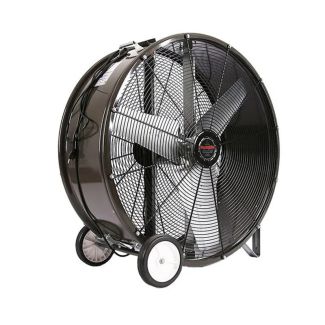
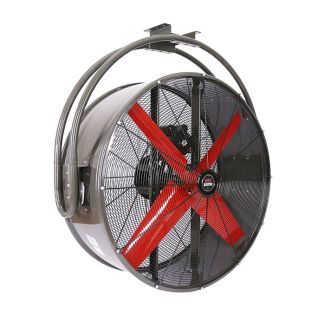

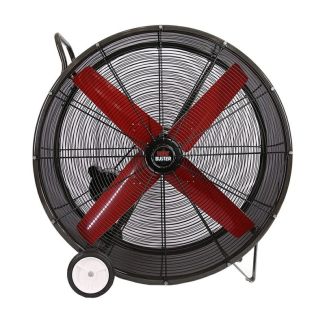



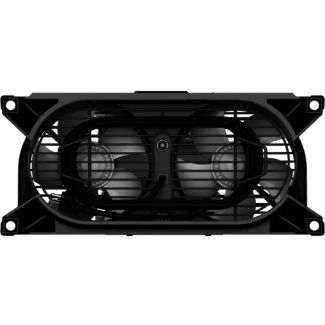

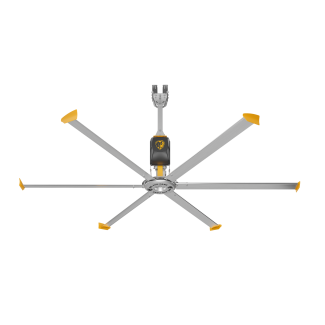

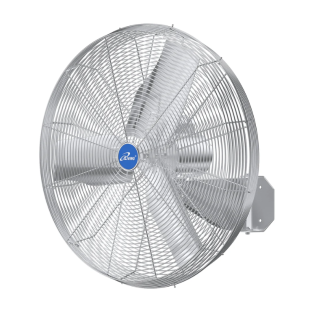
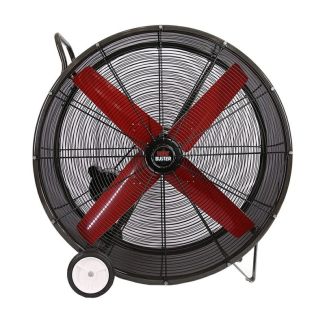


Air circulation fans are designed to move large volumes of air within an enclosed or semi-enclosed space. Unlike exhaust fans, which remove air from a building, air circulation fans continuously redistribute existing air to create more uniform temperatures, improve comfort, reduce moisture buildup, and eliminate stagnant air pockets.
Air circulation fans work by using an electric motor to rotate fan blades, creating airflow that moves air throughout a space. As air moves, temperature stratification is reduced, humidity is more evenly distributed, and stagnant areas are eliminated. These fans can be mounted on walls, ceilings, pedestals, or floors depending on the application. Commercial and industrial models often provide airflow ranging up to 500,000 CFM in large High Volume Low Speed (HVLS) designs.
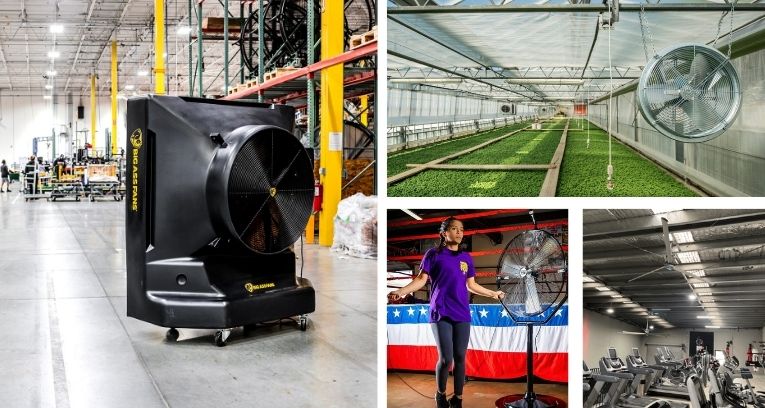

Air circulation fans serve a wide variety of functions beyond simply making occupants feel cooler, including supporting facility operations, improving environmental conditions, and helping protect equipment and building materials.
Cooling Work Areas: Air circulation fans create a wind-chill effect that can make occupants feel cooler without lowering the actual room temperature. This can improve comfort and productivity in manufacturing plants, warehouses, garages, and workshops where heat buildup is common.
Drying Wet Surfaces: High-velocity airflow accelerates evaporation and reduces drying times for floors, carpets, walls, and equipment. This makes circulation fans useful after cleaning operations, water intrusion events, or routine facility maintenance.
Cooling Equipment: Many industrial and commercial facilities use circulation fans to direct airflow around machinery, motors, electrical panels, and production equipment. Rather than providing ventilation by exchanging air, this cooling equipment improves heat dissipation directly around the machinery to maintain optimal operating temperatures.
Controlling Condensation: Moisture often accumulates on walls, windows, ceilings, and equipment in humid environments. Continuous air movement helps reduce condensation formation and minimizes the risk of corrosion, mold growth, and material degradation.
Dispersing Stagnant Air: Dead air zones can form in large spaces with poor airflow distribution. Air circulation fans continuously move air throughout occupied areas, helping eliminate temperature inconsistencies and improving overall comfort.
Supporting HVAC Systems: Circulation fans complement heating and cooling systems by improving air distribution. Better circulation helps conditioned air reach more areas of the building, reducing temperature stratification and potentially lowering HVAC energy consumption.
Whether you're trying to improve comfort, protect assets, or support HVAC performance, air circulation fans offer a practical and energy-efficient solution for numerous applications.
Air circulation fans are highly versatile and can be used in many different environments with ideal spaces typically having large open areas, high ceilings, moisture concerns, or equipment that generates heat.
Gyms and Fitness Centers: Fitness facilities require adequate air movement to improve occupant comfort. Large circulation fans help distribute conditioned air evenly while reducing hot spots in workout areas.
Retail Stores: Retail environments benefit from improved temperature consistency and enhanced customer comfort. Air circulation fans help move conditioned air throughout large sales floors and open-concept store layouts.
Loading Docks: Loading docks frequently experience temperature fluctuations as doors open and close throughout the day. High-capacity circulation fans help maintain airflow and improve comfort for workers in these environments.
Greenhouses: Greenhouses depend on continuous internal air movement to manage humidity, promote healthy plant growth, and maintain consistent temperature conditions throughout the structure. However, because internal circulation fans only redistribute existing air rather than removing odor-producing contaminants, true odor control and fresh air exchange require a dedicated ventilation and filtration system.
Automotive Shops and Aircraft Hangars: Large service facilities often have substantial open space and high ceilings. Air circulation fans help disperse heat, encourage sweat evaporation to cool workers, and create a more comfortable environment. A true ventilation system is still required to actually exhaust moisture and fumes from the building.
Warehouses and Distribution Centers: Large commercial storage facilities can experience severe temperature stratification, particularly in buildings with ceilings exceeding 20 feet. Air circulation fans help mix heated and cooled air for improved efficiency.
Selecting the proper fan size and airflow capacity based on square footage and ceiling height is critical to maximizing performance in these types of spaces.
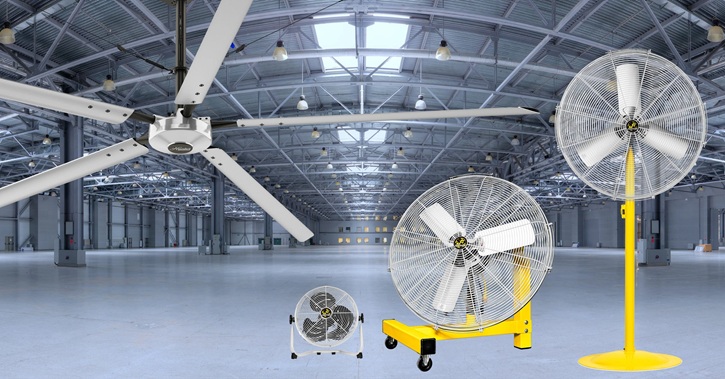
Air circulation fans are available in several configurations, each designed for specific airflow requirements and installation conditions. Types include:
Portable Air Circulation Fans: Portable fans provide flexibility and can be repositioned wherever airflow is needed. They are commonly used in maintenance operations, temporary cooling, drying projects, workshops, and localized airflow.
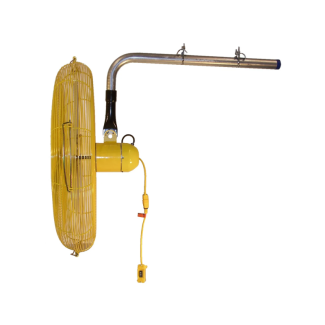
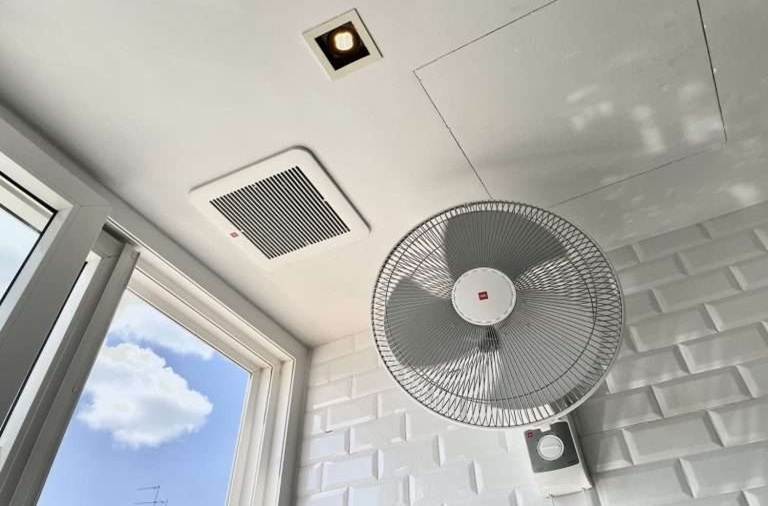
Wall Mounted Air Circulation Fans: Wall mounted units save valuable floor space while delivering targeted airflow across large areas. Fan diameters commonly range from 18 to 36 inches and can move between 3,000 and 15,000 CFM.
Pedestal Air Circulation Fans: Pedestal fans feature adjustable heights and directional controls. These units work well in workshops, warehouses, and commercial facilities where adaptable airflow is required.
High-Velocity Air Circulation Fans: High-velocity fans generate powerful airflow over long distances. Models often deliver 5,000 to 25,000+ CFM and are ideal for large industrial environments.
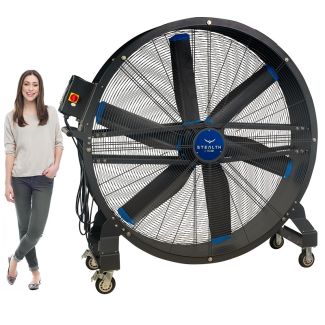
Drum and Barrel Fans: Often used interchangeably, drum and barrel fans feature large cylindrical housings and oversized blades designed to move high volumes of air across warehouses, garages, workshops, and other large spaces. Common sizes range up to 96 inches and can provide airflow exceeding 20,000 CFM in industrial settings.
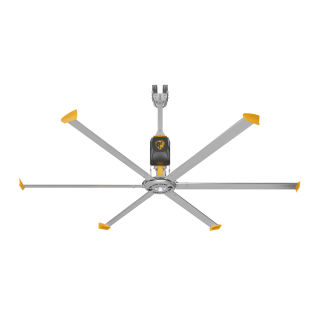
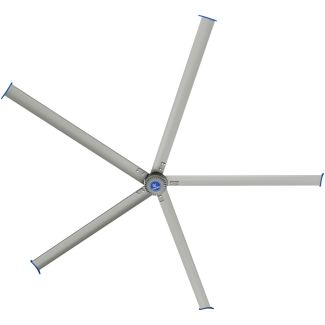
HVLS Fans: High Volume Low Speed fans are designed to move enormous quantities of air while consuming relatively little energy. Diameters frequently range from 8 to 24 feet, with airflow coverage areas exceeding 20,000 square feet.
Explosion-Proof Fans: Fans designed for hazardous locations are intended for environments where flammable gases, vapors, or combustible dust may be present. Fan construction, motors, electrical components, and installation requirements depend on the specific hazardous-location classification and applicable standards.
Floor Fans: Floor mounted fans provide economical airflow for commercial and residential applications. Compact models typically range from 1,000 to 8,000 CFM depending on the size and motor configuration.
The right fan type depends on your application’s specific layout and environmental conditions. Floor and wall mounted fans are useful where localized or targeted airflow is needed, while specialized fans for hazardous locations are selected based on specific environmental and safety requirements.
Air circulation fan performance varies based on airflow capacity, fan size, motor technology, construction, and application. Understanding these specifications can help businesses select the right commercial or industrial fan for effective air movement, cooling, and space circulation.
Airflow Capacity (CFM): CFM, or cubic feet per minute, measures how much air a fan moves. Small commercial units may produce 1,500 CFM, while industrial HVLS systems can exceed 300,000 CFM. Proper airflow sizing ensures adequate air movement throughout the target area.
Fan Size: Fan diameters vary widely depending on the application. Smaller commercial circulation fans are designed for localized airflow, while large-diameter HVLS fans move significant volumes of air across expansive commercial, industrial, warehouse, and agricultural spaces.
Speed Settings: Multiple speed options provide greater control over airflow performance. Variable-speed controls can provide more precise airflow management and may help improve energy efficiency.
Oscillation and Directional Control: Oscillating, tilting, and adjustable-head designs improve coverage area and airflow distribution. These features are particularly beneficial in environments with changing occupancy patterns such as specific workspaces, equipment areas, or occupied zones.
Durable Construction: Industrial-grade fans may utilize steel housings, powder-coated finishes, aluminum blades, and heavy-duty motors. These materials improve longevity and resistance to demanding operating conditions.
Noise Level: Noise output is important in offices, retail spaces, gyms, and other occupied environments. Fan noise depends heavily on fan type, speed, measurement distance, and testing conditions. Quieter models may operate below 60 dB, while large industrial units often exceed 70 dB under maximum load.
Energy Efficiency: Energy-efficient motors reduce operating costs while delivering high airflow performance. Electronically commutated motors (ECMs) and advanced motor technologies often provide significant energy savings compared to traditional motors.
Air circulation fans deliver the best results when paired intentionally with your facility's layout and climate goals. To optimize comfort during intense summer peaks, manage heavy airborne dust, or treat unoccupied zones, you can seamlessly integrate air circulation units alongside specialized equipment like air purifiers, energy recovery ventilators, or dehumidifiers for a complete environmental control solution.
Beyond airflow and construction, several additional considerations, including those involving installation requirements, operating conditions, electrical specifications, and maintenance needs can all affect fan selection and long-term performance.
Application and Environment: The intended application will influence the required fan design. Indoor warehouses, outdoor loading docks, agricultural facilities, and manufacturing operations often have unique airflow needs.
Mounting Options: Floor mount, wall mount, ceiling mounted, and pedestal mounted designs each offer distinct advantages. Evaluate available installation space before selecting a configuration.
Operating Conditions: Consider ambient temperatures, humidity levels, dust exposure, and potential chemical contaminants. Certain models are specifically designed for harsh industrial environments.
Power Requirements: Commercial air circulation fans may operate on 115V, 208V, 230V, or 460V electrical systems. Verifying voltage compatibility is essential before installation.
Maintenance Requirements: Routine maintenance may include cleaning blades, inspecting guards, lubricating bearings, or replacing belts. Choosing low-maintenance models can reduce long-term ownership costs.
Safety Features: Protective guards, thermal overload protection, OSHA-compliant construction, and automatic shutoff systems improve operational safety. Hazardous-location fans may require specialized certifications.
Hazardous or High Dust Environments: Applications involving combustible dust, flammable materials, or other hazardous conditions may require specially rated equipment and specific certifications. Review the site requirements and applicable codes and standards to determine the appropriate fan, motor, enclosure, and electrical configuration.
Before purchasing, confirm that the fan's voltage, phase, mounting configuration, airflow requirements, environmental rating, and other specifications are appropriate for the installation site.
HVACDirect.com offers air circulation fans from recognized manufacturers, such as Big Ass Fans, Canarm, Hunter, and more, known for quality construction, reliable performance, and proven airflow solutions.
Big Ass Fans: Big Ass Fans specializes in large-scale airflow solutions. Their products are widely used in warehouses, distribution centers, manufacturing facilities, and recreational venues. They also make barrel fans and wall mounted fans. Their AirEye or Black Jack fans are top models.
Canarm: Canarm offers a broad selection of commercial and industrial fans, including wall mounted, pedestal, and exhaust solutions. The brand has built a reputation for durability and value. Their air circulating fans feature aluminum blades and heavy-gauge steel panels.
Hunter: Hunter fans combine dependable performance with energy-efficient operation. Many models are designed for commercial and light-industrial applications. They also make wall and ceiling mounted fans. Hunter Jan Fan air circulation fans are a popular option of high-powered fans made to move large volumes of air.
iLiving: iLiving produces a variety of circulation and ventilation products suitable for workshops, garages, warehouses, and agricultural facilities. Their models often provide an attractive balance between price and performance. Their Super Turbo High Velocity Floor Fan provides up to 7500 CFM of cooling relief for workshops and garages.
MaxxAir: MaxxAir is known for rugged industrial airflow products including drum fans, pedestal fans, and high-velocity circulation equipment. Their products are commonly found in commercial facilities and work environments, including the popular High Velocity Floor Fans featuring larger metal-blade units designed for workshops, garages, and localized cooling.
Triangle Engineering: Triangle Engineering manufactures industrial-grade circulation fans designed for demanding applications. Their products emphasize air delivery performance, durability, and long service life. They have a wide range of products for lots of applications that range up to 84" in size over 50,000 CFM.
Each manufacturer offers unique strengths, allowing facility managers and property owners to select products tailored to their specific needs.
The cost of an air circulation fan ranges from $65 to $15,000+, depending on size, airflow capacity, installation requirements, and construction quality.
Entry-Level Pricing: Small portable and floor fans typically start under $100. These models are appropriate for workshops, garages, small commercial spaces, and localized airflow applications.
Commercial-Grade Pricing: Wall mounted fans, pedestal fans, and high-capacity industrial models commonly range from $500 to $5,000 or more depending on airflow performance.
Installation Costs: The professional installation labor for a standard residential air circulation or ceiling fan typically costs $0 to $360, though expenses vary based on electrical requirements, fan type, mounting location, lift equipment needs, and labor rates. Most can be plugged into a standard outlet, while larger HVLS fans may require professional installation.
Operating Expenses: Most air circulation fans consume substantially less energy than air conditioning systems. Depending on motor size and usage patterns, annual operating costs may range from under $50 for smaller models to several hundred dollars for large industrial fans.
Investing in properly sized air circulation equipment can improve comfort and potentially reduce HVAC operating costs over the long term. When a fan is too small or too large for a space, it disrupts the intended airflow dynamics and can make HVAC equipment and the fans themselves work harder than needed, driving up energy bills.
HVACDirect.com offers a comprehensive selection of airflow products backed by industry expertise, direct-to-consumer pricing, and top brand selections.
Wide Selection of Airflow Solutions: HVACDirect.com offers air circulation fans suitable for residential, commercial, industrial, agricultural, and warehouse applications. Multiple configurations make it easy to find the right solution.
Trusted Brands: Customers can choose from respected manufacturers that are known for quality performance and reliable operation. Access to leading brands simplifies the buying process.
Competitive Pricing: Direct-to-consumer pricing helps customers maximize value without sacrificing quality. A wide range of budget options ensures solutions for virtually every application.
Product Support and Expertise: HVACDirect.com's experienced team can assist with fan selection, airflow sizing, installation considerations, and product comparisons. This guidance helps ensure customers purchase equipment that meets their needs.
Convenient Online Shopping: Detailed specifications, product information, and online ordering capabilities make it easy to compare products and complete purchases from anywhere.
Whether you're outfitting a warehouse, greenhouse, gym, workshop, or retail facility, HVACDirect.com provides the products, expertise, and support needed to achieve effective air circulation.

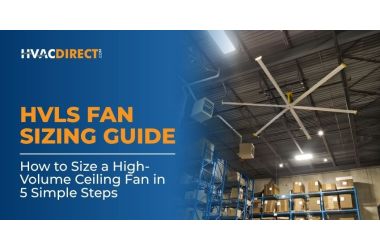

Start by calculating the room's volume in cubic feet using length × width × height. Then determine the desired number of air changes per hour (ACH). For many commercial applications, 4 to 10 ACH is common. Divide the resulting airflow requirement by 60 to determine the minimum CFM needed from your fan system.
The required CFM depends on the size and purpose of the space. Small workshops may need only 2,000 to 5,000 CFM, while warehouses often require 20,000 CFM or more. Choosing the proper CFM rating ensures effective air movement without excessive energy consumption.
The number of fans required depends on square footage, ceiling height, airflow capacity, and building layout. A 5,000-square-foot warehouse may require several high-velocity fans if there are multiple zones with walls or objects blocking airflow or a single properly sized HVLS fan for a large, open space. Facilities with obstacles, equipment, or partitioned spaces may require additional units to eliminate dead-air zones.
Fans should generally be installed where airflow can travel unobstructed across occupied areas. Wall mounted and pedestal fans should direct air toward the center of the space, while HVLS fans are typically installed near the center of the building. Proper positioning maximizes coverage and minimizes airflow interference.
Most commercial-grade air circulation fans are engineered for continuous-duty operation. Premium industrial motors are often designed to run 24 hours a day when properly maintained. Always review manufacturer specifications regarding duty cycle and operating conditions.
Many industrial air circulation fans are specifically designed for elevated-temperature environments such as manufacturing facilities, warehouses, and mechanical rooms. Some models can safely operate in ambient temperatures exceeding 100°F. Always verify the manufacturer's temperature rating before installation.
Yes, many industrial models are built for dusty conditions with specific fans intended for workshops, agricultural buildings, and manufacturing facilities often featuring enclosed motors, durable housings, and protective coatings. In highly dusty environments, routine cleaning and maintenance are especially important.
High-quality commercial fans commonly provide 10 to 20 years of service when properly maintained. Lifespan depends on operating conditions, maintenance practices, motor quality, and usage frequency. Industrial-grade construction generally delivers longer service life than consumer-grade alternatives.
Warranty periods vary by manufacturer and product type, with many commercial circulation fans including warranties ranging from 1 to 5 years. Some premium systems offer significantly longer coverage. Always review warranty terms for details regarding motors, blades, electronics, and labor coverage.
Mold thrives in damp, stagnant environments and air circulation fans continuously move air across surfaces, aiding moisture evaporation and reducing humidity accumulation. While fans do not replace dehumidification or proper ventilation, they can play an important role in moisture control and mold prevention strategies.