Your cookie preferences
We use cookies to remember your preferences and understand how shoppers use our site, helping us improve your shopping experience.
Read our privacy policy
An outdoor kitchen is a permanently installed or semi-permanent cooking and entertaining space built for use outside, typically centered around a built-in gas grill set into a weather-resistant island or cabinet structure with countertop space, storage, and optional appliances like refrigerators, sinks, side burners, and pizza ovens. Unlike a portable grill you push to the corner of the patio, an outdoor kitchen is a designed space built to stay outside and function the way an indoor kitchen does, just with fresh air and more room for guests.
Outdoor kitchens work by combining a structural island base made from stainless steel, stone, concrete, stucco, or poly lumber with a built-in grill and any combination of cooking appliances and accessories the space calls for. Gas grills connect to a natural gas line or propane tank running into the island cavity. Refrigerators, sinks, and beverage centers connect to electrical circuits or plumbing routed to the island. The island base provides access doors for utility connections and storage drawers for grilling accessories, keeping everything organized and within reach while you cook.
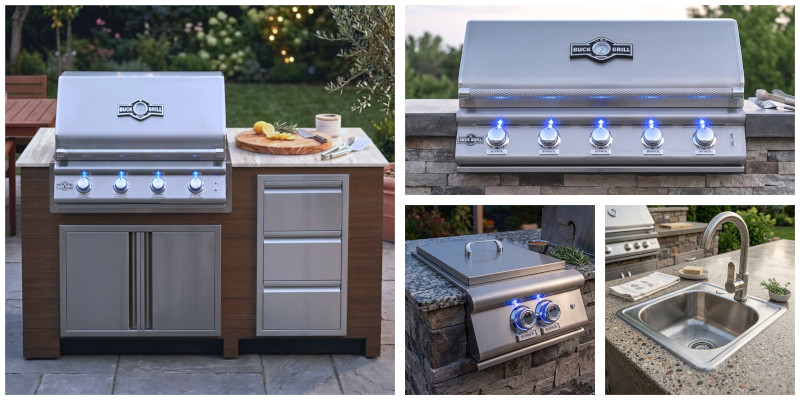







An outdoor kitchen is a permanently installed or semi-permanent cooking and entertaining space built for use outside, typically centered around a built-in gas grill set into a weather-resistant island or cabinet structure with countertop space, storage, and optional appliances like refrigerators, sinks, side burners, and pizza ovens. Unlike a portable grill you push to the corner of the patio, an outdoor kitchen is a designed space built to stay outside and function the way an indoor kitchen does, just with fresh air and more room for guests.
Outdoor kitchens work by combining a structural island base made from stainless steel, stone, concrete, stucco, or poly lumber with a built-in grill and any combination of cooking appliances and accessories the space calls for. Gas grills connect to a natural gas line or propane tank running into the island cavity. Refrigerators, sinks, and beverage centers connect to electrical circuits or plumbing routed to the island. The island base provides access doors for utility connections and storage drawers for grilling accessories, keeping everything organized and within reach while you cook.
An outdoor kitchen is one of the most used and highest-return outdoor investments a homeowner can make. If you cook outside regularly or entertain during warm months, the case for one is straightforward. Here is what makes it worth the investment.
Increased Home Value: Outdoor kitchens are one of the few backyard improvements that consistently add resale value. A well-built outdoor kitchen with quality appliances and a finished island makes a property more attractive to buyers and sets a home apart in a competitive market. The combination of an outdoor living space and functional cooking area is a premium feature that appraisers recognize.
Outdoor Entertaining: An outdoor kitchen changes how you entertain because instead of disappearing into the house to cook while your guests are outside, you stay in the middle of the gathering. The island itself becomes the social hub, with counter seating, a grill in arm's reach, and drinks in the outdoor refrigerator. Lion Premium Grills' outdoor BBQ island lineup and the Bull Outdoor Products series at HVACDirect.com are both designed with this flow in mind, with counter space on each side of the grill for prep and serving.
Convenient Cooking: Having everything you need outdoors eliminates the back-and-forth trips to the indoor kitchen that slow down the cooking process. A complete outdoor kitchen with a built-in grill, side burner, refrigerator, and sink lets you prep, cook, plate, and clean up without ever going inside. The Infinity Living 6FT and 8FT outdoor kitchen islands at HVACDirect.com include countertop workspace, storage access doors, and a built-in 32-inch 4-burner gas grill in a single ready-to-use package.
Custom Layouts: Outdoor kitchens are not one-size-fits-all. HVACDirect.com offers islands ranging from compact 6-foot straight configurations up to L-shaped and larger setups for bigger entertaining spaces. The Lion Premium Grills lineup includes the 6-foot Prominent Q, the 7-foot Sensational Q and Advanced Q, and 8-foot configurations including the straight Resort Q and the L-shaped American Q and Commercial Q, giving you the ability to match the layout to your specific outdoor space.
Dining Outdoors: Cooking and eating outside in the same space is a fundamentally different experience from carrying plates out to a patio table. An outdoor kitchen with bar-height counter seating or adjacent dining furniture turns the backyard into a destination rather than an overflow space.
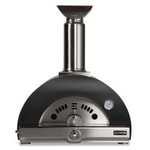
Added Functionality: The right components expand what you can do outdoors beyond grilling. A side burner handles seafood boils, wok cooking, and sauces. An outdoor pizza oven adds a whole different cooking method. A beverage center or refrigerator keeps cold drinks and ingredients close. An outdoor sink makes cleanup practical rather than an afterthought. HVACDirect.com carries all of these components individually and as part of complete outdoor kitchen packages.
The more you cook and entertain outside, the faster an outdoor kitchen pays for itself in convenience, enjoyment, and the value it adds to the property.
Outdoor kitchens work across a wide range of outdoor environments, from a small urban patio to a large resort-style backyard. The right configuration depends on the available space and how the area is used.
Commercial and Multi-Family Communities: Apartment communities, HOA-managed properties, resorts, restaurants with outdoor dining, and country clubs all use outdoor kitchens to create shared amenity spaces. A Bull Outdoor Products island or Lion Premium Grills setup handles the heavy use and frequent cleaning that a commercial or multi-family environment demands, and the built-in grill and counter setup makes it easy for multiple people to use the space across different occasions.
Backyards: The backyard is the most common outdoor kitchen location. Whether the goal is a simple 6-foot island with a built-in grill and counter, like the Infinity Living 6FT model, or a larger L-shaped setup with refrigeration and a sink, the backyard provides the space, the utility access, and the privacy to build a functional outdoor kitchen without compromise.
Patios: A patio is often the natural landing spot for an outdoor kitchen because it already has a flat, durable surface for the island base and is typically close to the house for utility connections. Compact 6 to 8-foot straight islands fit most standard patio footprints without overwhelming the space.
Decks: Decks are a common outdoor kitchen location, but they require attention to weight load, ventilation, and fire clearance from combustible framing materials. The island and grill must be positioned to meet local code requirements for clearances, and the deck structure needs to support the weight of a full outdoor kitchen island. Stainless steel island bases are typically the better choice on a wood deck because they are lighter than stone or concrete options.
Pool Areas: An outdoor kitchen beside a pool turns the pool area into a complete outdoor entertainment zone. Guests can move between the pool and the grill without going inside, and the refrigerator keeps poolside drinks and food cold and within reach. Bull Outdoor Products' L-shaped island configurations work particularly well in pool settings where the layout can wrap around a corner of the pool deck.
Rooftop Terraces: Rooftop outdoor kitchens in urban settings require careful planning around weight loads, wind exposure, waterproofing, and utility access, but the results are worth it for the views and the year-round use they enable. Modular stainless steel island systems are typically the best fit for rooftop applications because of their lower weight and the ability to configure them to unusual dimensions.
Utility access is the most important practical factor when choosing a location. The island needs to be close enough to a gas supply, electrical circuit, and water connection for the appliances you plan to include, and routing those utilities to a location far from the house adds meaningfully to installation cost.
The right outdoor kitchen type depends on your budget, how permanent you want the installation to be, and how much space and cooking capability you need. HVACDirect.com carries several formats across the brands in the outdoor kitchen lineup.
Modular Kitchens: Modular outdoor kitchens are pre-designed island systems built from individual component sections that connect together, typically arriving mostly assembled or ready to assemble on-site. They are faster to install than fully custom builds, available in a range of standard configurations, and easier to reconfigure if your space changes.
Built-In Kitchens: A fully built-in outdoor kitchen is constructed in place using masonry, concrete block, or stucco over a steel frame, then finished with tile, stone veneer, or stucco and topped with a stone or concrete countertop. This is the most permanent and customizable option, and it is typically what you see in high-end outdoor living features.
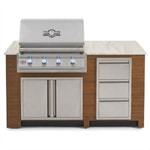
Island Kitchens: A straight island configuration is the most common outdoor kitchen format, a single rectangular island with a built-in grill at the center and counter space and storage on each side. The Infinity Living 6FT island with Travertine countertop and Woodgrain Poly Lumber base and the Infinity Living 8FT version are two of the top picks of this type of outdoor kitchen.
L-Shaped Kitchens: An L-shaped outdoor kitchen adds a perpendicular wing to the main island, creating significantly more counter space, storage, and the ability to integrate more appliances without extending the footprint in a single direction. The Lion American Q and Commercial Q are both 8-foot L-shaped configurations at HVACDirect.com, as are several Bull Outdoor Products models including the Gourmet Q and the 77-inch Patio Q. L-shaped layouts work well for larger entertaining areas and pool decks where the corner of the space can be anchored by the kitchen.
U-Shaped Kitchens: A U-shaped outdoor kitchen adds a third section opposite the two wings of an L-shape, creating a cooking workspace that surrounds the chef on three sides with maximum counter and appliance space. This configuration suits large outdoor entertaining areas with ample square footage and the utility access to support the full perimeter of components. It is the most expansive format and typically involves the largest Bull Outdoor Products or Lion Premium Grills island configurations available.
If you are not sure which format fits your space, HVACDirect.com carries outdoor kitchen packages that bundle pre-selected combinations of appliances and island configurations together, taking much of the guesswork out of the design process while still giving you the performance of individual top-tier components.
The most useful outdoor kitchen features depend on how often you cook outside, how many people you typically serve, and whether you want a basic grilling station or a complete outdoor food-preparation area. Key features typically include the size, grill, and add-on features.
Multiple Sizes and Lengths: Island size determines how many components you can include and how comfortably multiple people can use the space at once. HVACDirect.com carries outdoor kitchen islands from compact 6-foot straight configurations up to large multi-section L-shaped setups. The right size depends on your available footprint and how many cooking stations and appliances you need to include.
Different Color, Material, and Finish Options: The exterior material of the island base affects both durability and aesthetics. Common options include stainless steel, stone veneer, stucco, and the woodgrain HDPE poly lumber base used on Infinity Living islands. For a more modern or industrial look, you can also opt for rust-proof powder-coated aluminum, realistic weatherproof resin molding, traditional stacked brick, or raw weathered steel. Countertop materials include travertine stone on Infinity Living islands, as well as granite, soapstone, sintered stone, and freeze-proof porcelain tile options across the rest of the lineup. Matching these finishes to your home’s architectural style ensures visual cohesion, while choosing a material that specifically suits your regional climate and maintenance preferences upfront saves significant money and effort over time.
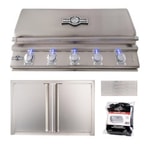
Built-In Grills: The grill is the anchor of any outdoor kitchen. High-quality islands feature heavy-gauge brushed stainless steel construction paired with durable cast burners that offer long-term warranties. Premium options typically include large multi-burner configurations designed for high-performance, serious outdoor cooking. To ensure maximum compatibility with your existing home utilities, these built-in island grills are widely available in both natural gas and liquid propane configurations. For example, Infinity Living islands usually include a 32-inch 4-burner built-in gas grill.
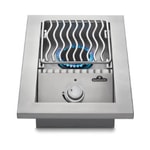
Side Burners: A side burner adds a high-output gas burner for cooking tasks that do not belong on the grill, such as sauces, seafood boils, wok cooking, and large stock pots. For example, Lion Premium Grills offers both single and double drop-in gas side burners as individual components, and several Lion island configurations include side burners as part of the package.
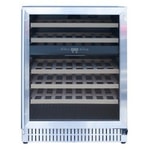
Outdoor Refrigerators: An outdoor refrigerator keeps ingredients, beverages, and condiments cold without requiring trips to the indoor kitchen. There are outdoor refrigeration options that are standalone components that integrate into any island with an appropriately sized access opening as well as built-in options. Outdoor-rated refrigerators are specifically built for the temperature fluctuations and humidity of an exterior installation.
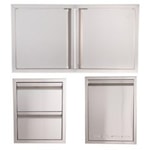
Storage Cabinets: Access doors and storage drawers in the island base keep grilling tools, propane tanks, and utensils organized and protected. Most Lion and Bull island configurations include multiple access doors and drawers, with the number and layout varying by model. Keeping everything at the grill rather than walking back to the house is one of the most practical advantages of a well-equipped outdoor kitchen.
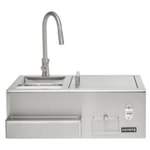
Bar and Sink Options: An outdoor sink turns cleanup from a chore into a practical part of the cooking flow, and a bar center or beverage station makes entertaining more self-contained. You can buy them in a package or add them individually as you expand your outdoor space.
You should start with the grill and island size that fits your space and cooking habits, then add components based on what will actually get used. A side burner and refrigerator cover most use cases well without adding unnecessary complexity to the installation.
Additional factors affect installation complexity, cost, and how the kitchen functions in your specific outdoor space and typically include the counter type, fuel type, and surface material. The island and appliances are only part of the planning equation.
Counter and Dining Space: Counter space on each side of the grill serves as prep area while cooking and serving space when food is ready. Wider islands and L-shaped configurations provide substantially more usable surface area. If you plan to have guests seated at the island while you cook, a bar-height wing with counter overhang accommodates bar stools and creates that layout naturally in L-shaped Bull and Lion island configurations.
Utility Connections (Gas, Electric, or Water): A gas grill requires either a natural gas line run from the house or a propane tank stored in the island cavity. All Lion, Bull, and Infinity Living islands at HVACDirect.com are available in both natural gas and propane configurations. An outdoor refrigerator requires a dedicated outdoor-rated electrical circuit. A sink requires a supply line and a drain. All utility connections must be installed by licensed professionals and permitted in most jurisdictions. Routing utilities to the island location is one of the most significant variables in total installation cost.
Countertop Material: Island configurations commonly feature premium travertine stone, natural stone, or tile countertop surfaces specifically engineered for outdoor durability. To preserve their appearance and integrity, most of these natural outdoor materials must be sealed periodically to prevent deep staining and moisture penetration. The only exceptions are high-performance surfaces explicitly specified as maintenance-free by the manufacturer. For example, Infinity Living islands come with a travertine stone countertop included.
Weather Protection: A covered structure above the outdoor kitchen significantly extends the life of the appliances and makes the space more usable in variable weather. A pergola, shade sail, or covered patio above the kitchen protects appliances from direct UV exposure and standing water after rain. A grill cover over the built-in grill during extended non-use periods is also recommended across all three brands.
Failing to plan utility connections early is one of the most common ways outdoor kitchen projects run over budget. Gas line extensions, electrical circuit runs, and plumbing connections all need to be factored into the total project cost before the island is purchased, not after.
HVACDirect.com carries several outdoor kitchen brands, including Infinity Living, Lion Premium Grills, and Bull Outdoor. Each has a distinct approach to materials, configuration, and price point.
Infinity Living: Infinity Living is the only brand in the HVACDirect.com outdoor kitchen lineup that uses a woodgrain HDPE poly lumber island base rather than traditional masonry or stainless steel. Their 6FT and 8FT outdoor kitchen islands pair this maintenance-free, weatherproof base with a travertine stone countertop and a 32-inch 4-burner built-in gas grill. Because the poly lumber base is the same material used throughout their outdoor furniture line, it never needs painting, staining, or refinishing regardless of the weather it sees. For homeowners who want a premium-looking outdoor kitchen with genuinely zero base maintenance, Infinity Living is the standout option in the lineup.
Lion Premium Grills: Lion Premium Grills has been building outdoor kitchen islands and built-in grills since 1992 and is credited as a pioneer of the pre-built outdoor kitchen as a product category. Their islands are built with commercial-grade 16-gauge brushed stainless steel and feature cast stainless steel burners backed by a lifetime warranty. HVACDirect.com carries the full Lion island lineup from compact 6-foot configurations through 8-foot straight and L-shaped setups, each customizable for fuel type and component selection. If commercial-grade stainless steel construction and a wide range of island size options are priorities, Lion is the right brand.
Bull Outdoor: Bull Outdoor Products pioneered the concept of outdoor barbecue islands designed specifically for backyard enthusiasts who want professional-quality outdoor cooking. Their island lineup at HVACDirect.com includes some of the largest configurations available, with L-shaped setups spanning from 77 inches up to the flagship Gourmet Q. Bull islands are built for serious outdoor entertaining with generous counter space, robust construction, and configurations designed around high-output cooking setups. For homeowners who want the largest, most fully equipped outdoor kitchen in the lineup, Bull is the top choice.
All three brands build products designed to stay outside year-round, and all offer natural gas and propane options. The primary differentiators are the island base material and aesthetic, the range of sizes and layouts available, and the scale of outdoor entertaining each brand is best suited for.
The total cost to install a pre-built outdoor kitchen typically ranges from $4,500 to $15,000+ once equipment, utility extensions, and assembly are factored in. Outdoor kitchen costs vary based on the island size, brand, number of appliances, and whether gas, electrical, and plumbing connections need to be extended to the installation location. Here is a realistic breakdown across the main cost categories.
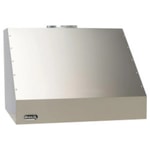
Equipment Cost: Complete BBQ island packages range from approximately $4,000 for basic straight configurations up to $13,000 or more for large, fully loaded L-shaped setups with premium features. Most standard 6- to 8-foot pre-built islands fall in the $5,000 to $8,000 range. Individual add-ons like outdoor refrigerators, sinks, pizza ovens, and range hoods are priced separately and will add $500 to $3,000+ to the total for custom setups.
Installation Cost: Extending utilities to the island location represents a significant variable expense if needed. Running a new natural gas line or extending electricity typically costs between $500 and $2,000 per utility, depending on the distance from your house. Adding a water line and drainage for a sink can add another $600 to $2,500, bringing total on-site utility and installation costs to anywhere from $500 to $6,500+. These costs can be lower if you already have a water line, electricity access, and other utilities set up.
Operation Cost: Ongoing operating costs are relatively low, generally running $10 to $50 per month depending on fuel type and usage. Natural gas is the most cost-effective option for frequent grilling, while propane tanks cost $20 to $40 per refill. Outdoor refrigerators or lighting add a modest $5 to $15 per month in electricity. Overall, an outdoor kitchen's operating costs are highly comparable to a moderately used indoor kitchen.
Maintenance Cost: Routine upkeep averages $50 to $200 annually. Premium bases like HDPE poly lumber require no painting or sealing, while stainless steel and stone options need occasional cleaning or sealing products costing $20 to $60 per year. Replacing worn internal grill components, like burners or grates, every few years averages $100 to $300.
Before construction begins, check with your local building department, as building, electrical, or plumbing permits are usually required when extending permanent utility lines or framing structures. Permit fees vary by municipality but generally range from $50 to $250 per utility, or a flat fee of $200 to $600 for a comprehensive outdoor project permit.
HVACDirect.com is a direct-to-buyer source for outdoor kitchens and BBQ island components from top brands in the industry, with competitive pricing and the support to help you build the right outdoor kitchen for your space.
Wide Selection: HVACDirect.com carries complete BBQ island packages, outdoor kitchen component packages, individual installation parts, sinks and bar centers, outdoor range hoods, outdoor refrigeration, and outdoor pizza ovens in one place. Configurations span from compact 6-foot straight islands to large L-shaped setups across all three brands in the lineup.
Trusted Brands: Every brand in the HVACDirect.com outdoor kitchen lineup is an established manufacturer with a real track record. Lion Premium Grills has been building outdoor kitchen islands since 1992. Bull Outdoor Products pioneered the outdoor barbecue island category. Infinity Living backs every island with the same quality standards and weatherproof materials used across their outdoor furniture line.
Competitive Pricing: HVACDirect.com offers competitive pricing on the full outdoor kitchen lineup, including significant discounts on many island configurations. We also offer a 100% Lowest Price Guarantee where we will beat a lower price by 10% if found elsewhere.
Shipping Options: Outdoor kitchen islands ship as freight items given their size and weight. HVACDirect.com coordinates freight shipping to your location and provides guidance on receiving large freight shipments. Shipping is normally free, unless stated otherwise.
Product Support: HVACDirect.com's team is available by phone, email, and live chat to help you work through those decisions before you order. We assist with other pre- and post-sales questions. Our team specializes in this equipment and industry, unlike the staff you may encounter at a general brick and mortar store.
Online Convenience: You can browse the full outdoor kitchen and BBQ island lineup at HVACDirect.com with detailed product specs, pricing, and configuration options for every model from the comfort of your home on your own time. You can also filter by fuel type, island size, number of burners, material, and brand to narrow your options quickly.
Being able to browse online by yourself also removes any sales pressure from the purchase. If you need our help choosing an outdoor kitchen, you can call or chat with one of our expert tech support representatives at any time.

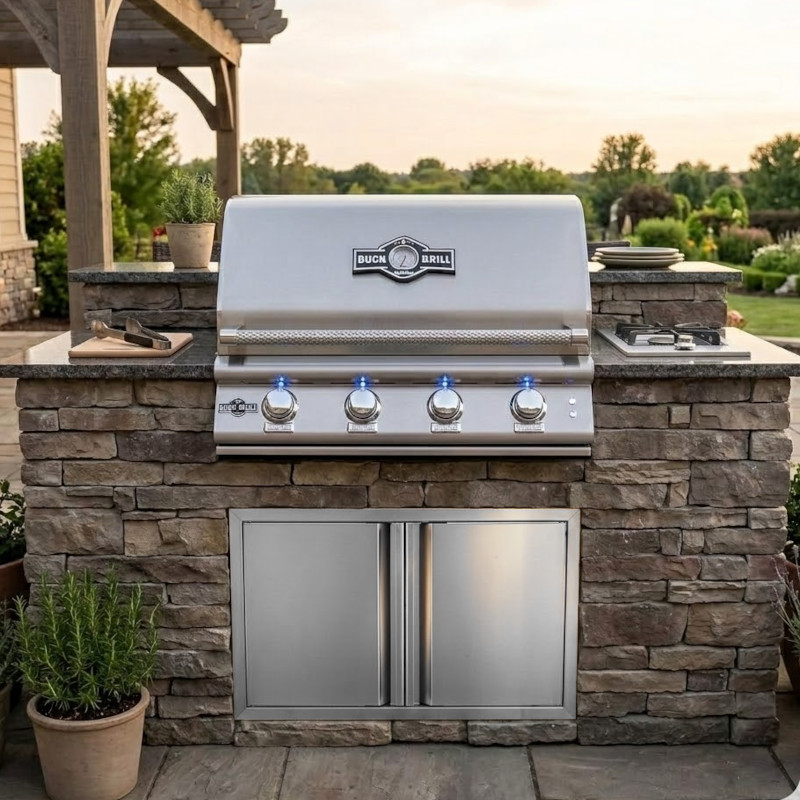
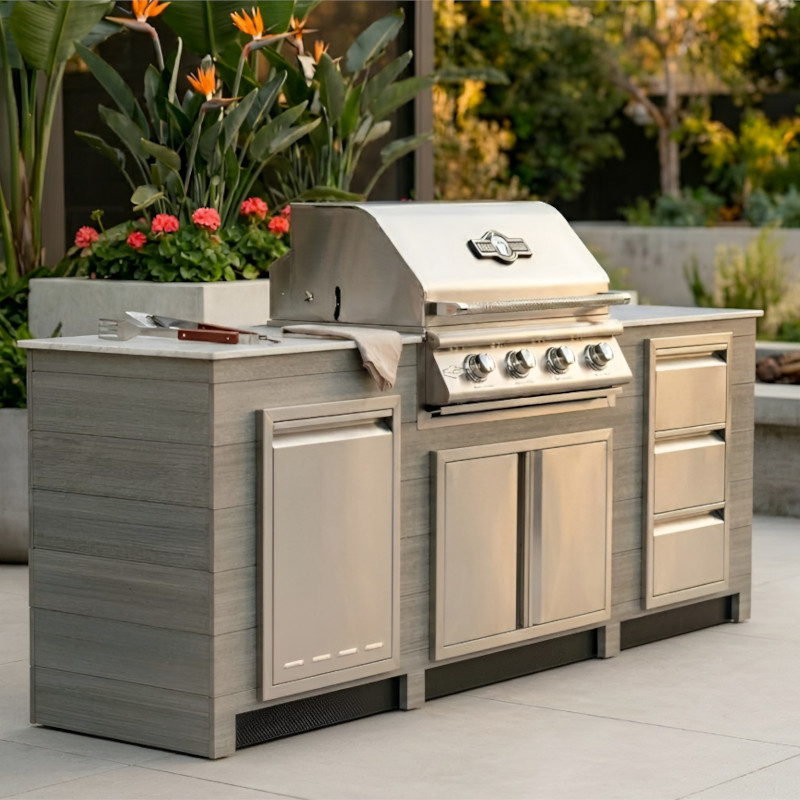
A quality outdoor kitchen built with stainless steel components, weather-resistant island materials, and proper installation can last 20 years or more with routine maintenance. The longevity depends on the island base material, the grill quality, and how well appliances are maintained when not in use.
Outdoor kitchens are built for permanent outdoor installation. The level of protection needed during off-season or harsh weather depends on the materials and your climate. Stainless steel bases benefit from a grill cover over the built-in grill during winter months or extended non-use periods. The Infinity Living poly lumber base requires no covers or seasonal preparation. In climates with freezing temperatures, any plumbing connections to an outdoor sink should be winterized to prevent damage to supply lines.
A covered structure above the outdoor kitchen significantly extends the life of the appliances and makes the space more usable in variable weather. A pergola, shade sail, or covered patio protects appliances from direct UV exposure and standing water after rain. That said, all outdoor kitchen islands at HVACDirect.com are built for outdoor use without a cover requirement, and a grill cover for the built-in appliance handles the most critical protection during extended non-use periods.
A gas grill needs either a natural gas line or a propane tank, and all Lion, Bull, and Infinity Living islands at HVACDirect.com are available in both fuel configurations. An outdoor refrigerator requires a dedicated outdoor-rated electrical circuit. A sink requires both a supply line and a drain connection. All utility connections must be installed by licensed professionals and permitted in most jurisdictions.
All gas-powered outdoor kitchen islands at HVACDirect.com are available in natural gas configurations. Natural gas eliminates the need to monitor propane tank levels and is generally the more convenient and cost-effective fuel for homeowners who grill frequently. It requires a gas line run from the house to the island location by a licensed plumber or gas fitter, which is an upfront installation cost but a long-term convenience.
All gas-powered islands at HVACDirect.com are available in propane configurations, and most island bases include an access door sized for a standard propane tank stored in the island cavity. Propane is the right choice when a natural gas line is not available or practical to extend to the outdoor kitchen location.
Not necessarily, but most homeowners end up wanting at least one electrical component. An outdoor refrigerator, beverage center, or range hood all require a dedicated outdoor-rated circuit. A basic grill-and-counter setup without refrigeration can be built with no electrical connections. If refrigeration is part of the plan, a licensed electrician needs to run a dedicated outdoor-rated circuit to the island location before installation.
A sink, or bar, is not a standard component in most base island configurations but is available as an add-on. If you add a sink or bar, a licensed plumber needs to run both a supply line and a drain line to the island location, with the drain connecting to the home's sewer system or an approved dry well depending on local code.
The best material depends on the climate, aesthetic, and maintenance commitment. Stainless steel island frames and components are the most common because they resist rust and hold up in most outdoor environments. The Infinity Living poly lumber base is the most genuinely maintenance-free option, requiring no painting, sealing, or refinishing at any point. Stone veneer and stucco finishes create a high-end built-in look but require more maintenance in freeze-thaw climates. All outdoor countertops should be stone or tile rated for exterior use, sealed periodically, and chosen for the specific conditions of your environment.
Yes, but deck structure must be assessed for load-bearing capacity relative to the weight of the island and appliances, and clearances between the grill and any combustible decking or framing must meet both the manufacturer's specifications and local fire code. A stainless steel island base is typically the better choice on a wood deck because it is lighter than masonry alternatives. You should check with a licensed contractor or structural engineer if you have questions about your specific deck's capacity before positioning an outdoor kitchen on it.
The island base and countertop assembly can often be completed by a capable homeowner, particularly with modular configurations designed for easier assembly. However, the gas connection, any electrical circuits for refrigeration or vent hoods, and any plumbing for a sink must be handled by licensed professionals in virtually every jurisdiction. A complete outdoor kitchen installation that includes all three utility types is a multi-trade project involving a licensed plumber, electrician, and possibly an HVAC contractor for the range hood.