Your cookie preferences
We use cookies to remember your preferences and understand how shoppers use our site, helping us improve your shopping experience.
Read our privacy policyRequired Fields *
In stock
WHY DO I NEED A CHIMNEY LINER?
A chimney liner is a very important part of the installation of a wood-burning appliance when venting into a masonry chimney. All appliances are tested to perform with a pipe of the same diameter as the collar of the appliance. It is expected that this diameter pipe will be used until the venting terminates above the chimney or building. When the smoke leaves the appliance or pipe (if the chimney is left unlined) the smoke expands. When it expands it cools. When it cools, the smoke doesn't travel upward as fast which slows the draft. This causes condensation in the form of creosote on the inside of the fireplace and chimney walls. This creosote is still flammable and if a hot enough fire is burned can ignite and cause a chimney fire. The creosote has to be cleaned from the inside of the chimney more regularly to avoid a chimney fire.
Key Terms
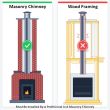
WARNING: Installing a chimney liner or chimney liner components in any space other than a code-compliant masonry chimney is extremely dangerous, creates a severe fire hazard and voids any and all warranties. To ensure safety and compliance with building codes, the liner type and material must match the approved appliance and fuel type, and installation must only be performed by a licensed or certified installation professional. See the installation for further details.
WHY DO I NEED A CHIMNEY LINER?
A chimney liner is a very important part of the installation of a wood-burning appliance when venting into a masonry chimney. All appliances are tested to perform with a pipe of the same diameter as the collar of the appliance. It is expected that this diameter pipe will be used until the venting terminates above the chimney or building. When the smoke leaves the appliance or pipe (if the chimney is left unlined) the smoke expands. When it expands it cools. When it cools, the smoke doesn't travel upward as fast which slows the draft. This causes condensation in the form of creosote on the inside of the fireplace and chimney walls. This creosote is still flammable and if a hot enough fire is burned can ignite and cause a chimney fire. The creosote has to be cleaned from the inside of the chimney more regularly to avoid a chimney fire.
Key Terms
WARNING: Installing a chimney liner or chimney liner components in any space other than a code-compliant masonry chimney is extremely dangerous, creates a severe fire hazard and voids any and all warranties. To ensure safety and compliance with building codes, the liner type and material must match the approved appliance and fuel type, and installation must only be performed by a licensed or certified installation professional. See the installation for further details.
WHY DO I NEED A CHIMNEY LINER?
A chimney liner is a very important part of the installation of a wood-burning appliance when venting into a masonry chimney. All appliances are tested to perform with a pipe of the same diameter as the collar of the appliance. It is expected that this diameter pipe will be used until the venting terminates above the chimney or building. When the smoke leaves the appliance or pipe (if the chimney is left unlined) the smoke expands. When it expands it cools. When it cools, the smoke doesn't travel upward as fast which slows the draft. This causes condensation in the form of creosote on the inside of the fireplace and chimney walls. This creosote is still flammable and if a hot enough fire is burned can ignite and cause a chimney fire. The creosote has to be cleaned from the inside of the chimney more regularly to avoid a chimney fire.
Key Terms
WARNING: Installing a chimney liner or chimney liner components in any space other than a code-compliant masonry chimney is extremely dangerous, creates a severe fire hazard and voids any and all warranties. To ensure safety and compliance with building codes, the liner type and material must match the approved appliance and fuel type, and installation must only be performed by a licensed or certified installation professional. See the installation for further details.
WHY DO I NEED A CHIMNEY LINER?
A chimney liner is a very important part of the installation of a wood-burning appliance when venting into a masonry chimney. All appliances are tested to perform with a pipe of the same diameter as the collar of the appliance. It is expected that this diameter pipe will be used until the venting terminates above the chimney or building. When the smoke leaves the appliance or pipe (if the chimney is left unlined) the smoke expands. When it expands it cools. When it cools, the smoke doesn't travel upward as fast which slows the draft. This causes condensation in the form of creosote on the inside of the fireplace and chimney walls. This creosote is still flammable and if a hot enough fire is burned can ignite and cause a chimney fire. The creosote has to be cleaned from the inside of the chimney more regularly to avoid a chimney fire.
Key Terms
WARNING: Installing a chimney liner or chimney liner components in any space other than a code-compliant masonry chimney is extremely dangerous, creates a severe fire hazard and voids any and all warranties. To ensure safety and compliance with building codes, the liner type and material must match the approved appliance and fuel type, and installation must only be performed by a licensed or certified installation professional. See the installation for further details.
WHY DO I NEED A CHIMNEY LINER?
A chimney liner is a very important part of the installation of a wood-burning appliance when venting into a masonry chimney. All appliances are tested to perform with a pipe of the same diameter as the collar of the appliance. It is expected that this diameter pipe will be used until the venting terminates above the chimney or building. When the smoke leaves the appliance or pipe (if the chimney is left unlined) the smoke expands. When it expands it cools. When it cools, the smoke doesn't travel upward as fast which slows the draft. This causes condensation in the form of creosote on the inside of the fireplace and chimney walls. This creosote is still flammable and if a hot enough fire is burned can ignite and cause a chimney fire. The creosote has to be cleaned from the inside of the chimney more regularly to avoid a chimney fire.
Key Terms
WARNING: Installing a chimney liner or chimney liner components in any space other than a code-compliant masonry chimney is extremely dangerous, creates a severe fire hazard and voids any and all warranties. To ensure safety and compliance with building codes, the liner type and material must match the approved appliance and fuel type, and installation must only be performed by a licensed or certified installation professional. See the installation for further details.
WHY DO I NEED A CHIMNEY LINER?
A chimney liner is a very important part of the installation of a wood-burning appliance when venting into a masonry chimney. All appliances are tested to perform with a pipe of the same diameter as the collar of the appliance. It is expected that this diameter pipe will be used until the venting terminates above the chimney or building. When the smoke leaves the appliance or pipe (if the chimney is left unlined) the smoke expands. When it expands it cools. When it cools, the smoke doesn't travel upward as fast which slows the draft. This causes condensation in the form of creosote on the inside of the fireplace and chimney walls. This creosote is still flammable and if a hot enough fire is burned can ignite and cause a chimney fire. The creosote has to be cleaned from the inside of the chimney more regularly to avoid a chimney fire.
Key Terms
WARNING: Installing a chimney liner or chimney liner components in any space other than a code-compliant masonry chimney is extremely dangerous, creates a severe fire hazard and voids any and all warranties. To ensure safety and compliance with building codes, the liner type and material must match the approved appliance and fuel type, and installation must only be performed by a licensed or certified installation professional. See the installation for further details.