Key Takeaways
- Built-In Grills Offer a Permanent Outdoor Cooking Solution: Designed to integrate into outdoor kitchens, built-in grills provide a seamless look, durable construction, and long-term cooking performance.
- Gas Grills Provide Convenience and Control: Easy ignition, precise temperature control, and simple cleanup make gas grills ideal for frequent outdoor cooking.
- The Right Grill Depends on Size and Features: Selecting the proper size, construction materials, and burner configuration ensures better performance, efficiency, and long-term durability.
Article Contents
When creating the perfect outdoor kitchen, a built-in gas grill is a must-have. Whether you are planning a weekend barbecue with the family or just having a dinner cookout, choosing the right grill transforms your backyard into a food lover's paradise. This guide will lead you through everything you need to know about built-in gas grills, from the features to choosing the best model for your outdoor space.
What is a Built-in Grill?
A built-in grill is a permanent outdoor cooking appliance that is designed to be installed directly into a countertop or outdoor kitchen structure. Unlike freestanding or portable grills, these provide a permanent, seamless, integrated look that blends into the rest of your outdoor space. They are available in a variety of fuel types, including gas and charcoal.
Built-in vs Freestanding Grills
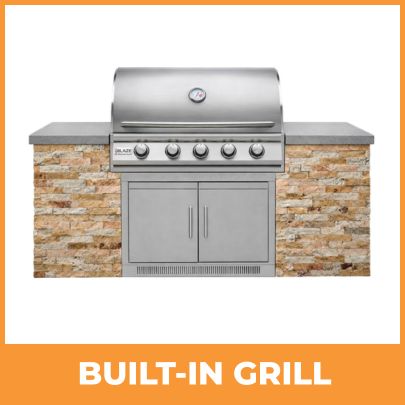
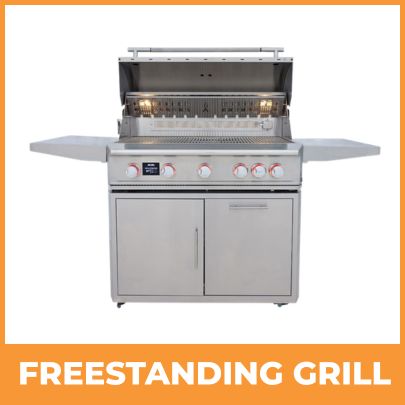
The main difference between built-in and freestanding grills lies in installation and mobility. Freestanding grills are self-contained units with wheels, making them portable and easy to move around your patio or breezeway. Built-in grills, in contrast, require a supporting structure, such as a kitchen island, on which they can be installed. Once installed, these grills are permanent and cannot be moved. Built-in models are often more durable, built to withstand being outside year-round and exposed to different weather conditions. They frequently have greater heating capacities and larger cooking surfaces than other types of grills.
Why Choose a Built-in Grill for Your Outdoor Space
If you're serious about outdoor cooking and love family cookouts, a built-in gas grill is the way to go. Built-in grills are perfect for homeowners who view their outdoor space as an extension of their home. If you grill frequently and want commercial-grade performance, a built-in grill is the best choice.
Compared with other grill types, built-in grills typically last much longer, rendering them a better long-term investment. They frequently have greater heating capacities and additional features. However, be sure to plan for one if you are looking to buy, since you’ll be committing to having the grill in a specific location.
Gas Built-in Grill Fuel Types
Gas grills are the most popular choice for built-in installations. They can run on either propane or natural gas.
Natural Gas Grills
Natural gas models connect directly to your gas line, giving you an endless supply of fuel. Natural gas is typically less expensive per BTU than propane, making it the more economical choice. If you choose this type, you must have a licensed professional install a gas line, which increases the installation cost.
Propane Grills
Propane models come with a refillable tank, so you’ll need to refill it at a store like Menards or Lowe's. Unlike natural gas, you don’t need a gas line to use them, rendering them a more flexible choice. Propane also burns hotter than natural gas, which some grill enthusiasts prefer for high-heat searing.
Benefits of Using Gas
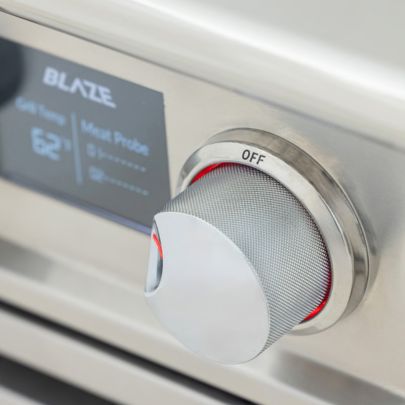
Gas grills normally come with a push-button ignition and knobs for precise temperature control. Unlike with other fuel types like charcoal and pellets, you won’t have any residue to clean up after use. With zoning, you can sear steaks on high heat on one side and grill vegetables on medium heat on the other. Overall, gas-built-in grills are great if you grill a lot, offering easy cleanup and maintenance and the ability to cook different foods at different temperatures simultaneously.
Built-in Grill Sizes and Cooking Area
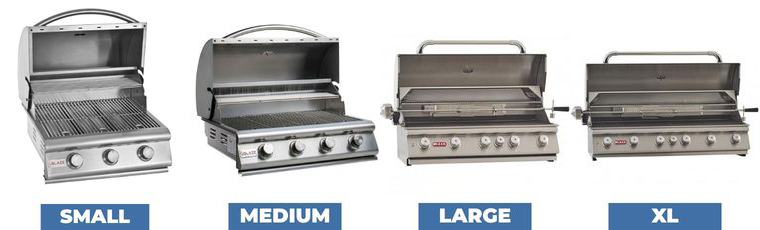
Choosing the right grill size for your home depends mainly on how many people you typically cook for and how much space you have in your outdoor kitchen. The bigger your grill is, the more burners you can have and the higher the BTUs (look for 800-100 BTUs per square inch of cooking surface for the best performance). At HVACDirect.com, we typically break them up into 4 different sizes.
Small (Up to 26 Inches)
Small grills up to 26 inches wide offer approximately 400 to 500 square inches of cooking surface and typically produce between 20,000 and 30,000 BTUs. They are ideal for smaller outdoor spaces and can comfortably prepare meals for 2 to 4 people.
Medium (27–33 Inches)
Medium grills between 27 and 33 inches provide around 500 to 700 square inches of cooking space, delivering 30,000 to 50,000 BTUs. The most common built-in grill size is 32 inches, usually featuring 3 to 4 burners. These grills can easily serve 6 to 8 people.
Large (34–42 Inches)
Large grills typically range from 34 to 42 inches wide and offer 700 to 900+ square inches of cooking space with 50,000+ BTUs. With room for 4 to 5 burners, they can prepare meals for 10 to 15 people, making them ideal for large families or frequent entertainers.
Extra Large (43+ Inches)
Extra-large grills measuring 43 inches or more provide over 1,000 square inches of cooking space and can serve 20 or more people. These grills are well-suited for hosting large gatherings, church events, or community parties.
Features to Consider When Choosing Your Built-in Grill
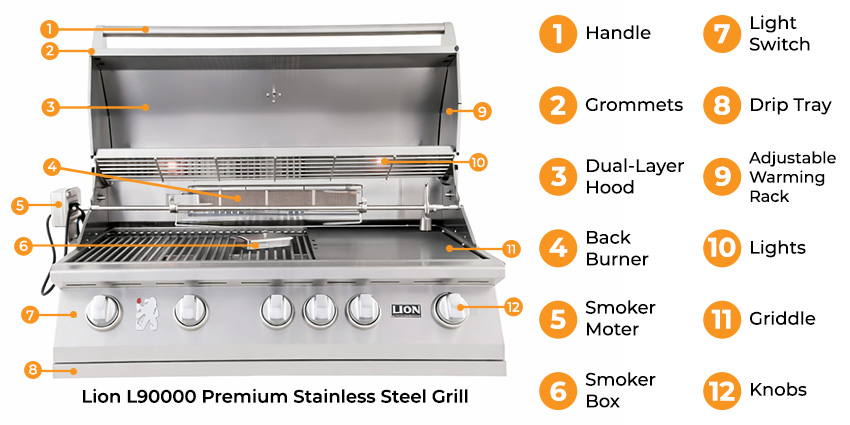
Here are some top features to consider, in addition to size, when buying a built-in grill.
Build Material for Built-in Gas Grills
The construction material of your grill determines its durability, longevity, and resistance against weather changes.
- 304 Stainless Steel - The standard for most built-in gas grills. They are highly corrosion-resistant in all climates and last a long time, protecting grill housing, burners, cooking grates, and internal components.
- 430 Stainless Steel - Less corrosion-resistant than 304 but performs better at sustained high heat, making it great for searing. Some manufacturers use both grades, placing 430 in high-heat areas that benefit from its heat-handling properties.
- Painted or Porcelain-Coated Steel - It’s more cost-effective, but it's much less corrosion-resistant than the other two. The material chips, scratches, and wears down over time. This exposes the steel to moisture, which can lead to rust and a shorter lifespan, particularly in humid or coastal environments. If you have a grill made of this material, make sure it is in a covered, weather-resistant area.
Burner Count and Configuration
You can buy grills with different numbers and styles of burners.
Burner Count
Built-in gas grills typically have 1 to 6 burners, with the most popular choice being 4 to 5. The number of burners you have determines how many types of food you can cook at different temperatures simultaneously (often called temperature zones). For example, you can sear a steak at high heat in one zone and grill vegetable skewers on medium heat in another zone.
The shape and arrangement of burners also control the evenness of heating. Well-designed burner layouts ensure consistent temperature across the entire cooking surface, eliminating hot and cold spots that can lead to inconsistent cooking.
Burner Materials
Like grills, burners also come in different materials that vary in durability and heat output. Here's a breakdown from basic to premium:
- Porcelain Steel Tube - Cheapest, most basic material with average performance and a short lifespan.
- Cast Iron - Retains heat well but can rust if not properly maintained.
- Porcelain Coated Cast Iron - Slightly better rust protection but will chip and scratch easily.
- Stainless Steel Tube - Durable and corrosion-resistant, a solid mid-range option.
- U or H Shaped Stainless-Steel Tube - Better heat coverage than straight tubes.
- Cast stainless steel (straight) – A premium choice, offering outstanding durability and exceptionally even heat distribution.
- U- or H-shaped cast stainless steel or cast brass – The top-tier option for burners, providing maximum durability, corrosion resistance, and heat retention. These rarely need replacement, even with heavy use.
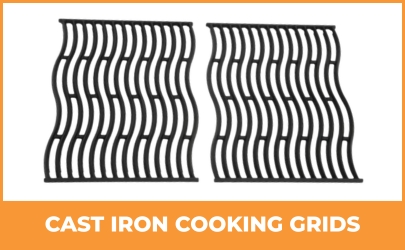
Cooking Grids
Cooking grids are the metal bars that you place the food on. They come in materials like the burners.
- Porcelain-Coated Rods - Budget-friendly, but not very durable. It chips easily, and the thin rods don’t retain heat well.
- Porcelain-Coated Cast Iron: Delivers strong sear marks, but coating can wear, leading to rust over time.
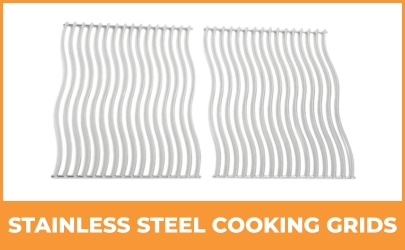
- Stainless steel rods – The top choice for most buyers, as they resist corrosion, handle high heat, and are easy to clean. Heavier-gauge rods retain heat better and deliver excellent sear marks.
Heat Distribution Systems
Heat distribution systems are designed to spread heat evenly, protect burners from drippings, and reduce flare-ups for safer, more consistent grilling.
- Stainless Steel Heat Shields - They reduce flare-ups and prolong burner life by deflecting heat upward and outward, and by catching drips before they reach the burners.
- Briquettes with Stainless Grate - They evenly absorb and radiate heat while vaporizing drippings, creating smoke that adds flavor. They produce more smoke and flavor than stainless steel shields alone, giving a charcoal taste.
Ignition Systems
The ignition system determines how reliably your grill starts and how long the system lasts.
- Piezo Ignition - Push-and-click button creates a spark. Cheapest option, no batteries needed, but the shortest lasting in stress tests as the mechanism wears from heat and moisture exposure.
- Battery-Operated Ignition – Offers longer lifespan and more reliable sparking than piezo systems. Uses AA or AAA batteries for simple push-button starts, with only occasional battery changes required.
- Flame Thrower Ignition – The premium, longest-lasting option. A spark lights a flash tube that delivers flame to the main burner, while the igniter remains outside the cooking chamber to avoid heat and moisture, greatly extending its service life.
Other Features to Look for in Built-in Gas Grills
Built-in gas grills often come with extra features you won’t find on standard grills.
- Internal lights – Integrated LED lighting in the grill hood makes it easy to cook after dark, letting you monitor food and temperatures without relying on patio lights or flashlights. Ideal for nighttime gatherings and entertaining.
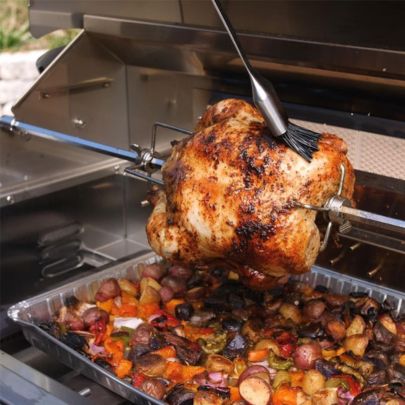
- Rotisserie burners – A feature many overlook, rear-mounted infrared burners paired with a motorized spit allow you to slow-roast whole chickens, roasts, or large cuts. The rotating motion delivers even cooking and self-basting, delivering juicy, flavorful results and turning your grill into a true outdoor oven.
- Grease management systems – Entry-level grills use small disposable cups that fill quickly and can be messy. Higher-quality models feature pull-out stainless-steel trays accessible from the front, making removal and cleaning simple while holding more grease for longer cooking sessions.
- Heat zone separators – Available on premium grills, these physical barriers separate cooking areas so you can grill foods at different temperatures side by side, with no heat transfer.
Must-Have Accessories for Built-in Gas Grills
Consider these accessories to protect your grill and expand your cooking options.
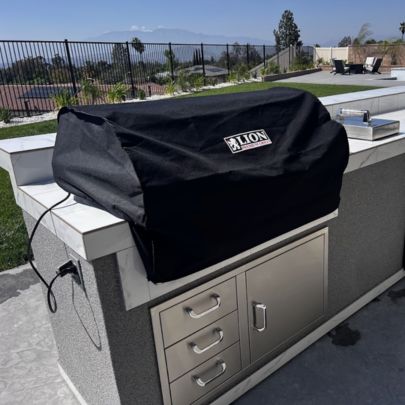
- Grill Covers – Shield your grill from rain, snow, sun, and debris when it’s not in use, helping it last longer.
- Rotisserie Kits – An optional kit that allows meat to rotate slowly for roasting.
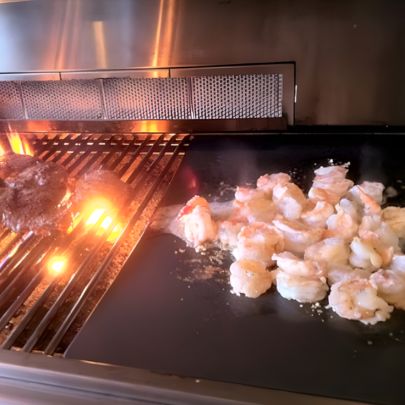
- Griddle Plates – Swap out your grids for a flat-top surface, perfect for breakfast, smash burgers, stir-fries, or anything that might slip through standard grates.
Top 5 Built-in Grill Brands
Here are some top-selling built-in gas grill brands on HVACDirect.com.
Aspire Built-in Grills
Aspire grills deliver premium features at competitive prices, including infrared rear burners, LED lighting, and heavy-duty stainless-steel construction. With excellent heat distribution and solid build quality, Aspire is a smart option for homeowners seeking professional-grade features without the high price.
Blaze Built-in Grills
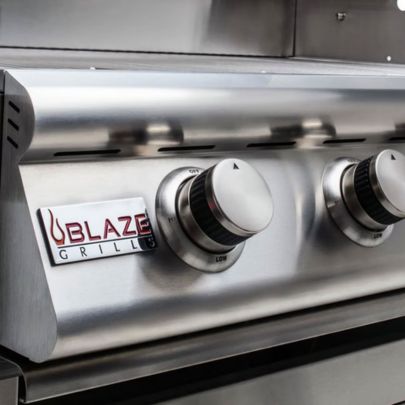
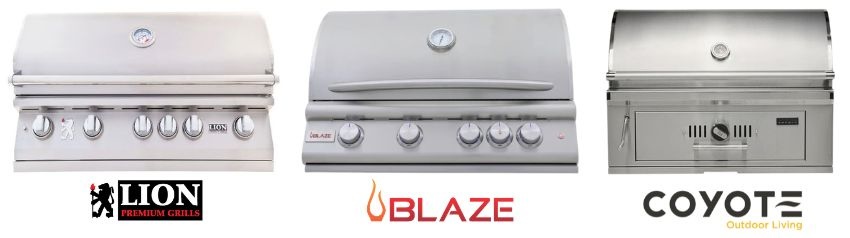
Blaze is known for combining quality construction with affordability. Their lineup features commercial-grade stainless steel, cast-brass burners, and innovative flame-stabilizing grids. With models ranging from 25 to 44 inches and strong warranties, Blaze delivers excellent value for both new buyers and experienced grillers.
Buck Built-in Grills
Buck grills are built for simple, dependable performance, focusing on the essentials. With quality stainless steel construction and efficient burner systems, Buck is ideal for cost-conscious buyers who prioritize reliability and low maintenance over additional features.
Coyote Built-in Grills
Coyote grills, made in the USA, feature innovative Infinity Burners designed for edge-to-edge heat coverage with no cold spots. Built entirely from premium 304 stainless steel, they are engineered for durability—even in harsh coastal climates.
Standard features include interior grill lights, heat zone separators, and precision temperature gauges, reflecting Coyote’s commitment to serious outdoor cooking performance.
Lion Premium Built-in Grills
Lion grills deliver luxury-level performance with commercial-grade stainless steel construction, ceramic rod flame tamers, and powerful burners for outstanding cooking results. The L90000 series showcases Lion’s premium craftsmanship, offering build quality comparable to professional equipment.
These grills are designed for homeowners who view their outdoor kitchen as a long-term investment in quality and performance.
Other Brands
We also carry built-in gas grills from leading brands such as Bull Outdoor Products, Hestan, Le Griddle, Napoleon, PGS, RCS, Summerset, and Sunstone Grills.
How to Choose the Right Built-in Grill for Your Outdoor Kitchen
Begin by evaluating how often you grill and what types of meals you plan to prepare. Measure your outdoor kitchen space, making sure to allow for proper clearances around the grill. Decide between natural gas and propane based on your setup, then set a realistic budget. Research brands and read customer reviews. Whenever possible, inspect grills in person to assess build quality, burner layout, and cooking grid materials. Heavier, thicker components usually signal better durability. Finally, review warranty coverage—look for at least two years on major parts, with longer coverage on burners and fireboxes preferred.
Shop Built-in Outdoor Grills at HVACDirect.com
If you’re ready to upgrade your outdoor kitchen, explore our full selection of premium built-in gas grills and take the next step toward building your ideal outdoor entertaining space.