Key Takeaways
- An Outdoor-Only Replacement Is Sometimes Possible: If a compatible replacement condenser is approved for your existing indoor coil or air handler, uses the same refrigerant, and meets the manufacturer's requirements, you may not need to replace the entire system.
- Refrigerants and Components Cannot Be Mixed Freely: Some R-410A-era indoor coils can be retained with a new R-454B or R-32 condenser when the manufacturer lists the exact combination and requires an A2L mitigation board or kit. Refrigerant type, pressure ratings, metering devices, controls, safety requirements, and all manufacturer instructions still apply.
- An A2L Sensor Is Not a Compatibility Adapter: In an approved transition combination, the specified A2L mitigation board and refrigerant sensor can provide the required leak detection and safety response. The kit must be the one specified by the manufacturer; a generic board or sensor cannot make an otherwise unapproved indoor coil suitable for a new A2L refrigerant.
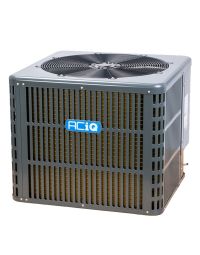
When the outdoor portion of a central air conditioner fails, replacing only that unit can sound like the simplest and least expensive solution. Sometimes it is. However, a central split system is not a collection of interchangeable parts. The outdoor condenser and the indoor evaporator coil work together as one refrigerant circuit, and the combination determines the system's capacity, efficiency, humidity control, reliability, and safety.
The arrival of lower-global-warming-potential refrigerants such as R-454B and R-32 makes equipment matching even more important. These refrigerants are classified as A2L, or lower-flammability refrigerants, and must be used only in equipment designed and approved for them. Some manufacturers permit specific R-410A-era indoor coils to remain in service with a new A2L condenser when the specified mitigation board, refrigerant sensor, metering device, and controls are installed. That approval must cover the exact model combination.
Can You Replace Only the Outdoor AC Unit?
Yes, in some cases you can replace only the outdoor AC unit. The replacement condenser must be compatible with the existing indoor coil or air handler, use the correct refrigerant, provide the appropriate capacity, and meet the equipment manufacturer's installation requirements. A qualified HVAC professional should verify the combination before installation.
EPA rules allow homeowners to continue operating and repairing existing air-conditioning systems. That can include replacing a failed R-410A condensing unit with a similar R-410A service component. The fact that new systems are transitioning to lower-GWP refrigerants does not mean every existing R-410A system must immediately be replaced.
The answer is usually no when the proposed outdoor unit uses a different refrigerant, the existing indoor coil is not approved for the new unit, or no certified equipment match is available. In those situations, replacing the outdoor unit and indoor coil together is generally the safer and more dependable approach.
Why Do the Indoor and Outdoor AC Units Need to Match?
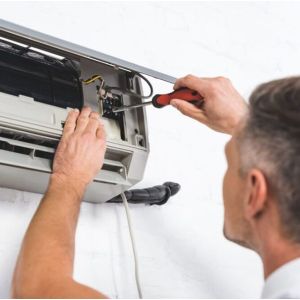
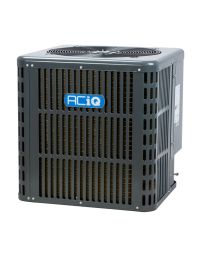
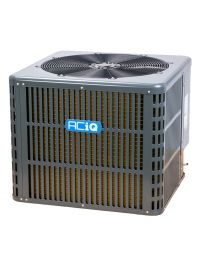
A split-system air conditioner has two main heat-transfer components. The indoor evaporator coil absorbs heat from the home's air, while the outdoor condensing unit releases that heat outside. Refrigerant continuously circulates between them. Because both components share the same circuit, their design characteristics must work together.
An approved match considers factors such as:
- Refrigerant Type: Both sides must be designed and approved for the refrigerant in the system.
- System Capacity: The indoor coil and outdoor unit must be sized to deliver the intended performance.
- Operating Pressures: Coils, valves, tubing, and other refrigerant-side components must be rated appropriately.
- Metering Device: The thermostatic expansion valve, electronic expansion valve, or piston must meet the manufacturer's specifications.
- Airflow: The blower and duct system must move the amount of air required by the matched equipment.
- Controls and Communication: Variable-capacity and communicating systems may require specific indoor controls or equipment.
- Efficiency Certification: Published SEER2, EER2, and heating ratings apply to specific tested combinations, not arbitrary component pairings.
AHRI certifies the performance of complete indoor-and-outdoor combinations. A valid AHRI certificate identifies the model numbers that were tested as a matched system. That certificate may also be required for certain rebates, incentives, or tax-credit documentation.
A mismatched system may still turn on and produce cool air. That does not establish that it is properly sized, efficient, reliable, code-compliant, or manufacturer-approved. Problems may include reduced capacity, poor dehumidification, excessive energy use, icing, abnormal refrigerant pressures, compressor damage, control problems, and loss of warranty protection.
How Do R-22, R-410A, R-454B, and R-32 Affect Replacement?
Start by checking the outdoor unit's nameplate. It normally identifies the refrigerant for which the equipment was designed. That refrigerant is one of the first factors determining whether an outdoor-only replacement is practical.
| Existing System | Outdoor-Only Replacement | Important Limitation |
|---|---|---|
| R-22 | Replacement options are limited and should use equipment specifically approved for the existing application. | Do not connect a standard R-410A, R-454B, or R-32 condenser to an R-22 indoor coil. |
| R-410A | A compatible R-410A service condenser may be used to repair an existing system. | Confirm the indoor-coil match, capacity, metering device, manufacturer requirements, and local code. |
| R-454B | Use only an R-454B unit approved for the indoor equipment and installation. | Required A2L detection and mitigation components must be installed exactly as specified. |
| R-32 | Use only an R-32 unit approved for the indoor equipment and installation. | R-32 equipment, controls, safety measures, and service procedures must be designed for R-32. |
R-22 Systems
R-22 equipment operates differently from modern R-410A and A2L systems. An R-22 indoor coil should not be connected to an R-410A condenser because of differences that include operating pressures and equipment design. With most R-22 systems now well into their service lives, a full-system replacement often makes more financial sense than attempting a major repair with scarce or specialized components.
R-410A Systems
Existing R-410A systems may continue to be used and repaired. EPA guidance specifically recognizes replacement of a failed R-410A condensing unit with a similar R-410A component as a repair. Service components manufactured after the applicable transition date must be labeled for servicing existing equipment, but the transition does not make existing R-410A air conditioners illegal.
R-454B and R-32 Systems
R-454B and R-32 are lower-GWP refrigerants used in new residential equipment. Both are classified as A2L refrigerants. They have lower toxicity and lower flammability than refrigerants in more flammable classifications, but their use requires equipment and installation practices designed around that classification.
Do not treat R-454B or R-32 as drop-in replacements for R-410A. However, an existing R-410A-era indoor coil may sometimes be retained as part of a manufacturer-approved transition system. In that situation, the manufacturer identifies the eligible coil and condenser models and specifies the A2L mitigation board or kit, refrigerant sensor, metering device, controls, and installation procedures. When installed and commissioned as directed, that mitigation system provides the intended leak detection and safety response. A general assumption that any recent indoor coil will work—or that a generic mitigation board is sufficient—is not acceptable.
What Does an A2L Refrigerant Sensor Actually Do?
A refrigerant detection sensor monitors for a potential A2L refrigerant leak. When the system detects a concentration that triggers its mitigation controls, it may stop compressor operation and activate the indoor blower or other approved measures to dilute and disperse refrigerant. The exact response depends on the equipment design and manufacturer's instructions.
An A2L sensor does not:
- Change the pressure rating of an older indoor coil.
- Make an R-410A expansion valve suitable for R-454B or R-32.
- Change seals, joints, electrical components, controls, or drain-pan construction.
- Prove that the indoor and outdoor units are an approved match.
- Create an AHRI-certified combination.
- Override the manufacturer's installation instructions or local building code.
The sensor is only one part of an engineered mitigation system. Depending on the equipment and installation, that system may include a factory or field-installed sensor, a control board or mitigation control, specific blower operation, wiring, alarms, cabinet requirements, and minimum room-volume or ductwork provisions. Every required component must be installed and commissioned as directed.
When Can an A2L Mitigation Board Allow the Existing Coil to Stay?
A mitigation board can be used to retain an existing R-410A-era indoor coil when the equipment manufacturer has evaluated and approved that exact coil for use with the selected R-454B or R-32 condenser. The board connects the refrigerant sensor to the approved system controls so the equipment can respond to a detected leak, commonly by stopping compressor operation and operating the indoor blower as specified.
This can be a practical option when the indoor coil is relatively new, leak-free, correctly sized, appropriately pressure-rated, and listed in the manufacturer's transition documentation. The installer must also use the specified expansion device and follow all instructions for refrigerant recovery, line-set preparation, wiring, airflow, charge, commissioning, labeling, and code compliance.
Even when a transition combination is approved, replacing the indoor coil may provide better long-term value if the existing coil is older, corroded, out of warranty, difficult to match, or likely to need repair soon. A complete matched A2L system also avoids relying on future availability of R-410A service equipment and can provide clearer efficiency ratings, warranty coverage, and replacement-part support.
When Does Replacing Only the Outdoor Unit Make Sense?
An outdoor-only replacement is most reasonable when:
- The indoor coil or air handler is relatively new and in good condition.
- The replacement outdoor unit uses the same refrigerant as the existing system.
- The manufacturer approves the exact indoor-and-outdoor model combination.
- The capacity and required indoor airflow are appropriate for the home.
- The existing metering device is correct or can be replaced with the specified device.
- The refrigerant lines are appropriately sized, clean, leak-free, and permitted for reuse.
- A qualified installer can commission the combination according to the manufacturer's instructions.
- The repair cost is reasonable compared with the age and condition of the remaining equipment.
This option can reduce the immediate equipment cost and avoid discarding a useful indoor component. The decision should still account for the age of the furnace or air handler, the length of any remaining warranty, and the likelihood that another major component will soon need replacement.
When Should You Replace the Indoor and Outdoor Units Together?
A complete matched-system replacement is generally the better choice when:
- No approved refrigerant transition exists: The proposed condenser uses R-454B or R-32, but the manufacturer does not approve the existing indoor coil with the required mitigation kit.
- No approved match exists: The manufacturer or AHRI directory does not identify the proposed combination.
- The indoor equipment is aging: An older coil, blower, or furnace may be near the end of its useful life.
- The indoor coil leaks or is corroded: Keeping a compromised coil can turn a less expensive repair into repeated service calls.
- The system is improperly sized: Repeating the old capacity without a load calculation may preserve comfort and humidity problems.
- Efficiency is a priority: The published rating of a modern outdoor unit generally depends on a specific indoor match.
- Warranty or incentives matter: A mismatched combination may not qualify for full warranty coverage, rebates, or efficiency incentives.
- Major modifications are already required: If the project needs a new coil, controls, metering device, or extensive refrigerant-circuit work, a complete replacement may provide better long-term value.
Replacing both sides also gives the installer an opportunity to verify the home's cooling load, ductwork, electrical service, drain arrangement, filtration, airflow, and thermostat. That does not automatically mean the furnace must be replaced, but the new indoor coil or air handler must be compatible with both the cooling equipment and any retained heating equipment.
What Should Be Checked Before Buying a Replacement Condenser?
Record the model and serial numbers from both the outdoor unit and indoor coil or air handler. Then ask the installer or equipment provider to verify each of the following:
- Refrigerant: What refrigerant does each component use?
- Manufacturer Approval: Does the manufacturer approve the exact indoor-and-outdoor combination?
- AHRI Match: Is there an AHRI certificate for the complete combination?
- Capacity: Is the equipment sized from an appropriate load calculation rather than the old unit alone?
- Metering Device: Which TXV, electronic valve, or piston is required?
- Airflow: Can the blower and ductwork deliver the required airflow?
- Line Set: Are the existing lines the correct sizes and suitable for reuse under the manufacturer's instructions?
- Controls: Are a specific thermostat, communicating control, sensor, or control board required?
- A2L Mitigation: If applicable, which detection and mitigation components are required?
- Warranty: Will the proposed combination retain the expected parts and compressor coverage?
- Code and Permits: Does the installation comply with current local mechanical, electrical, and building requirements?
- Commissioning: Will the installer verify charge, airflow, temperature split, static pressure, drainage, and system operation?
Buying by nominal tonnage alone is not enough. Two units described as “3 ton,” for example, are not necessarily interchangeable. Their refrigerant, compressor design, controls, approved coils, and certified performance may be different.
Repair the Existing System or Move to a New Refrigerant?
A compatible repair can be a sensible way to extend the life of a relatively young R-410A system. A complete transition to new equipment may be more attractive when the system is old, inefficient, unreliable, poorly sized, or already facing multiple repairs.
Compare the options using the total cost of ownership rather than the condenser price alone:
- Immediate equipment and installation cost
- Age and condition of the indoor equipment
- Expected energy consumption
- Warranty coverage
- Availability and cost of future service components
- Comfort and humidity performance
- Likelihood of another major repair
- Available rebates, incentives, and financing
There is no universal answer. The best choice depends on whether a legitimate matched replacement exists and whether preserving the rest of the system offers good value.
Replacing an Outdoor AC Unit: Frequently Asked Questions
Can I replace only the outside part of my air conditioner?
Sometimes. An outdoor condensing unit can be replaced by itself when the replacement is approved for the existing indoor equipment, uses the same refrigerant, has the correct capacity and metering requirements, and complies with the manufacturer's instructions and local codes. If a suitable match is unavailable, replacing the indoor coil and outdoor unit together is usually the better choice.
Can an existing R-410A-era indoor coil be used with an R-454B or R-32 condenser?
Sometimes, but only when the equipment manufacturer explicitly approves the exact indoor coil and new condenser as a transition combination. The specified A2L mitigation board or kit, refrigerant sensor, metering device, controls, and every other required component must be installed. A mitigation board can provide the required leak response for an approved combination, but it cannot make an unapproved coil compatible.
Can I replace an R-22 condenser with an R-410A condenser?
No. R-22 and R-410A systems use different operating pressures and equipment. An R-410A condenser should not be connected to an R-22 indoor coil.
Does an A2L refrigerant sensor make older HVAC equipment compatible?
No. A refrigerant detection sensor is one part of an A2L mitigation system. It does not change the indoor coil's pressure rating, metering device, refrigerant compatibility, controls, certification, or manufacturer approval.
Is R-410A now illegal?
No. Existing R-410A systems may continue to operate and be serviced. Compatible R-410A components may also be used to repair existing systems, subject to current regulations, equipment availability, manufacturer requirements, and local codes.
Will a mismatched indoor and outdoor AC system work?
It may run, but that does not make it a safe, efficient, reliable, or approved combination. A mismatch can reduce capacity and efficiency, create humidity-control or compressor problems, affect warranty coverage, and make the system ineligible for an AHRI certificate or certain incentives.
The Bottom Line
You may be able to replace only your outdoor AC unit when a compatible, manufacturer-approved condenser exists for the indoor equipment you already own. The safest path is generally to stay within the same refrigerant family and verify the complete match before purchasing.
A manufacturer-approved transition system may allow an eligible R-410A-era indoor coil to be used with a new R-454B or R-32 condenser when the specified A2L mitigation board, refrigerant sensor, metering device, controls, and installation procedures are all included. If the exact combination cannot be documented, do not rely on a generic mitigation board; replace the necessary indoor and outdoor components as a complete matched system.