Cold-Climate Heat Pump vs. Dual Fuel: The Quick Answer
A cold-climate heat pump is usually the cleaner, simpler choice when a properly sized matched system can cover most or all of the home's design heating load, the electrical service can support any required backup, and local electricity rates are favorable. A dual-fuel system can be the better fit when a home already has usable gas infrastructure, winter design temperatures create a meaningful capacity gap, or natural gas or propane backup offers a practical resilience or operating-cost advantage.
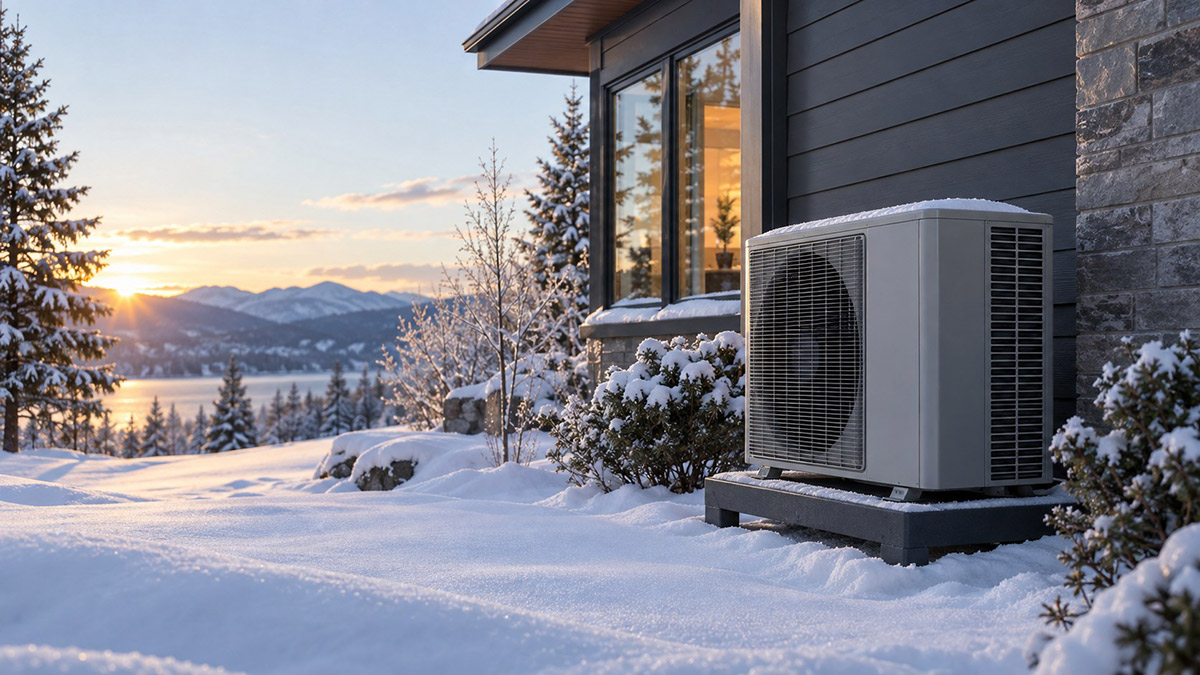
Modern inverter heat pumps have changed this decision. The old rule that “heat pumps stop working around freezing” does not describe current cold-climate equipment. ACiQ Hyper Heat systems modulate output and are engineered to continue heating far below 32°F. The decision is no longer whether a heat pump can run in winter; it is whether its available capacity and efficiency at your design temperature match the building and your utility costs.
What ACiQ Hyper Heat Means in Cold Weather
Published submittal data for applicable second-generation ACiQ Hyper Heat air-handler systems lists a standard heating operating range of -22°F to 75°F. For example, ACiQ's ACiQ-30-AHD matched with the ACiQ-30-HPD publishes 32,600 Btu/h maximum heating capacity and a 1.96 COP at 5°F. The ACiQ-48-AHD/ACiQ-48-HPD publishes 46,000 Btu/h and a 1.9 COP at 5°F.
Operating limit is not the same as full capacity
“Operates down to -22°F” means the specified matched system is designed to operate within that outdoor-temperature range. It does not mean every ACiQ model supplies its nominal rating, or the same efficiency, at -22°F. ACiQ's submittal notes 100% heat output at -4°F specifically for the 36,000-Btu model. Always compare the exact indoor/outdoor match and its extended heating tables with the home's load.
That low-ambient capability can let many homes remain all-electric. Depending on climate and sizing, electric resistance heat may still be installed for emergency heat, defrost support, or the small number of hours when the building load exceeds heat-pump output.
Cold-Climate Heat Pump and Dual-Fuel System Compared
| Decision Factor | Cold-Climate Heat Pump | Dual Fuel: Heat Pump + Furnace |
|---|---|---|
| Primary winter heat | Inverter heat pump across most or all outdoor conditions | Heat pump in milder weather; furnace takes over when controls call for it |
| Backup source | May use electric resistance heat, or none when load and design allow | Natural-gas or propane furnace |
| Equipment complexity | One refrigerant-based heating platform plus optional heat kit | Refrigerant system, combustion appliance, gas piping, venting, and dual-fuel controls |
| Cold-weather capacity | Must be checked at the local design temperature | Furnace can cover loads beyond the selected changeover point |
| Best fit | All-electric goals, strong low-ambient performance, favorable electricity pricing | Existing furnace/gas service, high peak loads, electrical limitations, or favorable gas economics |
| Cooling | Heat pump provides air conditioning in summer | Heat pump provides air conditioning in summer |
In a dual-fuel system, the heat pump and furnace normally do not deliver heat at the same time. Compatible controls lock out one heat source and enable the other at a selected changeover point. The equipment match, thermostat logic, airflow, coil temperature limits, and manufacturer instructions all matter.
Does the Backup Furnace Use Natural Gas or Liquid Propane?
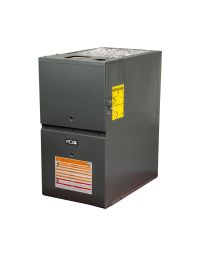
Either fuel can support a dual-fuel design, but the choice affects equipment setup and lifetime cost. Many ACiQ residential gas furnaces are factory-configured for natural gas. HVACDirect product documentation states that compatible models can be converted for liquid propane (LP) with the furnace's corresponding conversion kit, sold separately.
| Fuel Question | Natural Gas | Liquid Propane |
|---|---|---|
| Supply | Utility pipeline and meter where service is available | On-site tank with scheduled or will-call delivery |
| Planning | Compare utility rate, fixed charges, and any service-upgrade cost | Compare delivered price, tank ownership/rental, minimum delivery, and remaining fuel |
| Furnace setup | Common factory configuration for ACiQ gas furnaces | Requires the exact approved LP conversion kit when the model permits conversion |
| Dual-fuel strategy | May favor an economic changeover when gas is inexpensive | May favor running Hyper Heat longer to conserve tank fuel, depending on local prices and capacity |
Do not change fuels without a professional conversion
A furnace is not safely changed from natural gas to propane by adjusting the thermostat or connecting a different supply. The exact approved kit, orifices and/or springs, regulator setup, manifold-pressure verification, venting review, leak testing, and combustion checks are model-specific. Conversion and commissioning must be performed by a qualified professional under the installation instructions and applicable codes.
AFUE describes how effectively a furnace converts its fuel input into seasonal heat; it does not tell you which fuel is cheaper in your area. For a useful cost comparison, put electricity, natural gas, and propane on a common delivered-heat basis and include equipment efficiency, utility charges, and fuel-delivery costs.
Use the Balance Point, Not a Rule of Thumb
The thermal balance point is the outdoor temperature where the heat pump's available output equals the home's heating load. Below it, supplemental heat may be needed. The economic balance point is where another heat source becomes less expensive to operate. They are not necessarily the same temperature.
- Calculate the home. Request an ACCA Manual J heating-load calculation using the local winter design temperature—not just square footage or the old furnace size.
- Verify the match. Use AHRI-rated indoor/outdoor combinations and ACiQ extended performance data. Nominal “tons” are not a cold-weather heating-capacity guarantee.
- Compare energy prices. Use current local electric, gas, or delivered-propane rates and the furnace AFUE.
- Program compatible controls. Set compressor and furnace lockouts or staging based on the approved system design. Revisit settings after observing actual winter performance.
ENERGY STAR's cold-climate designation is a helpful screening tool: qualifying split systems must meet efficiency requirements, achieve a COP of at least 1.75 at 5°F, and retain at least 70% of their 47°F heating capacity at 5°F. It still does not replace a model-specific load and capacity comparison.
Which Heating System Should You Choose?
Choose an ACiQ Hyper Heat system when:
- You want an all-electric path and the matched system covers the design load.
- You value inverter modulation, steady temperatures, and avoiding combustion equipment.
- Your electricity pricing and electrical service support the design.
- You have a plan for rare capacity shortfalls, whether that is a heat kit or another approved backup.
Choose dual fuel when:
- You already have a sound gas furnace, venting, and gas service that can be integrated correctly.
- Your design load rises beyond the selected heat pump's low-temperature output.
- Local natural-gas economics favor furnace operation during the coldest hours.
- With propane, you prefer combustion backup but will actively manage tank level and delivered-fuel cost.
A cold-climate heat pump and dual fuel are not opposites: a Hyper Heat outdoor unit may be part of a properly engineered dual-fuel system when it is approved with the selected indoor coil, furnace, and controls. Compatibility must be confirmed rather than assumed.
Before You Buy
- Confirm the exact ACiQ indoor unit, outdoor unit, coil or furnace, thermostat, and refrigerant match.
- Request design-temperature capacity and COP—not only SEER2, HSPF2, or nominal tonnage.
- Verify electrical panel capacity and any heat-kit circuit requirements.
- For propane, identify the exact LP conversion kit and who will perform commissioning.
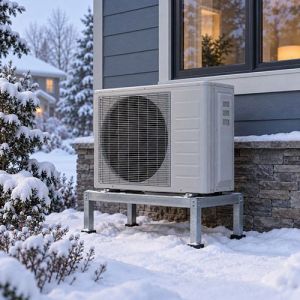
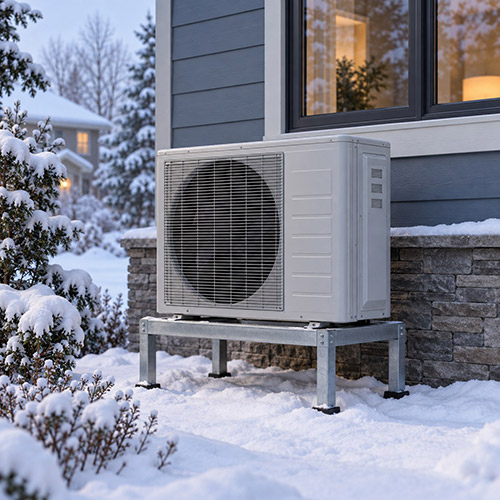
- Plan snow elevation, drainage, defrost water, clearances, and wind exposure for the outdoor unit.
- Have all refrigerant, electrical, gas, venting, and combustion work completed under manufacturer instructions and local code.
Frequently Asked Questions
Can an ACiQ Hyper Heat system heat at -22°F?
Applicable ACiQ matched-system submittals list heating operation down to -22°F. This is an operating limit, not guaranteed full rated output at -22°F. Check the exact match's low-temperature capacity and compare it with a Manual J load.
Is dual fuel always cheaper?
No. Cost depends on heat-pump COP at the current temperature, electricity and fuel prices, furnace AFUE, fixed utility charges, and control settings. Propane and natural-gas economics can be very different.
Can an ACiQ furnace run on propane?
Many ACiQ furnaces ship for natural gas and permit field conversion using the exact corresponding LP kit. Confirm the furnace rating plate and instructions. A qualified professional must perform the conversion and combustion setup.
At what temperature should a dual-fuel furnace take over?
There is no universal 32°F or 35°F setting. The correct changeover uses the home's load, matched heat-pump capacity and COP, fuel prices, furnace efficiency, approved controls, and comfort goals.