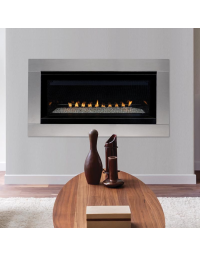
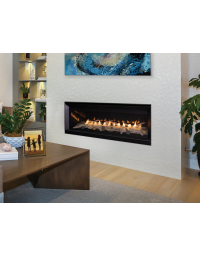
A vent free gas stove is relatively easy to install and usually comes as standalone packages. This means that no renovation of the premises is required. Most units come as freestanding units with their own standing legs. Other units can be anchored to the wall using screws or bolts.
- Exhaust gases namely carbon dioxide and carbon monoxide
- Water vapor
- Heat
How a Ventless Gas Stove Works
 When the combustion process is very efficient such as the combustion found in a vent free gas stove the amount exhaust fumes produced is minimal to none, and therefore a vent is not required to heat your home safely.
Selecting the Right Heater Size
From our previous discussion, recall that a ventless gas stove only operates efficiently when it has access to sufficient oxygen levels. The amount of air available is directly proportional to the volume of the room the heater is located in. Therefore, the size of the heater needed is determined by the volume of the room it is meant to heat. The National Fuel Gas Code provides guidelines on the ratio between the size of a gas heater to the volume of a room. The size of the heater selected should be equal to or less than the prescribed size. Installing a vent-free gas stove that is too large for space can result in inefficient operation leading to excess gas fumes in your home.Managing Water Emissions
The water vapor produced by ventless gas stoves can be managed in the following ways:- Ensure that the room is well ventilated to prevent the accumulation of water vapor and humidity.
- Ensure that you don't run the ventless gas stove longer than the recommended duration which is around 3 to 4 hours.
The Types of Gas Used by Gas Stoves
Either propane gas or natural gas can be used in a gas stove. However, for safety purposes, most ventless gas stoves are calibrated to work with only one type of gas. If your gas stove is designed for use with propane, only propane should be used. You cannot switch back and forth between natural gas and propane. The exception to this rule is if the manufacturer's instructions explicitly allow for usage of both natural gas and propane. This exception is known as dual fuel technology.Safety of Vent Free Gas Stoves
A good quality brand should come with an oxygen depletion sensor, abbreviated ODS. When the oxygen levels in the room are too low for the gas heater to burn gas without producing carbon monoxide over an acceptable level the ODS will detect this and trigger automatic shut-off of the gas stove. This mechanism prevents carbon monoxide poisoningMaintaining Your Ventless Gas Stove
- Do a quick clean once a week and thorough maintenance check at least once every three months.
- During maintenance, ensure that the air inlets are clear
December 14, 2018