Key Takeaways
- Whole-Home Ventilation Made Simple: Panasonic ERVs provide balanced airflow that improves indoor air quality while cutting heating and cooling costs by up to 82%.
- Flexible Sizing & Installation: With models ranging from 60 to 160 CFM, Panasonic offers ERVs for small apartments, medium-sized homes, and large residences.
- Trusted Efficiency & Compliance: Every Panasonic ERV meets ASHRAE 62.2 standards, is Energy Star certified, and comes with quiet ECM motors and MERV filter options.
Article Contents
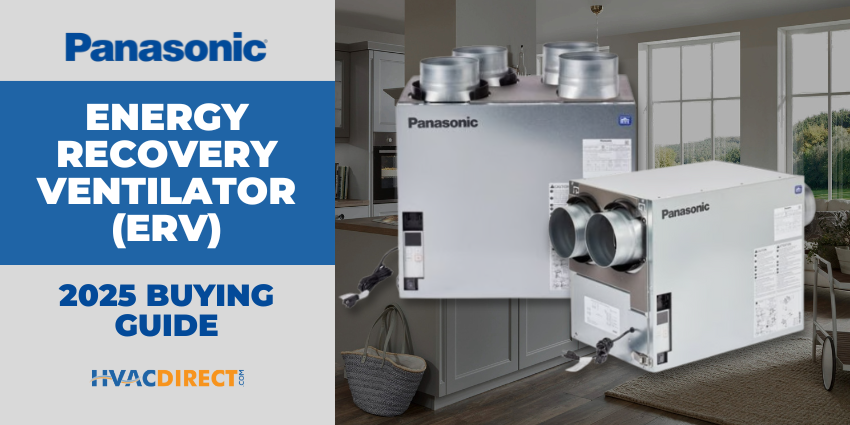
When it comes to improving your home's indoor air quality while maintaining energy efficiency, investing in the right energy recovery ventilator can make all the difference. This Panasonic ERV buying guide will go over what ERVs are, why choose Panasonic, how to size one for your space, what features they offer compared to alternatives, and, ultimately, help you choose the best ERV for home ventilation for your space.
Why Choose Panasonic Energy Recovery Ventilators

Panasonic: A Leading Technology Provider in Sustainable Energy
With over 65 years in business, Panasonic is a long-standing company with a background in sustainable energy – working in industries ranging from automotive to construction to home energy solutions. Their mission is to make people’s lives better by addressing climate issues and making the world a greener place.
Within indoor air quality, Panasonic’s Energy Recovery Ventilators (ERVs) provide green, balanced, energy-efficient fresh-air ventilation designed for virtually any climate. They provide cost-effective, code-compliant, easy-to-install ERV air solutions for spaces of any size.
Best ERV for Home Ventilation Performance
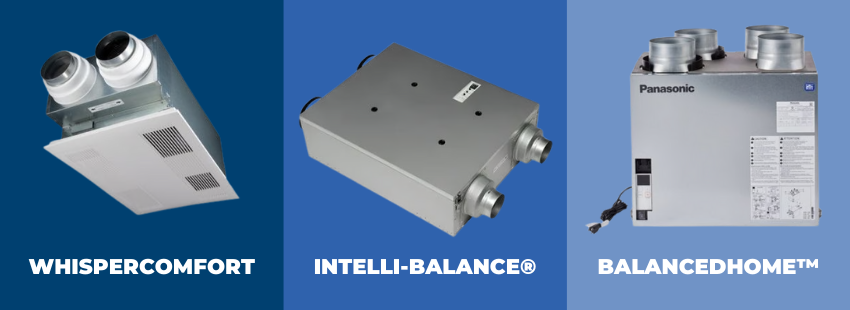
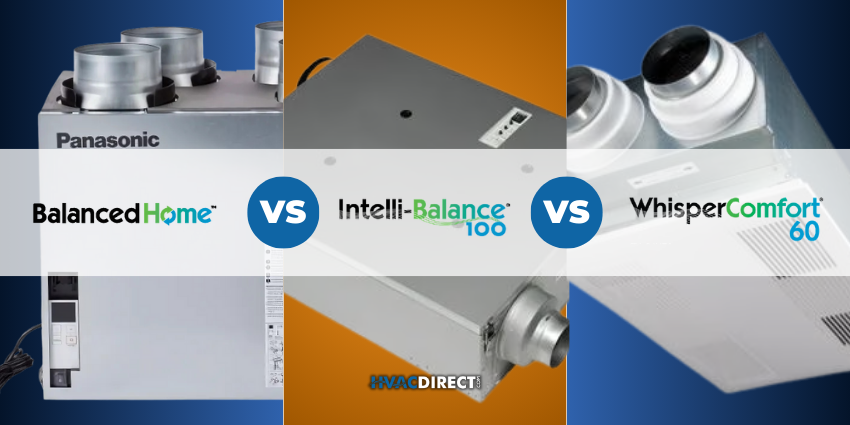
On HVACDirect.com, we offer three distinct Panasonic ERV product lines to meet diverse home ventilation needs.
- WhisperComfort®
- Intelli-Balance®
- BalancedHome™
Compared to traditional exhaust-only ventilation systems, Panasonic ERVs provide significant advantages including balanced air pressure (preventing drafts and comfort issues), and up to 82% heat recovery efficiency, plus continuous fresh air supply without the need to open windows.
All models also feature whisper-quiet ECM motors designed to operate all day with built-in timers that deliver exactly the amount of fresh air that most codes call for, making your home compliant with LEED, Indoor airPLUS, California Title-24, and the Washington State Residential Energy Code.
Ready to Improve Indoor Air Quality?
Shop Panasonic ERVs and get balanced fresh-air ventilation with industry-leading recovery efficiency.
Shop Panasonic ERVsWhat are Panasonic Energy Recovery Ventilators (ERVs)
What is an ERV & How It Works
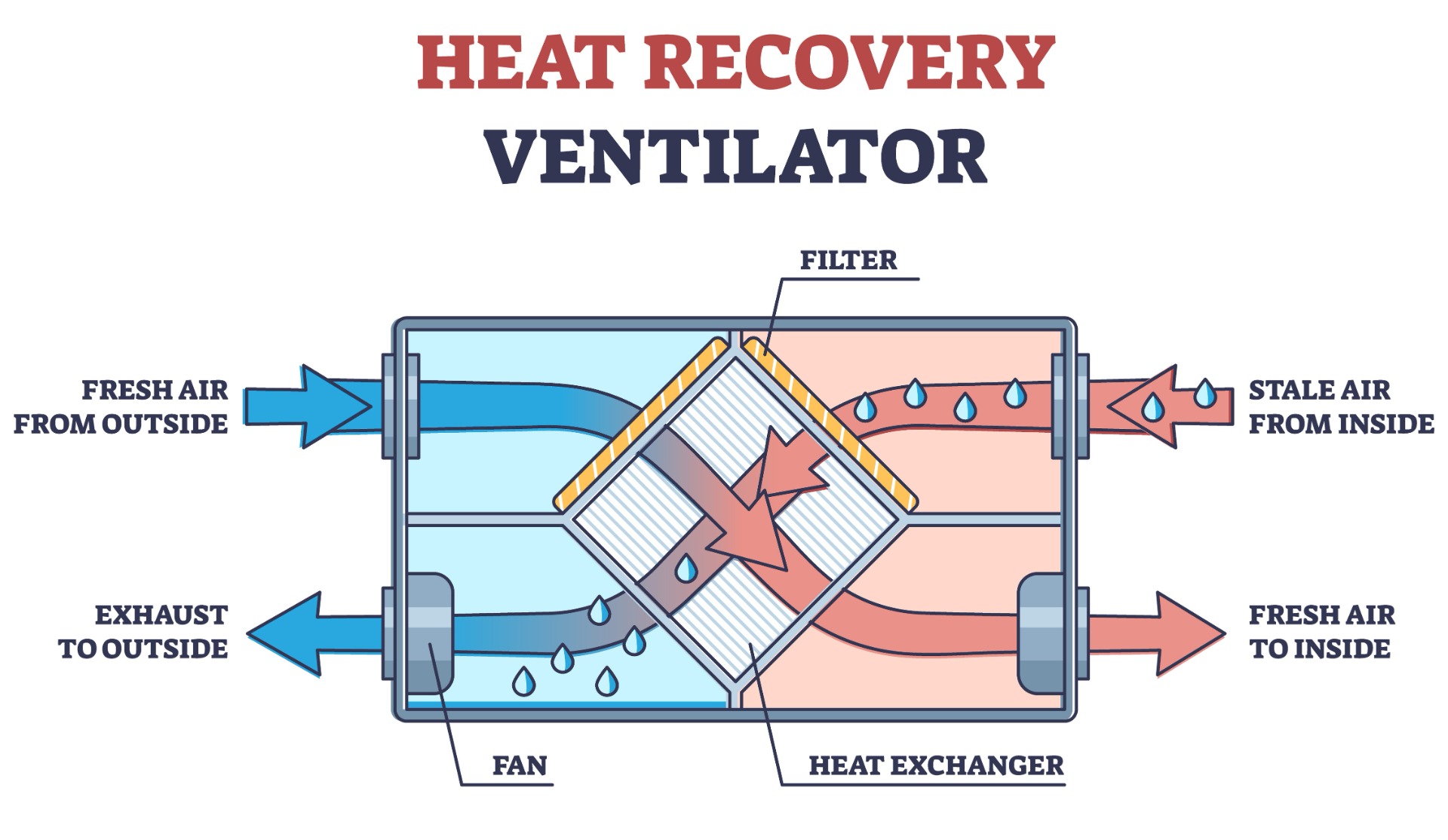
Energy recovery ventilators work by exchanging stale indoor air with fresh outdoor air while recovering energy from the outgoing airstream. Panasonic ERVs use a hygroscopic membrane core that transfers both heat and moisture between incoming and outgoing air streams, helping maintain comfortable indoor conditions while reducing HVAC system load.
Unlike simple exhaust fans that can create negative pressure in your home, Panasonic ERVs provide balanced ventilation by supplying and exhausting equal amounts of air. This balanced approach prevents pressure imbalances that can lead to comfort issues and drafts while ensuring consistent indoor air quality.
What Does CFM Mean?
When shopping for an ERV, you’ll find that they come with a CFM rating. CFM stands for Cubic Feet per Minute, which measures the volume of air moved by the ERV system. Higher CFM ratings indicate greater ventilation capacity. Panasonic offers models ranging from 60 CFM for smaller spaces up to 160 CFM for larger homes.
How to Choose the Best ERV for Your Home
Sizing an ERV (Energy Recovery Ventilator) is about matching the unit’s airflow to the fresh-air needs of your home. Here’s the general homeowner-friendly process:
How to Size Your ERV Based on CFM
Here is a four-step process you can follow when choosing the right size ERV.
1. Use the ASHRAE 62.2 Formula
A common formula used for calculating home ventilation needs is: CFM = (0.01 × floor area in square feet) + (7.5 × (number of bedrooms + 1)).
Example:
- 1,200 square foot home
- 2 bedrooms
- (0.01 × 1,200) + (7.5 × (2 + 1)) → 12 + 22.5 = 34.5 CFM needed
Quick Rule of Thumb
- Small homes (≤1,500 sq. ft.): ~50–70 CFM
- Medium homes (1,500–2,500 sq. ft.): ~70–120 CFM
- Large homes (2,500–3,500+ sq. ft.): ~120–160+ CFM
*Use the rule of thumb to get in the right ballpark, then confirm with the ASHRAE calculation and local code requirements.
2. Match the ERV’s Rated Airflow
Find an ERV model with a rated CFM at your typical static pressure (often 0.2–0.4 in. w.c. depending on duct runs) that meets or slightly exceeds your calculated requirement.
3. Factor in Climate and Usage
- Humid climates: ERVs help control indoor moisture.
- Cold, dry climates: HRVs are sometimes chosen, but many homes still use ERVs for balanced humidity.
- If you plan intermittent operation (e.g., 20 minutes on each hour), you’ll need a higher CFM model to deliver the same daily ventilation volume.
4. Consider Distribution and the Size of the Space
- Whole-house systems: Connect to dedicated small ductwork or tie into existing HVAC ducts.
- Spot ERVs (like Panasonic WhisperComfort): Sized smaller (often 40–80 CFM) for single rooms, additions, or offices.
Panasonic ERV vs HRV
- ERV: Transfers heat and moisture between air streams; ideal for humid or mixed climates.
- HRV: Transfers heat only; commonly used in very cold, dry climates where humidity retention is less critical.
Best ERV for Humid Climates
In humid regions, an ERV is preferred because it transfers both heat and moisture, helping prevent sticky indoor conditions and reducing latent load on your air conditioner. For small to mid-size homes, Intelli-Balance® 100 is a strong fit; for larger homes, choose BalancedHome™ for higher CFM capacity.
Best ERV for Cold Climates
Cold, dry climates often use HRVs, but many homeowners still choose ERVs to retain some indoor moisture in winter. If you want moisture balance with higher efficiency, BalancedHome™ offers up to 82% heat recovery efficiency at 32°F.
Panasonic Energy Recovery Ventilator (ERV) Key Features & Benefits
Comparing WhisperComfort®, Intelli-Balance® & BalancedHome™ ERVs: Key Differences
Above, we mentioned that Panasonic offers three different ERV product lines: WhisperComfort®, BalancedHome™, and Intelli-Balance®. Here’s a brief breakdown of their most important features.
| Panasonic Energy Recovery Ventilator Series | |||||
|---|---|---|---|---|---|
| Series | CFM | Energy Efficiency | Ductwork | Port Options | Best Uses |
| WhisperComfort® | 20–50 (Boost to 60) | Up to 70% Sensible Recovery @ 32°F Up to 60% Total Recovery @ 95°F | 4"5" | Side | Tight spacesSmall roomsTargeted ventilation |
| BalancedHome™ | 30–160 | Up to 82% Sensible Recovery @ 32°F Up to 73% Total Recovery @ 95°F | 6" | SideTop | Larger homes |
| Intelli-Balance®; | 30–100 | Up to 2% Sensible Recovery @ 32°F Up to 60% Total Recovery @ 95°F | 4"6" | MirroredCorded | Smaller homesMulti-family layouts |
Other Panasonic Energy Recovery Ventilator Features
All these series feature the following benefits:

- Energy-Efficient Ventilation: Advanced ERV core uses a hygroscopic material to transfer heat and moisture between incoming and outgoing air, balancing indoor humidity and reducing energy costs
- Side Port Configuration: Optimized for side port installation, offering greater layout flexibility for installers and architects
- Quick & Simple Installation: Includes fault indicator display inside the unit, standard power cord, and optional hardwire adapter in-box for adaptable electrical connections
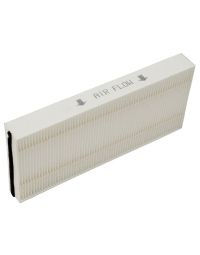
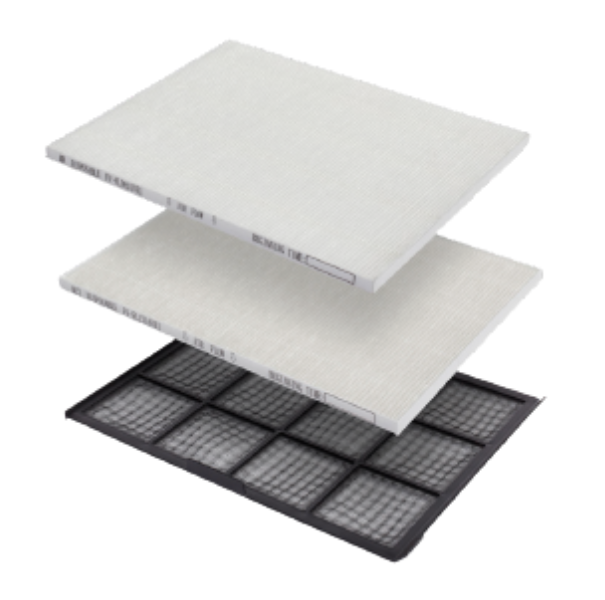
- High-Performance Filtration: Dual filtration system cleans both supply and exhaust air before it reaches the ERV core. Hinged panel allows easy access for routine maintenance. Includes MERV 13 filter
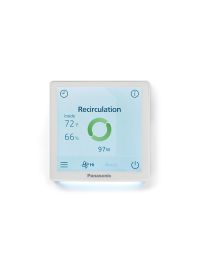
- Optional LED Wall Control: Compatible with Panasonic's intuitive touch screen wall control (sold separately), offering enhanced user control and system monitoring
- Flexible System Options: Available in 8 models with 4 adjustable CFM ranges to meet ventilation needs for a wide range of home sizes and designs
- Trusted Indoor Air Quality Solutions: Backed by Panasonic's commitment to clean air technology—explore a full suite of fans, purifiers, sensors, and accessories to complete your IAQ system
If you’re trying to decide which Panasonic Energy Recovery Ventilator (ERV) is right for your home and don't understand the technical features befind them, here’s a simpler side-by-side look at how the WhisperComfort®, Intelli-Balance®, and BalancedHome™ models compare. This quick breakdown highlights the key differences in size, controls, filters, and price level so you can easily see which one fits your needs and budget.
| Homeowner-Friendly Panasonic ERV Features Comparison | ||
|---|---|---|
| WhisperComfort® 60 | Intelli-Balance® 100 | BalancedHome™ |
| Quiet, set-and-forget operation with basic wall switch | Adjustable airflow settings keep fresh air balanced automatically | Smart controls with touchscreen display and app integration |
| Good filtration for everyday dust and dander | Upgradeable filtration for stronger allergen protection | Most advanced filtration with multiple filter options |
| Simple continuous ventilation to keep air fresh | Programmable timer for code-compliant continuous operation | Continuous or on-demand ventilation with auto alerts |
| Basic comfort features with quiet operation | Enhanced comfort with customizable airflow modes | Premium comfort with humidity management and filter alerts |
| Most budget-friendly ERV option | Balanced value and performance | Premium investment with advanced homeowner benefits |
Ready to Improve Indoor Air Quality?
Shop Panasonic ERVs and get balanced fresh-air ventilation with industry-leading recovery efficiency.
Shop Panasonic ERVsPanasonic Energy Recovery Ventilator (ERV) Flexible Installation
Panasonic ERV Installation Requirements
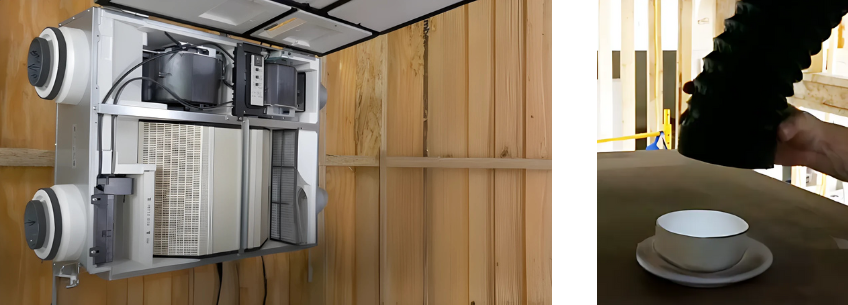
Panasonic designs their ERVs for installation flexibility:
- Mounting Options: Wall brackets (included) or ceiling chain mounts (sold separately)
- Ductwork: Works with 4", 5", or 6" insulated ductwork depending on model
- Electrical: 120V/60Hz power with standard cord included (hardwire adapter available)
- Static Pressure Access Ports: Built-in ports for airflow verification and balancing
- MERV Filters: MERV 6, 8, 10, or 13 filter options
Installation Options for Panasonic ERVs: Side Port, Top Port & Mount Types
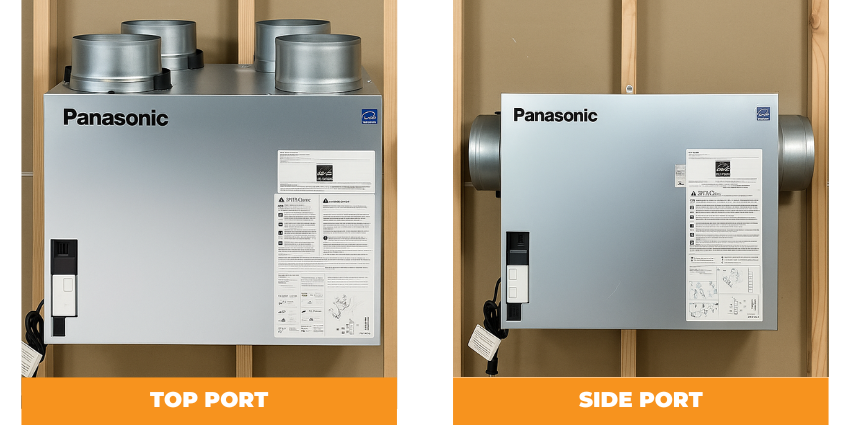
Panasonic offers both configurations to accommodate different installation scenarios:
- Top Port Models (ending in "T"): Ideal when ductwork comes from above
- Side Port Models (ending in "S"): Perfect for tight spaces or side access requirements
- Mirrored Models: Available for multi-unit applications requiring opposite orientations
Panasonic ERV Warranty & Maintenance You Should Know About
Panasonic provides comprehensive warranty coverage with 3-year parts warranty and 6-year motor warranty from the original purchase date. Refer to your model's operating manual for specific warranty information and registration requirements.
Panasonic USA offers three types of warranty service repair processes:
- Mail-In
- Carry-In
- On-Site
To determine your product's repair type, refer to the Panasonic USA Product Service Locator. All repair status inquiries should be directed to the Panasonic Authorized Service Center completing the repair.
ERV Frequently Asked Questions
ERV sizing depends on home square footage, number of bedrooms, and local codes. Use the sizing guide above but always consult with an HVAC professional for precise calculations considering your specific climate zone and local requirements.
On HVACDirect.com you can purchase a Panasonic Energy Recovery Ventilator for under $1,500, with prices ranging from $600 to $1,300 depending on the model. Installation will cost extra if you are hiring a professional.
While heat recovery ventilators (HRVs) only transfer sensible heat, energy recovery ventilators transfer both heat and moisture. This makes ERVs particularly beneficial in humid climates where moisture control is important.
Filter replacement depends on MERV rating: MERV 13 every 6 months, MERV 8 and 10 every 6–8 months, and MERV 6 washable cleaned every 2–3 months. Built-in indicators remind you when replacement is due.
Yes, Panasonic ERVs are excellent for retrofit applications with flexible mounting options and various duct configurations designed specifically for remodel installations.
Shop Panasonic Energy Recovery Ventilators (ERVs) on HVACDirect.com
HVACDirect.com sells seven different Panasonic ERV models including:
- FV-16VEC1S – Panasonic BalancedHome™ 160 Elite Plus+ ERV – Side Port (160 CFM)
- FV-16VEC1T – Panasonic BalancedHome™ 160 Elite Plus+ ERV – Top Port (160 CFM)
- FV-13VEC1S – Panasonic BalancedHome™ 130 Elite Plus+ ERV – Side Port (130 CFM)
- FV-13VEC1T – Panasonic BalancedHome™ 130 Elite Plus+ ERV – Top Port (130 CFM)
- FV-10VEC2 – Panasonic Intelli-Balance® 100 ERV – Side Port (100 CFM)
- FV-10VEC2R – Panasonic Intelli-Balance® 100 ERV – Side Port - Mirrored (100 CFM)
- FV-06VE1 – Panasonic WhisperComfort 60 ERV – Wall/Ceiling Mount Exhaust Fan (60 CFM)
Choosing the right Panasonic ERV system represents a smart investment in your family's health, comfort, and long-term energy savings. With proper sizing, professional installation, and regular MERV filter maintenance, a quality energy recovery ventilator will provide years of reliable service.
Ready to Improve Indoor Air Quality?
Shop Panasonic ERVs and get balanced fresh-air ventilation with industry-leading recovery efficiency.
Shop Panasonic ERVs