Your cookie preferences
We use cookies to remember your preferences and understand how shoppers use our site, helping us improve your shopping experience.
Read our privacy policyUpgrade your home with a high-efficiency wood stove that delivers efficient heat, offers timeless style, and provides reliable performance. Enjoy cleaner burns and lower your energy costs while staying cozy-warm with high-efficiency EPA-Certified clean burning technology. At HVACDirect.com we offer wide range of sizes from the top brands at the lowest prices - guaranteed!
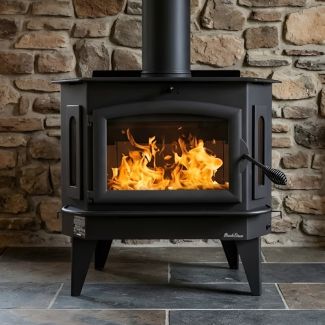
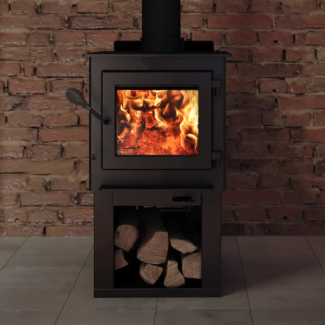
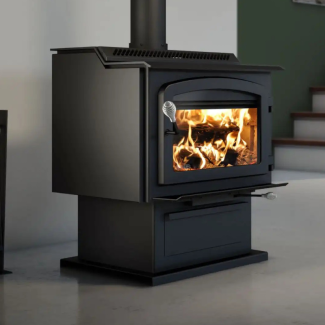
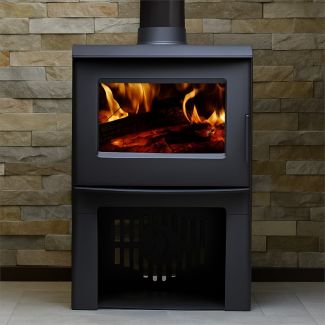
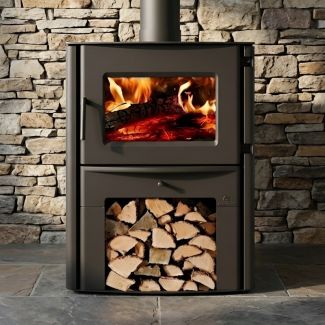
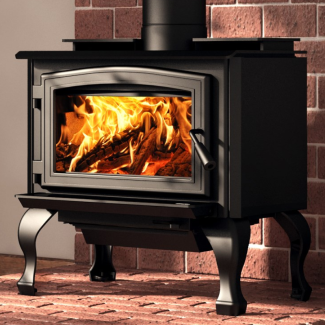
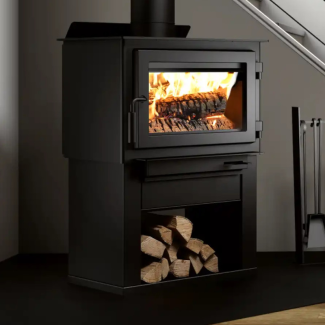
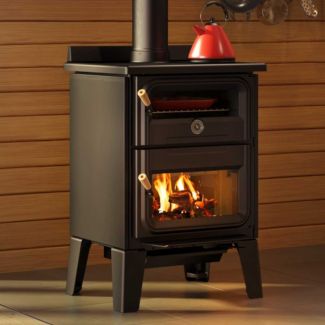
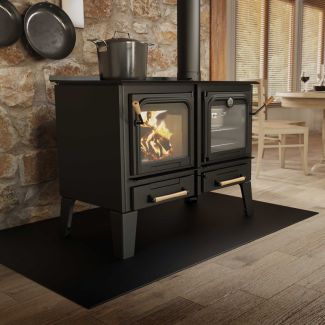
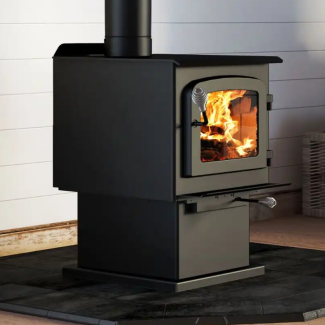
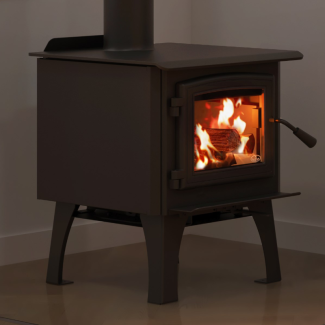
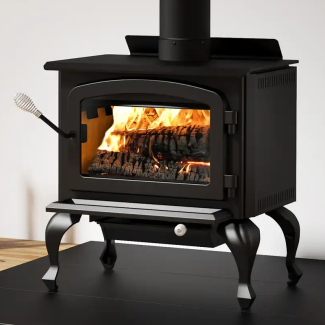

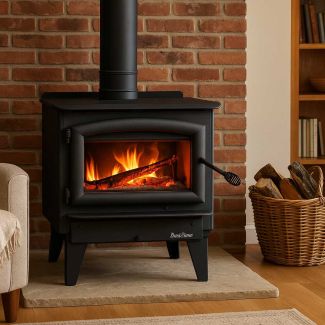

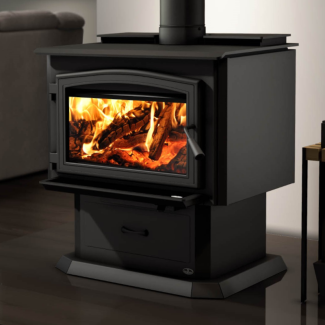
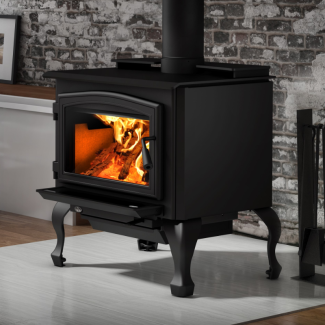

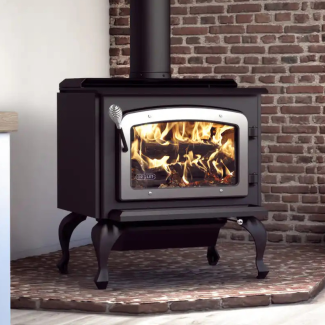
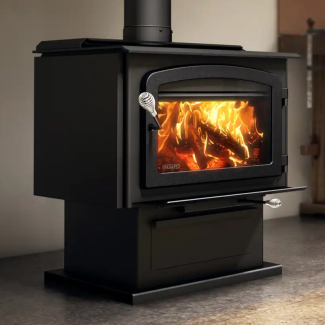
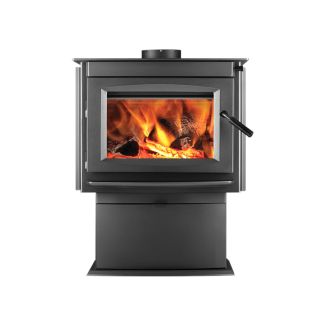

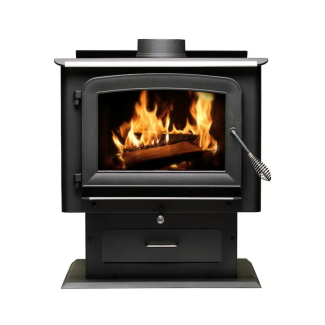
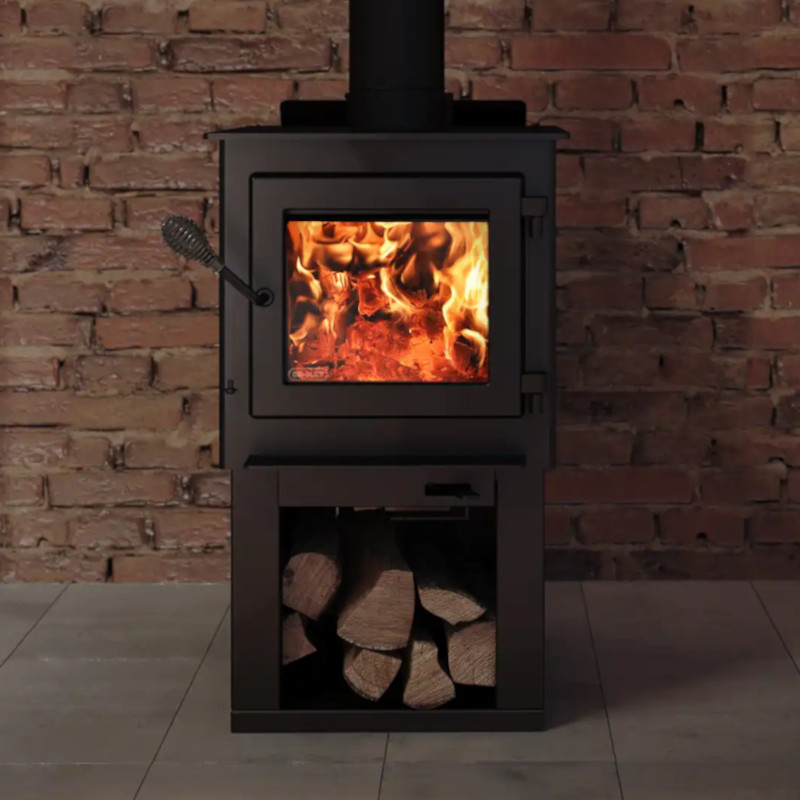
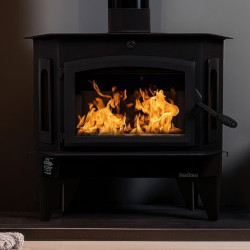
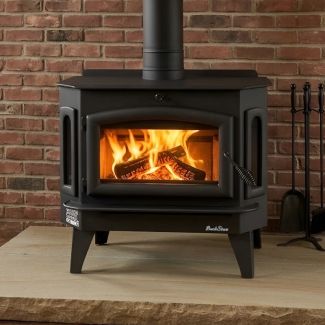
A wood stove is a freestanding or insert-style heating appliance that burns firewood inside an enclosed, controlled firebox to generate radiant heat, typically constructed from cast iron or steel and connected to a chimney or flue pipe to safely exhaust combustion gases out of the home. Unlike an open fireplace, a wood stove is a sealed system that regulates airflow to maximize combustion efficiency and heat output from each load of wood.
Wood stoves work by drawing air into the firebox through adjustable air vents, which feeds the fire and controls how hot and how fast the wood burns. As the firebox heats up, heat radiates from the stove's surface directly into the room, while many models also include a blower fan to circulate warm air more broadly. Modern EPA-certified stoves use secondary combustion or catalytic technology to burn gases a second time before they exit the flue, extracting more heat and producing far fewer emissions than older designs.
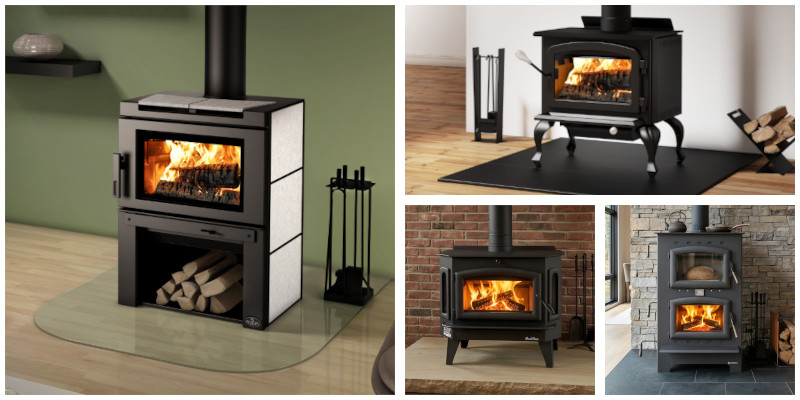




A wood stove is a freestanding or insert-style heating appliance that burns firewood inside an enclosed, controlled firebox to generate radiant heat, typically constructed from cast iron or steel and connected to a chimney or flue pipe to safely exhaust combustion gases out of the home. Unlike an open fireplace, a wood stove is a sealed system that regulates airflow to maximize combustion efficiency and heat output from each load of wood.
Wood stoves work by drawing air into the firebox through adjustable air vents, which feeds the fire and controls how hot and how fast the wood burns. As the firebox heats up, heat radiates from the stove's surface directly into the room, while many models also include a blower fan to circulate warm air more broadly. Modern EPA-certified stoves use secondary combustion or catalytic technology to burn gases a second time before they exit the flue, extracting more heat and producing far fewer emissions than older designs.
Wood stoves have been a primary heat source for centuries, and modern versions are cleaner, more efficient, and more capable than ever. Whether you're looking to reduce heating costs, add a reliable backup heat source, or simply enjoy the warmth of a real fire, a wood stove offers advantages that few other heating appliances can match.
Lower Heating Costs: Wood is one of the least expensive heating fuels available, and for homeowners with access to free or low-cost firewood, whether cut from their own property or sourced locally, a wood stove can dramatically reduce reliance on gas, oil, or electric heating during the coldest months. Even when purchasing firewood, a cord of hardwood typically costs far less per BTU than the equivalent energy from natural gas or electricity. In fact, heating with purchased wood averages around $19 to $22 per million BTUs, making it significantly cheaper than electricity or heating oil, which can exceed $38 to $40 per million BTUs.
Reliable Heating Source: A wood stove does not depend on electricity, gas lines, or utility infrastructure. As long as you have wood and a match, the stove produces heat, making it one of the most dependable heating options available regardless of weather conditions or grid reliability.
Off-Grid & Renewable Heating: Wood is a renewable fuel source, and when burned in a modern high-efficiency stove, it has a lower environmental impact than fossil fuels. For homeowners living off-grid or looking to reduce dependence on utility companies, a wood stove is one of the most self-sufficient heating solutions available.
Ideal for Primary and Supplemental Heating: Wood stoves work equally well as a home's sole heat source or as a supplement to an existing system. They are offered in heating capacities ranging from 20,000 all the way up to over 100,000 BTU. Many homeowners use a wood stove to heat the main living areas while keeping the central system set lower, reducing fuel consumption across the board without sacrificing comfort in the rooms used most.
Reliable Emergency Heating: When a winter storm knocks out power or a heating system fails, a wood stove keeps the home warm regardless since it does not rely on electricity for heating. For families in cold climates, having a wood stove as a backup is not just convenient. It can be a genuine safety asset during extended outages.
Cooking During A Power Outage: Many wood stoves with a flat cooktop surface can heat food and boil water during a power outage. Wood cook stoves take this further, functioning as a full cooking appliance for baking, boiling, and sautéing, which is invaluable in off-grid homes or as emergency backup in any household.
Ambiance and Atmosphere: The crackling sound, the smell of burning wood, and the warm glow of a real flame create a kind of comfort that no electric or gas appliance can fully replicate. For many homeowners, the experience of a wood stove is just as valuable as the heat it produces.
Improved Efficiency vs. Older Wood Stoves: Modern EPA-certified wood stoves achieve thermal efficiencies of 70 to 80% or higher through secondary combustion and improved firebox geometry, which is a dramatic improvement over older designs that converted only 50 to 60% of the wood's energy into usable heat.
Beyond comfort and cost savings, EPA-certified wood stoves sold at HVACDirect.com meet national safety and emissions standards, so you get the warmth and atmosphere of a real fire with the cleaner burn performance that modern combustion technology makes possible.
Wood stoves are a natural fit for any space where you want powerful, radiant heat and the character that comes with a working fire, performing best in well-insulated spaces with good chimney access. They work across a wider range of settings than most people expect, from primary living spaces to outbuildings and off-grid retreats, covering spaces anywhere from 250 to 3,000+ square feet.
Living Rooms: The living room is the most common installation for a freestanding wood stove. Positioned on a hearth pad with a proper flue connection, a wood stove becomes the focal point of the room, delivering powerful radiant heat to the most-used space in the home while adding character to the décor.
Family Rooms: Larger family rooms that need serious heat output are well-suited to mid-to-large BTU wood stoves that can maintain comfortable temperatures across a bigger open footprint without requiring constant tending.
Cabins: Cabins are one of the most traditional applications for a wood stove. Whether a hunting cabin, a lakeside retreat, or a full-time off-grid residence, a wood stove provides all the heat and cooking capability needed without relying on utility connections that may not exist in remote locations.
Cottages: Compact wood stoves are well suited to smaller cottages, especially those used seasonally where they provide warmth during shoulder seasons when the weather is too cool for no heat but not cold enough to warrant running a full HVAC system. Small wood stoves covering up to 1,500 sq ft are ideal for this application.
Workshops: Garages and workshops are notoriously cold in winter and rarely connected to the home's heating system. A wood stove is one of the most effective and affordable ways to keep a workshop warm enough to be productive, and if wood scraps or offcuts are available, fuel costs are minimal. Large wood stoves rated for 2,500+ sq ft are a popular choice for large workshop and barn applications.
Farmhouses: Farmhouses and rural properties have a long history with wood stoves, since firewood is often abundant, utility costs in rural areas can be high, and a wood stove's reliability aligns well with the self-sufficiency of farm life. Many farmhouse installations use a central stove in the main living areas supplemented by smaller stoves in outbuildings for heating since they are often built without a central heating and cooling system.
Basements: A wood stove in a finished basement can turn a cold, underused space into a genuinely comfortable room while also contributing heat to the floors above through natural convection. Basement installations require careful attention to flue routing and clearance requirements, and the stove size should be chosen based on the basement's square footage, typically a small or medium model in the 1,000 to 2,000 sq ft range.
No matter the space, proper sizing is the most important decision you'll make. An undersized stove will struggle to keep up, while an oversized stove will overheat the room and run inefficiently at low output. You should always match the stove's rated square footage to the actual space you need to heat, accounting for insulation quality and climate.
Wood stoves come in several configurations and construction types, each suited to different spaces, installation situations, and heating goals, including freestanding and insert options. The right type depends on whether you have an existing fireplace, how large your space is, and whether you prioritize simplicity, efficiency, or versatility.
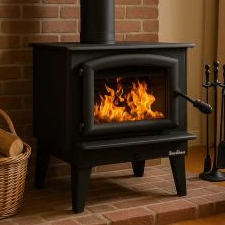
Freestanding Wood Stoves: The most common type, freestanding stoves sit on legs or a base on a protected floor surface and connect to a chimney through a flue pipe routed through the wall or ceiling. They work in virtually any room with a suitable chimney connection and offer the most flexibility in placement and sizing options.
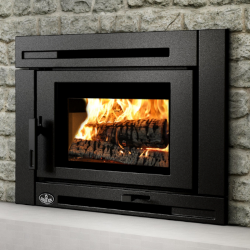
Wood Stove Inserts: Designed to be installed directly into an existing masonry fireplace opening, wood stove inserts transform an inefficient open fireplace into a high-efficiency enclosed heating unit. They are ideal for homeowners who already have a fireplace and want to dramatically improve its heating performance without rebuilding or replacing it.
Small Wood Stoves: Compact stoves designed for spaces up to 1,500 square feet, including cabins, cottages, workshops, and smaller living rooms, that offer the same functionality as full-size models in a much smaller footprint. Brands like Osburn and Breckwell offer well-regarded small stove options in this category.
Catalytic Wood Stoves: These stoves use a ceramic or metal combustor to ignite and burn gases from combustion at a lower temperature than would otherwise be possible, resulting in higher efficiency, longer burn times, and lower emissions. The combustor requires periodic inspection and eventual replacement but delivers sustained efficiency that makes catalytic stoves a strong choice for primary heating applications.
Non-Catalytic Wood Stoves: Non-catalytic stoves achieve clean, efficient combustion through secondary air systems and firebox design rather than a combustor. They are easier to operate and maintain, with no combustor to replace, and are the more common choice for homeowners who want strong performance without additional maintenance complexity. Most modern EPA-certified stoves on the market today are non-catalytic.
Steel Wood Stoves: Steel stoves heat up faster than cast iron, making them a good choice when you need warmth quickly. They are generally lighter and less expensive than cast iron models, though they may radiate heat less evenly and are more prone to warping if consistently overheated.
Cast-Iron Wood Stoves: Cast iron is the traditional material for wood stoves and remains popular for its ability to retain and radiate heat more evenly and for longer after the fire dies down. Cast-iron stoves take longer to heat up but are well-suited to spaces where consistent, sustained heat output matters more than a quick warm-up.
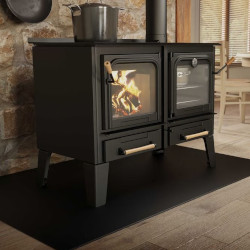
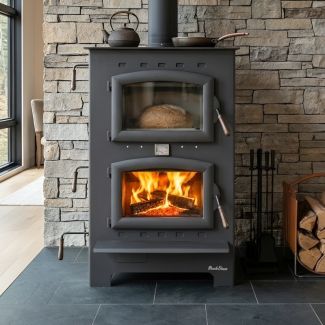
Wood Cook Stoves: Wood cook stoves combine a heating firebox with a fully functional cooking surface, oven, and sometimes a water heating reservoir in a single appliance. They are the cornerstone of off-grid kitchens and a practical choice for farmhouses, cabins, and any home where the ability to cook without electricity is a priority. The Buck Stove Homesteader is a well-known example in this category.
If you are unsure which type is right for your situation, the key questions are whether you have an existing fireplace opening (which makes an insert worth considering), how large the space is (which determines the right BTU category), and whether simplicity or maximum efficiency is your priority (which guides the catalytic versus non-catalytic decision).
Beyond the core firebox design, other technical and visual features, such as blower type, adjustable air controls, combustion style, and viewing area design, are important to consider when choosing a wood stove. Here’s a breakdown of each of them:
Wood Stove Fan and Blower: A built-in or optional variable speed blower fan circulates warm air more broadly throughout the room, reducing the temperature difference between the area directly around the stove and the rest of the space. Models without a blower rely on radiant heat and natural convection, which works well in open rooms but can leave corners and distant areas noticeably cooler. Variable speed fans allow you to balance noise level against heat distribution based on your preference.
Adjustable Air Controls: Fine-tuning the primary and secondary air supply gives you control over how fast and hot the fire burns. Well-designed air controls let you dial in a slow, steady burn for overnight heat or open up for a faster, hotter fire when you need to warm a room quickly.
Secondary Combustion: Secondary combustion systems route unburned gases through a secondary chamber where they are ignited a second time, extracting additional heat and dramatically reducing emissions. This is the core technology behind most modern EPA-certified non-catalytic stoves and represents a significant efficiency and emissions improvement over older single-combustion designs.
Catalytic (or Non-Catalytic) Combustion: This is a fundamental design decision that affects efficiency, burn time, emissions, and maintenance. Catalytic stoves achieve higher sustained efficiency and longer burn times but require the combustor to be maintained and eventually replaced. Non-catalytic stoves are simpler to operate with no combustor to replace.
Glass Viewing Door: A large, clear glass door lets you see and enjoy the fire without losing heat. Look for models with an air-wash system that directs a curtain of air across the inside of the glass during operation, keeping it clean and clear even during longer burns. Glass door options include classic all-black frames as well as upgraded metallic trim in nickel or gold finishes on select models.
Ash Removal System: Some wood stoves include a built-in ash drawer or pan that collects ash below a grate, making removal easier and less messy than scooping from the firebox floor. This is a convenience feature that matters most for homeowners who burn the stove frequently and deal with ash removal regularly throughout the heating season. Some pedestal base models integrate ash removal systems alongside built-in wood storage compartments.
Cooktop Surface: A flat or ridged cooktop surface allows you to heat water, simmer food, or keep a pot warm using the heat the stove is already producing. This adds practical utility beyond heating alone and makes the stove particularly valuable during power outages.
Outside Air Kit (Required for Certain Installations): An outside air kit draws combustion air directly from outside the home rather than from conditioned interior air. This is particularly important in newer, tightly sealed homes where a wood stove drawing air from inside can create negative pressure and draft problems. Some installations require an outside air kit by code, so it is worth checking whether your installation location needs one before purchasing and verifying that your chosen stove is compatible.
Not every feature is right for every buyer. A wood stove used primarily for ambiance and occasional supplemental heat has different priorities than one serving as a home's primary heat source through a cold winter, so focus on the features that align with how you actually plan to use the stove rather than paying for capabilities you won't need.
Beyond the stove's features, several installation and compatibility factors will determine whether a particular model is the right fit for your space. These are worth working through before finalizing your purchase, especially since chimney and installation costs can be as significant as the stove itself.
Heating Capacity: Wood stoves are rated by the square footage they are designed to heat, typically broken into three categories: small (up to 1,500 sq ft), medium (1,500 to 2,500 sq ft), and large (2,500+ sq ft). You should match the stove's rated capacity to the actual size and insulation quality of the space. Remember that oversizing leads to inefficient low-output burning, while undersizing means the stove runs flat out and still can't keep up on the coldest days.
Stove Dimensions: The physical footprint varies dramatically by tier. A compact model like the Drolet Deco Nano measures roughly 18.5" W x 29" D x 32.5" H, whereas a large unit like the Empire Gateway 3500 expands to 28 1/8" W x 24 5/8" D x 34" H. The physical size of the stove must fit the installation space while maintaining all required clearance distances from walls, furniture, and combustible materials. Measure carefully before purchasing, particularly in smaller rooms or when installing in front of an existing fireplace opening where space constraints are tighter.
Flue Size: The diameter of the stove's flue collar must match the flue pipe and chimney system it connects to. Most residential EPA-certified wood stoves use a standard 6-inch or 8-inch flue system (for example, the Empire Gateway 3500 requires a 6-inch chimney pipe connection). Using the wrong size or reducing the diameter at any point chokes the draft, reduces efficiency, creates severe safety hazards, and voids the product warranty.
Clearance Requirements: Every wood stove has manufacturer-specified minimum clearance distances from combustible materials such as walls, floors, furniture, and cabinetry that must be maintained for safe operation. These can sometimes be reduced with approved heat shields. Always review the clearance requirements for your specific model before finalizing its placement, and refer to the manufacturer's product manual for exact specifications.
Chimney Compatibility: The stove must be compatible with the chimney or flue system it connects to, whether an existing masonry chimney, a factory-built Class A metal chimney, or a new liner installed in an existing flue. Double-wall or single-wall black stove pipe connects the appliance to the ceiling or wall, where it transitions into a dedicated chimney system. Stoves must have their own isolated flue; connecting a wood stove to a chimney serving other household appliances is prohibited by national safety codes.
Floor Protection: A non-combustible hearth pad must be installed beneath and in front of the stove to protect the flooring from heat, sparks, and embers. The required dimensions depend on the stove's specifications and local code requirements, and this cost should be factored into the total installation budget.
Log Size: The maximum log length a stove can accept is determined by the depth and width of its firebox. Stoves on the market accommodate logs ranging from 17 inches in compact models (like the Drolet Deco Nano) up to 22 to 25 inches in extra-large models. A stove with a smaller firebox requires shorter, more frequently cut logs, which adds to wood preparation labor. If you source your own firewood, check the maximum log length before purchasing to confirm it's compatible with how you split and store wood.
Burn Time: Burn time, how long a full load of wood sustains a fire, directly affects how often the stove needs to be tended and reloaded. A stove with a longer burn time, often achievable through a larger firebox or catalytic technology, requires less attention overnight and during the day, which matters significantly when using the stove as a primary heat source. The average burn time for a single load of wood in a standard wood stove is 4 to 8 hours, though total heat and coal retention can extend to 8 to 12 hours depending on how the stove is operated.
Firebox Size and Capacity: Firebox volume determines how much wood the stove can hold per load, affecting both maximum heat output and time between reloads. A larger firebox suits colder climates or larger spaces; a smaller firebox is more appropriate for mild climates or supplemental use where sustained high output is not needed.
Warranty: Wood stoves are long-term investments, and warranty coverage varies significantly by brand and model. Warranty lengths vary by model and brand, with some offering lifetime warranties and others offering up to 5 years of coverage on certain components and parts. You should look for stoves with at least a limited lifetime warranty on the firebox and cast components, along with reasonable coverage on parts like door gaskets and glass that are more likely to need attention over time.
One factor worth budgeting for separately: the chimney system. Installing a new factory-built Class A metal chimney from scratch can cost as much as the stove itself, ranging from $1,000 to $3,000 or more depending on height, routing, and materials. If an existing chimney is in good condition and compatible, costs are much lower, but it is always worth having it inspected before connecting a new stove.
The top wood stove brands on the market include Buck Stove, Osburn, Breckwell, Drolet, Vermont Stove, and Empire Stove, each offering unique advantages in heating capacity, material quality, and combustion engineering.
Buck Stove: An American manufacturer building wood stoves since 1975, Buck Stove is known for durable construction, efficient designs, and a wide range of installation options across small, medium, and large heating capacities. Their model 21 is a popular choice for smaller spaces, while the model 91 handles up to 3,200 sq ft for larger homes and open layouts.
Osburn: A Canadian manufacturer focused on clean combustion and EPA certification, Osburn produces a wide range of wood stoves and inserts with competitive pricing and low emissions ratings. Their 2000 model with blower is well-regarded for mid-size home applications, and their 950 model is a strong entry-level option for spaces up to 1,200 sq ft.
Breckwell: Breckwell provides reliable performance across a range of sizes with a focus on user-friendly controls and consistent heat output. Their stoves suit a variety of layouts and are a practical choice for homeowners who want straightforward operation and dependable everyday performance.
Drolet: A leading Canadian manufacturer specializing in high-efficiency, EPA-certified wood stoves at competitive prices, Drolet stoves consistently score well for efficiency ratings and build quality relative to their price point. Their lineup skews toward high-capacity applications, making them particularly well-suited to heating larger spaces.
Vermont Stove: Vermont Stove combines classic styling with modern efficiency standards, producing wood cook stoves with ovens. Their products are a strong choice for homeowners who prioritize enduring design, consistent radiant heat, and long-term durability over budget pricing.
Empire Stove: Empire Stove produces dependable wood-burning stoves with sturdy builds designed for long-term reliability and efficient fuel consumption. Their stoves are a good fit for workshops, garages, and cabin applications where durability and simplicity matter most.
When comparing these manufacturers, keep in mind that your brand selection directly influences your long-term maintenance costs; for instance, cast-iron models from Vermont Stove require periodic re-cementing of structural seams over time, whereas heavy-gauge steel units from Drolet or Osburn eliminate seam leaks but generally radiate heat for shorter periods once the fire goes out.
The total cost to purchase and install a wood stove typically ranges from $1,000 to $15,000+ for a freestanding unit and $1,500 to $5,000 for an insert (prices may vary as they change over time). Here are some typical costs to expect:
Stove Purchase Price: Wood stoves range from roughly $1,000 to $10,000+ depending on size, material, combustion type, and brand. Compact entry-level steel stoves start around $1,000, mid-range cast-iron or catalytic models from established brands typically fall between $1,500 and $5,000, and premium large-format stoves or specialty wood cook stoves can exceed $7,000 or more.
Installation Costs: Wood stove installation costs can vary widely depending on the existing setup and the complexity of the chimney routing. A basic installation that includes delivery and connection to an existing chimney pipe may start around $300, while a more involved through-the-wall and vertical chimney installation can cost closer to $2,500. Costs can also increase if the project requires additional wall or ceiling modifications, new venting components, or other installation materials.
Chimney Costs: Depending on the pipe diameter, chimney height, and routing, $500 to $2,000 will cover the vast majority of typical chimney installations. Costs may include chimney pipe sections, supports, flashing, a chimney cap, or a stainless steel liner for an existing masonry chimney. Any existing chimney should also be inspected to confirm it is in good condition and compatible before connecting a new wood stove.
Operation and Maintenance Costs: The ongoing cost of running a wood stove depends almost entirely on your wood supply. Homeowners who harvest their own firewood heat for essentially no fuel cost beyond their time and effort. Purchased firewood typically costs between $150 and $400 per cord depending on species and region, and a typical home may burn one to five cords per heating season depending on climate and usage. Annual maintenance includes chimney inspection and cleaning, at least once per year, costing roughly $100 to $250 for a professional sweep, along with periodic replacement of door gaskets and glass as needed. Modern stoves with washable or minimal-maintenance components keep these costs manageable over the life of the unit.
Ultimately, your final price dictates whether you choose a freestanding stove requiring an entirely new chimney system or a fireplace insert that leverages existing infrastructure, though both paths require factoring in an extra $50 to $200 for local building permits and mandatory safety inspections.
HVACDirect.com is a trusted source for wood stoves from the industry's top manufacturers, backed by the service, pricing, and support to make sure you get the right product for your space. Here is what sets us apart:
Technical Support: Choosing the right wood stove involves more than picking a size and a style, as factors such as flue sizing, clearance requirements, chimney compatibility, and outside air kit needs all affect which model is right for your installation. HVACDirect.com's technical support team has years of experience in the industry and can help you work through those details so you go into the project with confidence.
Excellent Customer Service: From pre-sale questions to post-purchase support, HVACDirect.com is committed to making every customer interaction straightforward and helpful. If something is not right, we work to make it right.
Fast Lead Times: HVACDirect.com works with manufacturers and distribution partners to keep popular wood stove models available and moving quickly, so you are not waiting weeks for a stove when the heating season is already underway.
Free Shipping: HVACDirect.com offers free shipping on most wood stove orders, so the price you see is the price you pay without unexpected freight charges added at checkout for large, heavy items. We also have warehouses across the continental United States to get the product to your home as quickly as possible.
110% Price Guarantee: HVACDirect.com stands behind its pricing with a 110% price guarantee. If you find the same product for less elsewhere, we will beat it by 10%.
Contractor Focused: HVACDirect.com serves both homeowners and trade professionals, with wholesale pricing and account options that make us a preferred source for HVAC contractors, builders, and installers who need reliable product availability and competitive pricing on every job.
You can browse HVACDirect.com's full wood stove collection from Buck Stove, Osburn, Drolet, Vermont Stoves, Breckwell, and Empire Stove from the comfort of your home and compare thousands of different products with ease.
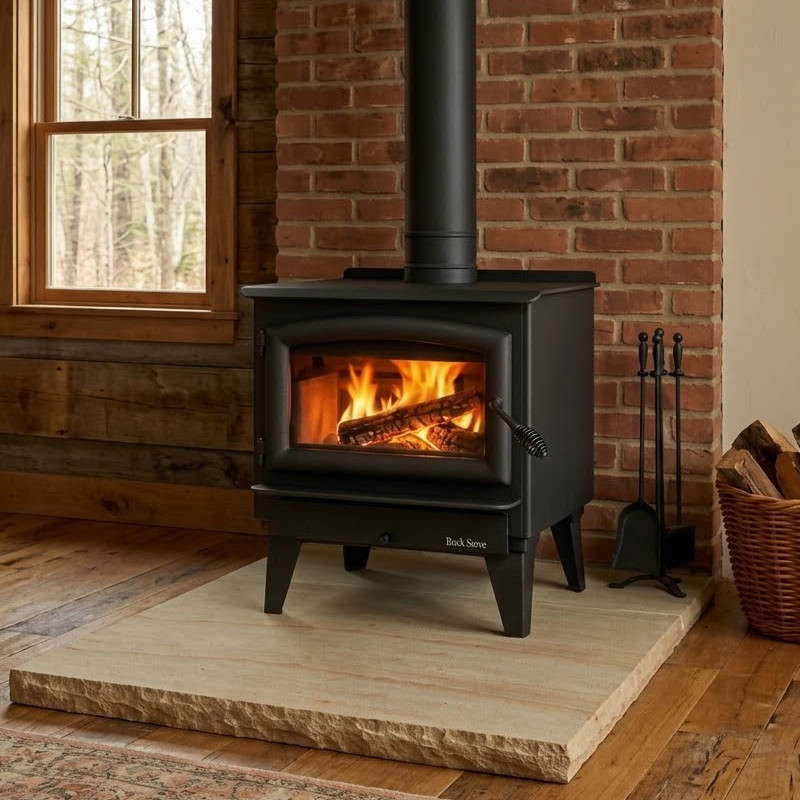
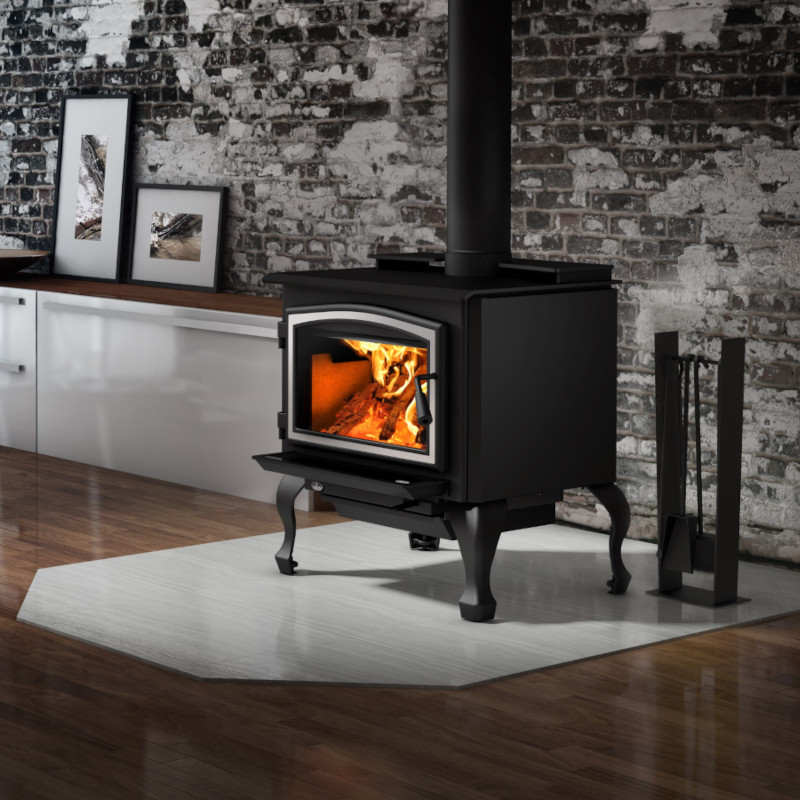
Using a wood stove starts with building and lighting a fire using dry, seasoned firewood and kindling with the air controls fully open. Once the fire is lit and the stove has warmed up, adjust the air controls to regulate burn rate and heat output. Use more air for a hotter fire and less for a slower, longer-lasting burn. You can reload with wood as needed. Always allow some ash to accumulate on the firebox floor to insulate the fire bed, and remove excess ash periodically to maintain good airflow.
Most wood stoves are designed and rated for wood burning only. Coal burns much hotter than wood and can damage a firebox not built for it, and burning charcoal indoors produces carbon monoxide at dangerous levels. If you want to burn coal, look specifically for a multi-fuel stove rated for both wood and coal combustion. You should not attempt it in a stove not designed for it.
The easiest method is to dip a damp paper towel in the fine white ash from the firebox floor and scrub the glass in a circular motion. The ash acts as a mild abrasive that removes soot without scratching. Specialized wood stove glass cleaner also works well for heavier buildup. Always clean when the stove is fully cool, and avoid standard household glass cleaners, which can leave residue that discolors when heated.
Open the air controls fully and place crumpled newspaper at the bottom of the firebox, followed by a layer of dry kindling arranged loosely to allow airflow. Light the newspaper, and once the kindling is burning well, add one or two small pieces of seasoned firewood. Allow those to catch before adding larger logs. Starting with smaller fuel and building up gradually establishes a strong draft and avoids a smoky, smoldering start that dirties the glass and produces excess creosote in the chimney.
Wood stoves burn firewood in an enclosed, controlled firebox where adjustable air vents regulate oxygen supply and combustion rate. Heat radiates outward through the cast iron or steel body, warming the room directly. In modern EPA-certified stoves, secondary combustion systems or catalytic combustors ignite gases produced during burning before they exit the flue, extracting additional heat and reducing emissions compared to older single-combustion designs, achieving thermal efficiencies of 75% or higher in qualifying models.
You can, but it comes with trade-offs. Pine ignites easily and burns hot and fast, making it useful for starting fires. However, it has a lower BTU content than hardwoods like oak or maple, burns through faster, and produces more resin and creosote, which can build up in the chimney and increase chimney fire risk if not managed with regular cleaning. Pine is best used as a fire-starting wood alongside hardwood rather than as a primary fuel.
The surface temperature of a wood stove during normal operation typically ranges from about 300°F to 700°F depending on burn rate and wood load. The internal firebox can reach 1,000°F or higher during a hot burn. Most manufacturers recommend keeping flue gas temperatures in the 300°F to 500°F range during sustained operation for optimal efficiency and to minimize creosote buildup. Running consistently too hot or too cool is not ideal for long-term performance or chimney health.
Yes, all combustion produces carbon monoxide as a byproduct. In a properly installed and well-maintained wood stove with a functioning chimney, those gases are vented safely outdoors. Carbon monoxide becomes a hazard when the flue is blocked, the chimney is not drawing properly, or the stove is used in a space without adequate ventilation. Installing a carbon monoxide detector near the stove is strongly recommended.
Wood stove blowers help circulate heated air from around the firebox and push it into the room for more even heat distribution. On freestanding wood stoves, the blower is typically located near the bottom rear of the stove, while inserts often have fans positioned at the front below the ash lip. Insert blowers generally pull cooler room air underneath the unit, move it up around the back of the firebox, and then push the warmed air back out through the top. Some models also offer variable-speed blower controls, allowing you to adjust airflow based on your heating needs.
Chimney cleaning removes creosote, which is a tar-like residue from wood combustion that is a fire hazard if allowed to accumulate. The chimney should be inspected and cleaned at least once per heating season, or more frequently for stoves used as a primary heat source. Cleaning involves using a chimney brush sized to the flue diameter to scrub the interior from top to bottom, dislodging creosote that is then collected and disposed of. Many homeowners hire a certified chimney sweep for this task, though it can be done DIY with the proper tools and safety precautions.
Yes, wood stoves are safe when properly installed, correctly maintained, and used as directed. All EPA-certified wood stoves sold at HVACDirect.com meet national safety and emissions standards. The most important safety factors are maintaining proper clearances from combustible materials, using a certified non-combustible floor protector, keeping the chimney clean and inspected annually, and burning only dry seasoned wood. Installing both a smoke detector and a carbon monoxide detector near the stove adds an important additional layer of protection.
Yes, they can if something goes wrong with the venting system. Carbon monoxide from a wood stove is most commonly caused by a blocked or improperly functioning chimney that allows combustion gases to back-draft into the living space rather than exhausting outdoors. A cracked flue liner, debris blocking the chimney cap, or a stove that is not drawing properly in a tightly sealed home can all create this risk. Annual chimney inspection, a functioning CO detector, and proper stove operation are the best defenses.
Minimum clearance distances vary by model and are specified by the manufacturer in the installation manual. As a general range, most freestanding wood stoves require at least 12 to 36 inches of clearance from unprotected combustible walls on the sides and rear. These distances can often be reduced with an approved heat shield. Always follow the specific clearance requirements listed for your model rather than general guidelines, and check whether local building codes impose any additional requirements beyond the manufacturer's specifications.