Your cookie preferences
We use cookies to remember your preferences and understand how shoppers use our site, helping us improve your shopping experience.
Read our privacy policyUnit Heater Categories
Shop by Fuel Type
Shop by Brand
Unit heaters are heating appliances that are designed to provide powerful and efficient heating to large open-air spaces where overcoming heat-loss in a less insulated, rugged environment is required. With a wide range of sizing options, common unit heater applications span a variety of spaces from residential garages, pole barns, and outbuildings to large-sized warehouses, factories, hangars, greenhouses, and indoor arenas.
Unit heaters are convection heaters, meaning they utilize a heat exchanger to heat air within the unit, like a convection oven, and then blow that hot air directly into the space. Unlike a central furnace, a unit heater usually delivers heat directly into the room without large supply ducts. Instead of running large ductwork through a building, unit heaters allow you to run small gas lines, electric lines, or hydronic pipes directly to the unit. That fuel is then converted to heat and expelled into the room all in one location, saving space, maximizing efficiency, simplifying installation, and lowering install costs.
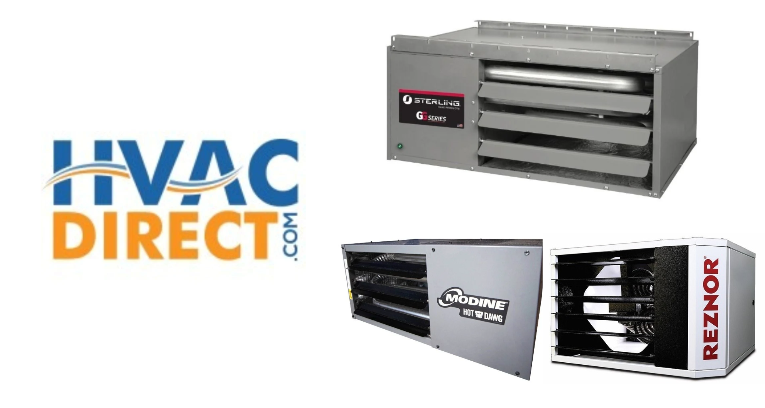
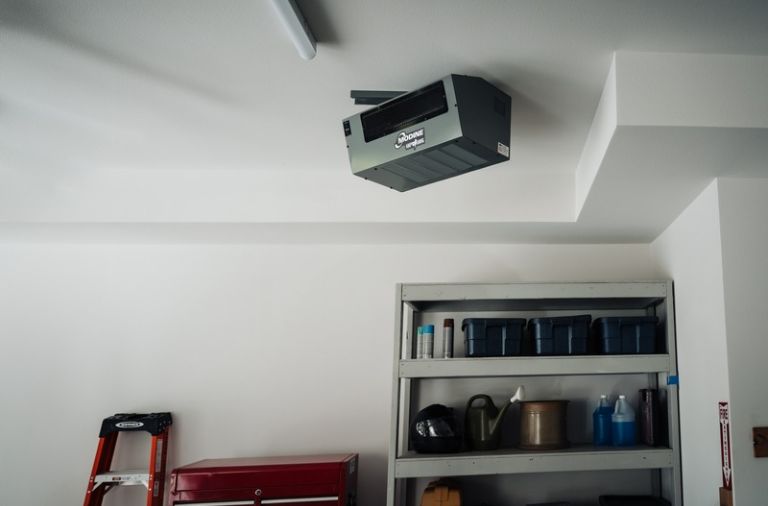
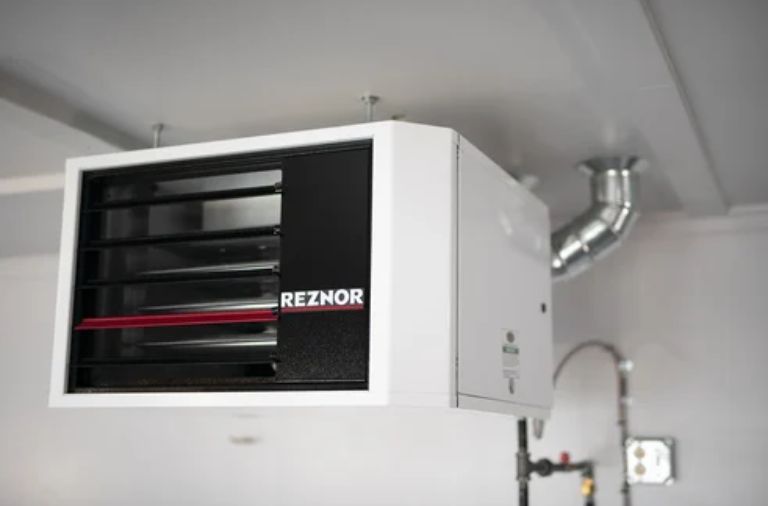
Unit heaters provide direct heat for climate control of wide-open residential and commercial layouts. Many models mount overhead, which can preserve usable floor space.
Select a unit heater by confirming the space’s cubic feet, ceiling height, insulation, local climate, available fuel or power source, and required heating capacity.
Unit heaters work well in garages, workshops, warehouses, loading docks, maintenance facilities, and other large indoor work areas. These spaces can benefit from direct heat without large supply duct systems.
Proper placement within these physical environments can support high-quality air circulation and help prevent cold spots across large operational areas. Install the heater according to the manufacturer’s mounting, clearance, venting, and airflow instructions to support effective heat distribution.
Depending on the equipment design, these heaters may use natural gas, liquid propane, electricity, fuel oil, or a hydronic hot-water or steam supply to deliver effective localized climate control. Selecting the correct unit heater configuration depends heavily on matching available utility hookups to the heating demands of the space.
Before choosing a configuration, verify the available fuel or power source, electrical requirements, venting needs, mounting location, and manufacturer installation requirements.
Selecting the right unit heater requires checking the core features that determine heat efficiency and longevity, specifically heat exchanger type and material, venting, and fan type. These structural specifications determine how safely and effectively the system heats large open spaces. Compare the exchanger type and material, venting configuration, and fan type when choosing a unit heater.
Balancing these primary specifications against building requirements ensures that the installed heater operates safely throughout peak seasonal demand. Compare the model’s heat exchanger material, venting requirements, fan design, capacity, airflow data, and installation manual before purchase.
Proper unit heater selection requires analyzing key operational factors such as heating capacity, fuel availability, voltage, altitude, and air throw direction and power. It is important to compare heater types and features, as those all impact performance and site compatibility.
Confirm capacity, utilities, voltage, altitude guidance, mounting height, and airflow direction before ordering the heater. Evaluating these logistical variables alongside structural specifications promotes higher-efficiency performance across temperature-sensitive and demanding environments for better comfort.
HVACDirect.com offers unit heaters from brands such as ACiQ, Reznor, Sterling, and Modine, which are known for noted engineering standards and proven durability to their specific commercial or residential heating units. These four industry leading brands are reputed for high performance, heating efficiency, and reliable heating output across diverse layouts.
Comparing these trusted manufacturers’ models and features can support long-term operational safety, energy savings, and reliable comfort during peak operating conditions. Check brands and models using verified HVACDirect.com specifications, including capacity, fuel type, efficiency, venting, electrical requirements, warranty, and compatible accessories.
Unit heater costs include the equipment price, installation, maintenance, and energy or fuel use. These cost factors determine the immediate purchasing budget and long term operational expenses of the system that support your desired climate control.
Prices shown here and below are planning estimates, not guaranteed costs. Equipment prices vary by heater type, heating capacity, efficiency, brand, and included accessories. Check current HVACDirect.com product listings for exact pricing. Installation, labor, energy, maintenance, and service costs vary by system size, efficiency, installation complexity, local contractor and utility rates, climate, and location. For an accurate project estimate, consult a qualified local HVAC professional or an HVACDirect.com specialist to point you in the right direction.
Permits (as needed) can carry a $200 to $1,000 cost, so balancing these initial and recurring financial elements is vital. Confirm local permit and inspection requirements with the authority having jurisdiction before installation. Before buying, compare the current equipment price, required accessories, installation quotes, expected energy costs, warranty terms, and routine maintenance needs.
Purchasing climate control equipment from an industry leader qualifies greater access to several distinct customer advantages that simplify the buying process. Those advantages include general improvements in pricing, shipping, customization, customer support, and higher quality product selection. These specialized service pillars ensure that property owners receive maximum value and reliable assistance throughout their project lifecycle.
Customization You Won't Find Anywhere Else: Specialized ordering options allow buyers to configure voltage types, altitude adjustments, and fuel conversions precisely to their building requirements. This tailored approach ensures seamless integration into unique industrial and agricultural layouts.
Expert HVAC Support: Dedicated technical specialists provide professional guidance to help customers select the correct BTU capacity, venting style, and accessories. HVACDirect.com support can help buyers review product specifications, but a qualified installer and the local authority having jurisdiction must confirm code-compliant installation requirements.
Top Unit Heater Brands: The curated catalog features top manufacturing names like Modine, Reznor, Sterling, and ACiQ for proven reliability. Buyers receive heavy-duty equipment built with titanium-stabilized aluminized steel heat exchangers and high-efficiency burners.
Long Term Support: Comprehensive customer care continues long after delivery with readily available replacement parts and manufacturer warranty assistance. This ongoing commitment inspires confidence that installed systems maintain peak performance for years to come.
Before ordering, verify the exact model’s price, stock status, shipping details, accessories, warranty terms, and installation requirements. Doing so can help you leverage product performance benefits and helpful heating solutions from your product research and purchase.
The right unit-heater size depends on the space’s cubic feet, ceiling height, insulation, local climate, and desired indoor temperature. As a starting point, HVACDirect.com recommends 1 BTU per 20 square feet for an 8- to 10-foot ceiling and 1 BTU per 17 square feet for a taller ceiling. Adjust the estimate for insulation and geographic location. If you live in a northern climate zone, you should increase your BTU requirement upward, and if your shop lacks proper insulation, you must account for additional heat loss to maintain comfort. Unit heaters currently available on HVACDirect.com may range roughly from 10,000 BTU all the way up to over 400,000 BTU for applications across residential garages, commercial workshops, and large industrial facilities. For a more accurate recommendation, provide an HVAC professional with the building dimensions, ceiling height, insulation level, climate, fuel or electrical options, and intended use.
Unit heaters only heat one zone at a time and in the particular zone where they are each installed. If you are heating multiple rooms or zones, you will want an appropriately sized heater for each. Many garages and small workshops use one properly sized unit heater, while larger or irregular spaces may need multiple units. Measure the space and account for ceiling height, insulation, geographic location, and heat loss. HVACDirect.com recommends starting with 1 BTU per 20 square feet for 8- to 10-foot ceilings or 1 BTU per 17 square feet for taller ceilings, which tells you if one large unit or potentially two smaller units would work best. Very large warehouses may require multiple heaters placed according to the heating load, building layout, mounting height, and airflow plan for improved redundancy and heat distribution. Most residential garages, workshops, and small commercial spaces perform adequately with a single correctly sized unit heater mounted on the ceiling or wall.
Unit heater service life varies by model, installation quality, maintenance, operating hours, and environmental conditions, but a 15- to 25-year range is commonly forecasted (under normal operating conditions in commercial or industrial settings). These heavy duty heating systems rely on durable aluminized steel heat exchangers and robust blower assemblies to withstand years of continuous winter use. Follow the manufacturer’s maintenance schedule and inspect the heater more often when it operates in dusty, corrosive, or high-use environments.
Follow the service interval in the selected unit heater’s manufacturer manual. Schedule maintenance before the heating season and more often if the manual or operating conditions require it. Routine maintenance can help identify dirty components, worn parts, and safety concerns before heavy seasonal use. Dusty or corrosive environments may require more frequent inspection and cleaning. Follow the selected model’s maintenance instructions for filters, burners, heat exchangers, fans, and controls. Scheduling regular tune-ups preserves thermal efficiency and helps the heating unit operate safely over its entire lifespan.
These heaters can operate effectively in extreme cold temperatures when properly sized for local heat loss. Operation also depends on the model, building heat loss, insulation, fuel or power supply, and installation conditions. For severe winter conditions, choose a heater using a verified heat-loss calculation and follow the manufacturer’s installation requirements. Facilities located in harsh climates require careful BTU calculations and high-efficiency models to overcome extreme structural heat loss. Improve insulation and air sealing, then confirm that the heater capacity matches the building’s calculated heat loss.
Unit heaters should be installed for optimal clearance and safe airflow distribution, as specified in the manufacturer’s installation manual and required by local code. Choose a location that supports safe clearances, service access, approved vent routing where needed, structural support, and effective airflow across the occupied area. Mechanics and facility managers must maintain required minimum clearances from combustible walls and ceilings as specified by the manufacturer. Use only the mounting method, hardware, structural support, and clearances approved in the unit’s installation manual.
Most direct-discharge unit heaters heat the space where they are installed rather than connecting to a home’s central supply-duct system. Confirm the selected product’s approved installation configuration. Installation requirements vary by heater type and may include a gas or propane supply, a dedicated electrical circuit, hydronic piping, and venting for combustion models. Do not connect a unit heater to ductwork unless the manufacturer specifically approves that configuration and a qualified HVAC professional designs the system. For a ducted commercial heating application, compare equipment designed for duct connections, such as duct furnaces, and work with a qualified HVAC professional on the system design.
Electric unit heaters typically require a dedicated circuit, but confirmation of the electrical requirements for the selected heater in its installation manual is advised. HVACDirect.com states that a typical electric garage heater requires 240V power and a dedicated circuit. HVACDirect.com recommends hiring a certified electrician to install the required dedicated service line for an electric garage heater.
Many unit heaters can use compatible wall-mounted thermostats to control room temperature. Many ceiling-suspended gas or electric unit heaters utilize low-voltage (24V) control wiring connected to a remote wall thermostat positioned in the occupied zone. This setup allows users to regulate the climate without needing to reach the overhead appliance. Property owners should select a thermostat model compatible with their specific heating unit type, such as single-stage or multi-stage options, to ensure proper cycling and performance.
Standard unit heaters produce a moderate level of operational noise, typically ranging between 50 and 60 decibels (dB) depending on model, which is comparable to a normal conversation or office environment. For fuel-fired models, sound may come from the fan, motor, airflow, ignition sequence, and burner operation. Electric and hydronic models have different sound sources.
Installing a permanent unit heater typically requires contacting the local building department or authority having jurisdiction to determine local permit requirements before beginning work. Because these systems involve gas lines, high-voltage wiring, or structural venting, municipal codes often mandate permits and professional installation to verify safety compliance. Property owners should always check with local municipal or fire officials regarding regional restrictions and building inspection rules prior to setup.
Unit heaters typically feature a manufacturer warranty that provides separate coverage lengths for internal components and the primary heat exchanger individually. Many standard commercial and residential units may include a 10-year warranty covering the stainless steel or aluminized steel heat exchanger against structural failure, along with a 1-year to 5-year warranty for functional electrical and mechanical parts such as the gas valve, ignition system, and blower motor. Warranty coverage varies by manufacturer and model. Review the HVACDirect.com product page and the manufacturer warranty document for the heat exchanger, parts, labor coverage if any, registration requirements, exclusions, and claim procedures.



