We use cookies to make your experience better. To comply with the new e-Privacy directive, we need to ask for your consent to set the cookies. Learn more.

1-800-397-1392
Today's Hours 8am - 11pm estRequired Fields *
Out of stock
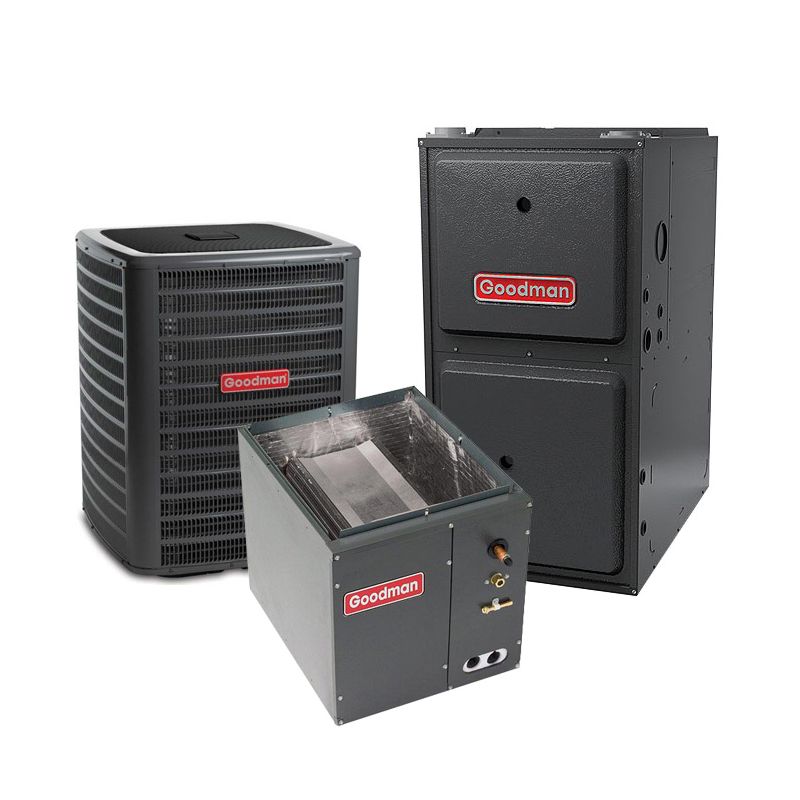
This Goodman system provides 1.5 Ton of cooling, 40,000 BTU of heating, and acheives 15 SEER. These features make it a perfect choice for your next system.
The Goodman GMEC960402BN furnace features a two stage gas valve and multi-speed blower motor that can be installed in either upflow or horizontal configurations. This furnace also features a X13 blower motor that saves electricity during the heating and cooling months. This direct current motor uses less electricity than the standard multi-speed furnace blower. This furnace also includes a patented aluminized-steel tubular heat exchanger and durable Silicon Nitride Hot Surface Ignition system. These furnaces are run-tested for heating or combination heating and cooling applications. With a heavy-gauge, reinforced, insulated steel cabinet and durable baked enamel finish, this unit can be installed in a variety of locations. Not intended for use in mobile homes.
The Goodman GMEC960402BN furnace has a 96% AFUE rating which means that for every every $1.00 you spend, 96 cents goes towards heating your home.
Furnace Features
Goodman AC - The GSX140181 Goodman Air Conditioner Condenser uses the chlorine-free refrigerant R-410A to help prevent damage to the Ozone Layer. This air conditioner 1.5 TON is equipped with sound-dampening features to provide operating sound levels are among the lowest in the heating and cooling industry. Using high-quality components,the Goodman GSX140181 air conditioner condenser an be either 14 or 15 SEER depending on which indoor unit it is paired with. If it is installed with the manufacturer-recommended evaporator coil, variable speed furnace, variable speed air handler, or variable speed modular blower, and also sometimes a thermostatic expansion valve (TXV), it is a 15 SEER system.
Please note that this product is regulated by DOE Efficiency Standards.
Posted on
Posted on
Posted on
Posted on
Posted on
Posted on
Posted on

For over three decades Goodman has concentrated on something more important than simple brand recognition consumer advertising. They focus on the design, engineering, and manufacturing of dependable products that have helped millions and millions of homeowners achieve reliable, high-quality, and affordable indoor comfort. In addition, Goodman has earned the loyalty and respect from thousands of local independent heating and cooling professionals across North America.