We use cookies to make your experience better. To comply with the new e-Privacy directive, we need to ask for your consent to set the cookies. Learn more.

1-800-397-1392
Today's Hours 8am - 11pm est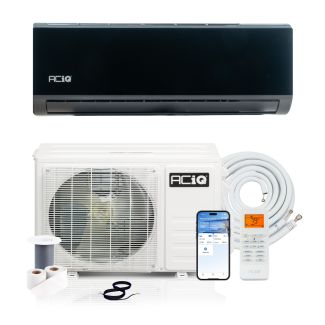


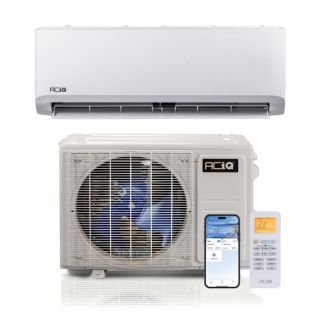

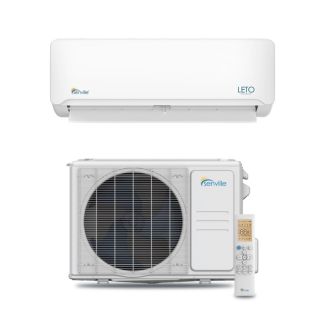

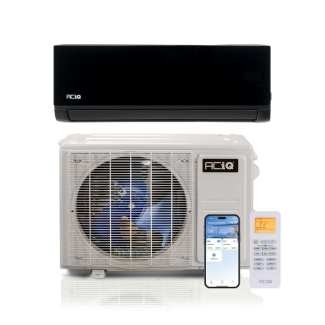
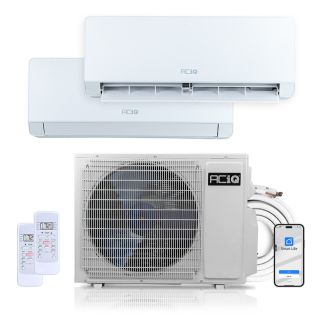
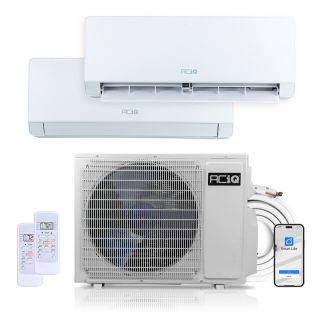
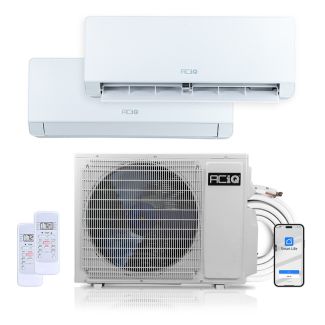
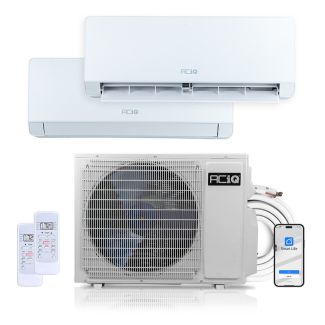
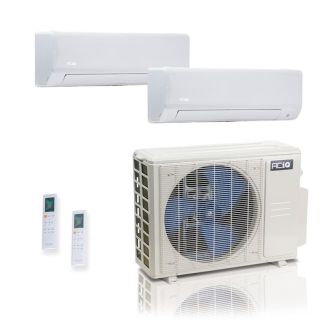
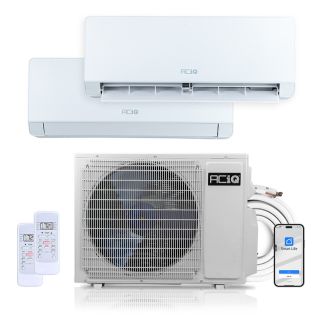
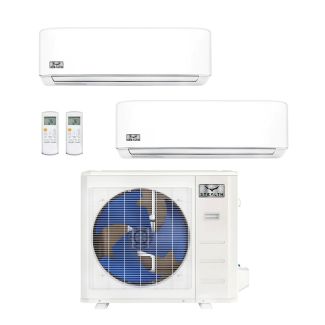

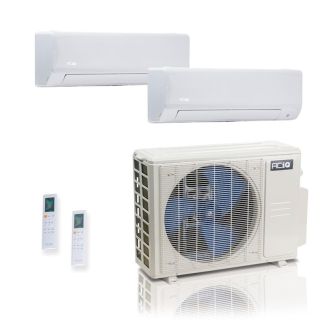
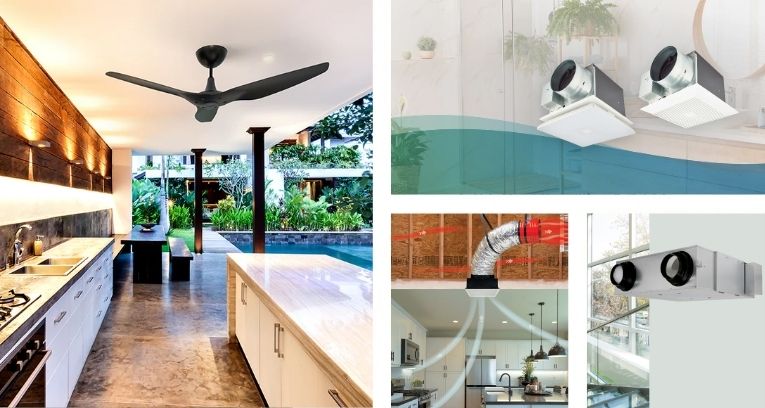

Basement mini splits are ductless heating and cooling systems designed to help control the cooler temperatures, dampness, and inconsistent airflow commonly found in finished and unfinished basements without requiring new ductwork. They connect an outdoor condenser to one or more indoor air handlers mounted in the basement to provide targeted climate control in areas that are often difficult for central HVAC systems to reach effectively.
These systems work by removing heat and humidity from the basement during warmer months to help keep the space cooler and drier. If your basement mini split system is a heat pump, it can also reverse the process during winter to bring heat into the space and maintain more comfortable temperatures year-round.
Basements are typically colder, more humid, and more prone to moisture issues than above-grade rooms. A basement mini split gives you precise control over the temperature, built-in dehumidification, lower energy usage, and easier installation without ductwork.
Independent Temperature Control: With a mini split, your basement gets its own temperature control, so you can keep it comfortable without affecting the rest of the house. Many systems also include their own handheld remote, making it easy to adjust settings for spaces like a home theater, gym, workspace, or living area without needing a wall thermostat.
Built-in Dehumidification: Basements are often more humid than the rest of the home, and a mini split can help reduce everyday moisture while cooling the space. Many models also include a dedicated dry mode for mild, damp days when full cooling is not needed.
No Ductwork Needed: Adding ductwork to a basement can be expensive and difficult because of limited access and the underground layout. A mini split only needs a small hole through an exterior wall to connect the indoor and outdoor units, making installation much simpler and often more affordable.
Energy Savings: Because a basement mini split system runs independently from a central HVAC system, you only need to heat or cool it when it's being used. No more wasting electricity and heating or cooling an empty space just because the rest of the house needs it.
Central HVAC systems often struggle in basements because they are not designed to handle higher moisture levels, and longer ductwork that runs to lower levels can lose significant heating and cooling before the air reaches the space. Placing a mini split in a basement solves both problems by delivering heating, cooling, and dehumidification directly in the space without ducts, helping prevent the humidity buildup that leads to mold and musty odors.
Mini splits are an excellent solution for normal basement humidity, but they may not be the best standalone option for spaces with severe moisture issues, active water leaks, standing water, or poor ventilation. In those cases, the underlying moisture problem should be corrected first, and a separate dehumidifier or drainage solution may also be needed. If your basement is very small or has a low ceiling, a standard mini split may be too large, leading to short-cycling, where the unit turns on and off constantly, which reduces efficiency and humidity control. Also, installation can become more expensive if there is no easy path for drainage or electrical lines, or if the indoor unit must be placed on an interior wall.
Mini split air conditioners work in most basements when properly sized based on square footage, insulation, and ceiling height. Some examples include finished basements, basements used frequently as living spaces, offices, gyms, or guest rooms, walkout basements, and any basement without ductwork. Here’s why homeowners choose a basement mini split for each space:
Finished Basements: These systems work well in finished basements used as living rooms, home theaters, or family rooms that require year-round temperature control.
Basement Home Offices, Gyms, or Workspaces: Basement offices, workspaces, or gyms are ideal because you can heat or cool only that area on your schedule, while handling extra heat and humidity from workouts.
Basement Rental Space or In-Law Suite: A basement converted into a guest bedroom or rental unit benefits from its own independent climate control. A mini split gives the occupant full control over their comfort without sharing a thermostat with the rest of the house.
Walkout or Above-Grade Basements: Walkout basements with direct access to the outdoors are especially well-suited for mini splits because the outdoor unit can be installed nearby, making it easier to run refrigerant lines and complete the installation.
Unfinished or Ductless Basements: If your central AC system's ductwork doesn’t reach your basement, or if your basement is unfinished and doesn't have any ductwork, a ductless mini split can provide heating and cooling without installing expensive ductwork.
Keep in mind that damp basements, poor insulation, exposed concrete walls, drafty areas, or water intrusion can affect comfort and efficiency. Addressing those basement-specific issues first in any type of basement can help the system perform at its best.
You can install a mini split in your basement yourself or have a professional handle it. Here’s what each option involves:
DIY Basement Installation: Some brands, like Stealth and MRCOOL, sell systems with pre-charged line sets made for self-installation. Basements are often a good place for a mini split because the lines can usually run straight outside through the exterior wall, making installation simpler and more direct. A DIY project still requires proper mounting, drainage planning, wall penetration, and electrical work completed according to local code requirements, often by a licensed electrician.
Professional Basement Installation: Hiring an installer means the setup work is handled for you from start to finish, including equipment placement, line routing, startup procedures, and coordinating permits or code requirements when needed. Professionally installed systems from brands like ACiQ, Mitsubishi, LG, and Daikin are popular choices because they offer advanced features, higher efficiencies, and strong warranty support when installed by a licensed HVAC contractor. In some cases, equipment pricing may also be lower for standard systems because they do not include pre-charged DIY line sets, with labor quoted separately.
Most local jurisdictions require mechanical and electrical permits for basement mini split installations, and requirements vary by city and county. With professional installation, permits are typically handled and included in the cost, while DIY installers usually need to obtain them themselves to stay compliant and protect their warranty.
A basement mini split typically costs between $500 and $5,000+, depending on the basement's size, the system brand, the complexity of the installation, whether it’s single or multi zone, and whether you choose DIY or professional installation. Here is a breakdown of those costs:
Equipment Cost: $500 to $3,000+, depending on BTU capacity, brand, SEER2 efficiency rating, and whether you need a single zone unit for a single open basement or a multi zone system for a basement with multiple zones.
Installation and Labor Cost: $500 to $2,500+, which accounts for the complexity of drilling through concrete foundations and running electrical circuits to the main panel. With DIY installations, there will be no labor costs.
Operating and Maintenance Cost: Around $30 to $50+ per month in electricity, depending on usage, climate, and local utility rates, plus $100 to $200 per year for filter replacements and an annual professional cleaning and tune-up.
Permit costs vary by location but often start around $100 and can increase depending on local city or county requirements.
Wall mounted units are best for unfinished basements due to lower cost and easy installation, while ceiling cassettes are preferred for finished basements to hide equipment and preserve wall space. Here are the different styles available:
Wall Mounted: Installed high on the wall for reliable airflow and easy maintenance, wall mount units are the most common option for unfinished basements and budget-conscious projects. They help keep equipment above potential floor moisture and usually require the simplest installation.
Ceiling Cassette: Recessed into the ceiling for a clean, out-of-the-way look, ceiling cassettes work well in finished basements with drop ceilings or drywall ceilings where enough overhead space is available.
Slim Ceiling Cassette: A lower-profile, compact version of the ceiling cassette designed for basements with shallower ceiling cavities or tighter overhead clearances.
Floor Mounted: A great option for basements with limited wall space or lower ceilings, these units sit near the baseboard and deliver airflow at floor level, which helps distribute heat more effectively in cooler underground spaces. If your basement has a history of flooding, there’s also a universal, or ceiling-mounted, option that will keep the unit off the floor.
Concealed Duct: Hidden above a drop ceiling and connected to short duct runs, concealed duct units are ideal for finished basements where keeping equipment out of sight is a priority. They offer a clean appearance but usually come at a higher installation cost.
For finished basements, wall mounted units are often the least desirable from a design standpoint because they remain visible on the wall. For unfinished or low-ceiling basements, ceiling cassettes can be less practical due to higher installation costs, drainage complexity, and ceiling space requirements. The best option ultimately depends on your basement layout, ceiling height, finish level, and budget.
A basement mini split needs its own dedicated electrical circuit run from your main panel to the outdoor unit, along with the correct wiring between the indoor and outdoor units. These are general guidelines to follow; please refer to your model’s manual for specific requirements. Here is what you will need:
Power Supply: Basement mini split systems typically operate on either 115/120V or 208/230V power, depending on the model and your home’s electrical setup.
Surge Protection: Because basement systems can be sensitive to voltage spikes and power fluctuations, an outdoor surge protector is highly recommended to protect the inverter board.
Outdoor Disconnect: A weatherproof safety switch must be mounted near the outdoor condenser to comply with the National Electrical Code (NEC).
Wire Size: Wire size, breaker size, and communication wiring vary by system and installation conditions, so always follow the manufacturer’s specifications and local electrical codes. Wire size is usually between 14 AWG and 10 AWG.
Branch Box: A basement mini split will typically not need a branch box unless you have multiple air handlers. If so, check the model specification to see if one is required.
When installing, it’s vital to follow the Minimum Circuit Ampacity (MCA) and Maximum Overcurrent Protection (MOP) ratings on the unit's nameplate to prevent electrical fires or equipment failure.
A 12,000 BTU to 18,000 BTU single zone system is the most common size range for a standard basement of about 400 to 600 square feet. If you’re using a multi zone system, that same BTU range typically applies to the individual basement air handler, not the total outdoor unit capacity. Opt for an 18,000 BTU unit if your basement has higher moisture levels or poor insulation.
9,000 BTU (250 to 400 sq. ft.): Great for adding heating and cooling to a basement bedroom, guest suite, or other enclosed room that needs independent temperature control. These smaller air handlers are commonly used to condition individual spaces within a finished basement rather than the entire basement itself.
12,000 BTU (400 to 600 sq. ft.): This 1 ton unit is a good fit for basement bedrooms, home offices, workout rooms, or other enclosed basement spaces with insulation and typical below-grade humidity levels. It is most commonly used to provide independent heating and cooling for a specific room or section of a finished basement rather than conditioning the entire basement area.
18,000 BTU (600 to 1,000 sq. ft.): The second most common option for larger, one-room basements. They’re ideal for basements that need a bit of extra power, especially if the space has an open layout, higher ceilings over 8 feet, tends to be more damp, or has poor or no insulation like in unfinished basements.
24,000 BTU (9=1,000 to 1,500 sq. ft.): Massive "man caves" or basement tenant suites that include kitchenettes and gyms.
30,000+ BTU (1,250 to 1,750+ sq. ft.): A popular size if you need a multi zone system, especially for larger basements with multiple finished rooms that function like an additional floor of the home.
Never guess on sizing. An undersized unit may run constantly, struggle to reach the set temperature, and increase energy bills. An oversized unit may short cycle, meaning it turns on and off too quickly, which can reduce efficiency and prevent proper humidity removal, an important factor in keeping a basement dry and comfortable.
Basement sizes vary widely, so the right mini split setup depends on the square footage, layout, ceiling height, insulation, and how the space is used. Many smaller or open basements can be heated and cooled effectively with a properly sized single zone mini split, while larger or divided basements may benefit from a multi zone system.
Single Zone Basement Mini Splits: The right choice for most homeowners who need to heat and cool a single open basement area, whether it's finished or unfinished. A single zone system is simple to install, affordable, and easy to maintain, and one correctly-sized unit is usually enough to heat and cool most standard basements.
Multi Zone Basement Mini Splits: If your basement has multiple rooms, such as a separate bedroom and office, or is a large open layout, where one indoor unit can’t reach every corner, a multi zone mini split is the better choice. Since multi zone systems connect two or more indoor air handlers to a single outdoor unit, each area has its own thermostat and temperature control.
Factors like basement square footage, ceiling height, insulation, moisture levels, and room layout should be considered before choosing between a single zone or multi zone system.


Basement mini splits are quiet, usually only about the sound of a whisper, and range from 19 to 35 decibels (dBA) per indoor unit. They are significantly quieter than window units or portable ACs, making them a good fit for basement home theaters, offices, and bedrooms.
Labor costs for a mini split professionally installed in a basement range from $500 to $2,500+ for a single zone. Multi zone systems will have higher labor costs, and if you are installing it yourself, there are no labor costs.
ACiQ, Mitsubishi, LG, and Daikin are top choices for reliability, while Stealth and MRCOOL are the favorites for those who want to tackle the job as a DIY project.
Yes, they are the #1 choice for finished basements because they don't require tearing down drywall to install bulky metal ductwork. These spaces are used regularly for living, entertainment, or work, and need consistent comfort that a central system either can’t or struggles to deliver to a below-grade room.
Yes, a mini split in an unfinished basement can help control moisture and keep the space from getting too cold in winter or too hot in summer, especially if you use the basement for storage, laundry, or workshop activities. Keep in mind that poor insulation and exposed concrete walls will make the system less efficient, and insulating at least the immediate installation area can help reduce energy loss.
Yes, Mitsubishi is one of the most reliable brands for basement mini splits. Their systems are known for quiet operation, strong dehumidification performance, and long service life, all of which are important for a basement environment. Popular options include Mitsubishi’s premium wall-mounted systems, including the Mitsubishi FX-Series, known for their quietness, Wi-Fi control, strong humidity management, and high efficiency. Another well-known, affordable product line that is popular for basements is the GL Series.
Yes, most basement mini splits are heat pumps that provide both heating and cooling from a single unit. In summer, they pull heat and humidity out of the basement. In winter, they extract heat from the outdoor air and deliver it inside, keeping the naturally cold basement warm even on freezing days. However, there are also cooling-only mini splits that can’t provide heat, so check your model before purchasing.
Yes, a basement can be a practical location for a DIY mini split installation. Brands like MRCOOL and Stealth offer pre-charged systems that do not require a refrigerant license, and routing the line set through a basement rim joist is often simpler than running it through upstairs walls or ceilings. You will still need to follow local permit requirements and have any required electrical work completed by a licensed technician.
Yes, most units also include a “Dry Mode” that reduces basement humidity without running full cooling, which is useful in a damp basement when you don't need the temperature lowered. Dehumidification occurs naturally in a mini split during cooling, as moisture condenses on the evaporator coil and drains through the condensate line.
HVACDirect.com offers wholesale pricing, free shipping on many complete systems, and a wide selection of basement mini splits from brands like ACiQ, Mitsubishi, LG, Daikin, Stealth, and MRCOOL. Our team has experience helping homeowners choose systems specifically for basement applications, including finished basements, home gyms, offices, guest suites, and damp below-grade spaces that need better humidity control. We can also help match the right BTU size, indoor unit style, and zone configuration to your basement’s layout and how the space is actually used.