We use cookies to make your experience better. To comply with the new e-Privacy directive, we need to ask for your consent to set the cookies. Learn more.

1-800-397-1392
Today's Hours 8am - 11pm est







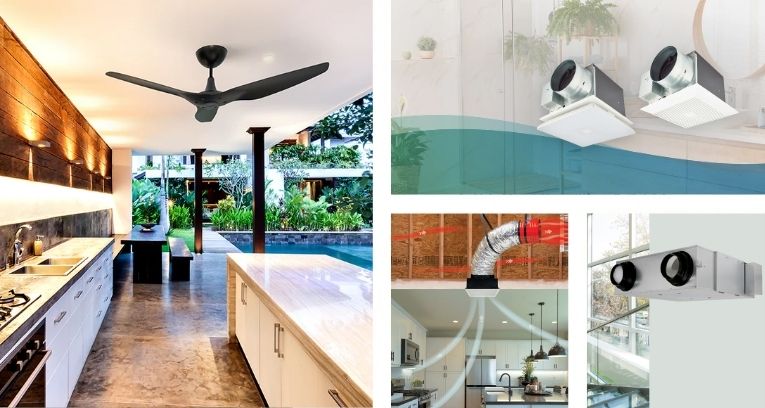

Whole-house mini split systems are ductless or short-run ducted heating and cooling systems that use a single outdoor heat pump connected to multiple indoor air handlers throughout the home. They can replace an existing HVAC system entirely or serve as the primary source of heating and cooling in homes that never had ductwork installed.
These systems move refrigerant between the outdoor and indoor units to provide cooling in summer and, on heat pump models, heating in winter, while cooling-only options are also available. Each indoor unit operates independently with its own thermostat, so every room in your house can be set to a different temperature.
For homes without existing ductwork, homes with aging central systems, or homeowners looking for more control and efficiency, a whole-house mini split is one of the most practical upgrades available. Here is why so many homeowners are making the switch:
Precise Multi Zone Comfort: You can set different temperatures for each room, allowing family members to customize their environments without affecting others. You can also turn indoor air handlers down or off in empty rooms to lower your electricity usage and bills.
Easy Retrofitting: These systems work especially well in older homes like farmhouses, Victorians, and historic properties where adding bulky ductwork could require major demolition or alter original architectural features. A ductless mini split allows you to add modern heating and cooling while preserving the home’s existing layout and character.
No Ductwork, No Problem: Installing central ductwork in a home that was never designed for it can be expensive, time-consuming, and invasive. A whole-house ductless mini split connects through small wall penetrations instead of large duct runs, making installation faster, less disruptive, and often far more cost-effective.
Superior Efficiency without Duct Loss: Because mini splits don’t use ducts, they avoid the 20% to 30% energy loss that is common in traditional central air systems, saving significant money on energy bills.
Extremely Quiet Operation: Designed to operate at minimal noise levels, both indoor and outdoor units are much quieter than traditional HVAC systems or window units, ensuring a peaceful living environment throughout your home.
Central ducted systems struggle to deliver consistent comfort across a whole home because duct runs lose efficiency over distance, airflow is difficult to balance between rooms, and the system has no way to treat each space differently. Central systems use one thermostat for the whole home, while mini splits let you adjust each room as needed.
A whole-house mini split may not be the right fit if your home already has efficient ductwork and a newer central HVAC system that does not need replacement. Homes with very poor insulation or significant air leakage may also see underwhelming results until those issues are addressed, regardless of how capable the mini split system is. Additionally, if you prefer a completely invisible HVAC solution and lack the wall or ceiling space to accommodate several indoor air handlers, a different type of heating and cooling system may be more appropriate.
Whole-house mini split AC systems work best in homes where ductwork is absent or impractical, such as buildings built before central air conditioning was standard. They’re also great for seasonal homes that don’t need heating and cooling year-round. Here are some of the most common whole-house mini split applications:
Homes without Existing Ductwork: Ductless mini split systems are one of the most practical ways to add whole-home heating and cooling to houses that were never built with central air. Because they do not require large duct runs through walls, ceilings, or crawlspaces, installation is usually faster, less invasive, and more affordable than adding central ductwork.
Older, Victorian, Farm, or Other Historic Homes: Historic homes often have plaster walls, original woodwork, radiators, or boiler systems that make installing traditional ductwork especially difficult without major remodeling. A whole-house mini split system adds modern heating and cooling while preserving the home’s original architecture and reducing the need for structural changes.
New Construction or Major Renovations: Building a new home or doing a full renovation is an ideal time to install a whole-house mini split instead of a traditional ducted system. It avoids the cost of ductwork and allows you to build in room-by-room temperature control from the start.
Vacation Homes or Seasonal Properties: Homes that sit empty for long periods benefit from turning off unused zones and only conditioning occupied areas instead of running the entire system year-round.
Poor insulation, significant air leakage, very high ceilings, and extreme climate conditions can all affect how efficiently a whole-house mini split system maintains comfortable temperatures throughout the home, and these factors should be accounted for when selecting the system size and efficiency ratings.
Yes, a whole-house mini split can be installed as a DIY project or by a licensed HVAC professional, depending on the system and your comfort level with the work involved. Here is what to know about each path:
DIY Whole-House Installation: DIY whole-home mini split systems come pre-charged, pre-vacuumed, and include the major installation components, making them a good option for handy homeowners. However, DIY systems are typically limited to 5 to 6 zones and are better suited for smaller whole-home applications rather than large houses with many rooms. While DIY installation can save on labor costs, whole-house systems are more complex than single-zone installs, and electrical work, permits, and code compliance are still required.
Professional Whole-House Installation: For multi-zone systems, a licensed HVAC technician handles refrigerant connections, vacuuming, pressure testing, mounting, and line set routing, while a licensed electrician completes all electrical work. Professional installation costs more in labor, but can offer better equipment pricing and ensures everything is done correctly without you having to manage the process.
Mechanical and electrical permits are required in most jurisdictions for whole-house mini split installations. Because the system covers the whole home, permit requirements may be more involved, so check with your local building department before starting.
Whole-house mini split systems vary widely in cost, typically ranging from $3,600 to $20,000+, depending on the size of the home, the number of zones, whether you’re installing it yourself or having a professional do it, the brands and models selected, and local labor rates. Here’s a breakdown of estimated costs.
Equipment Cost: $3,600 to $12,000+ for a whole-house system, depending on the number of zones, the BTU capacity of each indoor unit, and the system's efficiency and feature level. Multi zone systems covering larger homes with more indoor units will fall toward the higher end of that range. In the rare case your home can be air conditioned with a single-zone system, the equipment cost may be lower than this range.
Installation and Labor Cost: $1,500 to $6,500+, which accounts for mounting multiple indoor units, complex line runs, and potential electrical panel upgrades. Professional installation will cost more than DIY, though you may still need to purchase additional installation materials.
Operation and Maintenance Cost: $40 to $100 monthly for electricity, depending on usage and local power rates. Maintenance is generally cheap, with most systems coming with washable filters and self-cleaning features. If you want a professional annual cleaning or need repairs, it will cost around $150 to $300+.
Required permit fees for a project of this scale generally cost between $150 and $1,000, depending on your local municipality’s specific requirements for whole-home HVAC upgrades.
Wall mounted air handlers are the most common and versatile option for whole-house mini split systems. For rooms with different layouts or design needs, there are also other indoor unit types to consider:
Wall Mounted Air Handlers: Mounted high on an interior or exterior wall, these are the default choice for most rooms, providing even airflow and working well in bedrooms, living rooms, offices, and other standard spaces.
Floor Mounted Air Handlers: These sit low near the baseboard and are a practical alternative for rooms with large windows, sloped ceilings, or limited upper wall space. There are also universal floor models that can be mounted to a ceiling or wall for spaces that need more flexible placement, such as garages or attics.
Ceiling Cassette Air Handlers: Built into the ceiling and designed to distribute air in multiple directions, cassettes work well in open-plan living areas, kitchens, or dining spaces where a wall mounted unit would be too visible or less effective at covering the entire space.
Slim Ceiling Cassette Air Handlers: A lower-profile cassette option for rooms where ceiling depth is too shallow for a standard cassette, offering multi-directional airflow in a more compact form.
Concealed Duct Air Handlers: Hidden above the ceiling or within a soffit and connected to short duct runs, concealed duct units suit rooms where keeping all equipment completely out of sight is the priority. They cost more and require more complex installation, but offer a clean, vent-only appearance in the room.
Concealed duct air handlers are less common because they require short duct runs and a higher installation cost, making them a more specialized option compared to fully ductless systems. While some systems are sold with all of the same air handler type, you can also buy ones where you can mix and match indoor unit types across zones in the entire house as needed.
The electrical requirements for a mini split for an entire house vary by model, brand, and whether you are installing a single zone or multi zone system. Most multi zone whole-house mini splits require communication wiring to each indoor air handler, a dedicated circuit for the outdoor condenser, and a disconnect switch for easy shut-off in case of emergencies. Here are some general guidelines:
Dedicated Circuits: Each outdoor unit requires its own dedicated circuit breaker, not shared with other appliances or outlets. A whole-house system with multiple outdoor units will require multiple dedicated circuits.
Breaker Size: Breaker sizing varies by unit and must match the system's specified electrical requirements. Mini split systems can require breakers ranging from 15 amps to 60+ amps for larger multi zone outdoor units.
Outdoor Disconnect Switches: A weatherproof, non-fused disconnect switch must be installed within sight of each outdoor unit as required by most local electrical codes.
Power Supply: Whole-home mini split systems typically operate on either 115/120V or 208/240V power, depending on the model and your home’s electrical setup, with most systems using 208/240V.
Wiring: They typically require 10-gauge or 12-gauge copper wiring for communication between the outdoor and indoor units, though this may vary by model.
Branch Box: Certain high-capacity multi zone systems may require a branch box to distribute refrigerant and power to multiple indoor units. Check your model to see if one is needed, as some brands, such as ACiQ, do not require one on certain models.
Always reference the Minimum Circuit Ampacity (MCA) and Maximum Overcurrent Protection (MOP) ratings printed on each unit's nameplate before any electrical work begins. These are the numbers your licensed electrician needs to correctly size the breaker for every outdoor unit in your whole-house system, and getting them wrong can create safety hazards or cause repeated tripping.
For most whole-house mini split systems, a 36,000 to 48,000 BTU setup is the most common starting point, covering mid-size homes in the 1,500 to 2,700 square foot range. This BTU rating refers to the total capacity of the entire system, while each individual indoor air handler is sized specifically for the room or zone it serves. While this is a common baseline, you should select a system based on your specific square footage, layout, and zoning needs.
18,000 to 24,000 BTU (600 to 1,500 sq. ft.): Compact cottages, ranch-style houses, guest houses, or small two-bedroom homes requiring two to three indoor zones.
30,000 to 36,000 BTU (1,250 to 2,000 sq. ft.): Average-sized three-bedroom homes or large single-floor open-concept living spaces.
42,000 to 48,000 BTU (1,800 to 2,700 sq. ft.): Standard four-bedroom family homes with multiple levels or high-occupancy living areas.
60,000+ BTU (3,000+ sq. ft.): Large multi-generational estates or homes with vaulted ceilings and significant glass exposure that create high heat loads. These larger-capacity systems are also commonly used in homes with poor insulation or located in extreme climates.
Undersizing a whole-house system means certain rooms will never reach a comfortable temperature, and the system will run constantly trying to keep up, while oversizing causes short cycling that leaves rooms feeling humid and unevenly conditioned. Sizing each zone correctly for its specific space is just as important as the total system capacity.
Multi zone mini split systems are the most common configuration for whole-house applications, connecting multiple indoor air handlers to one or more outdoor units to cover every room in the home independently.
Single Zone Whole-House Mini Splits: A single zone system is suitable for whole-house coverage only in very small homes or open-plan spaces where a single well-sized indoor unit can realistically reach every area. In most cases, a single zone is better suited to supplement an existing system in a single problem area than to replace whole-home heating and cooling on its own.
Multi Zone Whole-House Mini Splits: The more common choice for whole-house coverage, connecting two to eight or more indoor air handlers to one or more outdoor units, depending on the size of the home and the total BTU requirement. Each zone operates independently with its own thermostat, and unoccupied rooms can be turned off or set back without affecting the rest of the house. Larger homes may require multiple outdoor units to cover the full load across all zones.
Whether you choose a single zone or multi zone system, whole-home performance ultimately depends on proper sizing and layout.



Yes, a properly sized multi zone heat pump mini split system can heat and cool an entire home. The key is making sure every room that needs conditioning has its own indoor unit sized for that specific space, and that the total outdoor unit capacity matches the combined load of all zones. If you need both heating and cooling, be sure to select a heat pump mini split, not a cooling-only one.
It depends on your home’s layout, existing ductwork, and how you want to control temperatures. Central AC is usually a better fit if you already have well-maintained ductwork and a layout that works with a single thermostat. A whole-house mini split is often the better choice for homes without ducts, hard-to-condition rooms, or homeowners who want room-by-room control and better energy efficiency.
A ductless mini split is a much better option than portable ACs for whole-house cooling. Portable units are only for single rooms and can pull warm air back in through the window hose, making them less efficient, louder, and blocking the window. Mini splits provide quiet, consistent, energy-efficient cooling throughout the home without those drawbacks.
Yes, whole-house mini splits are among the most energy-efficient options for heating and cooling, with high-efficiency models reaching up to 35 SEER2. Because they are ductless, they avoid the 20 to 30% energy loss common in traditional systems, and inverter technology helps maintain consistent temperatures with less energy. ENERGY STAR-certified models can reduce heating energy use by up to 60% compared to standard electric resistance systems.
Yes, on heat pump models, and particularly those with low-ambient or hyper-heat technology, mini splits can provide reliable whole-house heating even in very cold climates. Some models are rated to deliver full heating capacity at outdoor temperatures as low as -13°F. If you are in a region with harsh winters, look for systems specifically rated for cold-climate operation to ensure consistent performance when temperatures drop.
Most whole-house mini split installations use ductless indoor units because they are easier to install, more affordable, and work well in most room types. Slim ducted mini splits are a good option for rooms where you want a fully hidden installation with air delivered through ceiling vents, or for spaces where one unit needs to serve multiple adjacent areas through short duct runs. Many whole-house systems use a mix of both, with ductless units in most rooms and a slim ducted unit in areas where aesthetics or layout call for it.
It depends on the age and capacity of your electrical panel, since a whole-house mini split system adds multiple dedicated circuits, and older panels near capacity may need to be upgraded. It’s worth having a licensed electrician assess this early, as a panel upgrade adds cost and time and should be addressed before equipment is purchased. In general, most modern 200-amp panels can support a whole-house system, while older 100-amp panels may require an upgrade to handle the electrical demand.
Yes, a multi-zone mini split system can cover multiple floors of a home by placing indoor units on each level connected to an outdoor unit. Each floor or room operates independently, which is especially useful in multi-story homes where upper floors tend to run hotter than lower ones in summer.
Yes, and in many cases, they do it more effectively. Mini splits remove humidity as part of normal cooling operation, and because each zone runs based on the conditions in that specific room, humidity is addressed more precisely than with a central system that handles the whole house from one unit. Most mini splits also include a dedicated “Dry Mode” for days when dehumidification is needed without significant cooling, which central systems typically do not offer.
Indoor units typically run between 19 and 35 decibels, similar to a soft whisper, while outdoor units are around 45 to 65 decibels and are not very noticeable. Overall, mini splits are quieter than central systems, making them a comfortable choice for bedrooms, offices, and living spaces.
It depends on the system, as many multi-zone outdoor units support a limited number of indoor units, and adding more may require an upgrade or a second unit. If you plan to expand later, size the system with room to grow upfront. Always check the specifications for supported units and maximum BTU capacity.