Article Contents
Key Takeaways – Commercial Dehumidifier Sizing
- Accurate Moisture Load Calculation (PPD): Proper commercial dehumidifier sizing requires estimating daily moisture (pints per day) based on square footage, ceiling height, occupancy, and additional moisture sources to select a unit that maintains optimal humidity levels without overworking.
- Avoid Undersizing or Oversizing Commercial Units: Choosing an undersized commercial dehumidifier fails to control humidity—leading to mold, equipment damage, and compliance issues—while an oversized unit cycles too frequently, wastes energy, and delivers inconsistent humidity control.
- Match Dehumidifier Capacity to Specific Applications: Commercial dehumidifier sizing must be tailored for each environment—grow rooms, gyms, warehouses, or water-damage restorations—using high-capacity models (e.g., Quest Dual 225, Quest Dual 335) designed to handle unique moisture loads and compliance requirements.
In commercial spaces, commercial dehumidifier sizing isn’t just about comfort – it’s a matter of compliance, equipment protection, product preservation, and healthy air. Business such as gyms, warehouses, indoor agriculture, water damage restoration, and more depend on proper humidity management.
This comprehensive guide simplifies commercial dehumidifier sizing, ensuring even non-experts can confidently answer the question ‘what size commercial dehumidifier do I need.’ We'll walk you through the basics of sizing a commercial dehumidifier—even if you're not an HVAC expert.
How to Size a Commercial Dehumidifier
Step 1: Understand the Environment
The first step in our industrial dehumidifier sizing guide for answering the question ‘what size commercial dehumidifier do I need’ is analyzing and breaking down your environment. Here are a few factors to consider:
- Square Footage: The larger the room, the more air (and moisture) the dehumidifier must process.
Formula: Length × Width = Square Footage - Ceiling Height: Rooms with higher ceilings will have more moisture that needs to be removed.
Formula: Square Footage × Ceiling Height = Cubic Footage - Occupancy Levels: People naturally give off moisture through breathing and perspiration. In warehouses or offices, each person adds roughly 0.3–0.5 pints of moisture per hour. More people equals more humidity. This is especially important in gyms, spas, and warehouses where people are sweating at a faster rate.
- Moisture Sources: Appliances (like dryers or humidifiers), plumbing leaks, open crawl spaces, and plants all increase humidity. Industrial equipment can also contribute latent heat and vapor, requiring more powerful systems.
- Ventilation and Air Changes: Poor airflow causes humidity to linger. A room with less than 0.5 air changes per hour (ACH) can trap moisture.
Now that you understand your cubic footage and occupancy, let’s estimate your moisture load in pints per day. This tells you how to size a dehumidifier for commercial use—no guesswork, just the right numbers.
Step 2: Estimate the Moisture Load
Measuring the moisture load—essentially, how much moisture enters your space daily—is key. The moisture load is measured in pints per day or liters per hour. Pints per day, or PPD, is the standard way manufacturers rate a dehumidifier’s moisture-removing capacity. It tells you how many pints of water the unit can extract from the air over a 24-hour period under specific test conditions (typically 80 °F and 60 % relative humidity). Here’s how you can estimate:
- General Commercial Spaces: For standard environments, 1–2 pints per day per 100 square feet is a reasonable starting point.
- Agricultural and Grow Room Dehumidifier Sizing: Water vapor released by mature plants can produce approximately 3–4 gallons (24–32 PPD) of moisture a day per plant, with this number potentially tripling in the winter.
In certain industrial and agricultural settings, measurements may also use grains per pound (GPP) or pounds per hour (lbs/hr) to be even more accurate:
- Grains Per Pound (GPP): Used in HVAC testing, aerospace, and labs.
- Pounds per Hour (lbs/hr): Used in drying rooms, agriculture, and data centers.
Step 3: Match Moisture Load to Dehumidifier Capacity
After estimating your moisture load, the next step is to match this load to a suitable commercial dehumidifier. Here’s a simplified industrial dehumidifier size guide:
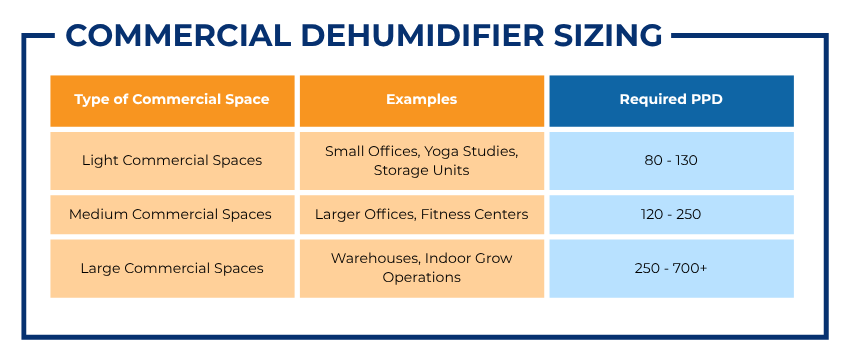
- Light Commercial Spaces (yoga studios, small offices, and storage units): 60–130 pints/day.
- Medium-Sized Spaces or Moderate Humidity Environments (larger offices, moderate storage areas, or fitness centers): 130–250 pints/day.
- Large Commercial Spaces or High-Humidity Environments (expansive warehouses, indoor grow operations): 250–700+ pints/day.
Simply, match your PPD load to a dehumidifier’s moisture removal capacity rating. If you’re unsure, oversizing slightly is safer than undersizing. This is especially true in high-humidity settings like indoor grows.
Real World Example - Commerical Dehumidifier in a Gym
Let’s size a gym that includes a workout area, locker rooms, and showers.
Step 1: Understand the Environment
The gym has the following characteristics:
- Total Area: 10,000 sq. ft.
- Ceiling Height: 10 feet
-
Occupancy: 35 people during peak hours
0.3–0.5 pints/hour per person = 0.4 × 2 hrs (estimated time at gym) = 0.8 PPD/person
35 × 0.8 = 28 PPD from occupancy - Cubic Volume: 10,000 sq. ft. × 10 ft. = 100,000 cubic feet in total
Step 2: Estimate the Moisture Load
We’ll calculate both low- and high-end rates using your validated cubic moisture conversion:
Moisture Rate Conversion:
- 100 sq. ft. × 10 ft = 1,000 cu. ft.
- 1–2 PPD per 100 sq. ft. = 1–2 PPD per 1,000 cu. ft.
So:
- Low End: 1 ÷ 1,000 = 0.001 PPD/cu. ft.
- High End: 2 ÷ 1,000 = 0.002 PPD/cu. ft.
Low-End Calculation:
- 100,000 cu. ft. × 0.001 = 100 PPD from air volume
- 100 + 28 (from occupancy) = 128 PPD total
High-End Calculation:
- 100,000 cu. ft. × 0.002 = 200 PPD from air volume
- 200 + 28 = 228 PPD total
Step 3: Match Moisture Load to Dehumidifier Capacity
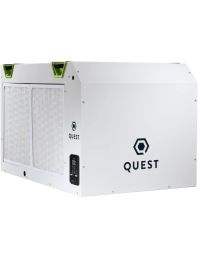
So, this estimate for a gym falls within a moderate humidity environment of 130–250 PPD. For this example, we might recommend that you invest in a Quest Dual 225, which has a max PPD of 225. If you think you might have more people using your gym or that they might stay for longer than the estimate we used here, you might want to consider investing in a Quest Dual 335 to be on the safe side.
Why Proper Sizing Is Critical in Commercial Spaces
Undersized vs. Oversized
Selecting the right-sized dehumidifier is crucial because an improperly sized unit can create serious challenges. An undersized dehumidifier struggles to keep humidity under control, resulting in excess moisture that can lead to mold, mildew, damaged equipment, and compromised products.
On the other hand, an oversized dehumidifier frequently cycles on and off, wasting energy, increasing your operational costs, and failing to adequately circulate air, resulting in inconsistent humidity levels. Both scenarios negatively impact business efficiency and the longevity of your facility.
Get the Best with the Right-Sized Dehumidifier
Properly sized commercial dehumidifiers improve indoor air quality, help ensure regulatory compliance, increase energy efficiency, and extend equipment lifespan. Companies can be fined for failing to maintain healthy humidity levels. For instance:
- Gyms and Fitness Centers: Poor humidity control can lead to moldy locker rooms, slipping hazards, and unpleasant odors. These can all be breaches of health codes.
- Warehouses: Improper storage conditions due to high humidity can damage goods and can also void manufacturer warranties or insurance coverage.
- Grow Operations: Cannabis facility state compliance often includes mandates for air quality, pest prevention, and mold control.
- Water Damage Restoration: Speed and moisture control are critical. Failure to follow industry guidelines such as those from the Institute of Inspection Cleaning and Restoration Certification (IICRC) can lead to legal liability or denied insurance claims.
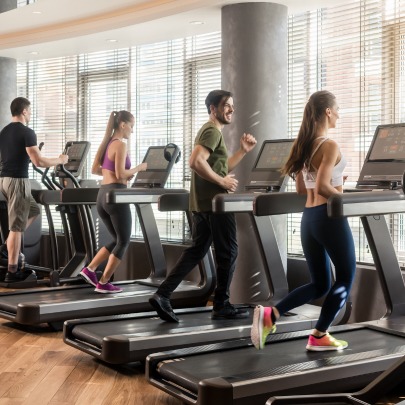
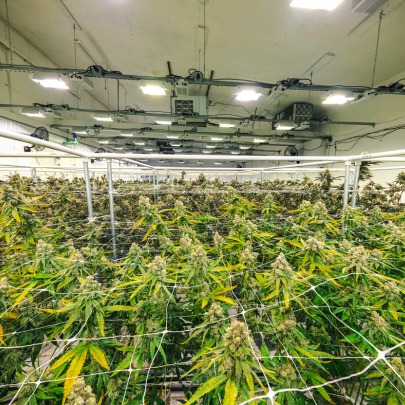
Brands such as Quest commercial dehumidifiers are specifically designed to thrive in these challenging environments, providing durability, energy efficiency, and the best moisture removal capacities tailored to each business’s needs.
Application-Specific Tips
Grow Room Dehumidifier Sizing
An indoor grow dehumidifier or dehumidifier for grow room must handle plant transpiration and high humidity levels. Moisture can cause mold and disease, negatively affecting crop yield and quality. Dehumidifiers specifically designed for grow rooms, like the Quest Dual 225 and Quest Dual 335, maintain ideal humidity levels.
Warehouse Dehumidifier Sizing
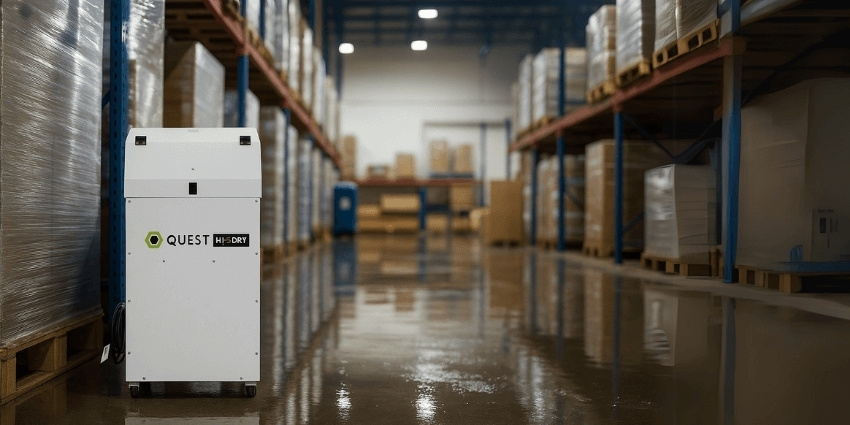
Big, open warehouses are humidity magnets. A ductable, high-volume dehumidifier tackles that by pulling in massive airflows and stripping out moisture, so your inventory stays free of mold, rust, and moisture damage. In high-moisture zones, you’ll need a commercial dehumidifier for high humidity—look for ratings above 300 PPD.
Water Damage Restoration Dehumidifier Sizing
After floods or leaks, swift moisture removal is vital in water damage restoration. Portable commercial dehumidifiers extract large volumes of water vapor to speed up drying and stop mold growth. Faster drying saves on repair costs and gets spaces back in use sooner.
Gyms, Indoor Pools, and Spas Dehumidifier Sizing
Gyms, indoor pools, and spas generate steam and sweat that can corrode metal and stain walls. Corrosion-resistant dehumidifiers clear humid air to prevent damage and slippery floors. Keeping moisture in check protects equipment and enhances comfort.
Benefits of Choosing Quest Commercial Dehumidifiers
Selecting a reputable brand like Quest commercial dehumidifiers offers multiple advantages. Quest dehumidifiers are built for:
- Energy Efficiency: Quest units are designed for optimal energy usage, significantly reducing operational costs.
- Reliability and Durability: Made in the USA, these units are built to withstand demanding environments.
- Versatile Capacities: Quest offers a wide range of units, from 70 to 700+ pints/day, suitable for diverse applications.
- Flexible Installation Options: Units are configurable for ducted or standalone use, accommodating various facility layouts and operational needs.
- Reputation: Trusted by industries such as agriculture, restoration, manufacturing, and healthcare, Quest is a benchmark brand known for quality and effectiveness.
Shop Quest Dehumidifiers
Picking the right commercial dehumidifier for your business doesn’t have to be hard. You can quickly and easily calculate an estimate of the capacity that you’ll need your commercial dehumidifier to be. With the right size, you’ll avoid damaging mistakes and keep mold and equipment wear and tear in check, saving you money in the long run.
If you’re unsure about selecting the right commercial dehumidifier and want a more detailed PPD calculation than our commercial dehumidifier sizing guide provides, our expert team is here to assist. We can guide you through every step to ensure you find the perfect Quest dehumidifier tailored to your business’s unique needs.
Commercial Dehumidifiers Frequently Asked Questions
“Pints per day” measures the amount of water a dehumidifier removes from the air within a 24-hour period, indicating its efficiency and capacity. By clearly understanding your moisture control needs, you'll confidently select the right commercial dehumidifier—protecting your investment, enhancing efficiency, and ensuring a healthier indoor environment for years to come.
Grow rooms typically require high-capacity dehumidifiers ranging from 250–700+ pints/day, depending on plant quantity, room size, and plant transpiration rates. Be sure to consider that plants themselves create moisture. Transpiration from mature plants can produce approximately 3–4 gallons (24–32 PPD) of moisture a day per plant, with this number potentially tripling in colder weather.
Yes, deploying multiple units can be beneficial for managing larger or compartmentalized areas, ensuring uniform humidity control throughout your facility.
Commercial dehumidifiers are built for continuous operation, offering higher moisture removal capacities, enhanced durability, and features specifically designed for demanding commercial environments.
Related Products

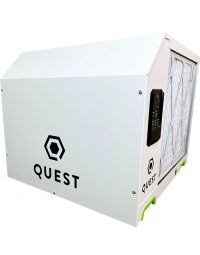
Quest 225 High-Efficiency Dehumidifier - 208/230V - R454B (SKU 4046100)
Brand: Quest
Price: $ 3,659.95 (In Stock)

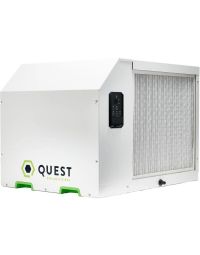
Quest 335 High-Efficiency Dehumidifier - 208/230V - R454B (SKU 4046200)
Brand: Quest
Price: $ 5,699.95 (In Stock)

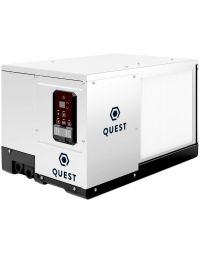
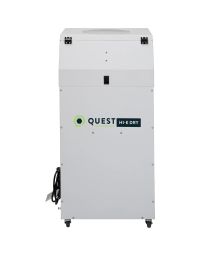
Quest Hi-E Dry 195 Commercial Dehumidifier for Warehouse Spa Indoor Pool - 120V - R454B (SKU 4046400)
Brand: Quest
Price: $ 3,999.95 (In Stock)