Key Takeaways
- Weak comfort does not automatically mean the new equipment is too small. Leaky or restrictive ducts can prevent a properly selected system from delivering the expected comfort.
- Supply and return leaks create different problems. Conditioned air may escape before reaching rooms, or unwanted air may enter the return system.
- Symptoms are clues, not a diagnosis. Filters, airflow settings, duct restrictions, installation issues, and building heat loss can look similar.
- Test before buying a bigger system. A load calculation, airflow checks, static-pressure measurements, and duct-leakage testing can help identify the right correction.
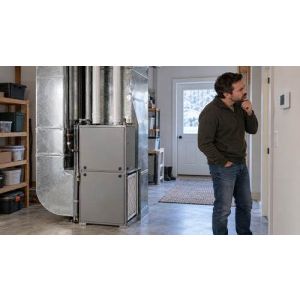
Duct leakage can make a new HVAC system feel undersized because the heating or cooling produced by the equipment is not necessarily the same as the comfort delivered to each room. Before assuming a new air conditioner, furnace, or heat pump needs more capacity, have the duct system and installation checked.
A replacement unit may be working while an old distribution problem remains. Escaping supply air, return-side leakage, restrictive ductwork, or incorrect setup can leave rooms uncomfortable even when the equipment itself is capable of meeting the home's calculated load.
Equipment Capacity Is Only Part of the Comfort Equation
The equipment heats or cools air; the duct system moves that air through the home. If a connection leaks, a branch is disconnected, or the duct layout cannot support the needed airflow, the room may not receive the heating or cooling intended for it.
Location matters. A leak into a hot attic or cold crawlspace can have different consequences from a leak inside the conditioned part of the building. Duct insulation also affects heat transfer, but insulation is not a substitute for an airtight air path.
Do not use a generic percentage of duct loss to diagnose your home. The amount and location of leakage, system operation, and surrounding conditions need to be evaluated. A system that runs for a long time is not automatically undersized, especially when variable-capacity equipment is operating normally at reduced output.
Supply Leaks and Return Leaks Are Not the Same
Supply Leaks Can Reduce Air Reaching Rooms
Supply ducts carry conditioned air away from the indoor equipment. A loose joint or damaged branch can let some of that air escape before reaching its intended register. Rooms farther along a problem branch may be especially uncomfortable.
A register with weak airflow is not proof of a leak. A closed damper, compressed flexible duct, poor duct sizing, or another restriction can cause a similar symptom. The repair should follow the cause rather than the appearance of the symptom.
Return Leaks Can Bring in Unwanted Air
Return ducts carry air back to the indoor equipment. Where that ductwork is outside the conditioned space, a leak can draw in air from its surroundings instead of only returning air from the occupied rooms. This can add heating or cooling load and may contribute to dust or moisture concerns, depending on location.
Return restrictions are a separate issue. Too little return area, a restrictive filter, or a blocked grille can limit airflow even when the duct connections are well sealed. A good inspection considers both airtightness and airflow.
Duct Leakage Symptoms Worth Investigating
| What you notice | Possible duct-related explanation | Other checks still needed |
|---|---|---|
| One room stays too hot or cold | Leaking, disconnected, or poorly balanced branch | Room load, register position, return path, and restrictions |
| Weak airflow at several registers | Supply loss or distribution problems | Filter, coil condition, blower setup, static pressure, and duct sizing |
| Unexpected dust or musty odors | Return leakage drawing from surrounding spaces | Moisture sources, filtration, building leaks, and equipment condition |
| New system struggles in extreme weather | Delivery losses adding to the comfort problem | Actual load, equipment match, commissioning, and operating limits |
These symptoms justify investigation; they do not confirm a particular defect. If the problem started immediately after replacement, contact the installer promptly and describe which rooms are affected and under what outdoor conditions.
Safe Checks Before the Service Visit
- Confirm thermostat mode and normal operating settings using the owner's manual.
- Check the user-serviceable filter for loading and correct fit. Use an equipment-compatible replacement, not automatically the highest available filtration rating.
- Make sure furniture and stored items are not blocking supply registers or return grilles.
- Note rooms that are consistently uncomfortable and whether the pattern changes when interior doors are closed.
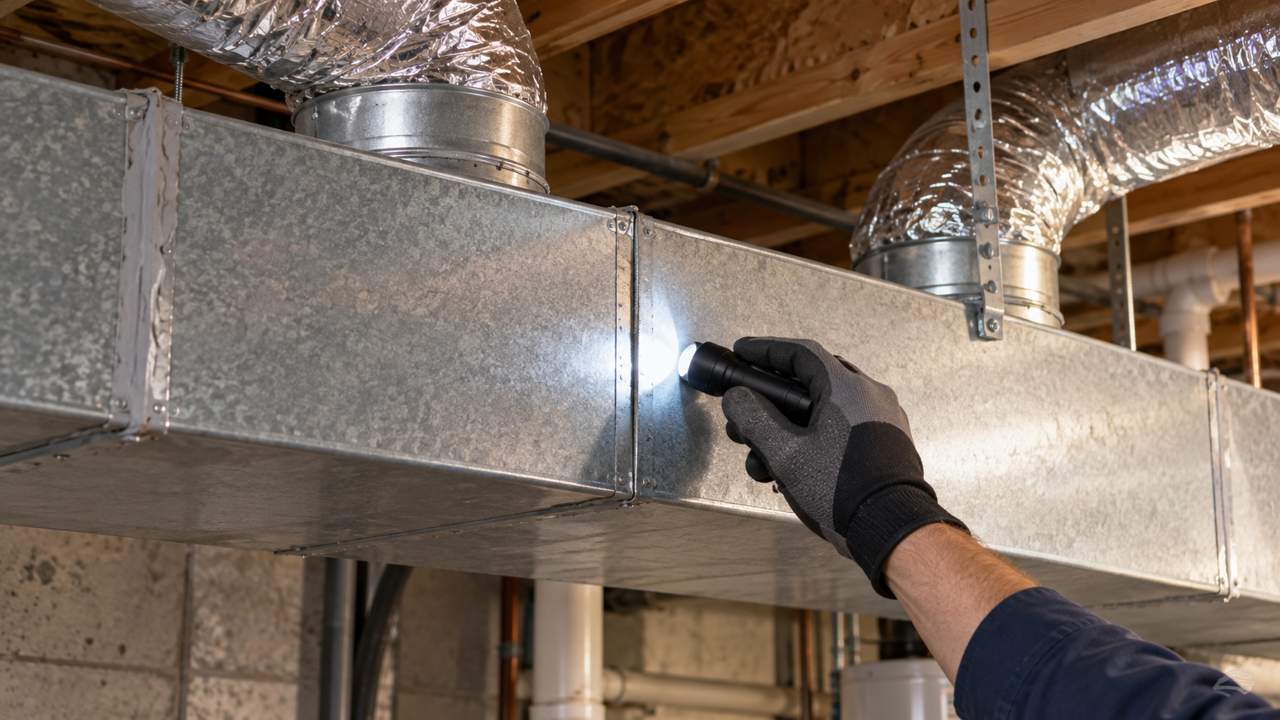
- From a safe, accessible location, look for obvious disconnected ducts, damaged outer jackets, or crushed flexible runs. Take photos for the installer rather than disturbing the ductwork.
Do not climb through an unsafe attic, enter a hazardous crawlspace, remove electrical panels, or reach into operating equipment. Do not use a flame or improvised smoke source to search for leaks. Leave suspected asbestos-containing material, damaged wiring, and combustion-vent concerns to qualified professionals.
If you smell gas, see smoke, or a carbon-monoxide alarm activates, leave the area and follow emergency guidance rather than continuing a duct inspection.
What Should a Contractor Check?
Ask for a diagnosis that separates equipment performance from air-distribution performance. Useful checks can include the following:
- Equipment selection and commissioning: confirm the installed match, capacity, controls, and manufacturer-required startup checks.
- Airflow and static pressure: check whether the blower and ducts operate within the equipment's allowed range.
- Duct leakage: test and inspect the air path, identifying which connections or sections need attention.
- Room distribution: evaluate branch airflow, balancing, return paths, and closed-door effects.
- Heating and cooling load: compare a current load assessment with the installed equipment rather than copying the old nameplate.
Ask whether the reported leakage figure is total duct leakage or leakage to outside the conditioned space. Those measurements answer different questions. A useful report explains the test method, location of defects, proposed work, and how results will be checked afterward.
Duct Sealing, Insulation, or Replacement?
A sound duct system with leaking joints may be a candidate for appropriate sealing. A disconnected or badly damaged section may need mechanical repair or replacement. Undersized, sharply bent, or compressed ducts may need a design correction instead of sealant alone.
The sealing system must be suitable for the duct material and application. Ordinary household cloth-backed duct tape should not be assumed to be a durable HVAC duct seal. Product listings, manufacturer directions, access, and local requirements determine which mastic, tape, or other method is appropriate.
Insulation and its outer vapor-retarder jacket may also need repair, particularly where ducts pass through unconditioned areas. Have leakage and insulation assessed together, but do not assume adding more insulation will fix an open air connection.
After the work, ask the contractor to recheck leakage and operating airflow. Sealing can change system pressures, so finishing with verification is more useful than judging the work only by how neat the seams look.
Why a Bigger HVAC Unit May Not Solve the Problem
Increasing capacity without fixing distribution can leave the same room-to-room problems in place. The existing ducts may not support the airflow required by larger equipment, and incorrect sizing can create new comfort and operating problems.
If a system truly is undersized, duct improvements cannot replace missing equipment capacity. The point is to measure before deciding: verify the load, installation, airflow, and leakage so the correction addresses the actual cause.
For related replacement planning, see what is involved in upgrading to a high-efficiency furnace. Equipment improvements and distribution improvements should be planned as parts of the same system.
Frequently Asked Questions
Can leaky ducts make a new air conditioner run all day?
They can contribute, but long runtime also depends on outdoor conditions, load, system controls, sizing, and installation. Have the cause measured before assuming a leak or a capacity problem.
Does weak airflow always mean the ducts leak?
No. Dirty or unsuitable filters, coil problems, blower setup, blocked grilles, duct restrictions, and balancing issues can also reduce airflow.
Should I seal every visible seam myself?
Not without identifying what the seam belongs to and what the manufacturer allows. HVAC air ducts are different from combustion venting, service panels, and required openings. A qualified contractor should identify the correct repair scope.
Can duct sealing make an undersized system large enough?
Reducing delivery losses can improve performance, but it does not change the equipment's rated capacity. Confirm the home's load and the system's actual operation before deciding whether equipment replacement is necessary.
Before buying a larger HVAC system, have the existing equipment, airflow, and duct leakage evaluated together so your next step fixes the measured problem.