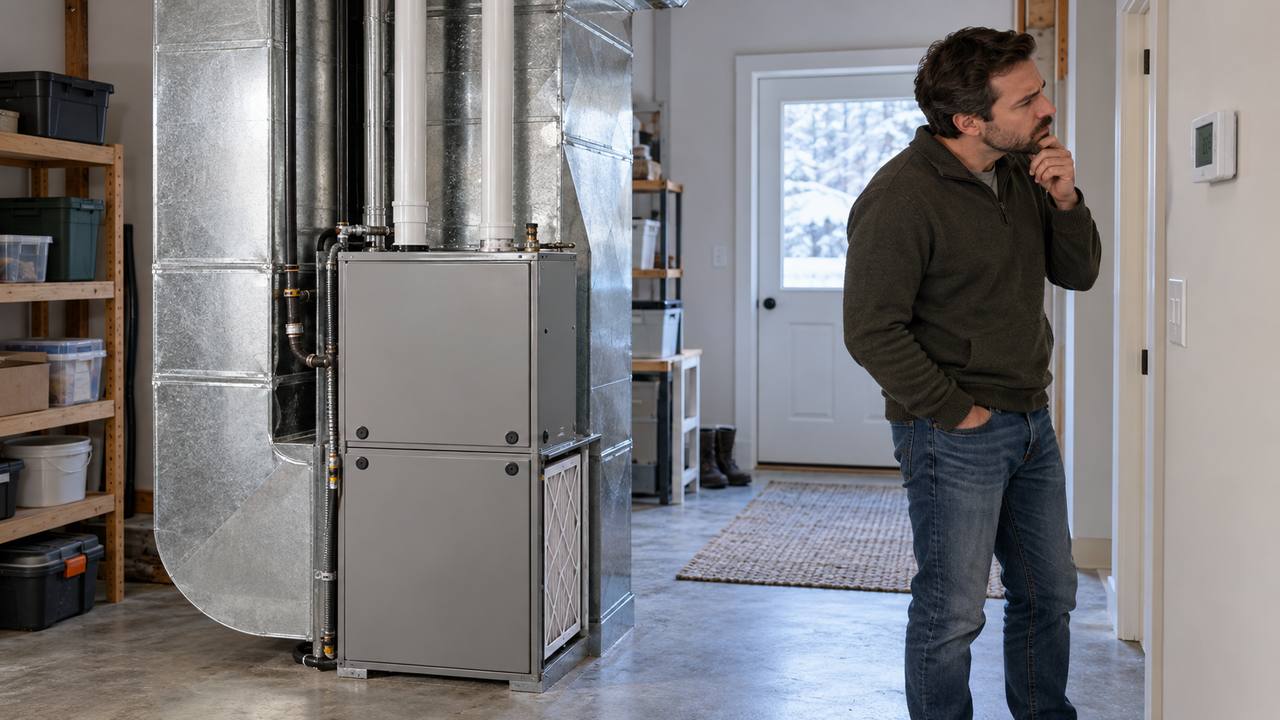
A furnace that blows cool air is frustrating, but it does not always mean the furnace has failed. A brief cool breeze at startup or after the burners shut off can be normal. If the air stays cold and the house is not warming, start with a few safe checks before scheduling service.
Key Takeaways
- Confirm the thermostat is calling for heat and the fan is set to Auto, not continuously On.
- Give the furnace a few minutes after startup; many systems delay warm airflow while the heat exchanger warms.
- Check the filter and accessible return and supply vents for airflow restrictions.
- Stop troubleshooting and call a qualified professional for repeated shutdowns, fault codes, gas odors, or suspected electrical or venting problems.
First, Is the Air Actually Cold?
Supply air may feel cooler than expected against your skin even while it is warming the home. Compare a supply register with the room temperature and watch whether the thermostat reading rises over a heating cycle. A short burst of unheated air as the blower starts or finishes is different from a furnace that runs for a long time without raising the indoor temperature.
Five Safe Checks to Make
1. Check the thermostat mode and fan setting
Set the system to Heat and raise the target temperature a few degrees above the room reading. Set the fan to Auto. With the fan on On, the blower may circulate room-temperature air between heating cycles, which can feel like the furnace is blowing cold air. If the thermostat has a schedule, temporary hold, or batteries, check those too.
2. Allow for the normal startup sequence
A gas furnace must prove its safety conditions, ignite, and warm the heat exchanger before delivering steady warm air. Some systems also run the blower briefly after the burners stop. If warm air arrives after a few minutes and the home reaches its setting, this may be normal operation. Use the specific owner’s manual for your model’s expected sequence.
3. Inspect the air filter
A heavily loaded filter can restrict airflow. In some furnaces, overheating then causes a safety control to stop the burners while the blower continues running to cool the equipment. Turn the system off before removing the filter, check its size and airflow arrow, and replace it with the type the equipment allows. Do not run the furnace without its required filter or install a denser filter than the system can handle. See our furnace-filter basics for more context.
4. Look for obvious airflow obstructions
Make sure return grilles are not blocked by furniture and that supply registers are open as intended. Do not remove furnace access panels or reach into the cabinet to investigate. Repeated overheating after a filter change can indicate a duct, blower, or control issue that needs professional diagnosis.
5. Note the pattern and any visible alert
Record whether the furnace never heats, heats briefly and then turns cool, or heats some rooms but not others. A thermostat alert or a fault light visible through a cabinet window can help the technician; write down the displayed code without opening the panel or resetting the furnace repeatedly.
When to Stop and Call for Service
If the furnace still blows cold air after the checks above, schedule a qualified HVAC technician. Ignition faults, high-limit trips, condensate problems, gas supply issues, and damaged components require model-specific testing. Never bypass a safety switch, adjust a gas valve, or attempt electrical repairs yourself. If you smell gas, leave the area and follow your gas utility’s emergency instructions. If a carbon monoxide alarm sounds, leave the building and contact emergency services.
Repair or Replace?
One cold-air episode does not automatically justify a new furnace. Ask for a diagnosis and repair estimate first. Replacement becomes worth discussing when the equipment has recurring faults, a major failed component, or comfort and efficiency problems that repairs cannot reasonably solve. Compare the complete installed price, not just the furnace cabinet; our furnace replacement cost guide explains the variables.
Frequently Asked Questions
Why does my furnace fan run when there is no heat?
The thermostat fan may be set to On, or the blower may be finishing a normal cycle. If the burners repeatedly stop while the fan continues, an airflow or safety-control issue may need service.
Can a dirty filter make the furnace blow cold air?
Yes. A severely restricted filter can contribute to overheating and a high-limit shutdown on some systems. Replacing the filter is a sensible first check, but repeated trips warrant a technician.
Should I keep resetting the furnace?
No. A recurring shutdown or fault code is information worth preserving for a technician. Repeated resets can mask the pattern and do not fix the underlying problem.
The Bottom Line
Start with the thermostat, a short startup wait, and the filter. If the house still is not warming—or you see repeated faults—turn to a qualified HVAC professional rather than opening or overriding the furnace.