Article Contents
Key Takeaways
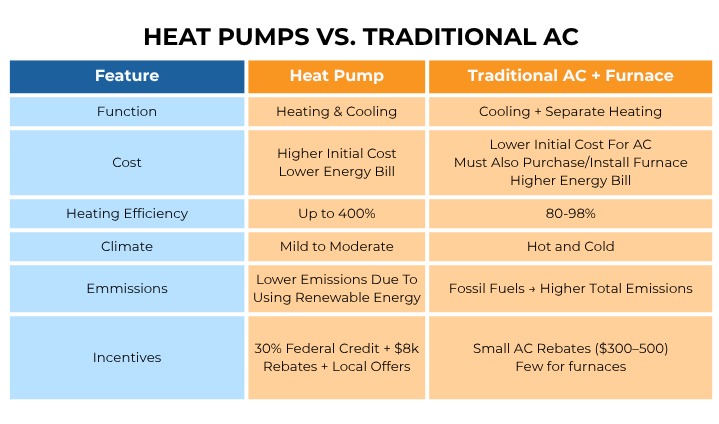
- Combined Heating & Cooling Efficiency: Heat pumps reverse the refrigeration cycle to both heat and cool in a single system, achieving up to 400% efficiency versus the 80–98% efficiency of separate AC + furnace setups.
- Lower Lifecycle Costs & Quick Payback: Despite higher upfront costs, federal tax credits (30%), point-of-sale rebates up to $8,000, and state/local incentives—plus annual savings up to $1,500—often yield a full payback in 5–7 years.
- Reduced Emissions & Energy Independence: By running on electricity instead of burning fuel, heat pumps cut 2.5–4.4 metric tons of CO₂ per year and shield homeowners from volatile gas and oil prices.
As energy prices climb and environmental awareness grows, many homeowners and contractors face a choice: upgrade to a heat pump or stick with the familiar air conditioner and furnace combo.In this guide, we'll compare efficiency, the cost of a heat pump vs. air conditioner, environmental impact, and incentives—plus showcase high efficiency ACiQ models you can shop today.
Efficiency & Cost Savings: Heat Pump vs. AC
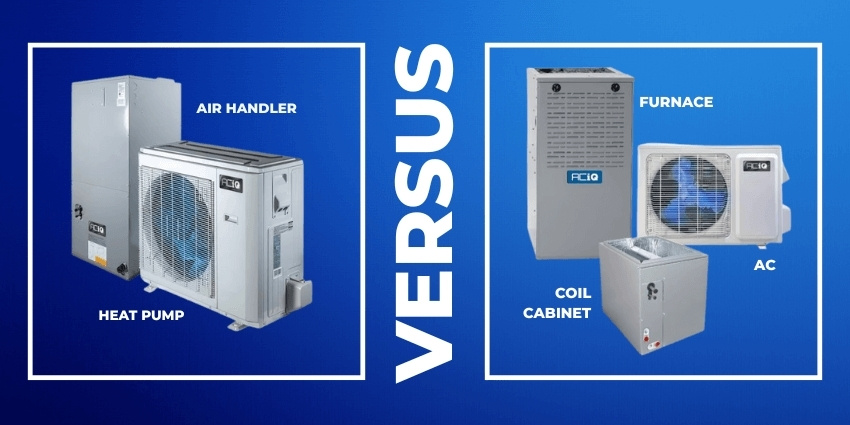
Heat pumps are more efficient than a traditional AC. Here’s a breakdown of the cost differences.
- Heat Pump:
- Higher initial cost
- Combines heating & cooling into one unit, potentially saving money due to the simpler set-up
- Heat transfer technology allows that to operate at 400% efficiency delivering up to four times the heat per unit of electricity consumed
- Lower monthly energy bills in many cases, thanks to higher efficiency ratings
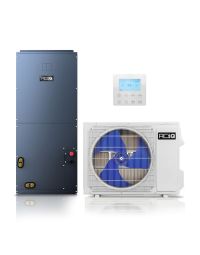
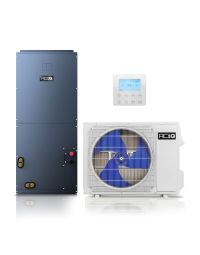
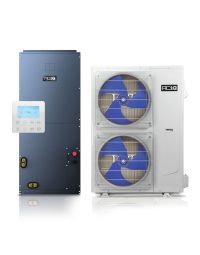
- Recommended ACiQ Unit: Consider high efficiency models such as the 27,000 BTU 22.8 SEER2 ACiQ Mini Split System w/ 24k Central Ducted Air Handler and 6k Wall Mount w/ WiFi 24+6
- Traditional AC:
- Lower initial cost but requires separate heating system—adding to final cost for full system
- Higher total energy costs when factoring in separate heating expenses
- 80-89% heating efficiency for furnaces because they must generate heat unlike a heat pump that just transfers it
- System efficiency depends on the paired heating unit
Heat Pump Long-term Savings
According to the DOE, homeowners can save up to $1,500 annually by switching to a heat pump for both heating and cooling. These savings can add up to over $10,000 over a 10-year period, offsetting the initial investment.
Climate Performance Comparison
HVAC performance is significantly impacted by the local weather. Here’s how each type of system performs in different climates:
- Heat Pumps:
- Best suited for mild to moderate winters; without backup heating
- May not function well in extremely cold temperatures
- With an efficiency of up to 250% at 0°F, modern cold-climate models function well down to -22°F
- More efficient in moderate climates, maintaining high efficiency when outdoor temperatures stay above 25°F
- Traditional AC:
- Ideal for hot climates where heating isn’t often needed
- Usually only used during warm seasons
- Less frequent use may mean less wear
Heat Pumps Operate at a Wider Temperature Range
In contrast to traditional AC systems, which need a furnace to heat and sit idle for a portion of the year, heat pumps provide the versatility to heat and cool in one package over a wider temperature range.
Environmental Impact & Energy Independence

Carbon Emissions
- Heat Pump: By using electricity, heat pumps lower CO2 emissions in homes by 2.5-4.4 metric tons annually. By 2032, widespread adoption of them could reduce 160 million metric tons.
- AC + Furnace: Produces a lot of greenhouse gases due to its reliance on the burning of natural gas or oil.
Energy Security
- Heat Pump: Protects homeowners from fluctuations in fuel prices by using domestic electricity.
- AC + Furnace: Subject to unstable gas and oil prices.
Making the switch to heat pumps improves both personal budgets and the nation's energy resilience, protecting homeowners from fluctuations in fuel prices, and relying on U.S. energy sources.
Not only are heat pumps better for the environment, but they are better for your wallet too.
Incentives for a Heat Pump vs. AC
Government and utility programs can significantly lower upfront costs:
- Heat Pump Incentives:
- 30% federal tax credit (up to $2,000/year)
- Point-of-sale rebates up to $8,000
- State and utility incentives totaling over $10,000 in some regions – select one of the buttons below to find incentives near you
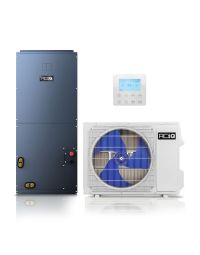
- Recommended ACiQ Product: Get a rebate up to $2,000 on this ACiQ 1 Ton 17.5 SEER2 High Efficiency Heat Pump Split System - R410A Inverter - Multi-Positional
- Traditional AC & Furnace Rebates:
- Typically, only small AC rebates ($300–$500)
- Furnaces rarely have any saving incentives
All these credits and rebates mean payback periods for heat pumps often fall to 5–7 years. You’ll also be saving with lower energy bills, resulting in more money for other necessities or hobbies.
Why Heat Pumps Usually Win
When you compare a heat pump versus an AC, weigh cost of a heat pump versus an air conditioner, and factor in efficiency and incentives, heat pumps almost always come out on top.:
- One unit for both heating and cooling saves space and reduces maintenance.
- Up to 400% operational efficiency cuts energy bills.
- Wide climate versatility makes them suitable for most U.S. regions.
- Substantial CO₂ reductions and support for renewable energy sources bolster sustainability.
- Generous federal, state, and utility incentives to save you money.
While traditional AC + furnace systems remain a viable option in specific contexts, heat pumps deliver unparalleled benefits for most homeowners.
Shop Heat Pumps at HVACDirect.com
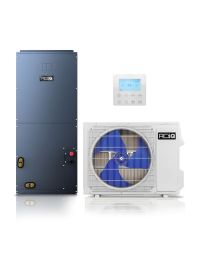
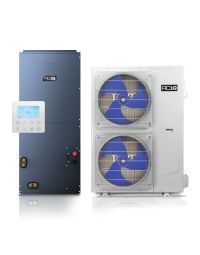
Ready to upgrade? Check out our selection of ACiQ heat pump systems and start saving on energy bills and emissions today. From compact single zone mini splits to powerful central ducted units like the ACiQ 27 000 BTU 22.8 SEER2 system, we’ve got your comfort covered.