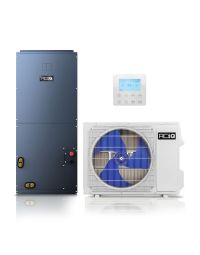
15In the recent past, heat pumps have grown very popular and still continue to be one of homeowners' favorite HVAC systems. This popularity is because a heat pump is able to cool and heat homes efficiently. Unfortunately, even though most people understand how air conditioners and furnaces work, they don’t have an in-depth understanding of how heat pumps operate.
This buyer’s guide will help you familiarize yourself more with heat pumps. For instance, did you know that homeowner’s that purchase heat pumps that have the Energy Star designation can qualify for a $300 tax credit? We recommend you check with your local energy provides for any tax credits or incentives you might be able to receive.
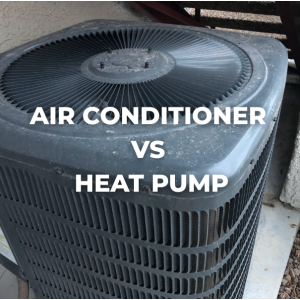
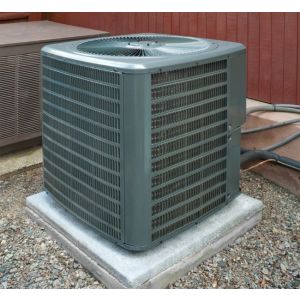
 A heat pump operates similarly to an air conditioner as it utilizes refrigeration principles to cool and heat. In fact, when working to cool the air, a heat pump works exactly like an air conditioner expelling heated indoor air outdoors.
However, when it is in heating mode, it reverses this process. It draws in warm air from the outdoors and pushes it indoors.
A heat pump operates similarly to an air conditioner as it utilizes refrigeration principles to cool and heat. In fact, when working to cool the air, a heat pump works exactly like an air conditioner expelling heated indoor air outdoors.
However, when it is in heating mode, it reverses this process. It draws in warm air from the outdoors and pushes it indoors.
 As far as fuel is concerned, if you live in a region where there is plenty of natural gas available, it would be sensible for the homeowner to cool and heat with an air conditioning and a conventional forced-air heating.
Usually, natural gas used to heat a gas furnace is considered less expensive and more fuel efficient than electricity. However, in areas such as the Northeast where electric-resistance and fuel oil furnaces are the norm, heat pumps can realize significant savings for the homeowner.
Even though an electric furnace is much cheaper to purchase than a heat pump, a heat pump can produce up to 2 ½ times more heat for the same amount of energy depending on the particular system, climate, and the house.
Before purchasing a heat pump you will need to perform an economic analysis based on a system’s efficiency and purchase price as well as your home’s cooling and heating load requirements.
Please keep in mind that if you choose to replace an existing furnace with a heat pump, you will also need to change the ductwork, as heat pumps need larger ducts.
As far as fuel is concerned, if you live in a region where there is plenty of natural gas available, it would be sensible for the homeowner to cool and heat with an air conditioning and a conventional forced-air heating.
Usually, natural gas used to heat a gas furnace is considered less expensive and more fuel efficient than electricity. However, in areas such as the Northeast where electric-resistance and fuel oil furnaces are the norm, heat pumps can realize significant savings for the homeowner.
Even though an electric furnace is much cheaper to purchase than a heat pump, a heat pump can produce up to 2 ½ times more heat for the same amount of energy depending on the particular system, climate, and the house.
Before purchasing a heat pump you will need to perform an economic analysis based on a system’s efficiency and purchase price as well as your home’s cooling and heating load requirements.
Please keep in mind that if you choose to replace an existing furnace with a heat pump, you will also need to change the ductwork, as heat pumps need larger ducts.
 All cooling and heating appliances have an energy guide label that rates the system’s energy efficiency for both heating and cooling modes. These ratings are relative to other models, that is, you can easily tell how one model in particular compares to other high and low-efficiency models.
A heat pump operates similarly to an air conditioner as it utilizes refrigeration principles to cool and heat. In fact, when working to cool the air, a heat pump works exactly like an air conditioner expelling heated indoor air outdoors.
However, when it is in heating mode, it reverses this process. It draws in warm air from the outdoors and pushes it indoors.
Should You Buy A Heat Pump?
When purchasing a heat pump, one of the factors you ought to consider is whether you will be making any savings. Energy savings are determined by several factors;- Climate
- Type of fuel readily available in your area
- Amount of insulation
- Your home’s energy efficiency
As far as fuel is concerned, if you live in a region where there is plenty of natural gas available, it would be sensible for the homeowner to cool and heat with an air conditioning and a conventional forced-air heating.
Usually, natural gas used to heat a gas furnace is considered less expensive and more fuel efficient than electricity. However, in areas such as the Northeast where electric-resistance and fuel oil furnaces are the norm, heat pumps can realize significant savings for the homeowner.
Even though an electric furnace is much cheaper to purchase than a heat pump, a heat pump can produce up to 2 ½ times more heat for the same amount of energy depending on the particular system, climate, and the house.
Before purchasing a heat pump you will need to perform an economic analysis based on a system’s efficiency and purchase price as well as your home’s cooling and heating load requirements.
Please keep in mind that if you choose to replace an existing furnace with a heat pump, you will also need to change the ductwork, as heat pumps need larger ducts.
Efficiency Rating For Heat Pumps
All cooling and heating appliances have an energy guide label that rates the system’s energy efficiency for both heating and cooling modes. These ratings are relative to other models, that is, you can easily tell how one model in particular compares to other high and low-efficiency models.
Defining SEER Rating
The two commonly used indexes for measuring efficiency are:- Seasonal Energy Efficiency Rating (SEER) which is used for cooling
- Heating Seasonal Performance Factor (HSPF) which is used for heating
Heat Pump Efficiency
Heat pump efficiency is distinguished via settings they offer. For instance, a heat pump without variable capacity controls is less efficient than a unit that does. Instead of running the heat pump at full capacity all the time, the different settings coordinate the blower and compressor to adjust to your house’s cooling and heating load requirements. Due to the fact that these heat pumps rarely operate at full capacity, they are quiet and increase energy savings in the long term.Zoned Cooling and Heating
Zoned cooling and heating is one of the newest concepts regarding efficient energy use. With a zoned system, you can independently control the airflow to various zones or rooms in your home. In order to achieve this, the HVAC unit will require a multizone programmable thermostat as well as a few dampers. For the best result, you should ensure that your air handler’s output is variable.2-Speed Compressors
With 2-speed compressors, heat pumps are able to heat and cool air only at the needed capacity while heat pumps that have a standard compressor are forced to run at maximum capacity. 2-speed compressors also minimize the wear and tear of a unit. Visit our heat pump page for a broad selection of heat pump units.April 15, 2018