Key Takeaways
- Choose a heat pump water heater when lower electricity use is a priority and you have a suitable location with enough air volume, clearance, and a condensate drain.
- Consider tankless when floor space is tight or you need a system sized for a particular simultaneous flow rate.
- Compare the right ratings: first-hour rating matters for a storage heat pump model; gallons per minute at your required temperature rise matters for tankless.
- Check installation costs as well as equipment price. Venting, gas capacity, electrical upgrades, and plumbing changes can change the project total.
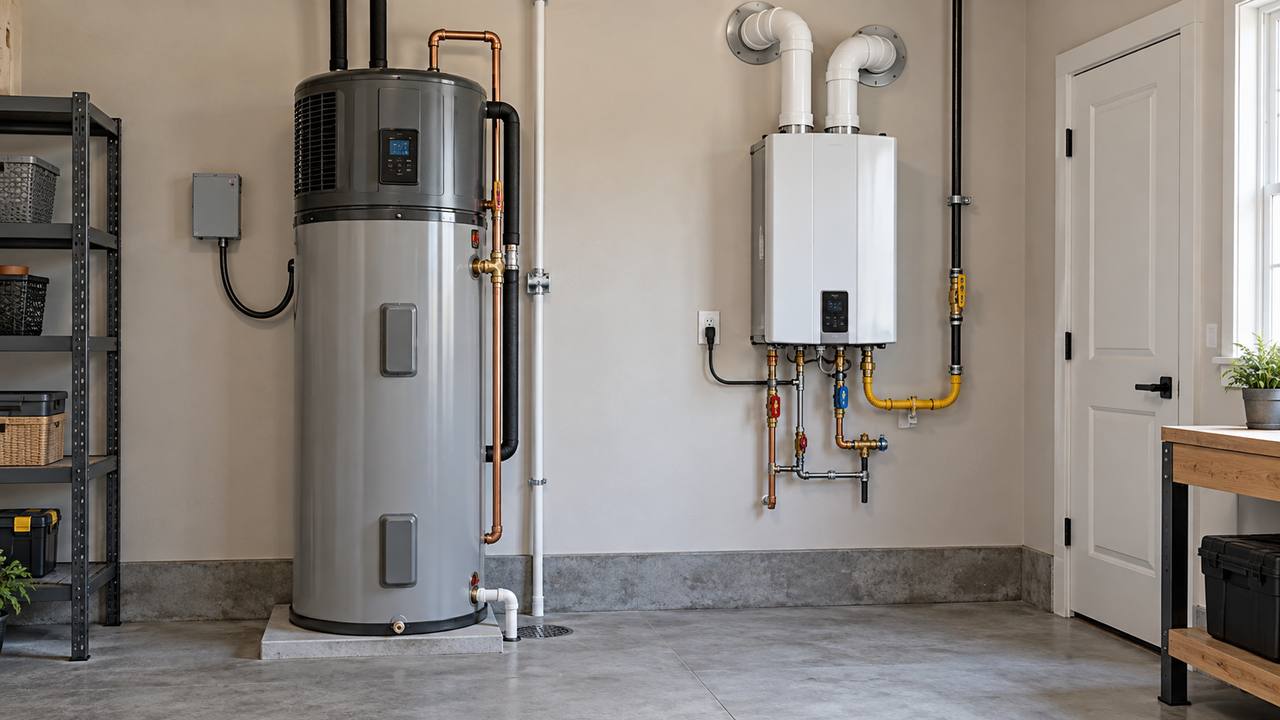
A heat pump water heater and a tankless water heater can both be smart upgrades, but they solve different problems. A heat pump model stores hot water and uses heat from surrounding air to warm it efficiently. A tankless model heats water as it flows through the unit, saving floor space and avoiding a storage tank. The better choice depends on your home's hot-water demand, available installation space, fuel and electrical service, and local climate.
How Each Type Makes Hot Water
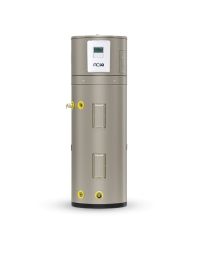
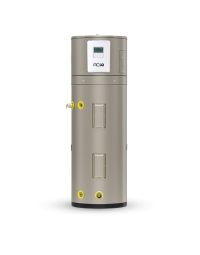
A hybrid heat pump water heater draws warmth from the room air and transfers it to water in an insulated tank. Most also have electric resistance elements that can assist when demand is high. Because the heat pump moves heat rather than creating all of it directly, it can use substantially less electricity than a conventional electric-resistance tank. The tank still has a finite supply of ready hot water, so capacity and recovery matter.
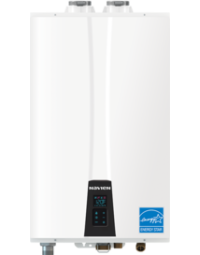
A tankless heater detects a call for hot water and fires a gas burner or energizes electric elements as water passes through. It has no large stored reserve. It can continue supplying hot water as long as the unit can meet the flow and temperature rise, but multiple showers and appliances at once can exceed its rated output. The phrase “endless hot water” does not mean unlimited flow.
Heat Pump vs. Tankless Water Heater: At a Glance
| Consideration | Heat pump water heater | Tankless water heater |
|---|---|---|
| Hot-water delivery | Stored tank; compare first-hour rating and recovery | On demand; compare flow rate at the required temperature rise |
| Typical energy source | Electricity | Natural gas, propane, or electricity, depending on model |
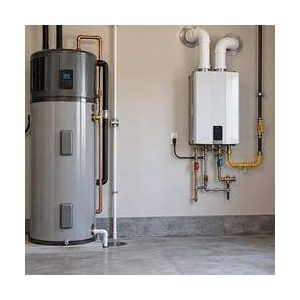
| Space | Tall tank plus manufacturer-required air and service clearance | Compact wall-mounted unit, but venting and service clearance may be needed |
| Installation details | Electrical circuit, condensate disposal, location temperature, and airflow | Fuel or electrical capacity, venting when required, water quality, and plumbing |
| Best reason to consider it | Efficient electric water heating with stored capacity | Save floor space and match on-demand flow needs |
Which Costs Less to Operate?
There is no universal winner because electricity and fuel rates differ by location. A heat pump water heater is generally an especially efficient electric option, but its real-world savings depend on installation conditions, usage, and operating mode. Gas tankless operating cost depends on fuel price, efficiency, and how much hot water the household uses. Electric tankless can demand a large electrical service upgrade, which may outweigh its compact size. Compare the model's efficiency rating, estimated annual energy use, local utility rates, and the full installed cost.
How Much Hot Water Do You Need at Once?
For a heat pump model, look at its first-hour rating—the amount of hot water it can deliver in an hour starting with a heated tank. Think about back-to-back showers, laundry, and dishwashing, and choose a tank and operating mode that fit those peaks.
For tankless, add the flow rates of fixtures you may run simultaneously, then check the unit's published gallons-per-minute output at the temperature rise your home needs. Colder incoming water requires more heating, which reduces available flow from a given unit. A whole-home tankless heater that works well in a warm climate may not support the same simultaneous use in a colder one.
Installation Space and Home Compatibility
A heat pump water heater needs a location within the manufacturer's permitted ambient-temperature range and enough surrounding air for the heat pump to work well. It also removes some heat and moisture from that space, produces condensate, and makes fan/compressor noise. A crowded closet may require a ducted model or a different location. Have an installer review electrical capacity, drain routing, and service access.
A gas tankless unit needs appropriately sized fuel supply and code-compliant venting; a condensing model also needs condensate management. Electric tankless models may require substantial circuit capacity. Water hardness and maintenance requirements matter for either approach, especially where scale can build up in a tankless heat exchanger. A licensed installer should verify the specific model and local requirements before you order.
Natural Gas, Propane, or Electric Tankless?
Start with the fuel your home actually has. Natural-gas and liquid-propane tankless units are not interchangeable; the model must be approved and configured for the intended fuel. Propane storage and piping, gas-line sizing, and venting all affect the installation. If your goal is to move away from combustion, an electric heat pump water heater may be the more relevant comparison. Electric tankless avoids a gas line but can have high instantaneous power requirements.
A Simple Decision Checklist
- Estimate simultaneous hot-water use and note whether back-to-back use is common.
- Check existing fuel, electrical panel capacity, and possible vent routes.
- Measure the proposed location and review the model's air, temperature, and clearance requirements.
- Compare the first-hour rating of heat pump models with the temperature-rise flow tables of tankless models.
- Request an installed quote that includes any electrical, gas, venting, condensate, and plumbing work.
If your home has a suitable utility space and you want efficient electric water heating, start with a heat pump water heater. If you need to free up floor space and can support the required flow, fuel, and installation, explore tankless water heaters. Compare the specifications of the exact models you are considering, then have a qualified professional confirm the fit before purchase.