Key Takeaways
- Consistent ice machine maintenance prevents costly issues – Regular cleaning, filtration checks, and inspections protect against health code violations, contamination, and expensive emergency repairs.
- Follow a structured 7-step maintenance plan – Daily, weekly, monthly, quarterly, and annual tasks ensure optimal performance, extend ice machine life, and maintain compliance.
- Professional servicing is essential – Quarterly deep cleaning and annual compliance audits by certified technicians catch hidden problems before they impact business operations.
Article Contents
If you have ever had to deal with a surprise health department inspection or complaint, you understand how important it is to maintain your commercial ice maker properly.
Contrary to popular belief, ice machine health code violations are among the most frequent equipment violations in commercial kitchens. Inadequate upkeep results in costly repairs, malfunctioning equipment, and ice that is tainted with bacteria, mold, and scale. We're going to share our seven-step method today for maintaining the smooth operation of your commercial ice maker while adhering to restaurant ice machine health codes.
Why Commercial Ice Machine Maintenance Matters
Commercial ice machines create the perfect environment for bacterial contamination – they're warm, moist, and often neglected until something goes wrong. Without regular maintenance and proper filtration, you're looking at:
- Health code violations that can shut down your business
- Costly emergency repairs (often 3-5x more expensive than preventive maintenance)
- Ice contamination that puts customers at risk
- Equipment that breaks down during your busiest periods
Our 7-step guide will help protect your business from all these risks.
The Foundation: How to Clean your Commercial Ice Machine Daily and Weekly
Step 1: Set Up Your Built-in Water Filtration System
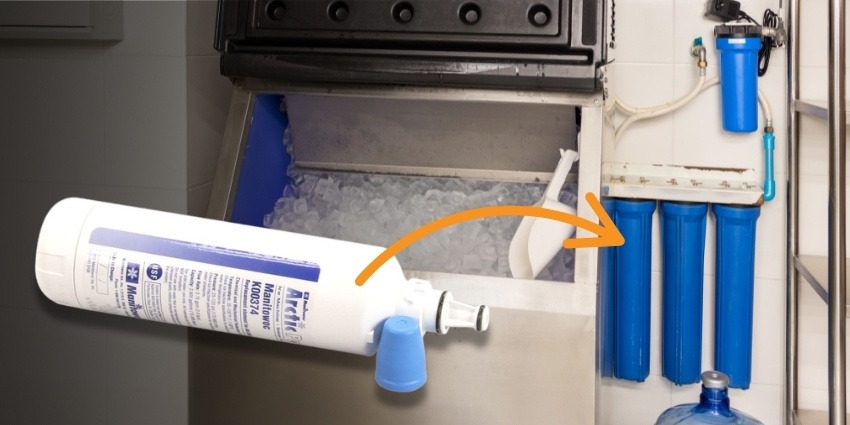
Commercial ice maker filtration systems are your first line of defense against contamination. For ice machines to maintain health code compliance, built-in filtration is crucial because it eliminates contaminants, sediment, and chlorine that promote bacterial growth and scale accumulation.
Make sure to check filtration monthly for proper flow, replace filters every 6 months (or more frequently for high-volume operations), and monitor water quality indicators like taste, smell, and clarity.
Step 2: Clean and Inspect Your Ice Machine Daily
The best defense against bacteria and mold in ice makers is daily maintenance. Spend 5 minutes cleaning the machine: wipe exterior surfaces with sanitizer, check ice quality (clear, odorless, tasteless), inspect the storage bin for contamination, and make sure your ice scoop is stored properly. This way, if something is wrong, you can catch it early.
Step 3: Thoroughly Clean Accessible Components Every Week
Weekly preventive cleaning focuses on ice machine sanitation requirements that health inspectors look for, targeting areas where mold and bacteria hide. Clean ice-handling equipment, sanitize exterior touch points, flush visible water lines, and remove all ice and sanitize the storage bin. Use only sanitizers that are approved for use in ice machines and are safe for food.
Monthly and Quarterly Deep Maintenance
Step 4: Monthly Scale Prevention and Water System Maintenance
Because scale buildup creates rough surfaces where bacteria can grow, it leads to equipment failures and violations of health codes. Monthly descaling of water lines and evaporator plates, inspecting connections for leaks, testing filtration efficiency, and checking water pressure prevents these mineral deposits from becoming a food safety concern.
Step 5: Quarterly Professional Sanitization
Addresses hard-to-reach areas every quarter to prevent ice machine mold and bacteria in internal components. This includes complete system disassembly, sanitization of evaporator and condenser components, and professional filtration assessment. Many businesses schedule this with their HVAC service provider to ensure it's done correctly and documented for health department records.
Long-Term Ice Marker Maintenance: Semi-Annual and Annual Care
Step 6: Semi-Annual Filter Replacement and System Inspection
For built-in filtration systems to remain effective, they require routine maintenance. Replace all filters (even if they appear to be clean) every six months, test the water quality, test the system pressure, and update records to comply with health department regulations. Avoid waiting for obvious contamination because the quality of the ice will have already been deteriorated.
Step 7: Annual Professional Health Code Compliance Audit
Your final step is an annual comprehensive review ensuring your commercial ice machine maintenance program meets all restaurant ice machine health codes. This includes complete equipment inspection by certified technicians, water quality analysis, documentation review, staff training updates, and equipment performance evaluation. This annual audit catches potential issues before health inspectors do.
The Bottom Line: Prevention Pays
Regular maintenance and proper built-in filtration aren't just about avoiding health code violations – they're about protecting your business, your customers, and your financial success. The businesses that stay ahead of these requirements rarely face emergency breakdowns or failed inspections.
Remember: The cost of prevention is always less than the cost of problems. Poor maintenance has far more negative effects than positive ones, whether it's a health department violation, an urgent repair during your busiest weekend, or worse, a customer becoming ill from contaminated ice.
Have questions about commercial ice machine filters or required maintenance? Contact HVACDirect.com today for expert guidance on equipment selection and maintenance tips tailored to your specific needs.