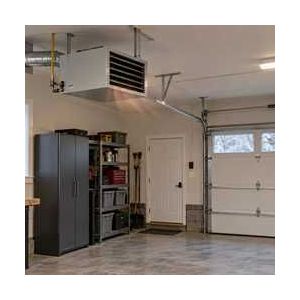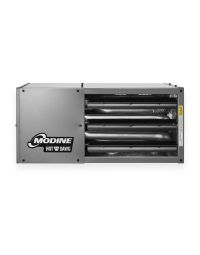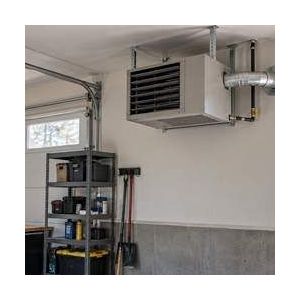
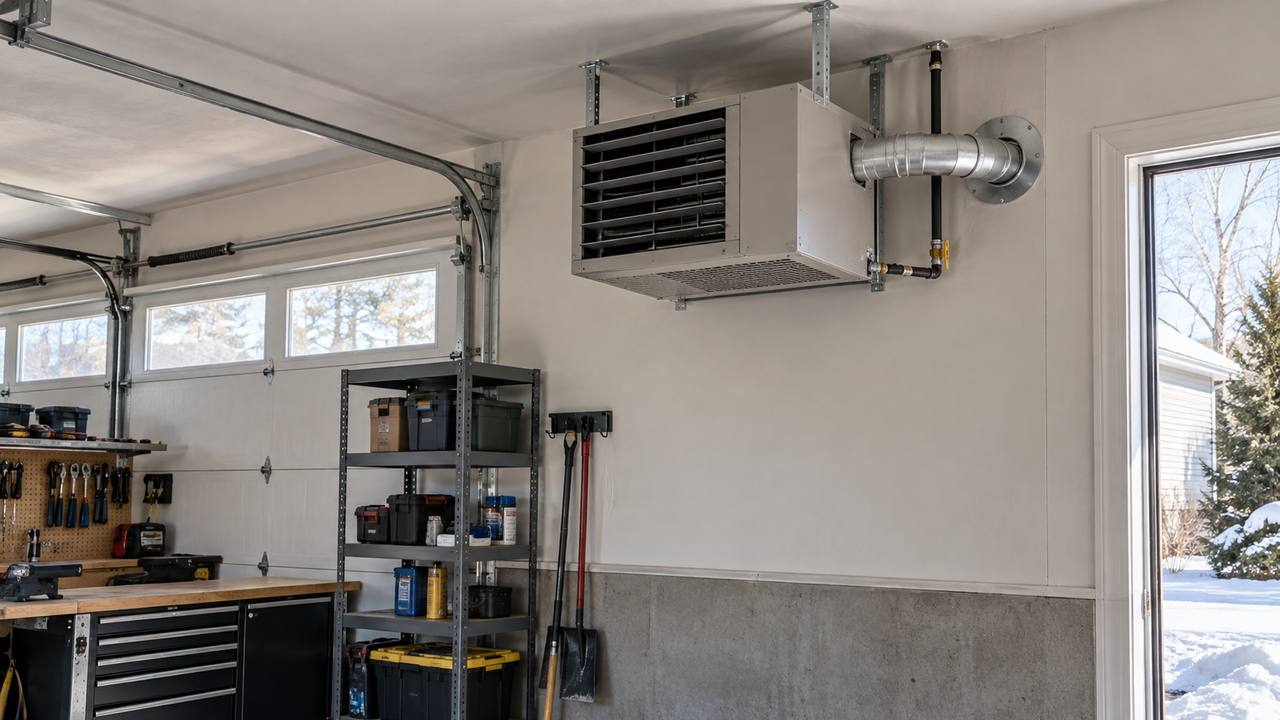
A gas-fired unit heater can make a cold garage or shop much more usable, but the fuel choice has to fit the building. Natural gas and liquid propane can power similar-looking heaters; the equipment configuration, fuel supply, installation details, and ongoing costs are not automatically the same.
Key Takeaways
- Start with the fuel you can actually supply. A natural-gas connection may be convenient if the property already has a suitable service; propane needs a correctly sized tank and delivery plan.
- Buy the heater for the specified fuel. Never assume a natural-gas unit can be connected to propane, or the reverse. Any conversion must be allowed for that exact model and performed with the manufacturer-approved parts and procedures.
- Size the space before comparing prices. Insulation, ceiling height, air leakage, large doors, and intended indoor temperature all affect the heating load.
- Installation is a professional job. Gas piping, combustion air, venting, electrical work, mounting, and clearances must follow the heater's instructions and local requirements.
Natural Gas vs. Propane: The Practical Differences
| Consideration | Natural-gas unit heater | Propane unit heater |
|---|---|---|
| Fuel supply | Utility service and correctly sized gas piping to the heater | On-site propane storage, regulator, and correctly sized piping |
| Availability | Only where utility service is available and adequate | Can serve locations without a natural-gas main if tank placement and deliveries are feasible |
| Operating-cost comparison | Compare the delivered price per therm, including applicable fees | Compare delivered propane price per gallon plus tank-related charges |
| Equipment choice | Use a natural-gas-listed model or an approved configuration | Use a propane-listed model or an approved conversion for that exact heater |
There is no universal winner on fuel cost. Local rates, delivery terms, heater efficiency, runtime, and the building's heat loss determine the real bill. Ask for fuel quotes in comparable energy units and include any new gas-service work, propane tank costs, or minimum-delivery fees in the installed-cost comparison.
Can You Convert a Unit Heater Between Natural Gas and Propane?
Sometimes, but only when the manufacturer explicitly supports conversion of the exact model. Natural gas and propane require different gas-control settings and components. A qualified installer should confirm the model number, approved conversion kit, fuel pressure, and commissioning procedure. Do not purchase a heater on the assumption that changing the connection or swapping an orifice alone is sufficient.
Choose Capacity for the Garage or Shop, Not Just Its Floor Area
A garage with insulated walls and ceiling, weather-sealed doors, and occasional use has a different heating load from a drafty workshop with frequent overhead-door openings. Ceiling height, climate, desired working temperature, and the time allowed to warm up the space also matter. The heater's input BTU rating is not the same as heat delivered to the room; compare output and efficiency for the specific model.
Have the installer estimate the space's heat loss and check the heater's mounting height and air throw. Oversizing can lead to short cycling and uneven comfort; undersizing may leave the room cold on design days. For a fuller walkthrough, see our garage-heater sizing guide.
Installation Details That Matter With Either Fuel
- Vent and combustion air: Follow the exact heater manual for permitted vent routing, termination, and combustion-air provisions. Separated-combustion models may suit dusty or challenging spaces, but the right choice depends on the installation.
- Mounting and clearance: Confirm structural support, service access, airflow, and clearances from stored materials and vehicles. Do not use a generic clearance number in place of the model's listing.
- Fuel supply: Have a qualified professional size the gas piping and, for propane, confirm tank and regulator capacity for all connected appliances.
- Safety: Keep combustible vapors away from the heater and follow local requirements for carbon-monoxide alarms and garage installations.
Gas piping and venting mistakes can create fire or carbon-monoxide hazards. Manufacturer guidance for garage unit heaters calls for qualified installation and model-specific clearances; treat these checks as part of the equipment selection, not an afterthought.
Which Fuel Is Better for Your Space?
Natural gas is often the straightforward choice when the property already has adequate utility service near the garage or shop. Propane can make sense where natural gas is unavailable, provided tank siting, winter deliveries, and total fuel cost work for you. In either case, compare properly sized heaters with the same type of combustion and venting arrangement before judging purchase price.
Frequently Asked Questions
Will a natural-gas heater run on propane?
Not as supplied unless the heater is listed for that fuel. Use only a manufacturer-approved conversion for the exact model, performed and checked by a qualified technician.
Is propane always more expensive than natural gas?
No single comparison holds everywhere. Fuel prices, utility fees, propane delivery terms, equipment efficiency, and annual hours of use vary. Compare local quotes and total installed cost.
Do both types need venting?
Many gas-fired unit heaters do. Vent design depends on the listed model and installation. Follow the manufacturer's instructions and local code; do not assume that an existing vent is suitable for a replacement heater.
The right choice is the correctly sized, fuel-compatible heater that your site can support safely and affordably. Confirm the fuel supply and installation plan first, then compare models and lifetime cost.