
Key Takeaways
- How Refrigerants Move Heat: Refrigerants absorb heat indoors and release it outdoors through a continuous cycle of evaporation and condensation, making proper charge, leak-free piping, and compatible components essential for efficient and reliable HVAC system performance.
- Understanding Refrigerant Types and Regulations: CFCs and HCFCs have been phased out due to ozone and environmental impact, while HFCs are now being reduced in favor of low-GWP alternatives like HFO blends and natural refrigerants that meet modern regulatory and sustainability standards.
- What to Know When Servicing or Upgrading Systems: Older systems using R-22 rely on reclaimed refrigerant and can be costly to maintain, while newer equipment increasingly uses next-generation A2L refrigerants, making certified installation, oil compatibility, and code compliance more important than ever.
Article Contents
Let us start by defining what a refrigerant is.
What Is a Refrigerant?
How Refrigerant Moves Heat
A refrigerant is a substance that in many cases is a fluid that is used to cool a space in the refrigeration cycle. The main purpose of refrigerants is to absorb heat and then use phase change thermodynamic phenomena to release it into another space. In other words, the fluid will change into a gas when it absorbs the heat and turn back into a fluid once it has released it.
In a typical air conditioning or refrigeration system, the refrigerant circulates through the evaporator and condenser coils. It picks up heat indoors, then releases that heat outdoors. This is why proper refrigerant charge and leak-free piping matter for efficiency and reliability.
How Refrigerants Are Classified
Main Refrigerant Categories
Before looking at specific refrigerants, let us look at how they are classified:
Refrigerants are broken down into four main classifications, that is;
- Chlorofluorocarbons
- Hydrochlorofluorocarbons
- Hydrofluorocarbons
- Natural refrigerants
These groups matter because they impact ozone depletion potential, global warming potential, safety characteristics, and what is allowed in new equipment under current regulations.
Chlorofluorocarbons (CFCs)
Older Refrigerants With Ozone Impact
They are also known as CFCs and have a low boiling point. In addition, they are unreactive, inexpensive, have low toxicity, easy to store and are not associated with risk of fire. Unfortunately, they are highly detrimental to the environment as they deplete Ozone. A common CFC brand is known as Freon.
As of today, CFCs are now fully banned in most countries under international environmental agreements, and any remaining systems using them are typically limited to legacy or specialty applications.
Hydrochlorofluorocarbons (HCFCs)
Transition Refrigerants Being Phased Out
Many manufacturers historically switched to HCFCs from CFCs. Even though they are better than CFCs, they are still capable of depleting the Ozone and will be phased out in time. Unfortunately, HCFCs are a potent greenhouse gas, in fact stronger than carbon dioxide that contributes to the buildup of chlorine gas in the air.
In the United States as of today, production and import of most HCFCs has been phased out, and remaining use is limited to reclaimed or recycled supplies for servicing older equipment.
If you still have older equipment that uses HCFC refrigerants, repairs can become more expensive over time as refrigerant supply tightens. Many building owners plan equipment replacement around this reality.
Hydrofluorocarbons (HFCs)
Common Modern Refrigerants With Higher GWP
Refrigeration manufacturers favor HFCs over CFCs as they do not deplete ozone as much. They are a powerful source of greenhouse gases so they have global warming potential.
Due to environmental regulations, many regions are now transitioning away from traditional HFCs toward lower global warming potential (GWP) refrigerants such as HFO blends and natural refrigerants.
What’s New in the U.S. (HFC Phasedown)
In the United States, HFC supply is being reduced over time under federal rules. This phasedown impacts availability and pushes manufacturers toward lower-GWP options in new air conditioning, refrigeration, and heat pump equipment.
Natural Refrigerants
Low-GWP Alternatives
These refer to naturally occurring hydrocarbons such as carbon dioxide, ammonia, water, and isobutene – R-600A. They are the most environmentally friendly option that is currently available.
Natural refrigerants are increasingly used in commercial refrigeration, heat pumps, and European-style residential systems because of their very low environmental impact and strong energy efficiency.
Natural refrigerants can also come with special handling requirements. For example, ammonia is highly efficient but requires trained personnel, and CO2 systems operate at higher pressures.
Common HFC Refrigerants in Commercial Systems
Examples You Still See in the Field
There are different types of hydro-fluorocarbon refrigerants. They include:
- R-410A
- R-407C
- R-134a
These refrigerants are used for commercial air conditioning units.
If you are the owner or facility manager of such a commercial space, it is important that you understand the variously available refrigerants in order for you to take a decision regarding the best air conditioning system for you.
We have outlined the differences between HFC refrigerants as well as why the right refrigerant matters below.
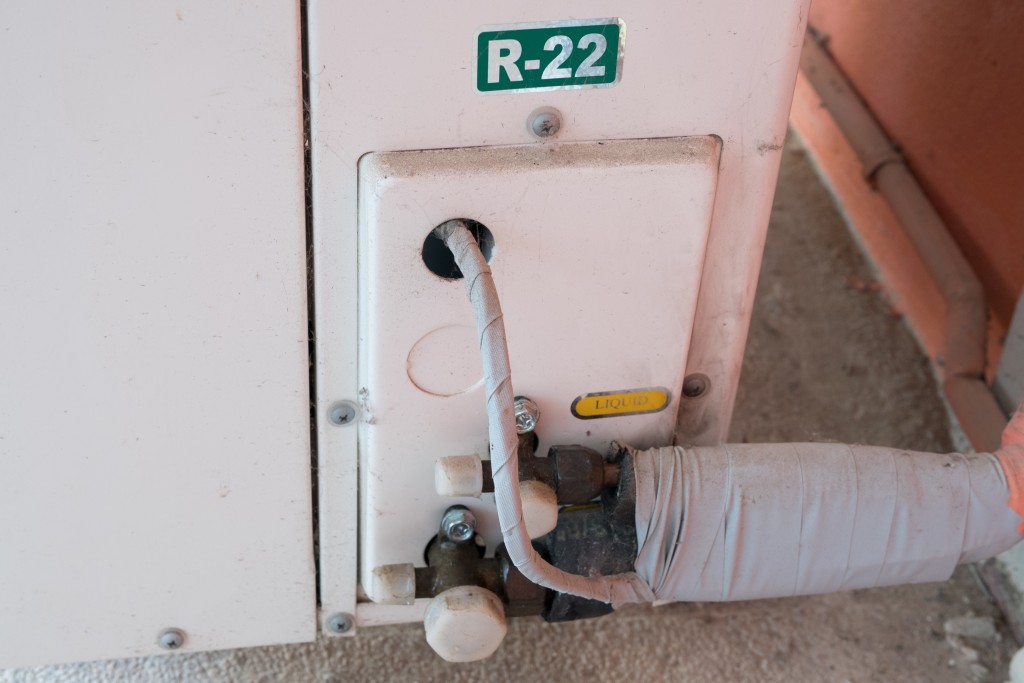
R-22 Refrigerant
Legacy Refrigerant Still Found in Older Systems
- Often referred to as Freon, which is its brand name
- R-22 was no longer used in most new air conditioning equipment manufactured after 2009
- R-22 production/import was further limited beginning in 2010
- As of January 1, 2020, new production/import ended in the U.S., and remaining supply is recovered, recycled, or reclaimed
- The reason for the phasing out was because it was discovered that R-22 is an HCFC, that is, a hydro-chlorofluorocarbon that contributed to the depletion of the Ozone layer
Today, R-22 is only available as recovered/recycled/reclaimed refrigerant, and servicing systems that rely on it can be costly due to limited supply.
If an R-22 system develops a leak, many owners compare repair costs versus replacement. Depending on the age and condition of the system, upgrading to newer equipment can be the more predictable long-term option.
R-410A Refrigerant
Widely Used, But the Industry Is Transitioning
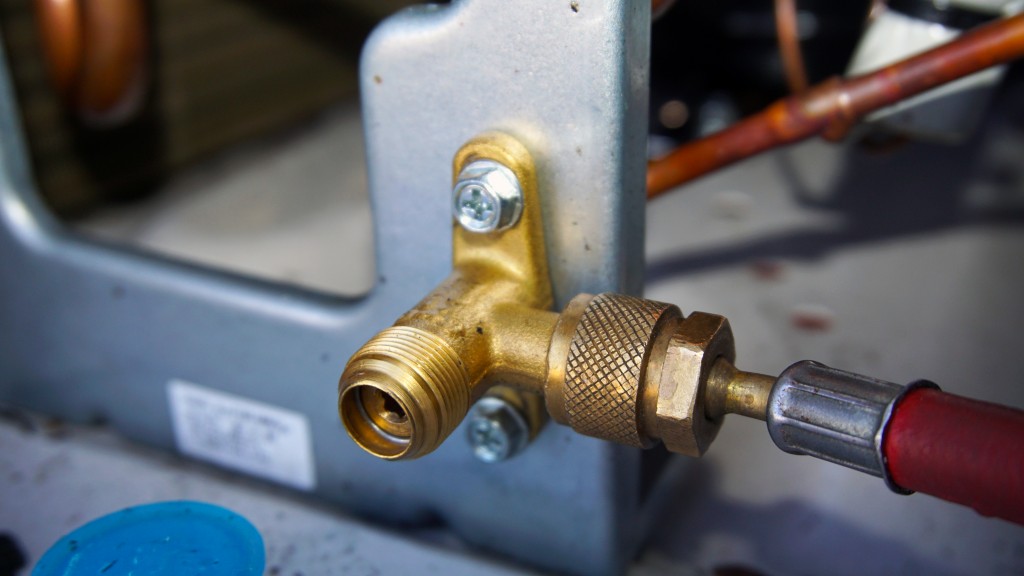
- Also known by other brand names such as Genetron® AZ-20®, Puron®, Suva® 9100 etc
- R-410A has been widely used in residential and light commercial equipment for many years
- It is a hydro-fluorocarbon (HFC) that does not deplete the Ozone layer
- R-410A is the most preferred refrigerant in unitary, lightweight air conditioning units
- R-410A operates at high pressures that are 50% higher than in R-22. They also need components that can operate at these high pressures
While R-410A remains common in existing systems, manufacturers have shifted new equipment toward next-generation refrigerants such as R-32 and R-454B to meet newer environmental standards and lower GWP requirements.
A2L Refrigerants (What Homeowners and Facility Managers Should Know)
Many of the newer replacement refrigerants being used in next-generation HVAC equipment are classified as A2L, meaning they are mildly flammable and require updated safety standards and installation practices. The equipment is designed with these refrigerants in mind, but it’s one more reason why proper installation and service by a qualified technician matters.
Industry leaders such as Emerson Climate Technologies see R-410A as a long-term solution for light commercial and residential air conditioning due to its high-efficiency performance that is almost the same as that of R-22. Here are some features that make it stand out when compared to R-22:
- Many air conditioner manufacturers have reported success with R-410A due to its energy efficiency in addition to being easy to use in their systems.
- There are now components that make it easy to design efficient R-410A systems.
- For greater efficiency and reliability, new air conditioning models are designed to be compatible with the use of R-410A.
- Because R-410A is capable of absorbing and releasing more heat than R-22, air conditioner compressors are able to operate at a much lower temperature. This reduces the chance of the compressor burning out due to overheating.
- R-410A requires air conditioner components such as compressors to tolerate a great amount of stress since the refrigerant operates at pressures greater than those required by R-22. The compressor’s high-pressure tolerance reduces the risk of a crack.
- If R-410A was used in a unit that was meant for R-22, the pressure exerted would be too much for the unit and it would break.
Lubrication Oils and System Compatibility
Why Oil Matters for Performance and Reliability
For efficient operation, all compressors are lubricated using an oil. However, the type of lubrication oil used from one compressor to another differs. For instance, R-410A units use Polyol Ester Oil or POE while R-22 units use mineral oil.
POE is more soluble with R-410 than R-22 is with mineral oil. This means that air conditioner compressors that use R-410A run more efficiently and consequently there is less wear and tear on the unit.
Modern Service Note: Always verify oil compatibility when retrofitting or servicing systems, as mixing incompatible oils and refrigerants can lead to system failure and long-term compressor damage.
Service and Compliance Reminder
In many cases, refrigerant handling requires certified technicians and proper recovery equipment. Leaks should be fixed, not topped off, and recovered refrigerant must be handled according to current regulations.
Update (As of 2026): Refrigerant Rules and What Changed
As of January 1, 2025, the new standard for residential HVAC refrigerants in the United States has shifted to R-454B (often branded as Puron Advance™) and R-32. The industry’s transition away from R-410A in new residential and light commercial HVAC equipment is now underway due to federal refrigerant regulations focused on reducing high-GWP HFCs. R-410A is still widely used in existing systems and can still be serviced, but most new equipment is moving toward lower-GWP alternatives like R-32 and R-454B. If you’re replacing an older system, expect the refrigerant choice to be driven by the model year and current compliance rules—another reason to work with a qualified installer and follow manufacturer requirements.
Important Dates and Regulatory Milestones
- January 1, 1996: Manufacture of many ozone-depleting refrigerants—including major CFCs such as R-11 and R-12—was generally banned in the United States under Clean Air Act provisions aligned with the Montreal Protocol.
- 2010: Production and import of R-22 (HCFC-22) were significantly limited, accelerating the phaseout of this common legacy residential and light commercial air conditioning refrigerant.
- January 1, 2020: U.S. production and import of R-22 (HCFC-22) officially ended; only recovered, recycled, or reclaimed R-22 remains available for servicing existing systems.
- December 27, 2020: The American Innovation and Manufacturing (AIM) Act was enacted, launching the national phasedown of high-GWP HFC refrigerants such as R-410A, R-134a, and R-404A.
- 2022: The EPA HFC allowance allocation program began reducing the supply of HFCs including R-410A, R-407C, R-134a, and R-404A under the AIM Act framework.
- January 1, 2025: Federal “Technology Transitions” restrictions began for certain HVAC product categories—primarily newly manufactured residential and light commercial systems such as central air conditioners, heat pumps, ductless mini-splits, rooftop units, and VRF systems—marking the industry’s shift away from R-410A toward lower-GWP refrigerants like R-454B (Puron Advance™) and R-32, both classified as A2L (mildly flammable).
- January 1, 2026: Expanded federal refrigerant management and leak repair requirements began applying to many systems using HFCs and certain HFO blends, increasing service, recordkeeping, and compliance obligations for covered equipment.
Looking Ahead: The Future of Refrigerants
Low-GWP and Next-Generation Solutions
As environmental regulations continue to evolve, the HVAC industry is shifting toward low-GWP refrigerants such as HFO blends and natural alternatives. These newer options aim to balance system performance, safety, and sustainability while meeting stricter global climate standards.
Homeowners and facility managers should work with certified HVAC professionals to ensure any new system or refrigerant upgrade complies with local codes and future regulatory requirements.