Key Takeaways
- Compare the stove's stated heating area with your home's insulation, climate, ceiling height, and floor plan.
- Look at usable heat output and firebox size together; neither a peak BTU number nor log length tells the whole story.
- Choose an EPA-certified model and plan its hearth, clearances, and chimney before ordering.
- Have a qualified hearth professional confirm the final size and installation for your home.
A wood stove that is too small may struggle on the coldest days. One that is too large can overheat the room and tempt you to run a low, smoky fire. The right choice starts with the space you actually want to heat—not just the largest square-footage number on a product page.
Start with the area you can realistically heat
Ask whether the stove will be the main heat source for a small home, a supplement for an open living area, or an occasional source of warmth. Count the rooms that can receive heat through an open path. A closed door, long hallway, or separate floor can limit heat circulation, even when the total square footage seems to match a stove's rating.
Next, consider the home's heat loss. Drafty windows, limited insulation, a cold climate, high ceilings, and frequent door openings can increase the heat needed. A tight, well-insulated house may need less. Heating-area claims are useful for narrowing choices, but they are estimates made under particular assumptions—not a guarantee that one stove will heat every room of a similarly sized home.
What do “small,” “medium,” and “large” wood stove mean?
Manufacturers use these labels to group models, but the boundaries vary. As a practical starting point, a compact stove often suits a smaller room or occasional use; a mid-size stove may fit a modest home or open living area; and a large model may be appropriate for a bigger, more open, or leakier space. Compare actual specifications and the installation manual for each model rather than assuming two “medium” stoves perform alike.
Firebox size matters—but bigger is not always better
The firebox is the chamber that holds the wood. A larger firebox generally accepts a larger fuel load and often a longer log, but it also needs to be operated in its intended range. If a stove is oversized for the space, you may have to open windows or reduce its air supply excessively to avoid overheating. A smoldering fire wastes fuel and can increase smoke and creosote. Choose a stove that can deliver comfortable heat during ordinary weather as well as colder spells.
When comparing models, check firebox volume, maximum log length, burn-time claims, and the manufacturer's stated heat-output range. Burn time depends on wood species, moisture, fuel load, draft, and how the stove is operated. Peak BTU figures are not a substitute for an appropriate operating range.
Check these five factors before choosing a model
- Heating goal: Decide whether the stove will heat one room, an open section of the house, or act as supplemental heat alongside a furnace or heat pump.
- Home and climate: Note conditioned area, ceiling height, insulation, air leakage, and typical winter temperatures.
- Layout: Identify doorways, stairs, and closed-off rooms that can keep heat from moving where you want it.
- Fuel and operation: Consider log length, wood storage, loading frequency, and whether you can reliably burn dry, seasoned wood.
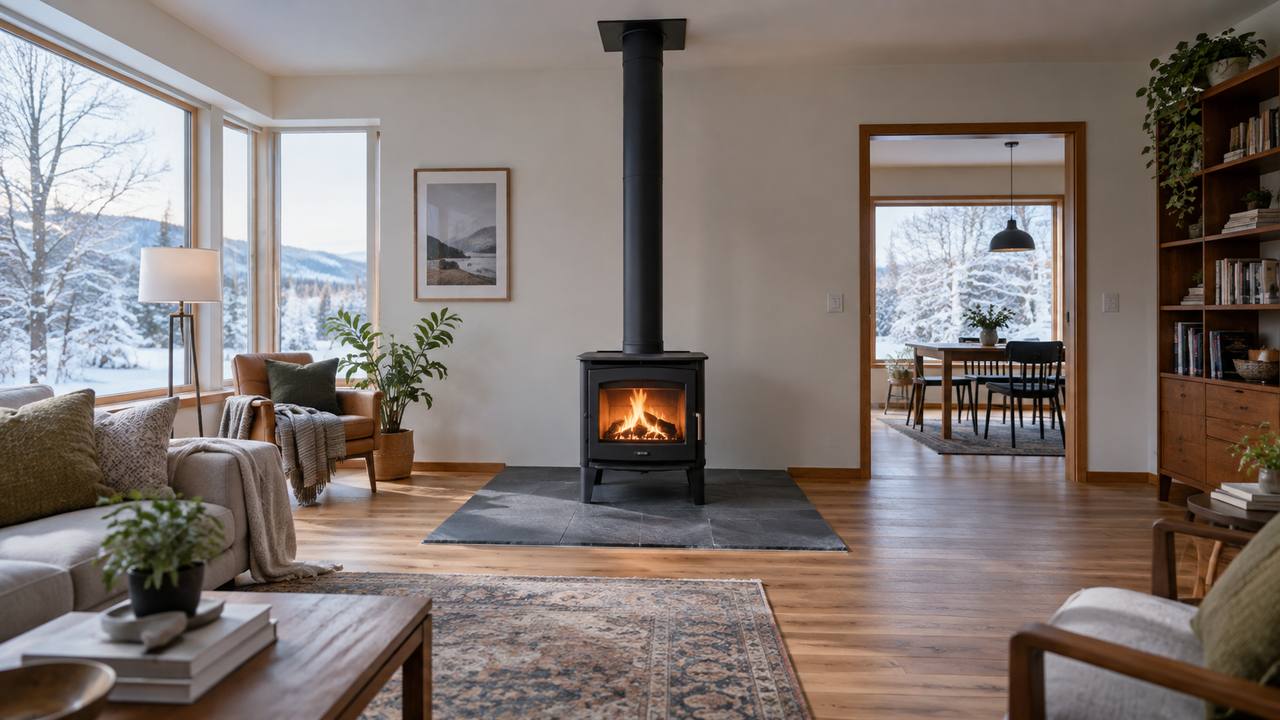
- Installation space: Confirm the stove's listed clearances, floor protection, chimney routing, and local code requirements before purchase.
Do not size the stove without sizing the installation
A wood stove needs a compatible chimney system, approved hearth or floor protection, and the clearances specified in its listing and installation manual. The required distances can differ by model and by whether approved heat shields are used. A short path to an existing chimney does not automatically mean that chimney is suitable. A qualified installer should assess the flue, ventilation, permits, and any local rules. Keep smoke and carbon-monoxide alarms in working order and arrange regular chimney and appliance inspections.
How to compare wood stoves at HVACDirect
Begin with the heating-area and size filters, then compare the manufacturer's specifications for a few candidates. Favor an EPA-certified stove whose normal operating range fits your real heating goal. Check the installation manual for hearth dimensions and clearances, and make sure the chimney components are compatible. If two models look close, the better fit is usually the one that can burn cleanly and comfortably through the conditions you experience most often—not simply the one with the higher maximum output.
Shop wood stoves at HVACDirect
Frequently asked questions
Can one wood stove heat my whole house?
It may in a smaller, open home, but heat does not distribute evenly through every floor plan. Closed rooms and distant spaces may still need another heat source. Size for your home's layout and heat loss, not total square footage alone.
Should I buy a larger stove for longer burn times?
Not automatically. A larger firebox may hold more fuel, but oversizing can make ordinary-day operation uncomfortable or smoky. Compare the manufacturer's output range and burn-time conditions with how you plan to use the stove.
Does firebox volume equal heating capacity?
No. Firebox volume describes space for fuel. Delivered heat also depends on the stove design, fuel quality, draft, and operating conditions. Read it alongside the rated output and heating-area guidance.
What should I bring to a stove-sizing conversation?
Bring a simple floor plan, dimensions, ceiling heights, information about insulation and windows, photos of the proposed stove location, and details of any existing chimney. That gives a hearth professional a better basis for a recommendation.
The best wood stove size is the one that meets your real heating needs while leaving room for a safe, code-compliant installation and a clean, comfortable burn.