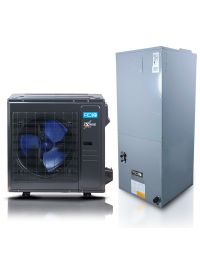
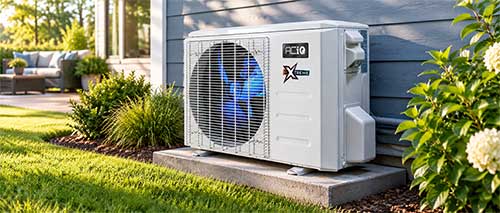
Smarter HVAC Output That Adjusts to Your Home
Traditional single-stage HVAC equipment generally runs at full output when the thermostat calls and shuts off after reaching the setpoint. ACiQ inverter technology takes a more responsive approach: it varies compressor speed so system capacity can rise or fall as conditions change.
Instead of treating every cooling or heating call the same, an inverter-driven system can use lower output during lighter loads and increase output when the home needs more capacity. That modulation supports more consistent comfort, quieter low-load operation, and improved energy efficiency.
How ACiQ Inverter Technology Works
An inverter controls the electrical frequency supplied to the compressor motor. Changing that frequency lets the compressor operate across a range of speeds rather than only switching between fully on and fully off. ACiQ describes its inverter compressor as adjusting speed to match the capacity required to maintain comfort.
The system still cycles off when appropriate, and it may reach high output during extreme weather or a large temperature change. The difference is that it can spend more time operating closer to the home's immediate demand.
Watch: Why ACiQ Inverter Technology Makes a Difference
Watch the ACiQ inverter technology video on YouTube.
Benefits of ACiQ Inverter Technology
More Consistent Comfort
Variable operation can reduce the noticeable temperature swings common with equipment that repeatedly starts at full capacity and shuts off.
Quieter Operation
During lower-load conditions, the system does not always need maximum compressor and fan output. That can make normal operation less intrusive. Compare published sound ratings for the exact model.
Improved Efficiency
Matching output more closely to demand can reduce unnecessary energy use and frequent full-output cycling. Actual operating cost depends on climate, utility rates, installation, controls, and the equipment being replaced.
Responsive Performance
The system can increase or decrease capacity as outdoor conditions and indoor demand change, helping it maintain comfort throughout the day.
Inverter HVAC vs. Traditional Fixed-Output Equipment
A fixed-output system is similar to a light switch: when there is a call, it operates at its designated stage until the thermostat is satisfied. An inverter system is more like a dimmer, with the ability to modulate within its approved operating range.
- Light-load weather: an inverter system may run at reduced capacity for longer, steadier cycles.
- Changing conditions: it can increase output as outdoor temperature or indoor load changes.
- Large recovery: the system may use higher capacity to move toward the setpoint.
- At the setpoint: it can reduce output rather than relying exclusively on abrupt full-output cycles.
Longer operation is not automatically wasted energy. A modulating system may run for more minutes while using less instantaneous power and delivering steadier output. Efficiency must still be evaluated using the complete matched system's SEER2, EER2, HSPF2, and model-specific performance data.
Advanced Technology at an Accessible Price
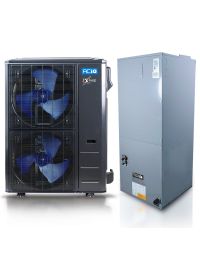
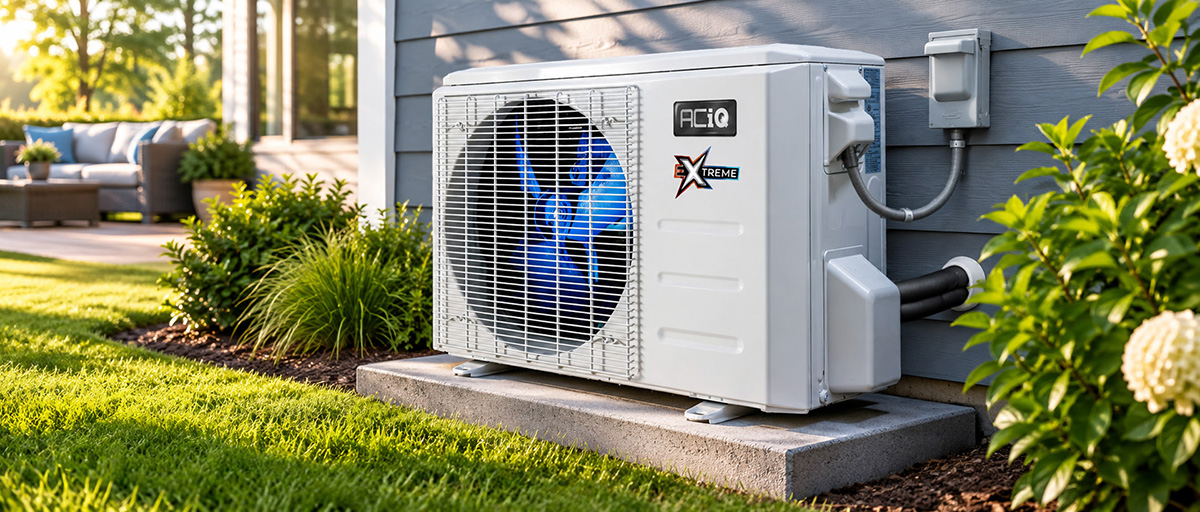
Inverter-driven compressors were once concentrated in premium HVAC lines. ACiQ offers inverter technology across multiple residential configurations, bringing variable output and intelligent control to more replacement and new-construction projects. The right value comparison should include equipment price, required accessories, installation, efficiency, warranty terms, and expected operating cost.
Choosing the Right ACiQ Inverter System
“Inverter” describes an important feature, but it does not replace system design. Before ordering, confirm:
- A Manual J load calculation and appropriate system capacity
- An approved indoor/outdoor equipment match
- Whether the system is cooling-only or a heat pump
- The refrigerant, electrical requirements, controls, and required accessories
- SEER2, EER2, HSPF2, sound, and low-ambient ratings for the exact combination
- Ductwork, airflow, line-set, and installation compatibility
Proper sizing matters especially with modulating equipment. Oversizing can shorten cycles and reduce the opportunity to benefit from low-output operation, while undersizing can leave the system operating near maximum capacity for extended periods.
Ready to Experience Smarter Comfort?
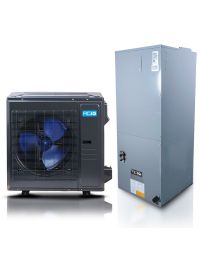
Compare ACiQ inverter heat-pump systems, available capacities, efficiency ratings, and matched indoor equipment.
Shop ACiQ Inverter Systems →Frequently Asked Questions
What does an inverter do in an ACiQ HVAC system?
The inverter varies compressor speed so heating or cooling output can adjust as demand changes instead of relying only on full-output on/off cycles.
Are ACiQ inverter systems quieter?
They can operate more quietly during lower-load conditions because the compressor and related components do not always need maximum output. Published sound ratings vary by model and match.
Does inverter technology lower energy bills?
Matching output to demand can reduce unnecessary energy use, but actual savings depend on equipment selection, installation, climate, utility rates, thermostat settings, and the system being replaced.
Is inverter the same as variable speed?
Inverter commonly refers to the electronics that vary compressor speed. Variable-speed may also describe an indoor blower, so review the complete matched-system specifications.
Sources
- ACiQ Unitary Series Brochure — inverter compressor modulation, variable capacity, comfort, efficiency, and sound claims.
- ACiQ High-Efficiency Systems Brochure — inverter-driven compressor operation and system performance information.
- HVACDirect ACiQ Inverter System Example — current matched-system description and product considerations.