We use cookies to make your experience better. To comply with the new e-Privacy directive, we need to ask for your consent to set the cookies. Learn more.

1-800-397-1392
Today's Hours 8am - 11pm est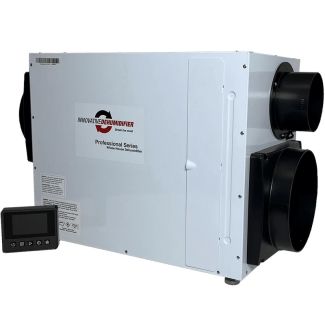
A crawl space dehumidifier is a heavy-duty appliance designed to remove excess moisture from the air beneath a home and maintain a selected humidity level. It targets relative humidity levels between 45% and 55% to prevent mold, wood rot, and musty odors.
These dehumidifiers work by pulling humid air across a cold evaporator coil, causing water vapor to condense into liquid. The collected water then flows through a drain hose or condensate pump while the system returns drier air to the crawl space.
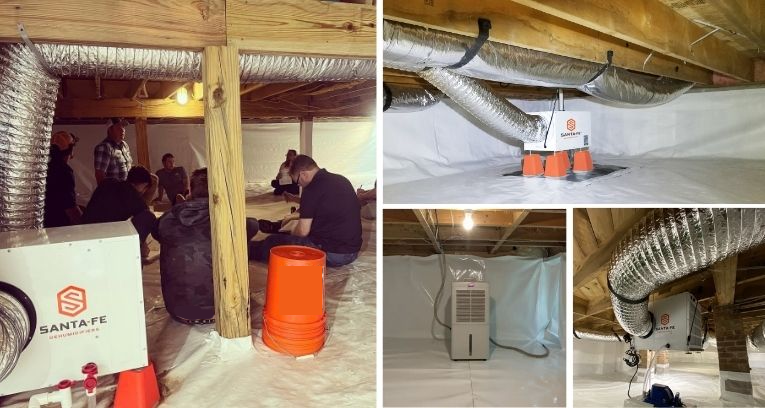
You can use crawl space dehumidifiers to control humidity, reduce condensation, dry damp areas, protect stored items, manage odors, and support an encapsulation system. They are most effective after plumbing leaks, groundwater intrusion, drainage problems, and other active moisture sources have been corrected.
Preventing Condensation: A dehumidifier reduces the water vapor that can collect on floor joists, pipes, ductwork, insulation, and foundation surfaces. Keeping relative humidity below 60% lowers the chance of condensation forming on cool building materials.
Drying Damp Areas: A crawl space dehumidifier helps remove moisture from the air surrounding damp wood, insulation, masonry, and soil coverings. It can support drying after minor seepage or repairs, but standing water must be removed first.
Controlling Humidity: A dehumidifier with a built-in humidistat keeps relative humidity in that 45% to 55% sweet spot without you having to babysit it. That steady control matters most in crawl spaces, where moisture from the ground can push humidity up even when the weather outside is dry.
Protecting Stored Items: Crawl spaces often end up holding boxes, seasonal items, or even HVAC equipment, and excess moisture can warp, rust, or mold these over time. Keeping the air dry helps protect whatever's stored down there from that kind of slow damage.
Reducing Musty Odors: Damp, musty smells usually come from mold and mildew feeding on excess moisture, and they don't always stay contained to the crawl space. Pulling humidity down removes the conditions those odors need to form in the first place and prevents them from spreading up into your home.
Supporting Encapsulation: Encapsulation seals off a crawl space from outside air and ground moisture with a vapor barrier, but it still needs a dehumidifier to manage whatever moisture gets trapped inside. Without one, a sealed crawl space can actually hold humidity in rather than letting it escape.
A dehumidifier controls moisture in the air, but it does not replace a ground vapor barrier, foundation drainage, plumbing repairs, or proper grading around the home.
Encapsulated, enclosed, damp, and difficult-to-vent crawl spaces are the best candidates for crawl space dehumidifiers. The unit should be matched to the space’s size, construction, sealing quality, temperature, and moisture load.
Encapsulated Crawl Spaces: Once a crawl space is sealed off with a vapor barrier, a dehumidifier is what actually manages the humidity that gets trapped inside. Without one, an encapsulated space can end up holding onto moisture rather than staying dry.
Vented Crawl Spaces: Vented crawl spaces let in outside air, which means humidity levels can swing depending on the weather and season. A dehumidifier helps smooth those swings out and keeps conditions more consistent regardless of what's happening outside.
Residential Foundations: Homes built over a crawl space foundation are especially prone to ground moisture working its way up into floor joists and subflooring. A dehumidifier placed in that space helps protect the structure sitting right above it.
Basement Crawl Spaces: Partial-height crawl spaces connected to a basement can develop pockets of trapped humidity that the main basement system does not reach. A compact or ducted model can direct dry air into these less accessible sections.
Flood-Prone Homes: Homes with a history of minor flooding or groundwater intrusion may benefit from a suspended dehumidifier after the underlying water problem has been addressed. Santa Fe hanging kits raise horizontal units above the floor and are specifically intended for spaces prone to flooding or standing water.
If you seal your crawl space it places less demand on the equipment, which can improve humidity control and reduce unnecessary runtime. This, in turn, increases the lifespan of the dehumidifier by reducing wear.
The type of crawl space dehumidifier you need depends on whether the system will serve only the crawl space, connect to ductwork, or also control humidity in other parts of the home. Low-profile horizontal units are usually the most practical choice for direct installation in shallow crawl spaces.
Whole-House Dehumidifiers: These tie into your HVAC ductwork to manage humidity across the crawl space and connected living areas at the same time. They're a good fit if moisture problems aren't limited to just the crawl space itself. Popular models include the Innovative WH Series and Santa Fe Ultra.
In-Wall Dehumidifiers: These are usually designed for higher vertical walls rather than the low ones in crawl spaces, though some models are designed to be shorter or lay horizontally to address this issue. They work well in installations where a standalone unit would take up too much floor space.
Ducted Dehumidifiers: These pull humid air in and distribute drier air back out through ductwork or grilles, which makes them useful for crawl spaces divided into multiple sections. They're a solid choice when air doesn't move freely between different parts of the space.
High-Wall Dehumidifiers: These are uncommon in crawl spaces. However, specific models, such as the Innovative HWD-45, are designed to mount horizontally on a wall and can fit in spaces with limited vertical clearance. High-wall models mount above the floor to preserve space or reduce exposure to minor water intrusion.
For most direct crawl space applications, a low-profile horizontal model, such as the Santa Fe Compact70, is more practical than an in-wall or high-wall unit because it is only 12 inches tall and is specifically designed for tight spaces with low walls.
The most important crawl space dehumidifier features are automatic humidity control, dependable drainage, low-temperature operation, accessible monitoring, and easy filter maintenance. These features reduce the amount of attention required after the system is installed.
Built-In Humidistat: This measures humidity in the crawl space and switches the unit on automatically once moisture climbs past your chosen setting, which keeps levels steady without making the unit run nonstop. Nearly every purpose-built crawl space model has one, including the Santa Fe Compact70 and the IDS WH Series, both of which use it to hold the space at that ideal 45% to 55% range.
Automatic Defrost: Crawl spaces run colder than the rest of the house, and ice can build up on the coil once temperatures drop. The Santa Fe Compact70 includes auto defrost and auto restart specifically to handle this, briefly adjusting operation until the frost clears so the unit keeps working through the colder months instead of icing over and shutting down.
Condensate Pump: Crawl spaces don't always have a floor drain within reach, so a pump pushes collected water up or over to wherever it can drain properly. The Compact70 supports an optional condensate pump accessory for exactly this situation, while IDS's IW Series in-wall units come with one built right in.
Remote Monitoring: Checking on a unit tucked under the house isn't exactly convenient, which is why remote monitoring matters more here than in most rooms. The Santa Fe Compact70 supports an optional remote dehumidistat, and the IDS IW-25-6 offers optional Wi-Fi control, so you can keep an eye on humidity without crawling underneath to check.
Continuous Drainage: Instead of collecting water in a bucket that someone has to remember to empty, continuous drainage sends it out automatically through a hose. This is especially useful in a crawl space, since the Compact70 is built to run on gravity drainage around the clock, and IDS units like the IW25 drain hands-free straight into existing plumbing.
Washable Filter: Crawl spaces tend to collect more dust, debris, and dirt than a finished room, so a washable filter cuts down on replacement costs and keeps the unit running efficiently. Professional-grade fixed, such as those from Sante Fe, and portable models, like those from Perfect Aire or Americool, which are built for smaller crawl spaces, commonly include a washable filter that just needs a rinse rather than a full swap.
Automatic drainage and remote humidity monitoring are particularly valuable because crawl spaces are rarely checked every day and are hard to access.
Additional factors to consider when buying a crawl space dehumidifier include coverage capacity, moisture-removal rate, operating temperature, drainage access, and installation requirements. These factors determine whether the unit can keep up with the actual conditions under your home.
Coverage Capacity: Choose a dehumidifier rated for the size and condition of your crawl space. For example, the Santa Fe Compact70 covers a crawl space of 2,500 to 3,000 sq. ft.
Moisture Removal Rate: Pint capacity tells you how much water a dehumidifier can remove over 24 hours under specific test conditions. The Santa Fe Compact70 removes 70 pints per day at 80°F and 60% relative humidity, while its capacity drops to 43.7 pints per day at 65°F and 60% RH.
Operating Temperatures: Check the rated temperature range if your crawl space becomes cold in winter. The Compact70 operates from 49°F to 95°F, while the Innovative WH60 is rated from 33°F to 105°F.
Drainage Access: Continuous drainage is more practical than a collection bucket in a hard-to-access crawl space. For example, if gravity drainage is not possible, Santa Fe's optional condensate pump can move water up to 12 feet vertically and up to 20 feet total.
Professional Installation: Ducted, in-wall, or hardwired units generally call for a professional, especially if the job involves electrical work or tying into existing ductwork. Standalone plug-in units are typically simple enough to set up yourself.
You should also consider the warranty coverage for the unit to ensure you have access to assistance if a unit breaks down. The warranty is typically limited and lasts around 5 years.
Santa Fe and Innovative Dehumidifier Systems make the most practical crawl space dehumidifiers available through HVACDirect.com. Both brands offer professional-grade models with continuous drainage and configurations designed for permanent residential moisture control in tight spaces with low walls.
Sante Fe Dehumidifiers: Santa Fe builds some of the most purpose-made crawl space units on the market, including the Compact70, a low-profile 70-pint-per-day model designed to fit between floor joists in tight spaces. Their lineup also covers larger whole-home options like the Ultra70 and Ultra98 for crawl spaces that connect to bigger living areas.
Innovative Dehumidifier Systems: IDS is known for space-saving in-wall units like the IW and HWD Series, which drain directly into existing plumbing and work well when floor space is at a premium. For crawl spaces tied into central HVAC, their WH Series offers whole-home ducted options like the WH100, WH150, and WH200.
Portable brands are better suited to temporary room drying and are generally less practical for permanent use in a low, sealed crawl space, though you can use one in the space. Popular brands for these include Americool, Namco, and Perfect Aire.
The total cost for a dehumidifier for a crawl space usually ranges from $1,400 to $10,000+, depending on whether you choose a standalone, plug-in unit, or a whole house one that needs structural changes to your home to install. A typical breakdown of costs is below:
Equipment Price: Crawl space dehumidifier equipment prices range from $1,400 to $5,000+, depending on the type of dehumidifier, capacity, and brand. For example, a whole house dehumidifier used for a crawl space costs more than a dedicated one for a single space.
Installation Costs: Installation costs vary from $0 to $10,000, based on whether the unit just needs to be plugged into an outlet or requires professional wall mounting, refrigerant lines, and dedicated electrical circuit upgrades.
Operation and Maintenance Cost: Operation costs range from $15 to $40 a month, depending mainly on usage amount and local electricity cost rates. Maintenance costs typically include replacing filters, cleaning the condensate line and coil, and miscellaneous repairs and range from $30 to $300. This depends a lot on whether you do the maintenance yourself or hire a professional.
Permits are required in most jurisdictions if you need to install a new dedicated electrical outlet, modify HVAC ductwork, or completely seal and close a vented crawl space before installing a dehumidifier. Permit costs typically range from $50 to $300 or more.
Homeowners should buy crawl space dehumidifiers from HVACDirect.com for wholesale pricing, professional-grade product options, expert buying guidance, reliable shipping, and knowledgeable product support. This is especially useful for crawl spaces where sizing, drainage, and installation requirements can be more involved than choosing a standard portable room dehumidifier.
Competitive Pricing on Top Brands: HVACDirect.com carries crawl space and whole home options from brands such as Santa Fe and Innovative Dehumidifier Systems. We offer wholesale, competitive prices without the middleman.
Expert Product Guidance Before You Buy: The HVACDirect.com team can help compare coverage, pint capacity, drainage requirements, ducting options, and electrical specifications. This can make it easier to choose equipment suited to the crawl space rather than relying on square footage alone.
Fast, Reliable Shipping: Many dehumidifiers and compatible accessories can ship directly to the homeowner or installer throughout the continental United States. We have warehouses throughout to ensure we can ship quickly anywhere. Current product listings also show inventory and shipping information so you can plan the project before ordering.
Knowledgeable Support After Purchase: HVACDirect.com provides access to product information and support for equipment, filters, pumps, duct kits, warranty registration, and other compatible accessories. Our technical team can help with any troubleshooting during or after the installation.
Homeowners can compare different capacities, installation styles, and price points in one place on their own time without any sales pressure.
Installing a crawl space dehumidifier means prepping the space, elevating the unit off the ground on blocks or a hanging kit so it never touches bare dirt or standing water, and then hooking up drainage and power. On the prep side, that means sealing off any outside vents and entry doors so humid outdoor air can't sneak back in, and laying down a thick plastic vapor barrier over the dirt floor with the seams taped securely. The unit itself should sit in an open, level, central spot with good airflow and easy access for filter cleaning. Once it's positioned, connect a drain hose to a condensate pump, sump pit, or straight outside the foundation, plug into a grounded, weather-safe 110/115/120V outlet, and set the target humidity between 45% and 55%.
The size crawl space dehumidifier you need depends on its pints-per-day capacity, the crawl space square footage, moisture severity, and how tightly the area is sealed, though a typical crawl space requires between 50 and 100+ pints per day. Pints per day, or PPD, measures how much moisture the unit can remove in 24 hours, so wetter crawl spaces with damp soil or consistently high humidity generally need more capacity. For example, a crawl space under 1,000 square feet with light to moderate moisture may need 50 to 70 pints per day, up to 2,000 square feet with moderate moisture 70 to 85 pints per day, up to 2,500 square feet with moderate moisture 90 to 100 pints per day, and over 2,500 square feet with high humidity 130+ pints per day.
A homeowner may be able to install a standalone crawl space dehumidifier when the setup only requires proper placement, a compatible outlet, and straightforward gravity drainage, though an HVAC contractor is a better choice for ducted, suspended, whole-home, or electrically modified installations. Professional installation is also useful when the crawl space has several rooms or sections that require ductwork to distribute dry air evenly, or when the space is difficult to access.
You may need a crawl space dehumidifier if relative humidity regularly exceeds about 50% to 60%, condensation forms on building materials, or you notice persistent dampness and musty odors. The EPA recommends keeping crawl-space humidity below 50% to reduce condensation and maintaining indoor humidity between 30% and 50% when possible.
Crawl space dehumidifiers can be worth the investment when excess humidity threatens floor joists, insulation, ductwork, stored belongings, or indoor comfort. The cost of running one is generally small compared to what it can prevent, including mold growth, wood rot, and structural damage that gets far more expensive to fix later. They provide the most value after groundwater, plumbing leaks, poor drainage, and other active sources of water have been corrected.
A crawl space dehumidifier typically lasts about 5 to 15 years, although professional-grade equipment can vary based on runtime, moisture load, maintenance, and installation conditions. Units that run continuously because they are undersized or installed in an unsealed, very damp space may wear faster.
A crawl space dehumidifier takes 1 to 3 days to reach a safe 30% to 50% humidity level, while completely drying out soaked wood and insulation takes 1 to 2 weeks. Mild dampness usually takes 24 to 48 hours. How long it actually takes depends on the starting humidity, how much moisture is trapped in the materials, temperature, airflow, sealing quality, and the unit's capacity. A dehumidifier's pints-per-day (PPD) rating measures the total water weight the unit extracts from the air over a 24-hour period. For example, a 70-pint rating means the unit can pull 70 pints (8.75 gallons) of moisture out of the air in one day, but only under specific test standards like 80°F and 60% relative humidity.
Crawl space dehumidifiers should be drained continuously, either by gravity or through a condensate pump, since manually emptying a bucket just isn't practical in a space you can't easily get to. With gravity drainage, the unit sits elevated on blocks and the hose slopes downward the entire way, with no low spots or kinks, running either straight outside the foundation or into a floor drain. When gravity flow isn't an option, a condensate pump takes over, pushing water vertically or horizontally through a small tube to a sump pit, dry well, or outdoors. Whichever method you use, it helps to route the discharge into an existing sump pit if one's already there, double-check that the unit is sitting level with a clear downward path for the line, and in colder climates, avoid running exterior drain lines above ground where they can freeze and block up.
Crawl space dehumidifiers should generally be set around 45% to 55% relative humidity, with the goal of staying below 60%. The EPA specifically recommends keeping crawl spaces below 50% humidity to help prevent condensation on building materials. Setting the unit much lower than necessary can increase runtime and electricity use without providing a meaningful moisture-control benefit.
Crawl space dehumidifiers can remain available during winter, but they will only remove moisture when humidity rises above the set point and the temperature remains within the unit's operating range. The Santa Fe Compact70 operates from 49°F to 95°F, while the IDS WH60 is rated from 33°F to 105°F. Since crawl spaces tend to run colder than the rest of the house, look for a model with auto defrost, since this keeps the unit working properly even as temperatures drop closer to its lower limit. In a dry winter crawl space, the humidistat may keep the compressor off for long periods, so year-round power does not necessarily mean year-round continuous operation.