Key Takeaways – Energy-Efficient Home Ventilation
- Using a Combination of Ventilation Products Helps your HVAC System Run More Efficiently: A ventilation strategy uses multiple systems working together. Ceiling fans, inline fans, exhaust fans, ERVs, and HRVs each play a role in creating balanced airflow that reduces strain on your HVAC system and lowers energy costs.
- A Smart Ventilation Strategy Can Reduce Energy Costs by Up to 30%: Ventilation helps manage heat, moisture, and air circulation, so your heating and cooling equipment doesn't have to work as hard. This results in energy savings of 10-30% and extends your HVAC system's life.
- Using Several Types of Ventilation Makes Your Home Healthier and More Comfortable: Targeted exhaust in bathrooms and kitchens, ceiling fans for air movement, and fresh air systems like ERVs and HRVs all work together to keep indoor air quality high and energy use low all year.
Article Contents
A healthy home starts with clean, balanced airflow and good indoor air quality. Opening windows and doors can help bring fresh outdoor air into your home, but did you know that it could be costing you hundreds of dollars a year in extra energy bills? Air leaks from windows and doors can lead to significant energy loss, making your heating and cooling systems work harder.
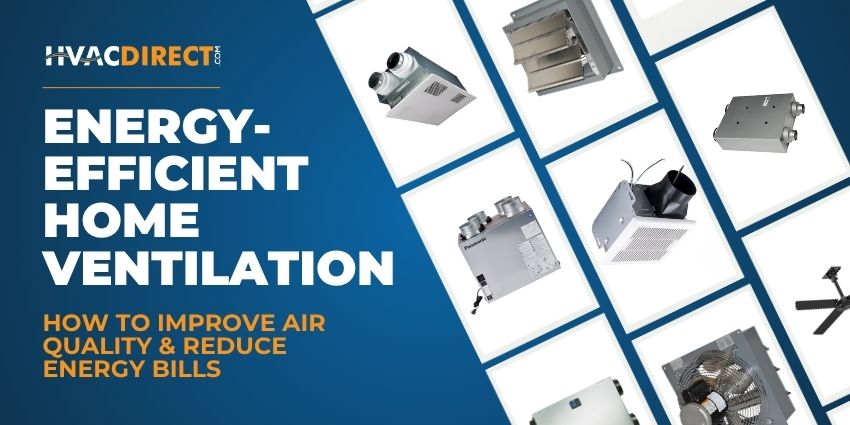
A better way is to use an energy-efficient ventilation strategy. Using a combination of ventilation products, such as ceiling fans, inline fans, exhaust systems, and a recovery ventilator, brings in fresh air, controls humidity, removes pollutants, and keeps every room comfortable. Proper ventilation is essential for both energy efficiency and maintaining healthy indoor air quality.
Let's explore how different ventilation components work together to create an energy-efficient, healthy home environment. You can find all of these products at wholesale prices on HVACDirect.com.
What is Home Ventilation
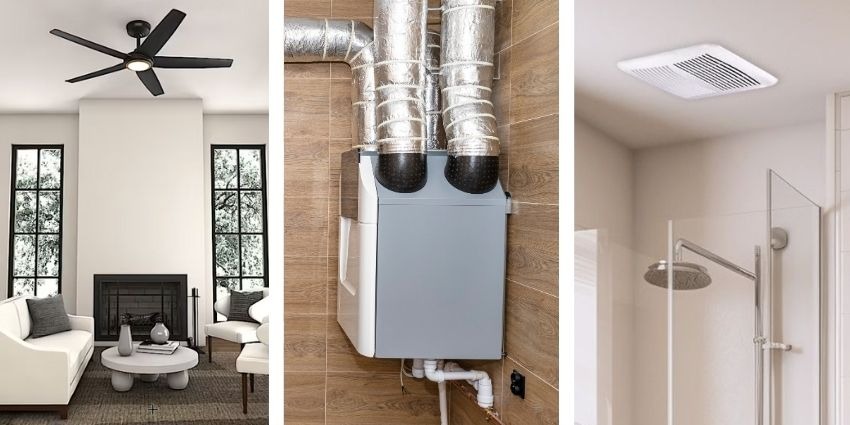
Think of your house as a human body. Your ventilation system is the lungs. It breathes in outdoor air to supply fresh air and circulates ventilated air throughout your home (fresh air supply). Then it exhausts air by pushing or filtering out chemical vapors, cooking smoke, smelly odors, and other air pollutants (exhaust air).
It is more effective and energy efficient to use a combination of air quality products, such as ceiling, attic, bathroom, and exhaust fans. You can also include inline fans and whole-house ventilation, such as energy recovery ventilators and heat recovery ventilators. These work together with the natural flow of air as part of the ventilation process.
Combining these with your main HVAC equipment creates a layered setup. This helps keep your indoor air clean and reduces wasted energy.
Why Home Ventilation Matters
Energy-efficient ventilation is about bringing fresh air into your home through a balanced ventilation system without overworking your heating and cooling system. When fresh air flows properly through your house, your HVAC doesn't have to struggle nearly as hard.
How Energy-Efficient Ventilation Systems Work Together with Your HVAC
Here's what happens when you use the right combination of natural and mechanical ventilation systems:
- Your home holds onto warm air when it's cold outside and keeps it out when it's hot.
- You breathe cleaner air AND your energy bills drop.
- Your AC and furnace get a break instead of running constantly. This extends the lifespan of your HVAC system and reduces the need for repairs.
- If your HVAC system has to work less, it won't need to use as much power, lowering energy bills.
- No more annoying drafts sneaking through cracks or doors that won't stay closed!
- Moisture gets kicked out before it can gunk up your HVAC or grow mold.
Choosing the right ventilation system for your specific home and climate is essential to prevent condensation, improve air quality, and ensure your system works efficiently. When ventilation components work together properly, they can reduce heating and cooling costs by 10-30% while extending the life of your HVAC equipment.
Types of Energy-Efficient Home Ventilation
Home ventilation works best when different systems support each other and take pressure off your heating and cooling equipment. Let's start off with the different types of ventilation fans.
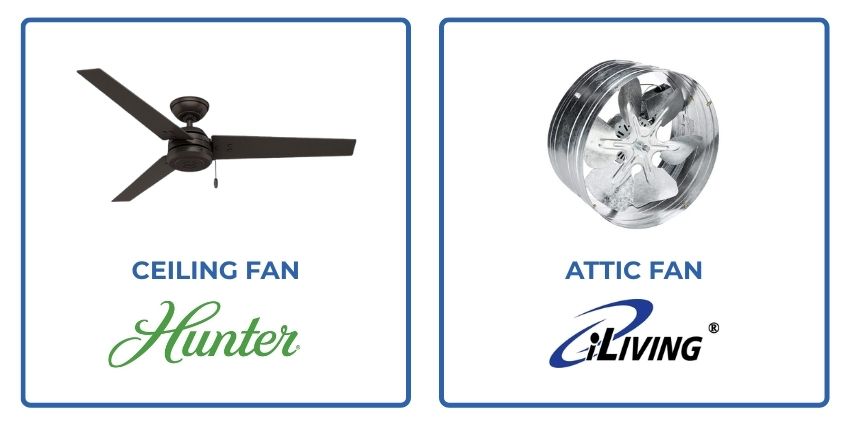
Layer 1: Air Circulation (Ceiling Fans & Attic Fans)
Ceiling fans keep air moving, which makes you feel cooler without having to run your HVAC system to lower the temperature. That wind-chill effect means you can bump your thermostat up by about 4 degrees in summer (or down a few degrees in winter) and still feel just as comfortable. As air enters and circulates through the living space, ceiling fans help maintain comfort and improve overall air quality. Less work and effort from your AC and furnace to heat or cool your home mean lower energy bills.
Meanwhile, attic fans tackle a problem most people don't even think about. On a hot summer day, your attic can hit 150°F or higher. All that trapped heat moves down into your living space, forcing your AC to work overtime. Attic fans exhaust that superheated air before it becomes your air conditioner's problem, which can seriously cut your cooling costs and help avoid heat buildup in your home.
Layer 2: Targeted Exhaust (Bathroom & Kitchen Fans)
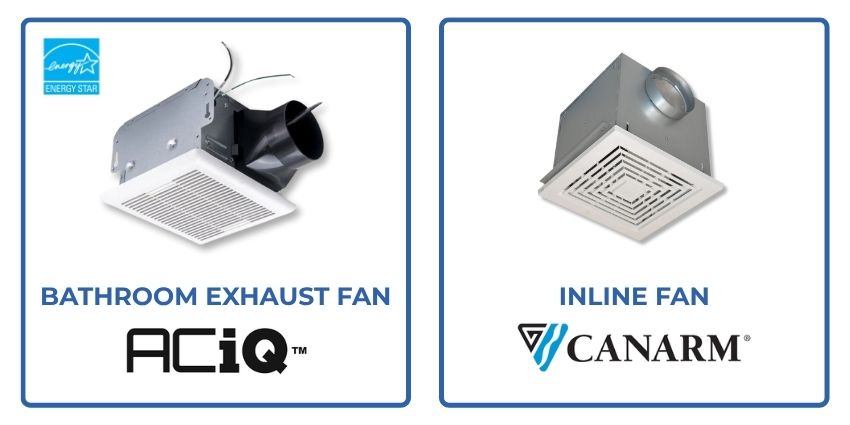
Bathrooms are moisture factories that particularly benefit from spot ventilation. Hot showers, baths, and even flushing toilets all dump humidity into the air. Bathroom exhaust fans, often called bath fans, remove moisture before it can drift through your house and settle in walls, ceilings, or your ductwork, causing damage and mold.
Why does this matter? Your AC must work way harder to remove water vapor and humidity than it does to just cool dry air. Let moisture spread through your home, and you're basically making your HVAC fight an uphill battle and risking structural damage.
Kitchen exhaust fans do something similar. Cooking creates heat, steam, grease particles, and odors. A good exhaust fan pulls all of that out immediately, with moisture removal as a primary benefit. Your HVAC doesn't have to deal with sudden temperature and humidity spikes every time you boil pasta or sear a steak.
Layer 3: Airflow Distribution (Inline Fans)
Inline fans sit inside your ductwork and give airflow an extra push where it's needed most. Got a room at the end of a long duct run that never quite gets enough air? That's where inline fans shine. They boost airflow to specific areas through duct systems that serve as pathways for air movement, without making your whole HVAC system work harder.
They also solve pressure problems. When air pressure in your home becomes unbalanced, weird stuff starts happening. Doors won't stay closed. You feel drafts coming from nowhere. Outside air sneaks in through tiny cracks around windows and outlets.
Inline fans help distribute fix presume imbalances and fresh air evenly throughout your house, rather than letting it all dump into one area.
Layer 4: Fresh Air Exchange (ERVs, HRVs & Whole-House Systems)
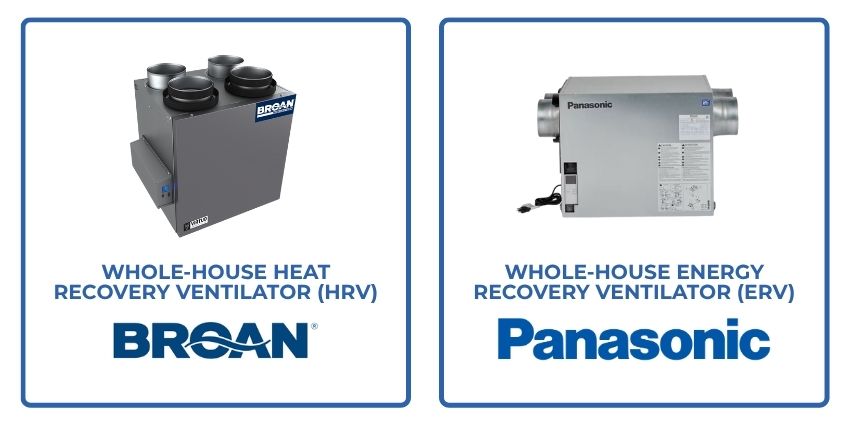
Heat Recovery Ventilators and Energy Recovery Ventilators are mechanical ventilation systems that exchange stale indoor air with fresh outdoor air while preconditioning the incoming air to save energy.
HRVs (heat recovery ventilation systems) transfer only heat. ERVs (energy recovery ventilation systems) transfer both heat and moisture. Both use a heat exchanger for transferring heat and managing humidity. HRVs are better for cold, dry climates where humidity isn't a concern, while ERVs are ideal for climates with hot, humid summers and cold winters. Both systems recover 60 to 80% of the energy that would normally be lost through ventilation.
HRVs and ERVs, along with whole-house fans, are types of whole-house ventilators. Whole-house ventilation systems often use balanced systems with two duct systems, one for fresh air intake and one for exhaust air removal. These balanced ventilation systems continuously swap out stale indoor air for fresh outdoor air throughout your entire home instead of one room. They tie into your existing ductwork and can be controlled with timers, thermostats, or smart home setups.
How Energy-Efficient Ventilation Systems Work Together to Help You with Your Heating and Cooling System and Save Money
When you layer multiple ventilation components, they create a system that takes serious pressure off your HVAC equipment. Ceiling fans keep air moving, attic fans stop heat buildup, bathroom and kitchen exhausts catch moisture at the source, inline fans balance ductwork airflow, and ERVs or HRVs bring in preconditioned fresh air. Each component handles a specific job before your heating and cooling system ever has to kick in.
The result? Your equipment runs less, lasts longer, your energy bills drop, you maintain indoor air quality, and your family is happier and healthier.
Is a Whole-House Ventilation System Worth it?

Absolutely. Whole-house ventilation is one of the best investments you can make for comfort and lower energy bills.
When ventilation is poor, your heating and cooling system struggles just to maintain temperature and humidity. That means higher bills and faster equipment wear.
Energy-efficient ventilation changes everything. Your ventilation and HVAC work as a team to balance air pressure, reduce system load, and save energy. Some more recent systems even use advanced EC motors and smart controls, making it easy to manage and monitor your system.
When it's all working together, you're looking at roughly at least 10% lower energy costs and better indoor air quality year-round. At HVACDirect.com, we carry all these products at wholesale prices that make upgrading easy and affordable. That's a win worth taking.
Energy Star-Certified Ventilation for Maximum Energy Recovery
Looking to save even more money? When buying ventilation products, look for Energy Star-certified models that meet strict energy-efficiency, performance, and sound criteria established by the EPA.
You can also check out Energy.gov's rebate and tax credit finder to see if a system qualifies. Most systems may be eligible for the Home Electrification and Appliance Rebate of $1,600 or the Home Efficiency Rebate of up to $8,000 off any project that reduces home energy use.
Top Ventilation Brands for Residential Spaces
Canarm
Canarm is the best choice for anyone who needs strong, steady airflow in larger spaces. In terms of residential products, they offer exhaust fans and energy recovery ventilators. Their shutter-mounted exhaust fans are popular choices for bringing fresh air into areas such as basements, attics, and garages, which tend to trap stale air. They also sell single-room energy recovery ventilation systems, with some models including CO2 and temperature sensors.
Hunter
Hunter is best known for fans. They develop a wide variety of residential ceiling fans for single or multiple rooms. They also have fans that can be used in separate residential spaces, such as barns, personal gyms, garages, and workshops. Their signature aerodynamic fan blades are great at reducing hot spots without creating cold air drafts. Hunter fans are a cost-effective way to improve air circulation, especially in mild climates where extreme heating or cooling is not required.
ACiQ
If you're looking for ventilation for a smaller room, ACiQ is the go-to brand. Their bathroom exhaust fans are ultra-quiet and super easy to install! Many ACiQ fans are Energy Star-certified, making them great if you're looking to cut your heating and cooling costs and improve energy efficiency.
Broan
Broan-NuTone is a leading manufacturer of a wide variety of ventilation products, including bathroom fans and fresh air systems. They even have an AI series of residential ERVs and HRVs that include features such as auto-balancing, which help increase energy efficiency.
Panasonic
As a premium brand, Panasonic may have higher initial costs, but you'll improve your home's energy efficiency so much that it will cut heating and cooling costs by a ton. They are best known for their energy recovery ventilators. Panasonic's ERVs are a cost-effective choice in regions with extreme temperatures. In humid climates, their advanced moisture control features can be especially beneficial. Panasonic also carries bathroom fans in addition to these.
All these brands offer a wide range of ventilation products, so be sure to explore them all.
Home Ventilation Frequently Asked Questions
It depends on what you're installing. Basic bathroom exhaust fans run anywhere from $50 to $300 each. Inline fans cost between $150 and $400. Whole-house ventilation systems range from $600 to $2,000 for the equipment. Energy recovery ventilators and heat recovery ventilators are pricier at $1,500 to $3,500. Buying from a wholesaler like HVACDirect.com can help you get everything you need for the lowest prices.
According to the U.S. Department of Energy, homes with balanced ventilation strategies can reduce heating and cooling costs by 10-30%. ERVs and HRVs work by transferring heat between the incoming and outgoing air streams, allowing them to recover 60-80% of the energy that is usually lost through ventilation. Combined with ceiling fans (which allow 3–5-degree thermostat adjustments) and attic ventilation (which can reduce cooling loads by 10-15%), the yearly savings can range all the way up to thousands of dollars.
Yes. Integrated ventilation continuously removes indoor pollutants, allergens, and irritants while bringing in filtered fresh air, helping to maintain indoor air quality for allergy and asthma sufferers. This is far more effective than opening windows, which brings in pollen and outdoor allergens.
Why Buy Ventilation Systems from HVACDirect.com
Ready for healthier, cleaner air for you and your family? Investing in an energy-efficient home ventilation system is one of the simplest ways to improve indoor comfort, protect your home, and lower monthly energy bills.
Buying from HVACDirect.com means that you get:
- A wide selection of home ventilation solutions, such as energy-efficient energy recovery ventilators and whole-house ventilation options
- Affordable, wholesale pricing, easy checkout, and fast shipping
- Expert sizing and product guidance from our team of experts
- And trusted brands, such as Canarm and Panasonic, that homeowners like you know and trust!
Don't wait to breathe easier and improve your home's energy efficiency - shop ventilation systems at HVACDirect.com or contact our team for expert help finding the right solution for your home!