We use cookies to make your experience better. To comply with the new e-Privacy directive, we need to ask for your consent to set the cookies. Learn more.

1-800-397-1392
Today's Hours 8am - 11pm estEnergy Recovery Ventilators (ERVs) swap stale, polluted indoor air for a continuous supply of fresh outdoor air, transferring both heat and moisture between the two air streams. That balance is what makes an ERV a strong fit in humid or mixed climates, where you want fresh air without dragging summer humidity inside or drying out your home in winter. By improving air circulation and easing the load on your equipment, an ERV helps extend the life of your HVAC system, cuts down on cooking, bathroom, and pet odors, removes indoor toxins through filtration, and boosts overall energy efficiency in your home or building.
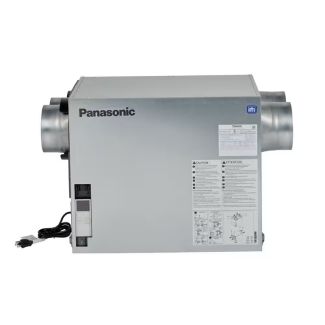
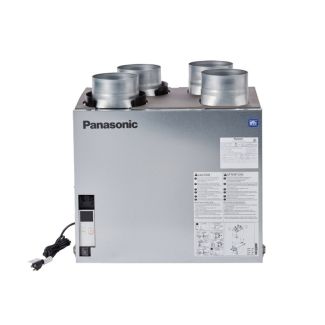
An energy recovery ventilator (ERV) is a balanced mechanical air exchange system designed to supply fresh outdoor air while removing stale indoor air. It works by drawing incoming and outgoing air streams simultaneously through an internal recovery core without letting the two air streams directly mix. Inside the core, heat and moisture transfer between the air streams to pre-condition the incoming fresh air. This process can reduce heating and cooling loads while helping manage indoor humidity.
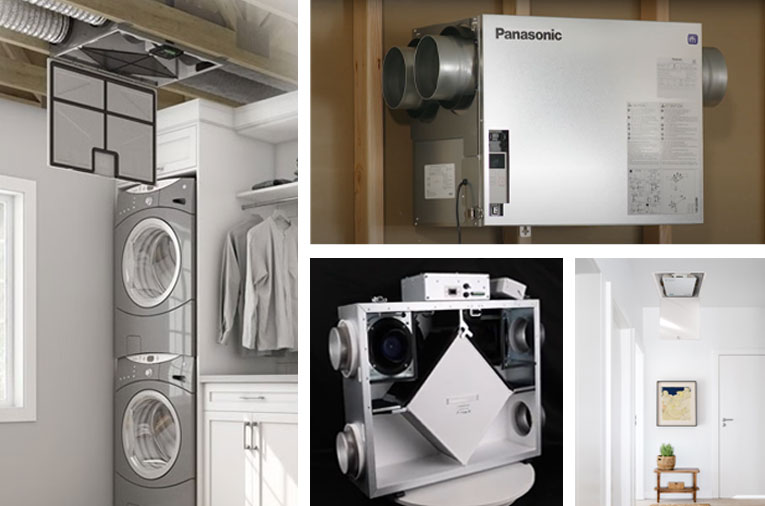





An energy recovery ventilator provides continuous, balanced fresh air exchange while minimizing heat and energy loss for whole-home comfort. Some key benefits include:
Healthier, More Comfortable Homes: These systems continuously pull in clean outdoor air while removing stale indoor air, airborne allergens, odors, and VOCs without causing temperature drops or drafts.
Protect Your Home from Moisture Damage: By transferring moisture between outgoing and incoming air streams, an ERV can help manage indoor humidity levels to prevent condensation, wood warping, and mold growth.
Lower Energy Cost and Reduce HVAC Strain: ERVs capture large portions of heat from exhausted air that pre-tempers incoming fresh air, significantly reducing the workload on your heating and cooling equipment.
Prevent Indoor Air Pressure Imbalances: These systems supply and exhaust equal volumes of air simultaneously to reduce negative pressure issues, which can stem from unconditioned outdoor air leaks and unwanted drafts.
Whisper-Quiet, Year-Round Ventilation: Engineered with insulated cabinets and advanced fan motors, these units maintain fresh indoor air circulation silently without requiring open windows.
Installing an ERV maximizes indoor air quality and delivers consistent energy savings, making it an essential upgrade for modern, tightly sealed homes.
Energy recovery ventilators are well suited to a variety of tightly-sealed homes and buildings, especially those in hot and humid climates, that need continuous mechanical ventilation while limiting heat and moisture transfer with outdoor air. Choosing the proper application site maximizes indoor air quality while protecting building materials from climate stress.
Many new homes are built tightly enough to benefit from planned mechanical ventilation. An ERV provides continuous balanced ventilation to introduce fresh outdoor air while recovering energy from outgoing exhaust. The ERV replaces stale air with fresh air while reducing the conditioning load from outdoor ventilation air.
Homes located in hot climates sometimes suffer from extreme outdoor heat that drastically increases the workload and strain on an air conditioner during summer months. An ERV tempers incoming outdoor air by transferring some heat to the outgoing exhaust air. This process prevents ambient heat from overloading your central cooling system and keeps indoor temperatures consistent.
Humid climates introduce heavy moisture loads that cause indoor discomfort and elevated risk for mold growth. An ERV can transfer some moisture from incoming outdoor air to the outgoing exhaust air. This moisture exchange reduces interior relative humidity levels and eases the dehumidification burden on your main air conditioner.
Homes with fixed windows or tight layouts may have limited natural fresh-air flow. An ERV actively cycles stale indoor air out of living areas while supplying filtered outdoor air through dedicated ductwork networks. This airflow helps reduce odors, dust, and VOCs without opening doors or windows.
Large and multi-story residences experience air stagnation and temperature stratification due to rising heat and expansive living spaces. An ERV provides balanced fresh-air ventilation and distributes ventilation air through continuous intake and exhaust cycles. ERVs can improve fresh-air distribution across floors, while HVAC zoning and duct design address larger temperature differences.
Offices, schools, retail spaces, and other high-occupancy buildings require greater outdoor-air ventilation to manage carbon dioxide, odors, moisture, and indoor contaminants. Commercial ERVs are available in high-CFM capacities, but the required airflow must be calculated for the building and local code. The system can dilute carbon dioxide and odors through fresh-air exchange, while filter performance depends on the approved filter type.
Choosing the right energy recovery ventilator depends directly on your building layout, square footage, existing ductwork, and specific ventilation demands.
Compact Spot/Multi-Port ERVs: These low-profile units supply targeted fresh air ventilation to single rooms, apartments, or smaller multi-family housing layouts without requiring extensive overhead duct networks.
Whole-House Inline/Ducted ERVs: Designed for single-family residences, these units can integrate directly with your central forced-air HVAC system ductwork to distribute tempered air across all living spaces if desired, though many systems use dedicated ventilation ducts instead.
Commercial & Industrial ERVs: High-capacity systems engineered to deliver up to 1,135 CFM or more, meeting strict commercial ventilation codes for schools, offices, and large facilities.
Through-The-Wall ERVs: Non-ducted ventilation solutions that mount directly through an exterior wall, providing localized fresh air exchange for room additions, offices, or retrofit areas.
Top-Port and Side-Port ERVs: Purpose-built duct configuration options that allow installers to connect airflow lines vertically or horizontally, accommodating tight mechanical rooms and drop ceiling clearances. Some side-port models also offer mirrored layouts or integrated dampers.
Selecting the correct ERV style helps support proper duct routing, static pressure, and airflow distribution, and efficient indoor moisture management across your entire space. Through-the-wall ERVs are useful for targeted ventilation in single rooms and retrofit spaces.
The most important ERV features to compare are airflow capacity, recovery efficiency, filtration, operating noise, fan controls, and cold-weather protection. Evaluating system specifications ensures your energy recovery ventilator provides optimal air quality, continuous humidity balance, and whisper-quiet performance.
Airflow Capacity (CFM): Match the ERV’s rated CFM at the planned static pressure to the building’s ventilation requirement without under-ventilating or creating excess static pressure.
Total Recovery Efficiency: Total Recovery Efficiency (TRE) ratings up to 86% (as in the Panasonic Intelli-Balance Elite Plus+ ERV) ensure maximum heat and moisture transfer between air streams to minimize central HVAC power usage.
Noise Level and Controls: Units engineered with sound-dampening insulated cabinets and integrated wall controls or smart sensors maintain quiet background operation while offering flexible fan speed settings.
High-Efficiency Filtration System: Fresh-air intake filters can capture dust and pollen before outdoor air enters the home.
Brushless ECM Fan Motors: Variable-speed electronically commutated motors, or ECMs, deliver ultra-low energy consumption, continuous operation reliability, and precise automatic airflow balancing. Sometimes, ECMs also have boost functions for enhanced performance.
Automatic Core Frost Protection: Integrated electronic defrost controls or supply-fan shutoff modes safeguard the internal enthalpy core from freezing up during extreme cold weather operations.
Selecting an ERV equipped with advanced filtration, smart controls, and efficient motor technology increases the likelihood of long-term indoor comfort and reliable year-round performance. Above all, a strong motor may be one of the most important features of a top-performing ERV.
Also consider installation needs, climate, maintenance, code requirements, and warranty coverage. These factors also help determine proper system sizing, ongoing energy costs, and long-term compliance.
Installation Requirements: Connecting an ERV involves specific mounting clearances, 110/115V, 120V, or 208/230V dedicated electrical wiring, insulated exterior duct runs, and balancing static pressure to match your existing central HVAC system. Check the model’s installation manual for required voltage, circuit size, mounting clearances, duct insulation, and condensate details.
Climate Suitability: ERVs perform better in regions with distinct summer and winter seasons or high year-round humidity. In very cold climates, choose an ERV or HRV with a defrost strategy that matches the manufacturer’s temperature limits.
Maintenance and Filter Replacement: System longevity depends on regular core vacuuming and replacing foam or filters every 3 to 8 months to maintain proper airflow velocity.
Building Codes and Ventilation Requirements: Modern residential codes often enforce ASHRAE 62.2 airflow standards, local energy rules like California Title-24, or mandatory mechanical fresh air rates for new tight home construction.
Warranty and Support: Manufacturer coverage varies between brands and models, but typically ranges from 5 to 10 years on internal electronic components and fan motors, with extended or lifetime warranty protections provided for the central core. Compare the published parts, motor, core, and labor terms before purchase.
Factoring in structural access, climate zone demands, and mandatory maintenance schedules ensures your ERV setup remains cost-effective and compliant over its full lifespan.
Leading manufacturers like ACiQ, Fantech, Panasonic, and others engineer high-performance energy recovery ventilators to deliver dependable whole-home fresh air exchange, high thermal recovery rates, and reliable humidity balancing across diverse climates.
ACiQ: Engineered with ultra-efficient brushless motors, ACiQ units deliver whisper-quiet performance, intelligent humidity monitoring, and high-efficiency filtration at a budget-friendly price point.
Fantech: Renowned for commercial and residential durability, Fantech builds versatile compact systems, side-port configurations, and advanced core frost protection features.
Panasonic: A leader in whisper-quiet technology, Panasonic manufactures low-profile ERVs like its WhisperComfort model, which features smart airflow controls and ECM motors that consume minimal power during continuous operation.
Broan: Broan models like the One feature intuitive wall controls, high Sensible Recovery Efficiency ratings, and simplified mounting configurations suited for whole-house duct systems.
VENTS-US: Specializing in both residential and high-volume commercial ventilation, VENTS-US manufactures heavy-duty systems, like the Frigate, capable of moving high CFM volumes through large facility spaces.
Compare each model’s CFM, recovery rating, duct layout, sound level, controls, filter options, and warranty before choosing the optimal ERV system for your building footprint and climate demands.
ERV equipment prices can start below $1,000 for compact units and rise above $10,000 for large commercial systems. Please note that the price ranges presented in this section and below serve as general planning estimates rather than guaranteed costs. Pricing and costs generally reflect actual products currently available on HVACDirect.com, where homeowners can typically reduce their equipment expenses by up to 70% compared to traditional retail pricing.
Unit Size and Airflow Capacity: Equipment pricing correlates directly to CFM capacity, with compact residential spot units starting around $600 to $800, while whole-house or commercial systems supplying higher CFM range from $1,200 to $8,000+.
Installation Style and Mounting Types: Professional installation generally carries a $1,500 to $2,500 charge, with additional $100 to $200 hourly fees. Certain styles, like wall mount or standalone units, carry lower upfront labor costs, whereas integrating a ducted, top-port, or side-port system into an existing HVAC network increases total installation expenses. Installation cost depends on ductwork, electrical work, wall penetrations, controls, and balancing requirements
Features and Efficiency: Premium units that are in the previously-mentioned $1,200 to $8,000+ range above are often equipped with special features. Those features include Sensible Recovery Efficiency cores, multi-speed ECM motors, integrated wall controls, and advanced MERV filtration that command higher purchase prices but lower ongoing energy bills.
Investing in a properly sized, high-efficiency ERV balances initial equipment and installation costs with long-term utility savings and interior climate protection. Compare the total installed cost, including the ERV, ducts, controls, electrical work, balancing, and maintenance. Note that equipment and installation-related services represent industry-wide averages that fluctuate significantly. The final project cost can be influenced by system size and efficiency level, specific installation challenges, regional contractor rates, local utility pricing structures, geographic climate conditions, and other individual circumstances. These create cost variations from one home to another, so homeowners should consult with a qualified pro from HVACDirect.com to determine accurate pricing tailored to their particular situation and location.
Purchasing an energy recovery ventilator directly from HVACDirect.com offers several key advantages that make upgrading your home ventilation easy and budget-friendly.
Save by Shopping Online and Cut Out The Middleman: Buying online lets you compare listed ERV models and prices before arranging installation, allowing you to save money on direct-to-consumer equipment.
Competitive Pricing on Professional-Grade ERVs: Access wholesale pricing and clear cost structures on commercial and residential units to stretch your investment further.
Choose from a Wide Selection of Trusted Brands: Browse an extensive catalog featuring top ventilation manufacturers like ACiQ, Broan, Panasonic, and VENTS-US to find your exact match.
Get Contractor-Quality Equipment at Competitive Prices: Receive authentic, factory-backed units complete with full warranty coverage and expert support from technical specialists.
Pairing direct equipment savings with expert pre-sale guidance ensures you receive the correct ERV unit delivered directly to your home, which may eliminate further work to research your best options.

You should inspect and clean ERV filters every 1 to 3 months to prevent dust buildup and maintain steady airflow through the recovery core. Most washable filter inserts can be vacuumed or rinsed 3 to 4 times per year, while high efficiency disposable MERV filters require full replacement every 6 to 12 months depending on household usage. Adhering to this routine maintenance schedule protects internal blower fan motors, optimizes thermal energy recovery, and helps maintain clean fresh-air circulation year-round.
Yes, an ERV helps control indoor humidity levels by transferring moisture between incoming and outgoing air streams through its internal recovery core. In humid summer months, it transfers some moisture from incoming outdoor air to the outgoing exhaust air, which reduces the workload on your central air conditioner. During dry winter months, it captures humidity from outgoing exhaust air and transfers it back to incoming fresh air to help reduce winter dryness, though results depend on outdoor conditions and system settings..
Warm, moisture-heavy regions are where an ERV shines most compared to a standard Heat Recovery Ventilator (HRV). In hot and humid weather, the enthalpy core inside an ERV captures both heat and latent moisture from incoming outdoor air before it enters your home. By transferring heat and humidity into the outgoing exhaust stream, the ERV tempers incoming air and can reduce the moisture load on the air conditioner. This process prevents outdoor humidity spikes from overloading your central air conditioner, helping your HVAC system cool your space more efficiently while maintaining comfortable indoor humidity levels.
Yes, an ERV can easily be paired with a heat pump system, and they make an ideal combination for year-round energy efficiency and home comfort. Because a heat pump conditions your home by moving heat back and forth rather than creating it, adding an ERV helps maintain the temperature and humidity levels that the heat pump works to achieve. The ERV pre-conditions incoming outdoor air by capturing thermal energy and moisture from outgoing exhaust air. This significantly reduces the heating or cooling load placed on the heat pump, which can reduce the heat pump’s ventilation-related heating and cooling load while continuously delivering fresh, filtered outdoor air into your home.
For homes relying on mini-split heat pumps, radiant heat, or baseboard setups, through-the-wall spot ERVs can be mounted directly on an exterior wall to handle targeted, ductless air exchange for individual rooms. Alternatively, a ducted ERV can also use its own small ventilation duct system in an attic, basement, or utility closet.