

With models achieving SEER2 ratings between 18 and 24+, 5 zone mini splits are highly energy-efficient. They save energy by using inverter technology to adjust output as needed and by letting you heat or cool each of the five zones separately, so you’re not wasting energy in rooms that aren’t in use.
5 Zone Mini Split Systems
Mini Split System Calculator
Please enter your room sizes to narrow your results. Start with your largest rooms first.
-
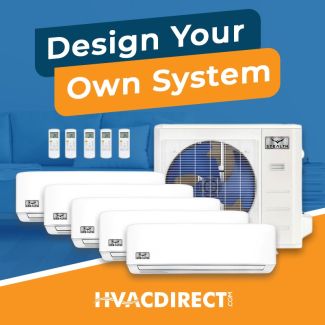 Stealth DIYCOOL Design Your Own 5 Zone Heat Pump System R454BModel: Stealth DIYCOOL Five Zone BYO R454BWas $3,824.60Special Price $2,485.99
 -

 ACIQ Five Zone Mini Split System - Design Your Own R454BModel: ACIQ Five Zone R454BWas $3,846.14Special Price $2,499.99
 -
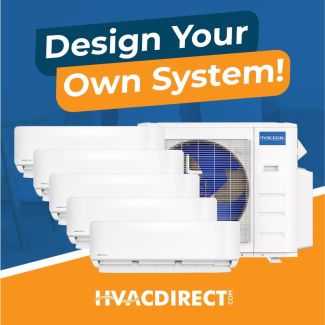 SAVE $254.30MRCOOL Design Your Own Five Zone Heat Pump System R454BModel: MRCOOL DIY Five Zone R454bWas $2,797.30Special Price $2,543.00
 -
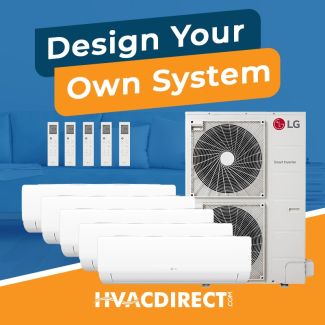 LG 5 Zone Mini Split System - Design Your Own R32Model: LG 5 Zone R32Was $5,510.12Special Price $3,405.35
 -
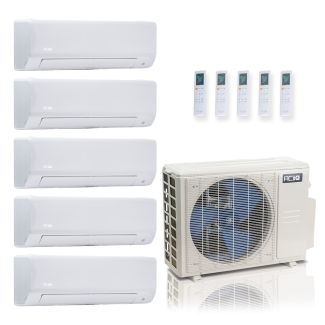
 SAVE $2,423.0536,000 BTU ACiQ Standard 24 SEER2 5 Zone Wall Mount Mini Split Heat Pump System - R454B | 230V - 6 + 6 + 6 + 6 + 6Model: ES-36Z-M5C / ACIQ-06W-HH-MD-5Was $6,923.04Special Price $4,499.99
 - SAVE $2,449.9836,000 BTU ACiQ Standard 24 SEER2 5 Zone Wall Mount Mini Split Heat Pump System - R454B | 230V - 6 + 6 + 6 + 6 + 9Model: ES-36Z-M5C / ACIQ-06W-HH-MD-4 / ACIQ-09W-HH-MDWas $6,999.97Special Price $4,549.99
- SAVE $2,476.9136,000 BTU ACiQ Standard 24 SEER2 5 Zone Wall Mount Mini Split Heat Pump System - R454B | 230V - 6 + 6 + 6 + 9 + 9Model: ES-36Z-M5C / ACIQ-06W-HH-MD-3 / ACIQ-09W-HH-MD-2Was $7,076.90Special Price $4,599.99
- SAVE $2,503.8236,000 BTU ACiQ Standard 24 SEER2 5 Zone Wall Mount Mini Split Heat Pump System - R454B | 230V - 6 + 6 + 6 + 6 + 12Model: ES-36Z-M5C / ACIQ-06W-HH-MD-4 / ACIQ-12W-HH-MDWas $7,153.81Special Price $4,649.99
- SAVE $2,503.8436,000 BTU ACiQ Standard 24 SEER2 5 Zone Wall Mount Mini Split Heat Pump System - R454B | 230V - 6 + 6 + 9 + 9 + 9Model: ES-36Z-M5C / ACIQ-06W-HH-MD-2 / ACIQ-09W-HH-MD-3Was $7,153.83Special Price $4,649.99
- SAVE $2,530.7536,000 BTU ACiQ Standard 24 SEER2 5 Zone Wall Mount Mini Split Heat Pump System - R454B | 230V - 6 + 6 + 6 + 9 + 12Model: ES-36Z-M5C / ACIQ-06W-HH-MD-3 / ACIQ-09W-HH-MD / ACIQ-12W-HH-MDWas $7,230.74Special Price $4,699.99
- SAVE $2,530.7736,000 BTU ACiQ Standard 24 SEER2 5 Zone Wall Mount Mini Split Heat Pump System - R454B | 230V - 6 + 9 + 9 + 9 + 9Model: ES-36Z-M5C / ACIQ-06W-HH-MD / ACIQ-09W-HH-MD-4Was $7,230.76Special Price $4,699.99
- SAVE $2,557.6736,000 BTU ACiQ Standard 24 SEER2 5 Zone Wall Mount Mini Split Heat Pump System - R454B | 230V - 6 + 6 + 6 + 6 + 18Model: ES-36Z-M5C / ACIQ-06W-HH-MD-4 / ACIQ-18W-HH-MDWas $7,307.66Special Price $4,749.99
- SAVE $2,557.6836,000 BTU ACiQ Standard 24 SEER2 5 Zone Wall Mount Mini Split Heat Pump System - R454B | 230V - 6 + 6 + 9 + 9 + 12Model: ES-36Z-M5C / ACIQ-06W-2 / ACIQ-09W-2 / ACIQ-12WWas $7,307.67Special Price $4,749.99
- SAVE $2,557.7036,000 BTU ACiQ Standard 24 SEER2 5 Zone Wall Mount Mini Split Heat Pump System - R454B | 230V - 9 + 9 + 9 + 9 + 9Model: ES-36Z-M5C / ACIQ-09W-HH-MD-5Was $7,307.69Special Price $4,749.99
-
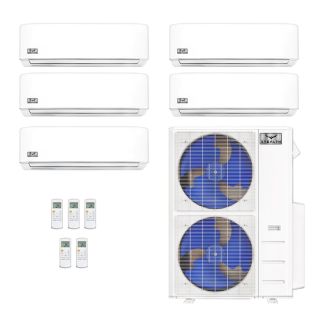 SAVE -$941.3936,000 BTU Stealth DIYCOOL 23 SEER2 5 Zone Wall Mount Mini Split Heat Pump System R454B | 230V 6 + 6 + 6 + 6 + 9Model: EZ-36Z-M4B / EZ-06W-MB-4 / EZ-09W-MBSpecial Price $4,765.99
 - SAVE $2,584.6036,000 BTU ACiQ Standard 24 SEER2 5 Zone Wall Mount Mini Split Heat Pump System - R454B | 230V - 6 + 6 + 6 + 9 + 18Model: ES-36Z-M5C / ACIQ-06W-HH-MD-3 / ACIQ-09W-HH-MD / ACIQ-18W-HH-MDWas $7,384.59Special Price $4,799.99
- SAVE $2,584.6136,000 BTU ACiQ Standard 24 SEER2 5 Zone Wall Mount Mini Split Heat Pump System - R454B | 230V - 6 + 9 + 9 + 9 + 12Model: ES-36Z-M5C / ACIQ-06W-HH-MD / ACIQ-09W-HH-MD-3 / ACIQ-12W-HH-MDWas $7,384.60Special Price $4,799.99
- SAVE -$996.3936,000 BTU Stealth DIYCOOL 23 SEER2 5 Zone Wall Mount Mini Split Heat Pump System R454B | 230V 6 + 6 + 6 + 9 + 9Model: EZ-36Z-M4B / EZ-06W-MB-3 / EZ-09W-MB-2Special Price $4,820.99
-
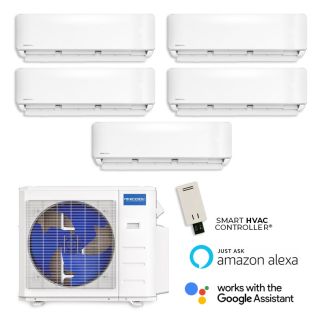 SAVE $482.80MRCOOL 36,000 BTU DIY 5th Gen 23 SEER2 5 Zone Wall Mount Mini Split Heat Pump System R454B | 230V 6 + 6 + 6 + 6 + 6Model: DIY-MULTI5-36HP / DIY-06-HP-WMAH-230-5Was $5,310.80Special Price $4,828.00
 - SAVE $2,611.5336,000 BTU ACiQ Standard 24 SEER2 5 Zone Wall Mount Mini Split Heat Pump System - R454B | 230V - 6 + 6 + 9 + 9 + 18Model: ES-36Z-M5C / ACIQ-06W-2 / ACIQ-09W-2 / ACIQ-18WWas $7,461.52Special Price $4,849.99
- SAVE $2,611.5436,000 BTU ACiQ Standard 24 SEER2 5 Zone Wall Mount Mini Split Heat Pump System - R454B | 230V - 9 + 9 + 9 + 9 + 12Model: ES-36Z-M5C / ACIQ-09W-HH-MD-4 / ACIQ-12W-HH-MDWas $7,461.53Special Price $4,849.99
-
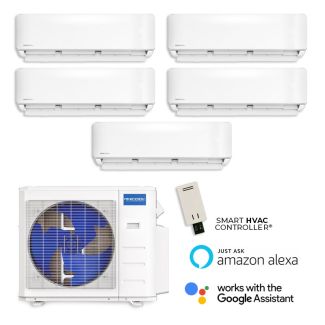 SAVE $490.30MRCOOL 36,000 BTU DIY 5th Gen 23 SEER2 5 Zone Wall Mount Mini Split Heat Pump System R454B | 230V 6 + 6 + 6 + 6 + 9Model: DIY-MULTI5-36HP / DIY-06-HP-WMAH-230-4 / DIY-09-HP-WMAH-230Was $5,393.30Special Price $4,903.00
 - SAVE $3,477.1136,000 BTU Stealth DIYCOOL 23 SEER2 5 Zone Wall Mount Mini Split Heat Pump System R454B | 230V 6 + 6 + 6 + 9 + 12Model: EZ-36Z-M4B / EZ-06W-MB-3 / EZ-09W-MB / EZ-12W-MBWas $8,397.10Special Price $4,919.99
- SAVE -$1,115.3936,000 BTU Stealth DIYCOOL 23 SEER2 5 Zone Wall Mount Mini Split Heat Pump System R454B | 230V 6 + 6 + 6 + 6 + 6Model: EZ-36Z-M4B / EZ-06W-MB-5Special Price $4,939.99
5 Zone mini split air conditioner systems
5 zone mini split systems are ductless heating and cooling systems that connect one outdoor unit to five indoor air handlers, allowing independent temperature control in up to five rooms or zones without requiring ductwork. Each zone has its own air handler and thermostat, so every space can be set to a different temperature based on who is using it and when.
These systems work by circulating refrigerant between the outdoor unit and all five indoor units through connected line sets. Many of the most popular 5 zone mini split systems use inverter technology to adjust output in real time based on the needs of each room, helping deliver steady comfort while reducing energy use and lowering energy bills, but you should always check the product specifications to confirm inverter technology is included.
Browse Products By Our Top Brands

What spaces are ideal for 5 zone mini split systems?
Five room mini split AC systems are great for spaces between 1,800 and 3,500 square feet that are well-insulated and have 8- to 10-foot ceilings. Here are common applications:
-
Homes without Ductwork: These mini splits work great in homes that don’t have any ductwork and where it would be timely and costly to install it. Some common types of homes that are usually built with it include farm homes, Victorian homes, and older homes.
-
Multi-Family or Commercial Spaces: A 5 zone system is well-suited for small multi-family properties, offices, storefronts, restaurants, or mixed-use buildings. Each room, suite, or tenant space can have its own independent temperature control.
-
Open-Concept Layouts: Large open floor plans, including gyms, lack interior walls to contain conditioned air and can be divided into defined zones, allowing the system to heat and cool areas that need it, rather than the entire space.
-
Large Homes with Add-On or Hard-to-Reach Zones: Homes with areas like a finished basement, sunroom, or attic that a central system may be hard to reach or that were added on and aren’t connected to your main system. These benefit from a whole home 5 zone system's ability to treat each area independently based on use, occupancy, and sun exposure without needing to add new ductwork or change your main system.
Room layout matters, but so do the conditions in each zone. High ceilings, poor insulation, large windows, and air leaks can increase heating and cooling demand, so these factors should be considered when selecting the size and efficiency of a 5 zone system.
Can I install a 5 zone mini split?
DIY installation is possible with certain brands; however, most homeowners opt for professional installation due to the time and effort required to connect five indoor units.
-
DIY 5 Zone Mini Split Installation: Some systems simplify installation with pre-charged or pre-vacuumed line sets, allowing homeowners to handle much of the physical work including mounting units, running line sets, and drainage, while a licensed HVAC technician completes the refrigerant work such as pressure testing and system startup. Electrical work is separate and must be completed by a licensed electrician in accordance with local code.
-
Professional 5 Zone Mini Split Installation: With professional installation, a licensed HVAC technician handles the full process, including refrigerant connections, pressure testing, evacuation (if required), and startup. This option is often preferred for larger multi zone systems due to the added complexity, though labor costs are included.
Most areas require permits for 5 room ductless mini splits due to their size and the electrical and refrigerant work involved.
How much do 5 zone mini split systems cost?
Including all equipment and installation, a 5 room AC system typically costs between $5,000 and $15,000+. Here is a breakdown of those costs:
-
Equipment Cost: $3,000 to $10,000+, depending on brand, total BTU capacity, SEER2 rating, and the types of indoor air handlers selected for each of the five zones.
-
Installation and Labor Cost: $3,000 to $6,000+ for professional installation, though pricing varies based on region, accessibility, electrical work, and line set length. If you are installing a DIY system, there will be no labor costs and installation costs will be next to nothing.
-
Operation and Maintenance Cost: $50 to $120 per month, depending on local electricity rates, the climate you live in, how often you use it, and the efficiency ratings of the five indoor units. Maintenance is generally low. Most systems use washable filters, and many include self-cleaning features. Optional professional cleaning may cost $100 to $300 per year, depending on system condition.
Permit costs typically range from $150 to $500+, depending on local city or county requirements.
What indoor unit styles are available for 5 zone mini splits?
The five indoor unit styles include wall mounted, floor mounted, ceiling cassette, slim ceiling cassette, and concealed duct.
-
Wall Mount: Wall mounted air handlers are the most reliable and common units, sitting high on the wall to provide efficient cooling for up to five standard rooms at the most affordable price point.
-
Floor Mount: Great for rooms with slanted ceilings or large windows, floor mounted air handlers sit low on the wall and provide excellent heating for any of your five zones. Some specific varieties of these indoor units, often called universal floor/ceiling units can be suspended from the ceiling as well.
-
Ceiling Cassette: These units install flush into the ceiling to distribute air in four directions, making them an ideal choice for a 5 room layout with large, open-concept kitchens or dining areas.
-
Slim Ceiling Cassette: A slimmer version of a standard ceiling cassette, these units are designed for rooms with limited ceiling depth where a full-size cassette may not fit. They recess into the ceiling for a clean look while still providing multi-directional airflow.
-
Concealed Duct: These units and the most expensive option are entirely hidden behind a wall or above a ceiling, providing a clean, built-in look for up to 5 rooms without visible equipment on the walls.
Most pre-configured systems come with the same indoor unit style across all zones, but many allow you to mix and match different unit types, like wall-mounted units in bedrooms, a ceiling cassette in the living room, or a floor-mounted unit in a sunroom, so you can tailor each zone to fit the room it's in.
What BTU sizes are available for 5 zone mini splits?
Five zone mini split BTU sizes range from 30,000 to 60,000 BTUs, with the most common sizes being 42,000, 48,000, and 60,000 BTU, covering 2,000 to 3,000+ square feet.
-
42,000 BTU (2,000 to 2,300 sq. ft.): A common entry-level size for 5 zone systems used in smaller homes with five compact rooms, such as bedrooms, offices, and a modest living area.
-
48,000 BTU (2,300 to 2,600 sq. ft.): Ideal for 5 room mini splits in larger homes with more spacious bedrooms, open living areas, and a garage or bonus room.
-
55,000 BTU (2,600 to 3,000+ sq. ft.): Great for high-capacity ductless mini split systems with 5 areas serving large homes, multi-story layouts, or homes with mixed room sizes.
Each indoor unit type ranges in size from 6,000 to 24,000 BTU and covers 250 to 1,500 square feet. For example, you could have a 48,000 BTU 5 zone system with four 9,000 BTU air handlers and one 12,000 BTU indoor air handler.
What power requirements do 5 zone mini splits need?
5 zone mini split systems typically require a dedicated electrical circuit and proper disconnect hardware, though exact requirements vary by model and local code.
-
Voltage & Amperage: Most systems operate on 208/230V to 240V single-phase power and typically draw 25 to 50+ amps, depending on system size and capacity.
-
Dedicated Circuit Breaker: A dedicated 30A to 60A double-pole breaker is commonly required, depending on the system. This dedicated breaker protects the system from overloads and prevents the outdoor unit from sharing power with other appliances or circuits.
-
Wire Gauge: Always follow the manufacturer's specifications and local electrical codes for wire size and type, though most systems use 10 AWG copper wire for 30A to 40A installations and 8 AWG for 50A runs from the electrical panel to the outdoor unit. A separate communication wire is also run between the outdoor unit and each indoor air handler so all zones can send and receive commands properly.
-
Disconnect Box: A weatherproof fused or non-fused disconnect box must be installed within line of sight and typically within 3 to 6 feet of the outdoor unit so a technician can safely shut off power before servicing.
-
Branch Box: Some 5 zone systems may require a branch box depending on the manufacturer, while others, including certain ACiQ systems, use direct multi-port connections.
Each five zone ductless AC system can have different electrical requirements depending on the specific model, so you should always follow the Minimum Circuit Ampacity (MCA) and Maximum Overcurrent Protection (MOP) values listed on the unit’s nameplate.

Why You Need an ACiQ Smart Toilet
ACiQ smart toilets combine modern design with advanced hygiene and comfort features to transform everyday bathroom routines. In this guide, we explore how smart toilets work, what premium features to look for, and why ACiQ models stand out for homeowners seeking luxury performance at an accessible...
Read more February 4, 2026
2025 Wood Burning Fireplaces Buying Guide: Types, Installation, and Best Brands for Your Home
Considering a wood burning fireplace? This quick guide compares radiant front, circulating, and EPA-approved high-efficiency models—how they heat, what they cost, and when each is the best choice. Learn key installation basics (clearances, chimney/venting, permits), sizing tips, and smart...
Read more September 24, 2025
Upgrade Your Old Central AC: Why a Central Zoned Mini Split Is the Perfect Replacement
Upgrading from an old central AC system? A central zoned mini split is the smart replacement that combines the familiar comfort of ducted air with the flexibility of ductless zones. With one powerful outdoor unit, you can heat and cool your main living areas plus add independent comfort to garages,...
Read more September 23, 2025
Top 3 Panasonic Energy Recovery Ventilator (ERV) Series of 2025
Looking for the best ERV for your home in 2025? Panasonic offers three top-rated series—BalancedHome™, Intelli-Balance®, and WhisperComfort®—each designed to improve indoor air quality while reducing energy costs. In this guide, we review features, applications, and real homeowner feedback so you...
Read more September 16, 2025

FAQs about 5 zone mini split systems
Yes, most five zone mini splits provide both heating and cooling because they operate as heat pumps, using refrigerant flow reversal to switch modes. In cooling mode, heat is removed from each of the five rooms, while in heating mode, the system pulls heat from the outdoor air and transfers it indoors, even in cold weather on many models.
Designed to handle up to five separate zones, a 5 room mini split can cover a combined area of 2,000 to 3,000+ square feet. A zone can be a single room or a larger connected space, such as an open-concept living and dining area. You can mix and match indoor units from 6,000 to 24,000 BTUs to fit everything from a 250-square-foot bedroom to a 1,200-square-foot living area. For example, a 48,000 BTU system could power four 9,000 BTU units for bedrooms and one 12,000 BTU unit for a larger family room.
The brands that make the best 5 zone mini splits include ACiQ, Daikin, Mitsubishi, and LG. The most popular brands for DIY 5 zone mini splits are MRCOOL and Stealth.
If you want to take on the project yourself, some DIY 5 zone systems use pre-charged line sets that do not require specialized HVAC tools, allowing you to save on labor costs and work on your own timetable. Standard professionally installed systems may offer lower equipment pricing through contractor channels, though labor costs are added separately, and they can be a practical option for larger 5-room projects that involve more complex wiring, longer line set runs, and coordination between multiple indoor units.
Yes, when properly maintained, these quintuple room systems typically last between 15 and 20 years, sometimes up to 25. Regular tasks like cleaning the air filters of each of the five indoor units and keeping the outdoor unit clear of debris will help your system reach its maximum lifespan.
With indoor units running at only 19 to 35 decibels, about as loud as a soft whisper or rustling leaves, 5 head mini splits are extremely quiet. Most 5 room systems use noise-dampening technology to keep the outdoor compressor from disturbing you or your neighbors.
Almost all 5 zone mini split systems are high-efficiency heat pumps that provide both cooling and heating, moving heat in or out of all 5 spaces individually to keep you comfortable year-round.
Each of the five indoor units typically features a dedicated dry mode designed to pull excess moisture from the air. This mode slows down the fan to keep the cooling coils cold, allowing the system to act as a dehumidifier without making your rooms feel too cold.
Most 5 room ductless mini splits come pre-charged with enough refrigerant for a standard installation. If you have a longer line set that needs more, you’ll have to get a professional to help.
Yes, you must use a vacuum pump to remove all air and moisture from the lines for each of the five zones before starting the system. This step is critical and is done by a licensed professional because any trapped air in such a large system can cause the compressor to fail early and will void your manufacturer's warranty. Most DIY models come pre-vacuumed. The system should be pressure tested and then evacuated with a vacuum pump to remove air and moisture before startup.