
Four zone mini splits use inverter technology to achieve high SEER2 energy-efficiency ratings of 18 to 30+ and up to 60% less energy use than traditional ducted systems. Because they are ductless and control each zone independently, they avoid the 20 to 30% energy loss from ductwork and don’t waste energy heating or cooling rooms you’re not using.
4 Zone Mini Split Systems
Mini Split System Calculator
Please enter your room sizes to narrow your results. Start with your largest rooms first.
-
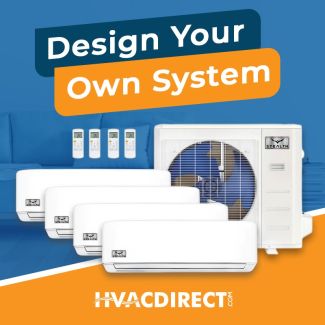 Stealth DIYCOOL Design Your Own 4 Zone Heat Pump System R454BModel: Stealth DIYCOOL Quad Zone R454BWas $3,147.68Special Price $2,045.99
 -

 ACIQ 4 Zone Mini Split System - Design Your Own R454BModel: ACIQ Quad Zone R454BWas $3,153.83Special Price $2,049.99
 -
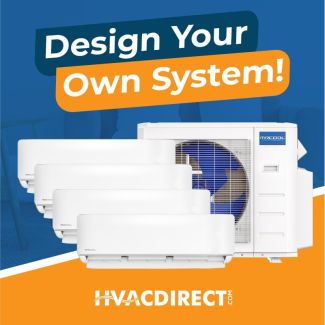 SAVE $210.00MRCOOL Design Your Own 4 Zone Heat Pump System R454BModel: MRCOOL DIY Quad Zone R454bWas $2,310.00Special Price $2,100.00
 -
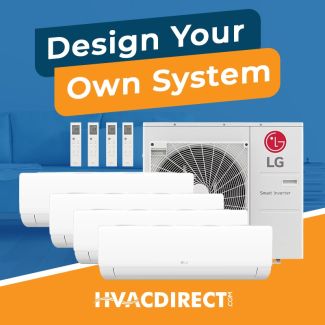 LG 4 Zone Mini Split System - Design Your Own R32Model: LG 4 Zone R32Was $2,984.44Special Price $2,487.03
 -
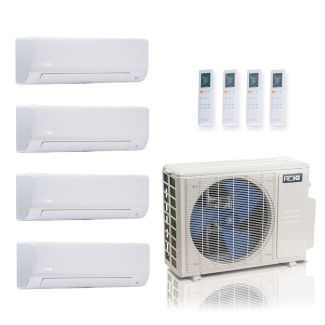
 SAVE $1,965.3627,000 BTU ACiQ Standard 25 SEER2 4 Zone Wall Mount Mini Split Heat Pump System - R454B | 230V - 6 + 6 + 6 + 6Model: ES-27Z-M4C / ACIQ-06W-HH-MD-4Was $5,615.35Special Price $3,649.99
 - SAVE $1,992.2927,000 BTU ACiQ Standard 25 SEER2 4 Zone Wall Mount Mini Split Heat Pump System - R454B | 230V - 6 + 6 + 6 + 9Model: ES-27Z-M4C / ACIQ-06W-HH-MD-3 / ACIQ-09W-HH-MDWas $5,692.28Special Price $3,699.99
- SAVE $2,019.2227,000 BTU ACiQ Standard 25 SEER2 4 Zone Wall Mount Mini Split Heat Pump System - R454B | 230V - 6 + 6 + 9 + 9Model: ES-27Z-M4C / ACIQ-06W-HH-MD-2 / ACIQ-09W-HH-MD-2Was $5,769.21Special Price $3,749.99
- SAVE $2,046.1327,000 BTU ACiQ Standard 25 SEER2 4 Zone Wall Mount Mini Split Heat Pump System - R454B | 230V - 6 + 6 + 6 + 12Model: ES-27Z-M4C / ACIQ-06W-HH-MD-3 / ACIQ-12W-HH-MDWas $5,846.12Special Price $3,799.99
- SAVE $2,046.1527,000 BTU ACiQ Standard 25 SEER2 4 Zone Wall Mount Mini Split Heat Pump System - R454B | 230V - 6 + 9 + 9 + 9Model: ES-27Z-M4C / ACIQ-06W-HH-MD / ACIQ-09W-HH-MD-3Was $5,846.14Special Price $3,799.99
-
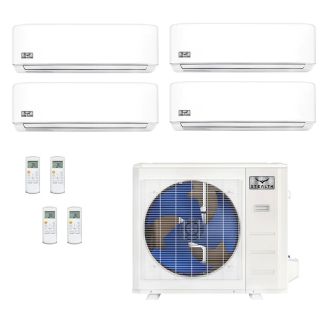 SAVE $2,946.6927,000 BTU Stealth DIYCOOL EZ Series 23 SEER2 4 Zone Wall Mount Mini Split Heat Pump System R454B | 230V 6 + 6 + 6 + 6Model: EZ-27Z-M3B / EZ-06W-MB-4Was $6,772.68Special Price $3,825.99
 - SAVE $2,073.0627,000 BTU ACiQ Standard 25 SEER2 4 Zone Wall Mount Mini Split Heat Pump System - R454B | 230V - 6 + 6 + 9 + 12Model: ES-27Z-M4C / ACIQ-06W-HH-MD-2 / ACIQ-09W-HH-MD / ACIQ-12W-HH-MDWas $5,923.05Special Price $3,849.99
- SAVE $2,073.0827,000 BTU ACiQ Standard 25 SEER2 4 Zone Wall Mount Mini Split Heat Pump System - R454B | 230V - 9 + 9 + 9 + 9Model: ES-27Z-M4C / ACIQ-09W-HH-MD-4Was $5,923.07Special Price $3,849.99
-
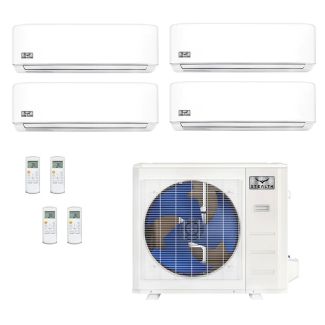 SAVE $2,891.6927,000 BTU Stealth DIYCOOL EZ Series 23 SEER2 4 Zone Wall Mount Mini Split Heat Pump System R454B | 230V 6 + 6 + 6 + 9Model: EZ-27Z-M3B / EZ-06W-MB-3 / EZ-09W-MBWas $6,772.68Special Price $3,880.99
 - SAVE $2,099.9927,000 BTU ACiQ Standard 25 SEER2 4 Zone Wall Mount Mini Split Heat Pump System - R454B | 230V - 6 + 9 + 9 + 12Model: ES-27Z-M4C / ACIQ-06W-HH-MD / ACIQ-09W-HH-MD-2 / ACIQ-12W-HH-MDWas $5,999.98Special Price $3,899.99
-
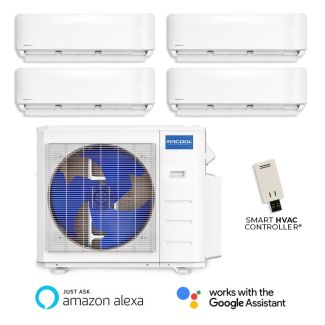 SAVE $392.80MRCOOL 27,000 BTU DIY 5th Gen 23 SEER2 4 Zone Wall Mount Mini Split Heat Pump System - R454B | 230V - 6 + 6 + 6 + 6Model: DIY-MULTI4-27HP / DIY-06-HP-WMAH-230-4Was $4,320.80Special Price $3,928.00
 -
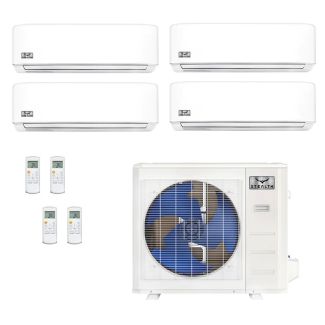 SAVE $2,836.6927,000 BTU Stealth DIYCOOL EZ Series 23 SEER2 4 Zone Wall Mount Mini Split Heat Pump System R454B | 230V 6 + 6 + 9 + 9Model: EZ-27Z-M3B / EZ-06W-MB-2 / EZ-09W-MB-2Was $6,772.68Special Price $3,935.99
 -
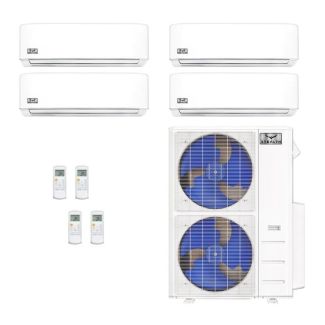 SAVE $2,833.9427,000 BTU Stealth DIYCOOL 23 SEER2 4 Zone Wall Mount Mini Split Heat Pump System R454B | 230V 6 + 6 + 6 + 12Model: EZ-27Z-M3B / EZ-06W-MB-3 / EZ-12W-MBWas $6,813.93Special Price $3,979.99
 -
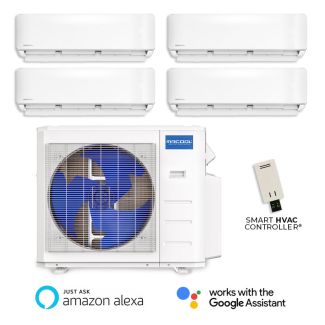 SAVE $400.30MRCOOL 27,000 BTU DIY 5th Gen 23 SEER2 4 Zone Wall Mount Mini Split Heat Pump System - R454B | 230V - 6 + 6 + 6 + 9Model: DIY-MULTI4-27HP / DIY-06-HP-WMAH-230-3 / DIY-09-HP-WMAH-230Was $4,403.30Special Price $4,003.00
 - SAVE $2,778.9427,000 BTU Stealth DIYCOOL 23 SEER2 4 Zone Wall Mount Mini Split Heat Pump System R454B | 230V 6 + 6 + 9 + 12Model: EZ-27Z-M3B / EZ-06W-MB-2 / EZ-09W-MB / EZ-12W-MBWas $6,813.93Special Price $4,034.99
-
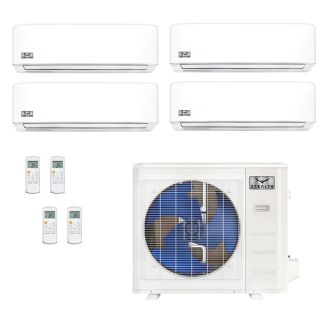 SAVE $2,726.6927,000 BTU Stealth DIYCOOL 23 SEER2 4-Zone Mini Split Wall Mount Heat Pump System R454B | 230V - 9 + 9 + 9 + 9Model: EZ-27Z-M3B / EZ-09W-MB-4Was $6,772.68Special Price $4,045.99
 -
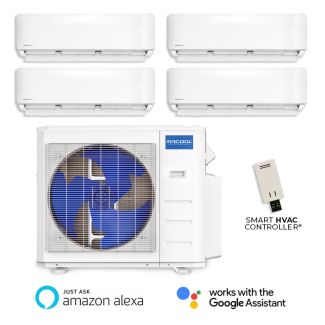 SAVE $407.80MRCOOL 27,000 BTU DIY 5th Gen 23 SEER2 4 Zone Wall Mount Mini Split Heat Pump System - R454B | 230V - 6 + 6 + 9 + 9Model: DIY-MULTI4-27HP / DIY-06-HP-WMAH-230-2 / DIY-09-HP-WMAH-230-2Was $4,485.80Special Price $4,078.00
 - SAVE $2,207.6736,000 BTU ACiQ Standard 24 SEER2 4 Zone Wall Mount Mini Split Heat Pump System - R454B | 230V - 6 + 6 + 6 + 6Model: ES-36Z-M5C / ACIQ-06W-HH-MD-4Was $6,307.66Special Price $4,099.99
- SAVE $2,234.6036,000 BTU ACiQ Standard 24 SEER2 4 Zone Wall Mount Mini Split Heat Pump System - R454B | 230V - 6 + 6 + 6 + 9Model: ES-36Z-M5C / ACIQ-06W-HH-MD-3 / ACIQ-09W-HH-MDWas $6,384.59Special Price $4,149.99
-
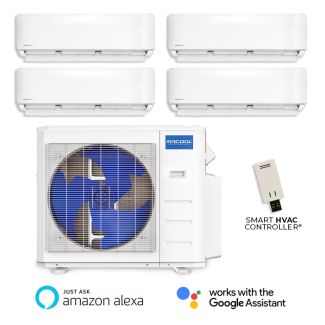 SAVE $754.11MRCOOL 27,000 BTU DIY 5th Gen 23 SEER2 4 Zone Wall Mount Mini Split Heat Pump System - R454B | 230V - 6 + 9 + 9 + 9Model: DIY-MULTI4-27HP / DIY-06-HP-WMAH-230 / DIY-09-HP-WMAH-230-3Was $4,907.11Special Price $4,153.00
4 Zone mini split air conditioner systems
Four zone mini splits are ductless heating and cooling systems that connect one outdoor condenser to four individual indoor air handlers, giving you independent temperature control across four separate rooms or zones. Each zone has its own indoor unit and thermostat, allowing you to control the temperature in each space individually for better comfort and efficiency.
These systems work by moving refrigerant between the outdoor unit and each of the four indoor units through line sets. These systems mini split systems use inverter technology to automatically adjust output based on the needs of each room, helping maintain comfort while improving energy efficiency, though not all models have this feature, so always check the equipment specifications.
Browse Products By Our Top Brands

What spaces are ideal for 4 zone mini split systems?
These systems are great for spaces with 8- to 10-foot ceilings, good insulation, and a total coverage area of 1,200 to 3,000+ square feet across four rooms or areas. Here are some example spaces:
-
Smaller Whole Homes without Ductwork: One of the most common uses for a quad zone mini split is adding air conditioning to smaller homes with no existing ductwork. Older row homes, farmhouses, cottages, and homes that already have a heat source use four zones to cover a main living area plus two to three additional rooms.
-
Split-Level or Multi-Story Homes: Upper floors are usually warmer than lower levels because heat naturally rises. A 4 zone system lets you set upstairs rooms cooler and lower-level rooms warmer to help balance temperatures.
-
Home Additions or Renovations: You can connect up to four rooms to a single outdoor unit without opening walls or adding ductwork, making mini splits the ideal solution for additions like sunrooms, converted spaces, and remodels your existing HVAC system can't fully support.
-
Rooms with Hot and Cold Spots: A quad zone system can improve comfort in rooms your current HVAC system struggles to reach, especially spaces with poor airflow, older windows, insulation issues, or long duct runs.
-
Rooms with Different Temperature Needs: This system lets you set each space to a different temperature based on who’s using it, their schedule, and their comfort preferences. For example, you can keep a nursery warm, make a bedroom cooler for someone who runs hot, or even turn off a guest room when empty.
-
Small Business or Light Commercial Spaces: These systems are also used in offices, storefronts, restaurants, workshops, and pole barns where multiple rooms need independent temperature control.
Wide open floor plans, vaulted or high-ceiling rooms, spaces with heavy sun exposure, and older homes with drafty areas can place greater demands on a mini split system and make consistent comfort more challenging throughout the home.
Can I install a 4 zone mini split?
You can complete some parts of a 4 zone mini split installation yourself or hire a professional, depending on your experience level, schedule, and how hands-on you want to be with the project.
-
DIY 4 Room Mini Split Installation: Some brands, such as Stealth, offer 4 zone systems with pre-charged and vacuumed line sets that you can install yourself, which can eliminate labor costs and let you work at your own pace. Many homeowners handle mounting indoor units, routing line sets, and drain lines themselves, then hire a licensed HVAC professional for vacuuming, refrigerant procedures, electrical wiring, and final startup.
-
Professional 4 Zone Mini Split Installation: Professionals can handle placement strategy, startup procedures, refrigerant work where applicable, electrical coordination, and overall setup across all four zones. In some cases, contractor channels may also offer cheaper equipment pricing, though labor costs will be higher than DIY.
Permit and code requirements vary by location. Multi-zone systems often require approved electrical work and inspections, so it is important to review local regulations before starting any installation.
How much do 4 zone mini split systems cost?
These systems typically cost between $3,000 and $12,000+ total, depending on the equipment selected, number of zones, efficiency level, and whether you install it yourself or hire a contractor. In many cases, equipment makes up the largest share of the cost, while installation varies based on layout and local labor rates.
-
Equipment Cost: $2,000 to $8,000+ for one outdoor unit and four indoor units, depending on brand, efficiency, and total BTU capacity.
-
Installation and Labor Cost: $2,000 to $5,000+ for professional installation, varying based on line set length, home layout, electrical needs, and local contractor pricing. Homeowners who choose a DIY-friendly system and handle the physical setup themselves can eliminate labor costs and reduce installation costs to next to nothing.
-
Operation and Maintenance Cost: $30 to $80 for monthly cooling or heating costs, depending on climate, insulation, usage habits, and electricity rates. Ongoing maintenance is usually low, with most systems only needing filters cleaned regularly and annual inspections that might cost $100 or more if repairs or replacement parts are needed.
Professional installation may include permits depending on the contractor and local jurisdiction. If installing yourself, permit fees may be separate and vary by area. Permit costs will vary by location and requirements, often costing $100 to $500+.
What indoor unit styles are available for 4 zone mini splits?
There are five main types of indoor unit styles available for these systems, including wall mount, floor mount, ceiling cassette, slim ceiling cassette, and concealed duct.
-
Wall Mounted Indoor Air Handlers: In a 4 zone system, wall mounted units are the most common choice for bedrooms, offices, and living spaces since they are affordable, easy to install, and work well in most standard rooms.
-
Floor Mounted Indoor Air Handlers: For any of the four zones with limited wall space, floor mounted units are a great option, sitting low on the wall to keep windows, artwork, and other wall features clear and in view. Some specific varieties of these indoor units, often called universal floor/ceiling units can be suspended from the ceiling as well.
-
Ceiling Cassette Indoor Air Handlers: For any larger zones like living rooms or open areas of the four zones you want to cover, ceiling cassettes are installed into the ceiling and distribute air in four directions, blending in better than wall-mounted units.
-
Slim Ceiling Cassette Indoor Air Handlers: For any of the four zones where a standard ceiling cassette won't fit due to limited ceiling depth, slim ceiling cassettes offer a lower-profile alternative that still recesses into the ceiling and provides multi-directional airflow without requiring as much overhead space.
-
Concealed Duct Indoor Air Handlers: For a fully hidden look in one of the four zones, concealed duct units are installed above the ceiling and deliver air through small vents, making them ideal when aesthetics are a priority.
You can mix and match different indoor unit styles to fit the needs of each of the four rooms, but it’s important to confirm compatibility with your specific system and brand before selecting different unit types.
What BTU sizes are available for 4 zone mini splits?
Indoor units range from 6,000 to 24,000 BTU, each capable of covering rooms averaging 250 to 1,500 square feet. Quad room mini split systems come in total capacities from 24,000 to 55,000+ BTU, making them suitable for homes spanning 900 to 3,000+ square feet overall.
-
24,000 to 28,000 BTU (900 to 1,300 sq. ft.): Used in small homes, apartments, condos, or 4 smaller connected rooms like a living room, two small bedrooms, and an office.
-
30,000 to 36,000 BTU (1,300 to 2,000 sq. ft.): Commonly used for small-to-medium houses for 4 rooms, such as a medium-sized bedroom, living area, an office, and a bonus room.
-
42,000 to 48,000 BTU (2,000 sq. ft. to 2,600 sq. ft.): Great for larger homes with four distinct zones, such as a living room, primary bedroom, additional bedrooms, and a garage or basement.
-
55,000+ BTU (2,600 to 3,000+ sq. ft.): Used for extra-large homes, open floor plans, or spaces that have poor insulation, high ceilings, or extreme climates.
When sizing a 4-zone mini split, look beyond total square footage. Room layout, ceiling height, insulation quality, sun exposure, and how each space is used all play a major role in choosing the right BTU capacity for each zone and overall system performance.
What power requirements do 4 zone mini splits need?
A 4 room mini split typically needs a dedicated 208V to 230V or 220V to 240V circuit with a double-pole breaker sized to the specific system. Breaker requirements vary by brand, model, and BTU capacity, with many systems using 30- to 50-amp protection, while some larger units may require more.
-
Voltage & Amperage: Your 4 zone mini split requires a dedicated high-voltage circuit to power the outdoor condenser. The exact voltage and breaker size depend on the unit you choose, so always verify the electrical data plate and installation manual.
-
Dedicated Circuit Breaker: This system needs its own double-pole breaker. Depending on the model, breaker sizes may range from 30 amps to 50 amps or higher on some larger-capacity systems.
-
Wire Gauge: Mini split systems require separate power wiring to the outdoor unit and communication/control wiring between the outdoor unit and indoor air handlers. Exact wire type, conductor count, and minimum gauge must be selected according to the manufacturer specifications and local electrical code.
-
Disconnect Box: A properly rated outdoor disconnect box should be installed within sight of the condenser so power can be shut off for service. Some areas allow non-fused disconnects, while others require fused disconnects.
-
Branch Box: Whether a 4-zone mini split needs a branch box depends on the manufacturer and model. Some systems use a branch box to distribute refrigerant, while others allow each indoor head to connect directly to the outdoor unit.
Before any electrical work starts, check the nameplate on your outdoor unit and the installation manual, as they list all electrical requirements for a safe, code-compliant installation.
Why You Need an ACiQ Smart Toilet
ACiQ smart toilets combine modern design with advanced hygiene and comfort features to transform everyday bathroom routines. In this guide, we explore how smart toilets work, what premium features to look for, and why ACiQ models stand out for homeowners seeking luxury performance at an accessible...
Read more February 4, 2026
2025 Wood Burning Fireplaces Buying Guide: Types, Installation, and Best Brands for Your Home
Considering a wood burning fireplace? This quick guide compares radiant front, circulating, and EPA-approved high-efficiency models—how they heat, what they cost, and when each is the best choice. Learn key installation basics (clearances, chimney/venting, permits), sizing tips, and smart...
Read more September 24, 2025
Upgrade Your Old Central AC: Why a Central Zoned Mini Split Is the Perfect Replacement
Upgrading from an old central AC system? A central zoned mini split is the smart replacement that combines the familiar comfort of ducted air with the flexibility of ductless zones. With one powerful outdoor unit, you can heat and cool your main living areas plus add independent comfort to garages,...
Read more September 23, 2025
Top 3 Panasonic Energy Recovery Ventilator (ERV) Series of 2025
Looking for the best ERV for your home in 2025? Panasonic offers three top-rated series—BalancedHome™, Intelli-Balance®, and WhisperComfort®—each designed to improve indoor air quality while reducing energy costs. In this guide, we review features, applications, and real homeowner feedback so you...
Read more September 16, 2025

FAQs about 4 zone mini split systems
Most quad room mini split systems can both heat and cool because they operate as heat pumps. By reversing the direction of refrigerant flow, they can remove heat from your home for cooling or draw heat from the outdoor air to warm all four connected zones. Some models are cooling-only, so it is important to check the specifications of the system you are considering.
A quad zone unit can heat and cool up to four rooms, totaling 900 to 3,000+ square feet, requiring a system in the 24,000 to 55,000 BTU range. Each individual room is typically 250 to 1,500 square feet. For example, you can cover an 800 sq. ft. living room, 600 sq. ft. bedroom, 500 sq. ft. bonus room, and 600 sq. ft. garage with a 42,000 BTU 4 zone mini split system.
ACiQ, Mitsubishi, and Daikin are the most popular brands for 4 zone mini splits, making 4 zone mini splits that are reliable, highly energy-efficient, and whisper-quiet. Other popular options include LG for its cold-climate heating performance and Stealth and MRCOOL for their DIY options.
The best choice depends on your experience level, budget, and how involved you want to be in the project. A DIY 4 zone mini split can help reduce labor costs and may be a good fit for those comfortable managing a larger installation with four indoor units, line sets, and drain lines. A standard professionally installed system can be a convenient option for buyers who prefer contractor setup, coordinated installation, and labor handled separately.
With proper maintenance, 4 zone units can provide 15 to 20 years of reliable service, and for higher efficiency models that are well cared for, that lifespan can stretch up to 25 years.
Yes, quad zone mini splits are quiet, with indoor units whisper-quiet at 19 to 35 decibels (dBA), depending on the unit. They are quiet enough not to disturb you when you sleep.
Most 4-zone mini split systems are heat pumps, meaning they move heat rather than generate it directly, which helps make them highly efficient. In cooling mode, they remove heat from inside the home, and in heating mode, they pull heat from the outdoor air and transfer it indoors. Some 4 zone models are cooling-only, or fixed-speed, so always check the specifications of the system you are considering.
Every time your 4 zone ductless AC system cools, it automatically pulls moisture out of the air. On those sticky days when full cooling isn't quite needed, most units also offer a dry mode that tackles humidity without making your home feel cold, which is a nice bonus for staying comfortable without overcooling.
No, quad zone mini splits come pre-charged with enough refrigerant for a standard installation. However, you may need to add refrigerant if your total line length exceeds the manufacturer’s pre-charge limit. If you do, you will need a licensed professional to handle the refrigerant.
Yes, standard 4 zone mini split line sets should be pressure tested first to check for leaks, then vacuumed before the refrigerant is activated. Pressure testing helps confirm all flare connections and line-set fittings are sealed properly, while vacuuming removes air and moisture that could damage the system. A licensed HVAC technician typically performs these steps during installation. If you're using a DIY quick-connect kit with factory-sealed pre-charged line sets, pressure testing and vacuuming may not be required, so always follow the manufacturer’s installation instructions.