Key Takeaways
- Efficiency vs. Application: Ventless gas stoves deliver nearly 100% efficiency and work best as supplemental heating in open areas, while direct vent gas stoves can serve as primary heat sources, approved for bedrooms and enclosed spaces.
- Installation Trade-offs: Ventless stoves install easily without chimneys or venting systems, reducing cost, while direct vent stoves require wall or roof venting but ensure superior indoor air quality with sealed combustion.
- Safety and Code Considerations: Direct vent gas stoves meet most building codes and are safer for those with respiratory issues thanks to outdoor exhaust, while ventless models may face restrictions and are not ideal for sensitive individuals.
Article Contents
Gas heating stoves are becoming an increasingly popular option for homeowners due to rising energy costs and the need for effective home heating solutions. By allowing you to heat areas of your house without warming the entire house, these multipurpose heating solutions offer an effective substitute for conventional central heating systems.
This 2025 gas heating stove buying guide will cover everything you need to know about gas heating stoves, such as efficiency ratings, installation requirements, safety features, and top brands, to make the best decision for your home heating needs.
Why Choose a Gas Heating Stove?
Stoves that run on gas have several benefits over conventional heating techniques. Gas heating stoves, which run independently of your home's main heating system and only heat the areas you use, provide instant warmth with a steady heat output.
These versatile heating appliances can operate through multiple control options including switches, remote controls, and thermostat compatibility, with many models including variable-speed, heat-activated blowers for optimal comfort. Gas heating stoves also provide reliable operation during power outages when equipped with pilot light systems and offer fuel flexibility with both propane and natural gas options to match your existing utility connections.
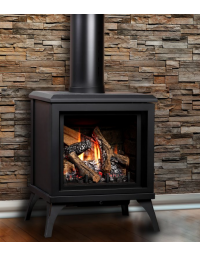
There are two main types of gas heating stoves: ventless and direct vent.
Types of Gas Heating Stoves – Ventless and Vented Models
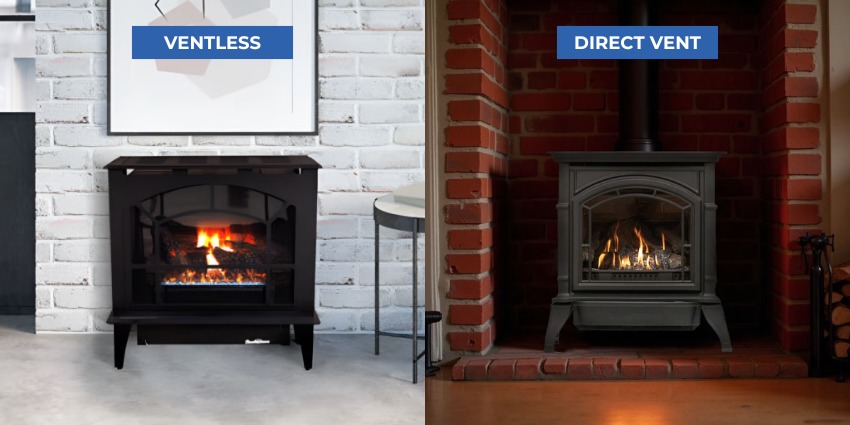
Understanding the differences between ventless gas stoves and direct vent gas stoves is crucial for selecting the right heating solution for your specific needs.
Ventless Gas Heating Stoves
Ventless gas stoves are the option to go for if you need a heating source with flexible installation. They can be installed without chimneys or venting. The absence of venting requirements makes gas stove installation significantly simpler and more cost-effective, allowing flexible placement in open areas with proper clearances and gas line access. However, they are subject to local building codes.
Ventless gas stoves burn fuel so efficiently that their combustion process achieves efficiency ratings close to 100%. This is because virtually all the heat they generate remains in the room rather than escaping through venting systems.
Without depending on your home's main heating system, ventless gas stoves are great for when you need extra heat in specific spaces. They work best in open living spaces, basements, or places that require more heating in the winter. They are perfect for homes where traditional venting would be costly or impractical due to their small size and flexibility.
Direct Vent Gas Heating Stoves
Contrary to ventless stoves, direct vent gas stoves require proper venting though walls or roofs, which may be limiting. Though, they can still be installed in bedrooms and enclosed spaces and are not as restricted as much by local building codes.
Direct vent gas stoves use a sealed system. Venting is concentric – meaning it uses a double-walled pipe within a pipe. This design completely separates combustion air and indoor air, significantly improving indoor air quality compared to ventless alternatives.
While direct vent gas stoves achieve slightly lower efficiency than ventless models due to heat loss through the exhaust system, they compensate with superior safety features and broader installation approval. Many models are AFUE-rated, qualifying them to serve as primary heat sources for specific areas or rooms.
Ventless and Direct Vent Gas Heating Stoves Pros and Cons
Ventless Gas Stoves Pros and Cons
Pros:
- Extremely efficient, often close to 99%, since all heat stays in the room
- No chimney or vent required, making installation easier and more flexible
- Can run on propane or natural gas
Cons:
- Not recommended for people with respiratory issues due to indoor combustion byproducts
- May cause higher humidity or condensation in tightly sealed spaces
- Some building codes restrict installation in bedrooms or small enclosed rooms
Best Installation Locations:
- Open living rooms, basements, or areas where supplemental heating is needed
- Spaces with good airflow and not prone to excessive moisture
Direct Vent Gas Stoves Pros and Cons
Pros:
- Sealed combustion draws air from outside, improving indoor air quality
- Can be installed in bedrooms or enclosed spaces since exhaust goes outside
- Very safe and approved by most building codes
Cons:
- Slightly lower gas stove efficiency compared to ventless because some heat exits with exhaust
- Requires venting through a wall or roof, which can increase installation complexity and cost
- Placement flexibility is limited by venting requirements
Best Installation Locations:
- Anywhere in the home, including bedrooms, as long as proper venting is possible
- Rooms where air quality and safety are a priority, such as tightly sealed homes
Gas Heating Stoves Operation and Control Features
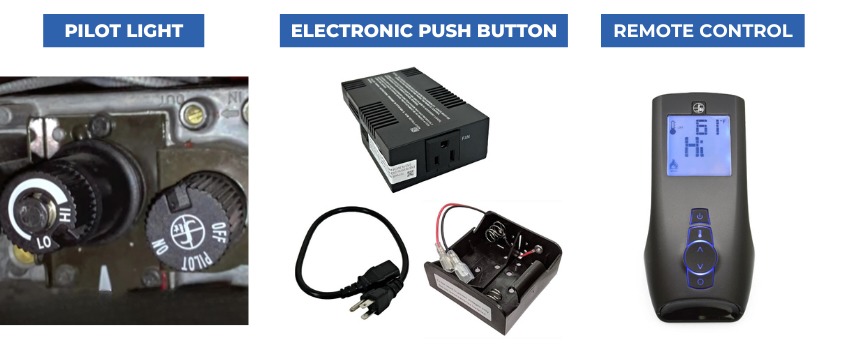
Gas heating stoves offer versatile operation options for maximum convenience and user control. They can be controlled directly using the included switch and variable heat control on the stove, via a remote control for convenient operation from across the room, or with a thermostat control for automated temperature management.
Turning Your Gas Heating Stove On and Off
Models equipped with a pilot light will need to be lit at the start of the heating season, while newer electronic ignition systems offer push-button convenience. Many stoves feature blower systems - most of which are variable speed and heat-activated - ensuring efficient heat circulation throughout the space. These advanced blower systems automatically adjust fan speeds based on stove temperature, maximizing heat distribution while maintaining comfortable noise levels.
Gas Stove Installation and Safety Requirements
Proper gas stove installation requires careful attention to utility requirements, safety clearances, and local building code compliance to ensure safe, efficient operation.
Gas Heating Stove Utility Requirements
All models require a gas line for operation, sized appropriately for the stove's BTU rating. Some models may require a 120V outlet for ignition systems, blowers, or electronic controls.
Safety and Clearances for Gas Heating Stoves
Gas stove safety depends on maintaining proper clearance requirements around the stove as specified by the manufacturer. These clearances prevent fire hazards and ensure adequate ventilation around the unit. You may also like to consider floor protection to prevent heat damage, particularly with combustible flooring types.
Venting and Code Compliance
Direct vent gas stoves need proper vent pipe installation (vertical or horizontal) per the manufacturer's manual. Ventless models must comply with local building codes and safety regulations, as some jurisdictions restrict or prohibit ventless installations entirely.
We recommend having your stove professionally installed to ensure correct gas pressure regulation and reliable safety shut-off features for safe operation.
Below are some common sizes and BTU ratings for gas heating stoves available on our website for you to consider.
| Gas Heating Stoves Features Guide | |||||
|---|---|---|---|---|---|
| Type | Fuel Type | Size Ranges | BTU Ratings | Installation Types | Brands |
| Ventless | Propane Natural Gas | Up to 29" Wide 30" – 39" Wide | 0 – 10,999 20,000 – 29,999 30,000 – 39,999 40,000 – 49,999 | Freestanding Mobile Home Approved | Breckwell Buck Stove Empire Kingsman |
| Direct Vent | Propane Natural Gas | Up to 29" Wide 30" – 39" Wide | 20,000 – 29,999 30,000 – 39,999 40,000 – 49,999 | Freestanding Mobile Home Approved With Blower | Breckwell Empire Kingsman Napoleon |
Top Gas Heating Stove Brands for 2025
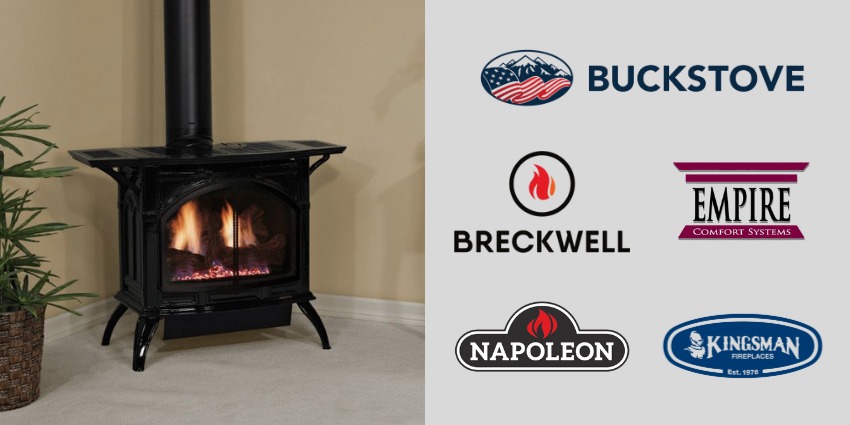
- Buck Stove Strong reputation for durable construction and efficient heating performance, offering both traditional and contemporary designs with robust blower systems and user-friendly controls.
- Breckwell High-efficiency with advanced combustion technologies and control systems, often incorporating smart features and energy-saving operation modes.
- Empire Leader in ventless gas stoves while also producing quality direct vent models, offering an extensive product line for various space needs.
- Kingsman Value-oriented heating solutions without compromising quality, making gas heating stoves for budget-conscious homeowners.
- Napoleon European design aesthetics with North American heating performance, creating gas heating stoves that are both functional heating appliances and attractive home décor elements.
When selecting among these heating stove brands, consider factors such as local dealer support, warranty coverage, parts availability, and specific model features that align with your heating needs.
Choosing the Right Gas Heating Stove
Selecting the right gas heating stove depends on several critical factors. If you need extra heating but can’t install a chimney, ventless gas stoves are the better option. If you need a primary heat source for specific rooms, direct vent gas stoves offer AFUE-rated freestanding furnaces.
Room size, ceiling height, insulation levels, and existing heating infrastructure all influence the appropriate stove size and type. Local building codes also impact installation options, with some areas restricting ventless installations. Budget considerations should include both initial purchase costs and long-term operating expenses, plus installation complexity.
Professional heating contractors can perform load calculations to ensure proper sizing and assess your specific installation requirements, helping you make the best choice for your home's heating needs.
Shop Gas Heating Stoves at HVACDirect.com
Both ventless and direct vent gas heating stoves offer significant advantages over traditional space heaters in terms of efficiency, safety, and convenience. Choosing the right type depends on your specific heating needs, room requirements, and local building codes.
Ready to find the perfect gas heating stove for your home? Browse our complete selection of ventless and direct vent gas stoves at HVACDirect.com and discover quality models from top brands like Buck Stove, Empire, Napoleon, and more.