Key Takeaways
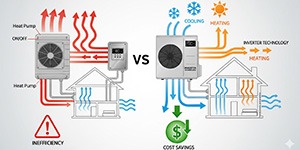
- Year-Round Comfort: Heat pumps keep your home comfortable in every season by transferring heat indoors during winter and pushing it outside during summer.
- Energy-Efficient & Eco-Friendly: Lower electricity usage, reduced reliance on fossil fuels, and fewer maintenance needs make heat pumps a smart long-term investment.
- Ideal for Mild Climates: Heat pumps perform best in regions with moderate winters but can be paired with backup heating for colder temperatures.
Article Contents
Heat pumps are becoming one of the most popular choices for homeowners and businesses who want an efficient, versatile, and eco-friendly way to stay comfortable year-round. Unlike traditional HVAC systems that either heat or cool separately, a heat pump does both—and it does so with impressive efficiency. But how does a heat pump actually work, and is it the right choice for your space? Let’s take a deeper look.
What Is a Heat Pump?
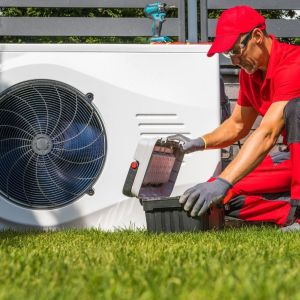
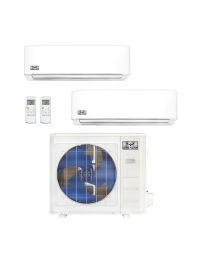
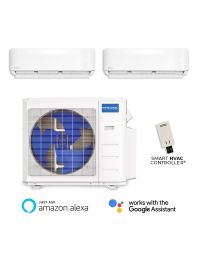
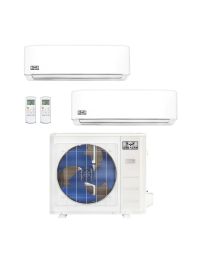
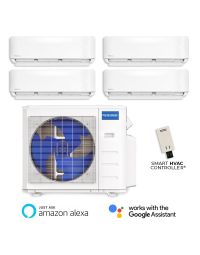
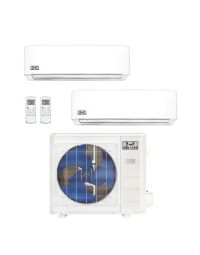
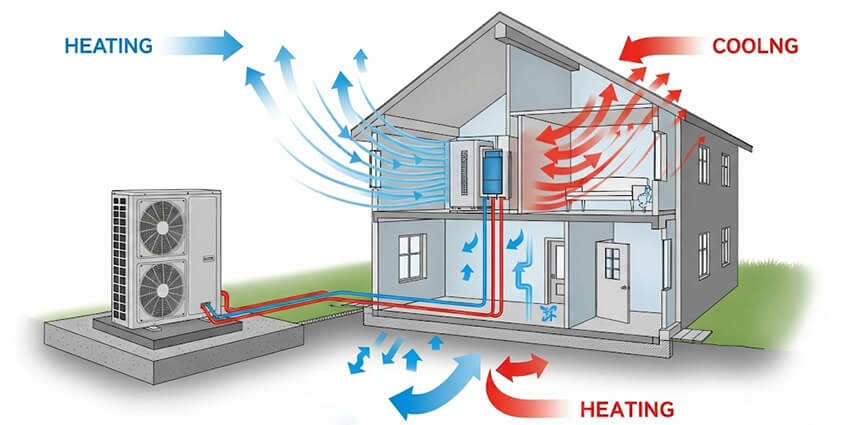
A heat pump system is an energy-efficient solution designed to move heat from one place to another rather than generating it like a furnace or burning fuel like a boiler. Using electricity and refrigerant, it transfers thermal energy to keep your home warm during the winter and cool throughout the summer. The system consists of two main components: an outdoor unit, which acts as the compressor or condenser and interacts with the outside air by pulling in heat during colder months or expelling it in warmer months, and an indoor unit, often called the air handler or evaporator coil, which circulates conditioned air throughout your living space. Working together in a closed-loop system, these components move refrigerant back and forth to absorb and release heat as needed, delivering reliable comfort year-round.
How a Heat Pump Heats Your Home
One of the most surprising features of a heat pump is its ability to extract heat from cold air—even when it feels freezing outside. As long as the outdoor temperature is above 32°F, there is still enough heat energy for the system to capture and transfer indoors. The process begins when the refrigerant in the outdoor coil absorbs heat from the surrounding air. This refrigerant is then compressed, which raises its temperature significantly. Once heated, it is sent indoors to the air handler, where the warmth is transferred to your home’s air and circulated through ductwork or an indoor unit. This cycle repeats until the thermostat reaches the desired temperature, keeping your home consistently warm without the need to burn fuel.
How a Heat Pump Cools Your Home
When it’s time to cool things down, the process simply reverses. The heat pump acts much like a central air conditioner:
- Warm air from inside your home passes over the indoor coil.
- The refrigerant absorbs this heat and carries it to the outdoor unit.
- The outdoor coil releases the heat into the outside air.
- Cooler air is then circulated back into your home.
This ability to “flip directions” is what makes a heat pump so versatile. Instead of needing a separate furnace and air conditioner, you can enjoy heating and cooling in one system.
Advantages of Heat Pumps
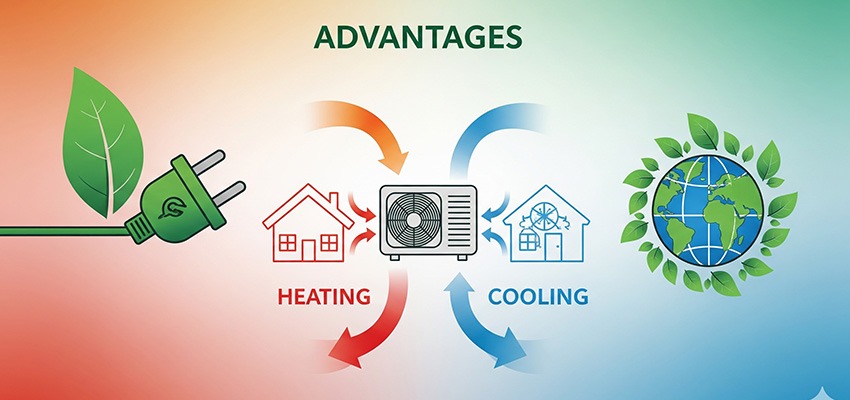
- Energy Efficiency and Cost Savings
- Eco-Friendly Comfort
- All-in-One Solution
- Low Maintenance and Long Life
Heat pumps move heat instead of generating it, which means they use much less electricity than furnaces. With high SEER and HSPF ratings, they keep your home comfortable while lowering monthly energy bills. Check out our energy-efficient heat pump systems.
Since heat pumps don’t burn fossil fuels, they produce fewer emissions. They’re a greener choice for families looking to reduce their environmental footprint while staying comfortable year-round.
A single heat pump provides both heating and cooling, so you don’t need separate systems. This makes installation, maintenance, and repairs simpler and more cost-effective.
With fewer moving parts than combustion systems, heat pumps are reliable and durable. Regular filter changes and checkups can keep them running for 15 years or more.
When a Heat Pump Alone Isn’t Enough
While heat pumps are excellent in moderate climates, they do have limitations. When outdoor temperatures dip into the 30s or lower, the system may struggle to extract enough heat to keep up with demand.
In colder regions, heat pumps are often paired with a backup heating source, such as a gas furnace or electric resistance heater. This combination—called a dual-fuel system—ensures that your home stays warm no matter how cold it gets outside.
Is a Heat Pump Right for Your Home or Business?
A heat pump may be the ideal solution if you live in a region with mild winters and hot summers, want to cut down on fossil fuel use, and are looking for long-term energy savings with year-round comfort. It’s also a great choice if you’d prefer the convenience of a single system instead of maintaining separate heating and cooling equipment. For colder climates, a heat pump can still be effective when paired with a secondary heat source, and many homeowners still save money overall thanks to the system’s efficiency during milder days.
Choosing a Heat Pump at HVACDirect.com
A heat pump is more than a heating and cooling system—it’s an efficient, all-in-one solution designed to keep your home comfortable year-round. By transferring heat instead of generating it, heat pumps lower energy costs and reduce environmental impact while providing dependable comfort. Explore our wide selection of heat pumps at HVACDirect.com and find the perfect system for your home.