The #1 question we get is “How much does it cost?” The most common answer is, “It depends.” But in this video, we’ll break that cost down so that you have a much better idea of what to expect when you’re shopping.
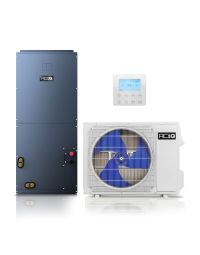
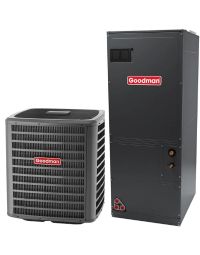
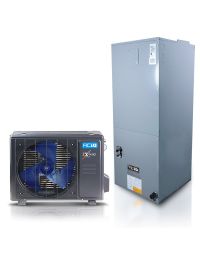
The most common residential system in the US for central heating cooling includes 3 components: an air conditioner condenser, a gas furnace, and an evaporator coil.
Here are factors that affect the cost for each, let’s start with the AC:
Tonnage – Tonnage needed will depend on the size of your home. The larger your home, the higher tonnage you will need. The higher the tonnage of the unit, the higher the cost. To calculate this, multiply the number of square feet you need to cool by 25. This number is the total number of BTU’s you need. Divide that number by 12,000 and this will give you your needed tonnage.
SEER – SEER stands for Seasonal Energy Efficiency Ratio. The higher the SEER rating, the more expensive the unit will be, but it will use less energy and save you money in the long run. Different regions of the USA have a minimum SEER rating requirement, be sure to check what the laws are in your area before making a purchase.
Furnaces:
AFUE – AFUE is your furnace’s efficiency rating. Ratings start at 80% being the least efficient and reach up to 98%. Furnaces with a rating of 90% and up are incredibly efficient and can save up to 50% on your electric bills.
BTUs – BTU’s or British Thermal Units are units of heat. Each btu is defined as the amount of heat required to raise the temperature of 1 pound of water by 1 degree. The larger your home is, the larger BTU rating you will need.
Stages – Your furnace can be single stage, two stage, or modulating.
Single stage is the most affordable, but always runs at its maximum temperature. Much like a light switch it is on or off with no in between which can waste energy and costs more on energy bills. A two-stage furnace will operate much more efficiently than a single stage furnace. The two stage has two operating options to choose from. Most of the time, the unit will operate at around 65% of the furnace's maximum capacity. However, when the first stage is not sufficient to heat up your home, the second stage will kick on and provide the additional heat to ensure that your home reaches the desired temperature. The two-stage furnace allows the unit to operate on less gas most of the time allowing you to save money on your utility bills.
Modulating furnace units do cost the most at time of purchase but are the most efficient option available. Instead of having stages, a modulating furnace uses a modulating gas valve and a variable speed blower which allows the furnace to operate anywhere between 0% and 100% heating capacity. With this type of system, the fan runs continuously and ramps up or down depending on the requirements. Since the fan and burner almost never run at full capacity and the energy robbing on/off cycle is eliminated, the unit is extremely fuel-efficient.
Another factor that affects your total cost is where you live. People who live in places with warmer climates would only need a basic furnace. Someone who lives in colder climates would want a more advanced and efficient furnace and a smaller air conditioner or no air conditioner at all. If you live in a place with a climate that’s somewhere in between, you can use a heat pump for both heating and cooling and eliminate the need for a dedicated furnace. And, with new next gen inverter heat pump technology, you can replace many gas furnace systems, so be sure to check out these as an option.
Installation: The second piece of the puzzle is installation. Getting your system installed costs on average between $2,500 and $5,000. This is not a do-it-yourself job and should only be done by a licensed professional.
Now, let’s imagine there’s a family living in Southern Ohio, in a 1,500 square-foot home, that has an 80,000 BTU, 96% gas furnace and a 2.5 Ton, 16 SEER air conditioner. This system by AirQuest from us is $3,771.00+ miscellaneous installation parts would end up with a total material cost of around $4271.00. With installation your total project cost would run $6771-$8771. Local quotes for this would be around $9,000-$15,000 depending on your location.
If the same family was looking to upgrade to a higher efficiency system from us, with installation your cost would be around $7,020 and $9,520 compared to local quotes of $11,000-$18,000. The primary benefit of upgraded HVAC systems is overall home comfort followed by energy-efficiency, and that will ultimately save you money on utilities.
By purchasing equipment directly from HVACDirect.com, you can save thousands of dollars compared to local companies and avoid those marked-up prices.
We hope you now have a better idea how much an HVAC System could cost. If you have a question or comment about this video, let us know below. And, of course, subscribe to our channel to see more videos about all things HVAC-related.
The most common residential system in the US for central heating cooling includes 3 components: an air conditioner condenser, a gas furnace, and an evaporator coil.
Here are factors that affect the cost for each, let’s start with the AC:
Tonnage – Tonnage needed will depend on the size of your home. The larger your home, the higher tonnage you will need. The higher the tonnage of the unit, the higher the cost. To calculate this, multiply the number of square feet you need to cool by 25. This number is the total number of BTU’s you need. Divide that number by 12,000 and this will give you your needed tonnage.
SEER – SEER stands for Seasonal Energy Efficiency Ratio. The higher the SEER rating, the more expensive the unit will be, but it will use less energy and save you money in the long run. Different regions of the USA have a minimum SEER rating requirement, be sure to check what the laws are in your area before making a purchase.
Furnaces:
AFUE – AFUE is your furnace’s efficiency rating. Ratings start at 80% being the least efficient and reach up to 98%. Furnaces with a rating of 90% and up are incredibly efficient and can save up to 50% on your electric bills.
BTUs – BTU’s or British Thermal Units are units of heat. Each btu is defined as the amount of heat required to raise the temperature of 1 pound of water by 1 degree. The larger your home is, the larger BTU rating you will need.
Stages – Your furnace can be single stage, two stage, or modulating.
Single stage is the most affordable, but always runs at its maximum temperature. Much like a light switch it is on or off with no in between which can waste energy and costs more on energy bills. A two-stage furnace will operate much more efficiently than a single stage furnace. The two stage has two operating options to choose from. Most of the time, the unit will operate at around 65% of the furnace's maximum capacity. However, when the first stage is not sufficient to heat up your home, the second stage will kick on and provide the additional heat to ensure that your home reaches the desired temperature. The two-stage furnace allows the unit to operate on less gas most of the time allowing you to save money on your utility bills.
Modulating furnace units do cost the most at time of purchase but are the most efficient option available. Instead of having stages, a modulating furnace uses a modulating gas valve and a variable speed blower which allows the furnace to operate anywhere between 0% and 100% heating capacity. With this type of system, the fan runs continuously and ramps up or down depending on the requirements. Since the fan and burner almost never run at full capacity and the energy robbing on/off cycle is eliminated, the unit is extremely fuel-efficient.
Another factor that affects your total cost is where you live. People who live in places with warmer climates would only need a basic furnace. Someone who lives in colder climates would want a more advanced and efficient furnace and a smaller air conditioner or no air conditioner at all. If you live in a place with a climate that’s somewhere in between, you can use a heat pump for both heating and cooling and eliminate the need for a dedicated furnace. And, with new next gen inverter heat pump technology, you can replace many gas furnace systems, so be sure to check out these as an option.
Installation: The second piece of the puzzle is installation. Getting your system installed costs on average between $2,500 and $5,000. This is not a do-it-yourself job and should only be done by a licensed professional.
Now, let’s imagine there’s a family living in Southern Ohio, in a 1,500 square-foot home, that has an 80,000 BTU, 96% gas furnace and a 2.5 Ton, 16 SEER air conditioner. This system by AirQuest from us is $3,771.00+ miscellaneous installation parts would end up with a total material cost of around $4271.00. With installation your total project cost would run $6771-$8771. Local quotes for this would be around $9,000-$15,000 depending on your location.
If the same family was looking to upgrade to a higher efficiency system from us, with installation your cost would be around $7,020 and $9,520 compared to local quotes of $11,000-$18,000. The primary benefit of upgraded HVAC systems is overall home comfort followed by energy-efficiency, and that will ultimately save you money on utilities.
By purchasing equipment directly from HVACDirect.com, you can save thousands of dollars compared to local companies and avoid those marked-up prices.
We hope you now have a better idea how much an HVAC System could cost. If you have a question or comment about this video, let us know below. And, of course, subscribe to our channel to see more videos about all things HVAC-related.
April 6, 2022