Have you recently carried out an energy efficiency assessment of your home? If so, there is no better time to decide which HVAC system is best suited for your home.
 Modern systems will provide you with more options than earlier models including numerous stages of cooling and heating as well as varying fan speeds.
 Humidity Control Systems
If you live in a very humid or dry climate, humidifiers and dehumidifiers definitely should be on your list. Using these HVAC units, you are able to control the level of humidity in your home and bring it either up or down to 50%, which is the recommended amount.
Unfortunately, you cannot use humidifier and dehumidifier units using forced-water heating systems. If you have a humidifier or dehumidifier unit installed into the air conditioning or furnace, you will not be able to control the humidity levels unless you turn on the system. The alternative is to add separate humidifier/dehumidifier units.
Humidity Control Systems
If you live in a very humid or dry climate, humidifiers and dehumidifiers definitely should be on your list. Using these HVAC units, you are able to control the level of humidity in your home and bring it either up or down to 50%, which is the recommended amount.
Unfortunately, you cannot use humidifier and dehumidifier units using forced-water heating systems. If you have a humidifier or dehumidifier unit installed into the air conditioning or furnace, you will not be able to control the humidity levels unless you turn on the system. The alternative is to add separate humidifier/dehumidifier units.
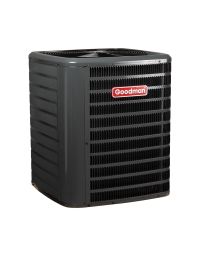
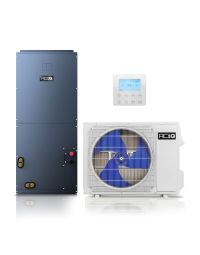
 There are 4 different types of air conditioners:
Modern systems will provide you with more options than earlier models including numerous stages of cooling and heating as well as varying fan speeds.
Single or Multi-Stage Heating and Cooling Systems
A single stage heating or cooling system means that your air conditioner or furnace only has a single level of cold or heat output. Single-stage heating and cooling systems are more popular in places where the weather is at extremes. You will find them in places that have hot and humid seasons and cold winters. Single-stage heating systems are designed to provide as much comfort as possible in extreme weather conditions. Unfortunately, this means that for the most part the HVAC unit is operating at full capacity, even when it does not have to. This is what sets apart a multi-stage heating and cooling system. With a multi-stage, you are able to vary the amount of heat or cold output. So, if you live in an area where you don’t experience extreme weather conditions or you do but on particular days you experience moderate weather, you can adjust how much output is needed hence saving you money. The levels of heating and cooling you can choose vary from one thermostat model to the next.Zoned HVAC Systems
This refers to heating and cooling units that are able to either cool or heat parts of your home separately. This is achieved by controlling zone dampers or zone valves inside the ductwork or vents. By using zoned units, you will significantly cut down on your energy costs.Humidity Control Systems
If you live in a very humid or dry climate, humidifiers and dehumidifiers definitely should be on your list. Using these HVAC units, you are able to control the level of humidity in your home and bring it either up or down to 50%, which is the recommended amount.
Unfortunately, you cannot use humidifier and dehumidifier units using forced-water heating systems. If you have a humidifier or dehumidifier unit installed into the air conditioning or furnace, you will not be able to control the humidity levels unless you turn on the system. The alternative is to add separate humidifier/dehumidifier units.
Heating HVAC Systems
Modern heating systems easily achieve 97% efficiency and are able to convert almost all the fuel into heat that can be used in your home. Heating systems can be categorized into two broad groups including:- Furnaces
- Forced water systems
There are 4 different types of air conditioners:
- Window Air Conditioner
- Mini-Split Air Conditioner
- Packaged Air Conditioner
- Central Air Conditioning System
March 5, 2018