Key Takeaways
- Ice and snow are more damaging than you think: From falling icicles to heavy ice buildup, winter weather can harm HVAC components and even cause leaks.
- Blocked airflow strains your system: Snow piled around outdoor units prevents proper heat exchange, forcing the system to overwork, consume more energy, and wear out faster.
- Prevention saves money and extends lifespan: Clearing gutters, improving drainage, keeping a safe clearance, and scheduling seasonal maintenance are simple steps that protect your HVAC system from costly repairs.
Article Contents
Winter weather brings its share of challenges across the country. Beyond icy roads, slippery sidewalks, and snow-covered driveways, one often-overlooked problem is the potential damage that harsh weather can cause to your HVAC system. While it may seem like your furnace is safe indoors and your air conditioner is protected because it’s not running, both systems can be vulnerable to winter-related issues. Understanding these risks can help you prevent damage, extend the life of your equipment, and save money on costly repairs.
Falling Ice and Gutter Problems
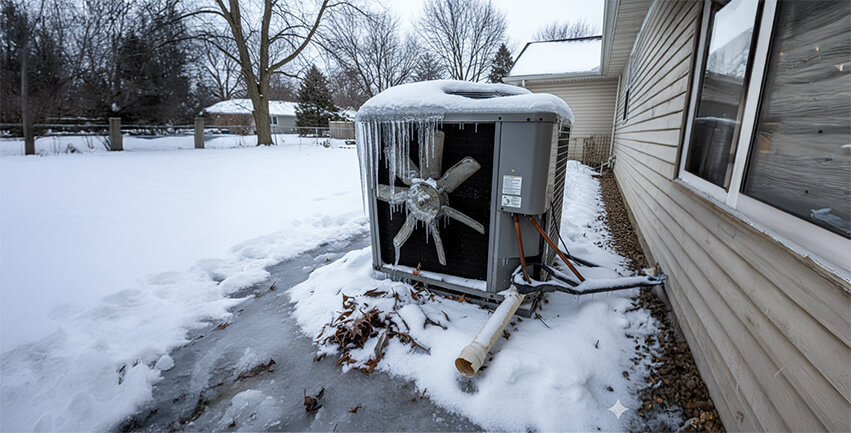
One of the most common winter hazards for outdoor HVAC units—such as heat pumps and air conditioners—is falling ice. Many systems are installed near the side of a house, often directly below rooflines and gutters. During freezing weather, clogged gutters can trap moisture, which freezes into heavy icicles. As these icicles grow, they can eventually snap off and crash down onto your HVAC equipment.
The impact from falling ice can dent or crack the metal cabinet of your outdoor unit, damage refrigerant coils, or even knock internal components loose. In severe cases, a single large icicle can put your system completely out of commission. Protecting your gutters with proper cleaning and installing gutter guards can go a long way toward preventing these accidents.
The Risks of Melting Snow
Snow buildup around your home may seem harmless, but as it begins to melt, it can cause unexpected problems for your HVAC system. A slow melt may allow water to drain safely away, but when a sudden warm front follows a heavy snowfall, melting can happen rapidly. This quick melt often leads to water pooling around your outdoor equipment or seeping into basements, crawl spaces, and garages where furnaces are commonly installed.
Excessive moisture around HVAC equipment can cause rust and corrosion, damaging sensitive components. Electrical parts are particularly at risk if exposed to water. Worse still, if temperatures drop again after the melt, standing water can refreeze inside your unit, expanding and cracking parts like coils, valves, or piping. Preventing these issues may be as simple as ensuring proper drainage around your home and keeping snow cleared away from HVAC systems.
Ice and Snow Accumulation on Units
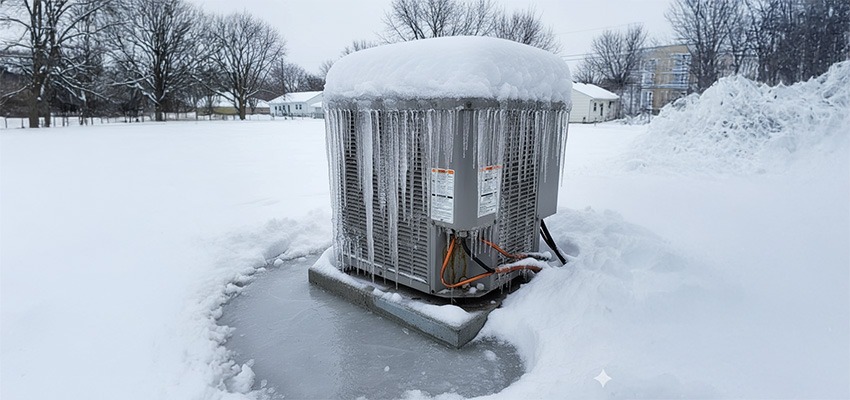
Outdoor heat pumps are especially vulnerable to ice and snow accumulation. While heat pumps are designed to operate in cold weather, heavy ice buildup can cause major operational issues. The weight of ice adds extra strain, leading to loud vibrations and potentially damaging refrigerant lines. This can result in leaks that compromise the unit’s efficiency or even cause a system breakdown.
Snow piled up around the unit is another concern. Blocked airflow prevents the system from properly exchanging heat, forcing the unit to work harder and run longer. This increases energy use, raises utility bills, and significantly shortens the system’s lifespan. To protect your equipment, keep at least a two-foot clearance around outdoor HVAC systems and gently clear away snow and ice when safe to do so.
Preventing Winter HVAC Damage
While winter weather is unavoidable, there are several proactive steps homeowners can take to protect their HVAC systems:
- Maintain your gutters:
- Check drainage:
- Clear snow safely:
- Schedule maintenance:
Keep them clear of leaves and debris so water can drain properly. This helps prevent heavy icicle formation.
Ensure your yard is graded so melting snow flows away from your home and HVAC units./p>
Avoid using sharp tools to chip ice from your system. Instead, use warm water or allow the unit’s built-in defrost cycle to handle light buildup.
Professional inspections before and after the winter season can help detect small issues before they turn into expensive repairs.
When Replacement Becomes Necessary
Even with the best precautions, winter weather can sometimes cause irreversible damage to HVAC systems. Corrosion, frozen coils, or major cabinet damage may make repair impractical. When that happens, replacing your system with a new, energy-efficient model is often the smartest choice.
At HVACDirect.com, you’ll find a wide selection of furnaces, air conditioners, heat pumps, and ductless mini-splits designed to keep your home comfortable year-round. With options from top brands and models built to handle a variety of climates, upgrading your HVAC system can provide peace of mind and long-term savings.