Key Takeaways
- Start with the controls: select Heat, raise the setpoint, and allow the normal startup delay.
- Defrost can look like a problem: brief pauses, outdoor water, and light steam may be normal in winter.
- Keep homeowner checks external: clean filters and clear loose debris, but leave electrical and refrigerant diagnosis to a qualified technician.
If your mini split is running but the room is not getting warmer, the system may not be broken. An incorrect operating mode, a normal startup delay, an outdoor defrost cycle, restricted airflow, or low-temperature capacity limits can all make heating pause or feel weaker. Start with the safe checks below before requesting service.
First, confirm that the mini split can heat
Not every ductless system is a heat pump. Check the model documentation or product specifications for a heating rating. A cooling-only mini split may show a sun or Heat option on a universal remote even though the outdoor unit cannot provide heat.
Seven safe checks when a mini split is not heating
1. Select Heat mode—not Auto, Fan, or Dry
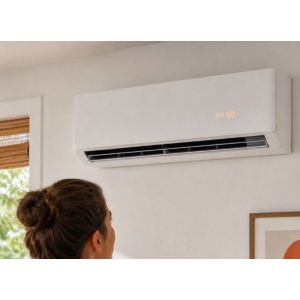
Use the remote to select Heat, usually shown by a sun symbol. Set the temperature several degrees above the current room temperature. Fan mode only circulates room air, Dry mode is intended for dehumidification, and Auto can choose a mode based on its own logic.
2. Allow time for the heating startup delay
Many mini splits delay the indoor fan while the indoor coil warms. This anti-cold-air behavior keeps the unit from blowing chilly air at startup. After selecting Heat, wait several minutes without repeatedly changing modes or setpoints.
3. Check whether the system is defrosting
In cold, damp weather, frost can form on the outdoor coil. The heat pump periodically reverses operation to melt it. Indoor airflow may pause, the outdoor fan may stop, water may drain beneath the condenser, and light steam can appear outside. A short, occasional defrost cycle is normal. Thick ice that remains, frequent cycling without restored heat, or ice blocking the base needs professional attention.
4. Clean the indoor filter and clear airflow
Turn the system off and follow the owner’s manual to remove and clean the reusable filter. Make sure furniture, curtains, and decorations do not block the indoor intake or discharge. Reinstall a completely dry filter before operating the unit. Do not open electrical panels or wash internal electronics.
5. Inspect the outdoor unit from a safe distance
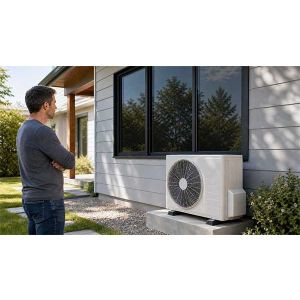
Clear loose leaves and light snow from around the condenser while maintaining the manufacturer’s required clearances. Do not chip ice from the coil, bend fins, pour hot water on the cabinet, or reach through the guard. The outdoor unit needs an open air path and a place for defrost water to drain without refreezing against the base.
6. Synchronize modes on a multi-zone system
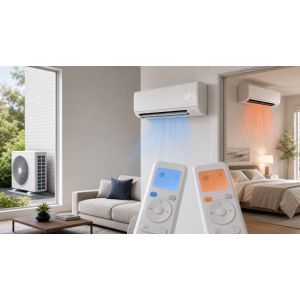
Most conventional multi-zone heat pumps cannot heat one room while another indoor unit calls for cooling. Turn all heads off, set every active zone to Heat, and restart them one at a time. A conflicting zone may otherwise enter standby or prevent expected operation. See our multi-zone mode-conflict guide for more detail.
7. Consider outdoor temperature and system capacity
Heating capacity changes as outdoor temperature falls, and each model has a published operating range. A system that maintains temperature in mild weather may run continuously or need supplemental heat during colder conditions. Compare the outdoor temperature with the exact model’s performance data rather than assuming every mini split has the same cold-weather capability.
What the air should feel like in Heat mode
Heat-pump supply air can feel warm rather than furnace-hot, especially when the indoor fan is moving more air. Judge performance by whether room temperature is rising over time, not only by touching the airflow. Keep doors and windows closed and give the system time to recover from a large setback.
Try one controlled power reset
If the controls appear unresponsive, turn the system off with the remote, then disconnect power using the correct disconnect or breaker only if you can identify it safely. Wait about five minutes, restore power, select Heat, and allow the normal protection delay. Do not repeatedly cycle the breaker. If an error code returns, record it along with the indoor and outdoor model numbers.
When to call a qualified HVAC technician
Arrange service when the unit trips a breaker, shows a recurring error code, produces a burning odor or abnormal noise, leaks indoors, develops persistent heavy ice, or still does not heat after the basic checks. Refrigerant diagnosis, live-voltage testing, wiring work, sensor checks, control-board access, and internal coil cleaning are not homeowner troubleshooting steps.
Frequently asked questions
Why does my mini split stop blowing during heating?
A brief pause can be normal during coil warmup or an outdoor defrost cycle. A long or repeated loss of heat with an error code should be diagnosed using the model-specific service information.
Why is steam coming from the outdoor mini-split unit?
Light vapor during defrost can be normal as frost melts from the outdoor coil. Shut the system down and request service if there is a burning smell, smoke, arcing, or another unsafe condition.
Should I remove ice from the outdoor coil?
No. Do not chip or scrape the coil. Clear only loose snow and debris around the cabinet. Persistent ice can point to an airflow, drainage, sensor, refrigerant, or defrost-control problem.
Can all heads on a multi-zone mini split use different temperatures?
They can usually use different temperature setpoints, but active heads sharing one conventional outdoor unit generally need compatible operating modes—such as all Heat rather than a mix of Heat and Cool.
Shop mini splits built for your climate
If the system is undersized, cooling-only, or outside its intended temperature range, maintenance alone will not change its design. Explore ductless mini-split systems at HVACDirect and compare the exact heating capacity and operating range for your climate before choosing a replacement.