Key Takeaways
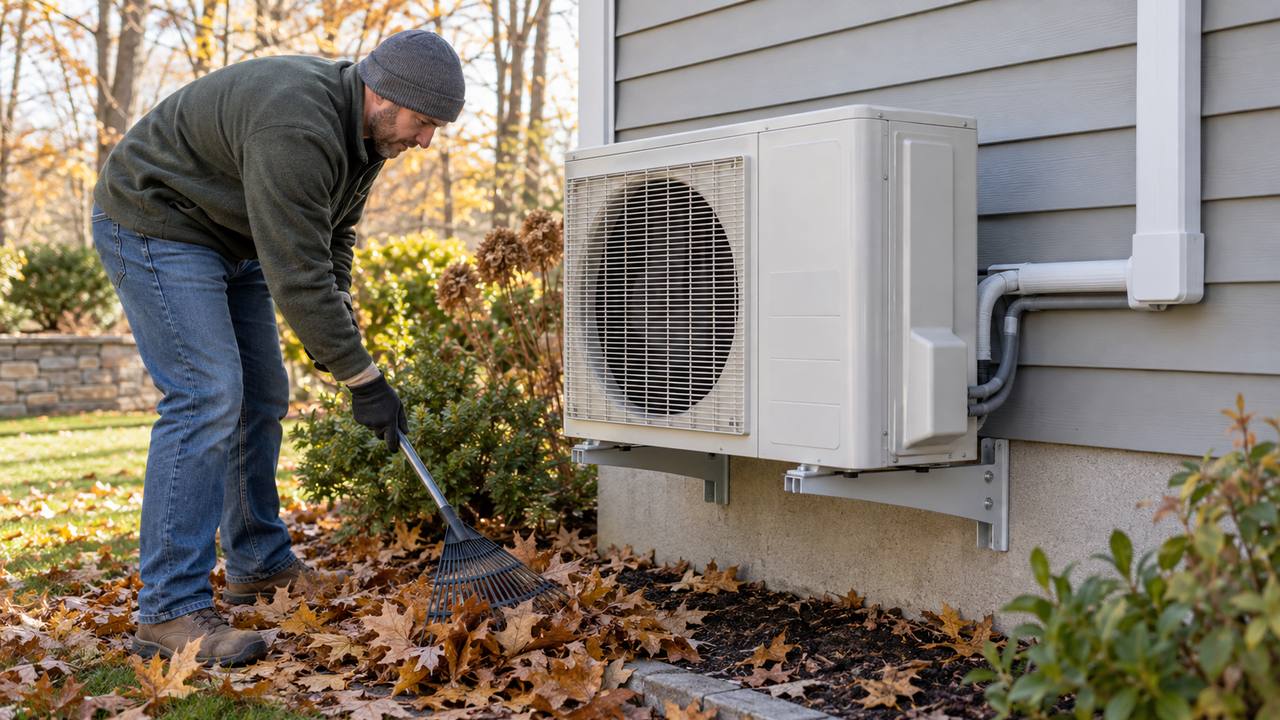
- Keep the outdoor unit breathing. Clear leaves, plants, and snow from around it without striking the coil or fan.
- Clean indoor filters. Follow the owner's manual; a dirty filter can reduce airflow and comfort.
- Do not wrap an operating heat pump. A mini-split used for heating needs outdoor airflow and a path for defrost water.
- Leave repairs to a professional. Electrical panels, refrigerant lines, coil damage, and persistent ice are not routine homeowner maintenance.
A little fall maintenance can help a mini-split heat pump work reliably when you need heat. The safest preparation is mostly about airflow, drainage, clean filters, and noticing problems early—not opening the equipment or trying to service the refrigerant system yourself.
Start with the instructions for your exact indoor and outdoor model. Required clearances, filter-cleaning methods, snow accessories, and operating limits vary. The checklist below covers general homeowner tasks that do not require removing electrical or refrigerant components.
Mini-Split Winter-Prep Checklist
- Identify your system. Confirm that the installed mini-split is a heat-pump model rated for heating, and locate its owner's manual.
- Clear the outdoor area. Remove loose leaves and other debris from the ground and keep vegetation from blocking the air path. Follow the model's stated clearances.
- Check the base and drain path. Look for standing water, debris, or a location where defrost water could freeze against the unit or across a walkway.
- Clean indoor filters. Turn the indoor unit off and use the manual's removal, washing, drying, and reinstallation directions.
- Test heating before a cold snap. Set the controller to Heat and allow the system time to respond. Note unusual sounds, error codes, or weak airflow.
- Arrange professional service if needed. Ask a qualified technician to investigate persistent icing, leaks, damaged wiring, or poor heating.
Safety first: Keep hands and tools away from the fan and coil. Do not open covers or spray electrical components. If a task requires access beyond the owner's manual, stop and call a qualified HVAC professional.
Give the Outdoor Unit Room to Work
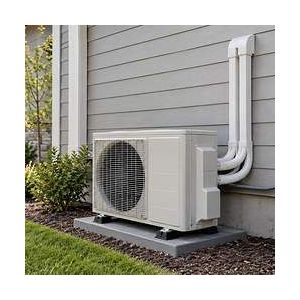
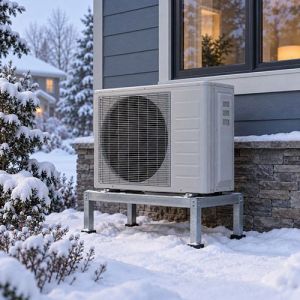
A heating mini-split extracts heat from outdoor air. Leaves, shrubs, stored items, and drifting snow can restrict that airflow. Gently clear loose debris around the unit before winter and check again after storms. Use the installation manual for the exact clearance requirements; a generic distance cannot cover every model or mounting arrangement.
Look at the location from above as well as the sides. Roof runoff, icicles, or snow sliding from an eave can bury or damage an outdoor unit. A properly designed stand, wall mount, snow hood, or deflector may help in snowy areas, but these are installation decisions for a contractor who can preserve airflow and service access. Do not improvise a tight enclosure.
During a defrost cycle, water can drip from the outdoor unit and freeze nearby. Keep the drainage route open and watch for ice forming on steps or walkways. If water repeatedly freezes against the equipment, ask a professional whether the mounting height, drainage, or approved accessories need attention.
Clean the Indoor Unit's Filters
Indoor filters collect dust and can become restrictive. Follow your model's instructions for removing and cleaning them. Many ductless filters can be washed, but the approved method and cleaning interval depend on the equipment. Let washable filters dry completely before reinstalling them. Do not operate the unit without the required filters.
Keep furniture, curtains, and decorations away from the air inlet and outlet. If the unit has a washable front panel, use only the cleaning method specified in the manual. A deep coil or blower cleaning is different from routine filter care and is best handled by a qualified service provider.
Know What Normal Winter Operation Looks Like
A heat pump may briefly pause indoor heating while it defrosts the outdoor coil. You might notice water draining outside, a change in fan sound, or vapor that looks like steam. Those observations can be normal. They are different from a unit encased in persistent ice or one that never returns to heating.
Use Heat mode when you want heating, and avoid repeatedly switching modes while diagnosing a slow response. In a multi-zone system, check whether connected rooms are requesting conflicting operating modes. If the controller shows an error code, record it and consult the manual rather than repeatedly resetting the system.
Winterization Mistakes to Avoid
- Do not cover a heat pump that will run in winter. A wrap or close-fitting cover blocks the air it needs to heat.
- Do not chip ice off the coil or fan. Sharp tools can bend fins or damage refrigerant tubing.
- Do not pour boiling water on frozen equipment. Sudden temperature changes and water near electrical parts can create additional hazards.
- Do not bury the outdoor unit while shoveling. Keep snow piles away from the air path and drainage area.
- Do not treat refrigerant or electrical work as a filter-cleaning task. Those jobs require a trained technician.
When Should You Call for Service?
Schedule professional help if heating remains weak after checking the settings and clean filters, the outdoor unit develops heavy ice that does not clear, the breaker trips, you see a damaged line or wire, or the controller repeatedly displays an error. A technician can evaluate airflow, electrical operation, refrigerant performance, defrost behavior, and installation details without risking damage from trial-and-error repairs.
If you are shopping for a system rather than maintaining an existing one, compare the exact model's low-temperature heating capacity and installation requirements—not just its advertised minimum operating temperature. Browse mini-split systems and discuss the right match with a qualified installer.
Frequently Asked Questions
Should I turn my mini-split off for winter?
Not if it is your planned heat source and the model is rated for the conditions. Follow the owner's manual and your heating plan. A cooling-only model cannot provide heat.
Is frost on the outdoor unit normal?
Some frost can form in cold, damp weather, and the system should periodically defrost. Persistent heavy ice, blocked drainage, or lost heating warrants a service call.
Can I put a cover over the outdoor unit?
Do not cover an outdoor heat-pump unit while it is operating. If your equipment will be shut down for a season, follow the manufacturer's specific storage and protection guidance.
Ready for the first cold snap? Clear the outdoor airflow path, clean the indoor filters, test Heat mode, and keep the model manual handy. A short professional tune-up can address problems you cannot safely inspect yourself.
The goal is simple: maintain airflow and drainage without disturbing the parts that require professional service. A few careful checks now can make winter comfort more predictable.