Key Takeaways
- A new system does not automatically mean the old line set can stay. Follow the exact equipment manufacturer's piping requirements.
- Size, length, condition, and contamination matter. A line that does not leak may still be unsuitable for the replacement.
- Changing refrigerants needs a compatibility assessment. Do not assume matching copper diameters makes an old installation acceptable.
- Compare complete installation scopes. Access, routing, insulation, testing, and commissioning affect the project, not just the copper price.
Whether you should replace the line set with a new AC or heat pump depends on the replacement equipment's requirements and the existing tubing's size, route, condition, and history. Reuse is a model-specific installation decision, not a universal way to save money.
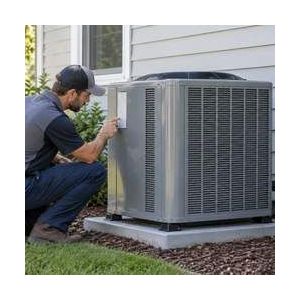
Ask your installer to assess the refrigerant piping before ordering equipment. A new outdoor unit and indoor coil can be the right match while the old piping remains the wrong size, damaged, contaminated, or otherwise unsuitable.
What Is an HVAC Line Set?
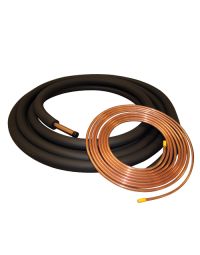
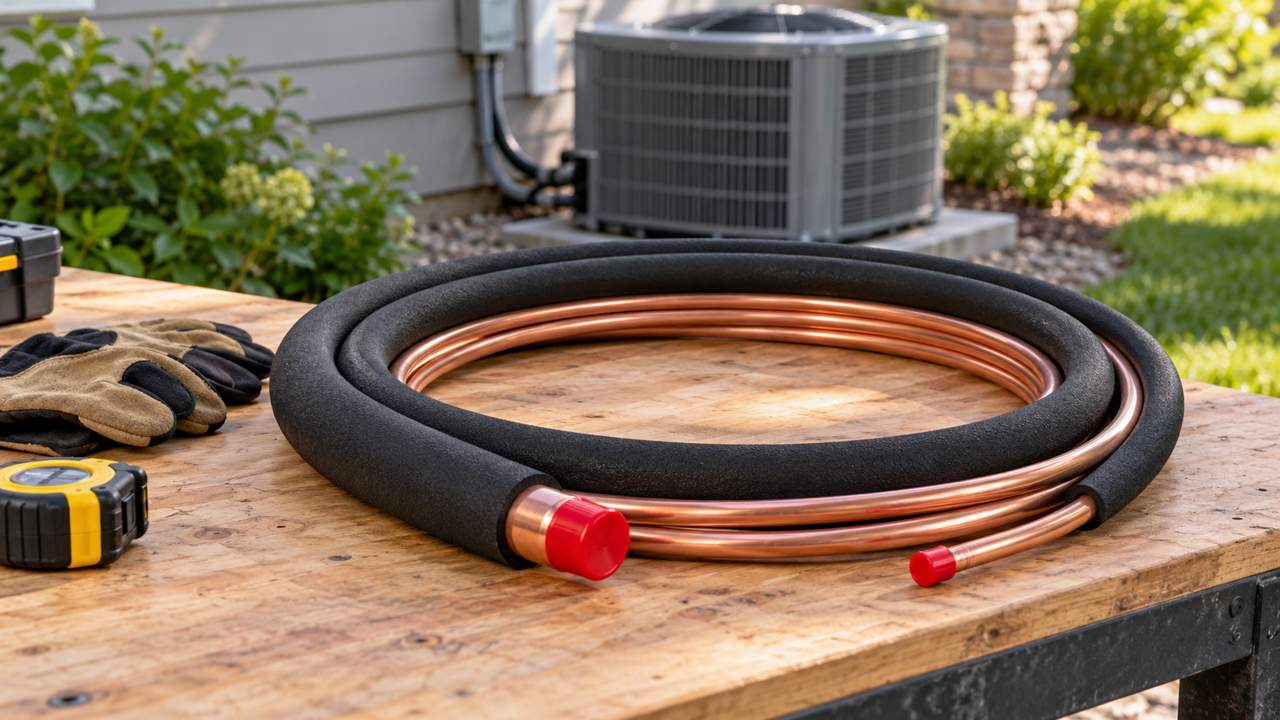
A line set connects the indoor and outdoor sections of a split HVAC system and carries refrigerant between them. It normally includes two copper tubes, with the required insulation and connections determined by the equipment and application.
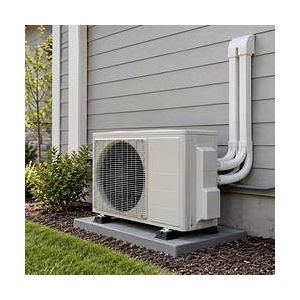
Line sets are different from air ducts, electrical cables, and condensate drains. The existing tubing may run along an exterior wall, through an attic or crawl space, or inside finished construction. That route affects both inspection and replacement access.
When Should the Existing Line Set Be Replaced?
Replacement is appropriate when the new equipment instructions require new piping or when the existing installation cannot meet the permitted piping specification. Have the installer explain the exact reason rather than relying on a blanket rule about all old lines.
- Wrong tube sizes: The required liquid and vapor line diameters must be verified for the new equipment and application.
- Unsuitable route or length: Actual routing, vertical separation, and fittings can place an installation outside the manufacturer's limits or require a different approved design.
- Damage or recurring leaks: Corrosion, crushed tubing, kinks, abrasion, or inaccessible problem joints can make reuse a poor choice.
- Contamination: A compressor failure, debris, moisture exposure, or uncertain service history needs a professional assessment. New equipment should not inherit an unresolved contamination problem.
- Unverifiable compatibility: Reuse should not proceed merely because the piping is difficult to replace.
Insulation also needs inspection. Damaged insulation is not by itself proof that the copper must be replaced, but it should not be ignored. The installer should distinguish a repairable insulation issue from a tubing problem.
When Might Reusing a Line Set Be Acceptable?
Reuse may be an option only where the exact equipment documentation permits it and the installer can verify the existing piping meets the applicable requirements. That review includes tube material and sizes, installation configuration, physical condition, cleanliness, and the ability to complete required testing and commissioning.
A system that cooled adequately in the past does not establish suitability for different equipment. Likewise, a leak test alone does not prove correct sizing or acceptable internal condition.
Ask for the reuse decision and any required preparation to be included in the installation scope. There is no universal flushing procedure that makes every old line set compatible. Cleaning methods, if permitted, must follow the specific manufacturer's instructions and should not be improvised.
Does a Refrigerant Change Require New Lines?
The answer depends on the exact new system and its instructions. A refrigerant name alone is not enough to decide. Piping requirements, lubricant compatibility, allowable preparation, connection methods, and applicable installation requirements must be evaluated together.
Do not assume an existing line set can be reused simply because both systems use copper. Do not assume that a generic flush is always required or always sufficient. Some equipment instructions prohibit reuse; others provide conditions that must be satisfied.
Changing to equipment using a different refrigerant is not permission to mix refrigerants or retain an incompatible indoor coil. Treat the indoor unit, outdoor unit, piping, controls, and required safety provisions as a complete installation.
For purchase planning, see R-454B vs R-32: what new HVAC buyers need to know. Refrigerant handling and installation should be performed by appropriately qualified professionals; this guide does not provide DIY refrigerant-service instructions.
How Access and Routing Change the Project
A short accessible exterior run is a different project from tubing concealed behind finished walls. An installer may propose a new approved route instead of opening the entire old path. Discuss appearance, protection, insulation, service access, and wall penetrations before work begins.
Ask whether the quote includes removal or abandonment of old piping, new tubing, necessary supports and protection, insulation, finish repairs, and commissioning. Do not compare a copper-only price with a complete installed scope.
If reuse is proposed because replacement is difficult, ask what evidence supports it. Access cost is a legitimate planning concern, but it does not override the replacement equipment's requirements.
Questions to Ask Before You Buy
- Does the exact new equipment allow reuse of existing refrigerant piping?
- What tube sizes, route, length, and vertical separation have been verified?
- Are there signs of leakage, damage, contamination, or previous compressor failure?
- What preparation and testing does the manufacturer require if reuse is permitted?
- Does the insulation need repair or replacement?
- If new piping is needed, what route and finish work are included?
- Will the complete matched system be commissioned and documented?
Browse HVAC line sets after the installer confirms the required specification. A listed size or length is not a recommendation for every AC, heat pump, or mini split.
Frequently Asked Questions
Do I always need a new line set with a new air conditioner?
Not always, but reuse must be permitted by the exact equipment instructions and supported by an assessment of the existing piping. Do not make the decision from equipment tonnage alone.
Can a line set be too large or too small?
Yes. Use the manufacturer's piping requirements for the actual application rather than assuming that larger tubing is better or copying the previous system.
Can the old copper stay if it does not leak?
Being leak-free is only one consideration. Size, route, condition, contamination, and manufacturer approval still need verification.
Is a mini-split line set interchangeable with a central AC line set?
Not automatically. Tube diameters, insulation, connections, length requirements, and model-specific instructions can differ. Precharged or quick-connect line sets also require exact compatibility.
Have the installer document why the line set can be reused or must be replaced before purchasing the new system, so the piping decision supports the equipment rather than limits it.