We use cookies to make your experience better. To comply with the new e-Privacy directive, we need to ask for your consent to set the cookies. Learn more.

1-800-397-1392
Closed Until Monday
Industrial Dehumidifiers are perfect for large areas, anywhere with large range of temperatures, or places with extreme humidity. They are designed to be corrosive resistant, handle continuous run, and wide temperature ranges. Great for light industrial areas, indoor pools, or homes in high demand areas.
Our line-up of Perfect Aire commercial dehumidifiers range in capacity from 150 pints per day to 250 pints per day, and they are easy to move, easy to use and highly efficient. The difference that these state-of-the-art dehumidifiers make in a large room is nothing short of amazing.
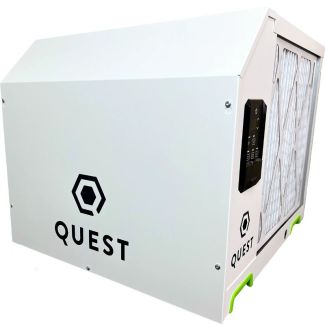
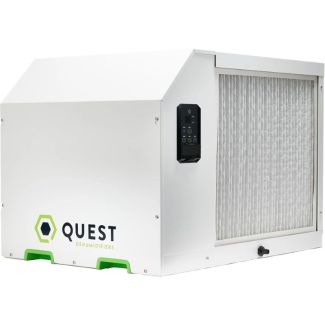
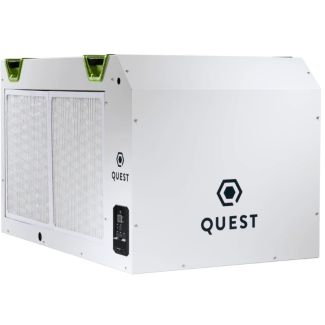


Commercial and industrial dehumidifiers are heavy-duty systems engineered to handle large-scale moisture challenges in warehouses, manufacturing facilities, storage areas, laboratories, and other industrial settings. These systems are designed to be corrosion resistant, handle continuous operation, and manage wide temperature ranges.
Built with high-capacity moisture removal and robust airflow, commercial and industrial dehumidifiers effectively control humidity in even the most challenging conditions by reducing moisture levels. The systems pull in humid air and pull it across refrigerated coils where the moisture condenses and is either drained or pumped out of the space, while the dried air is returned to the environment.
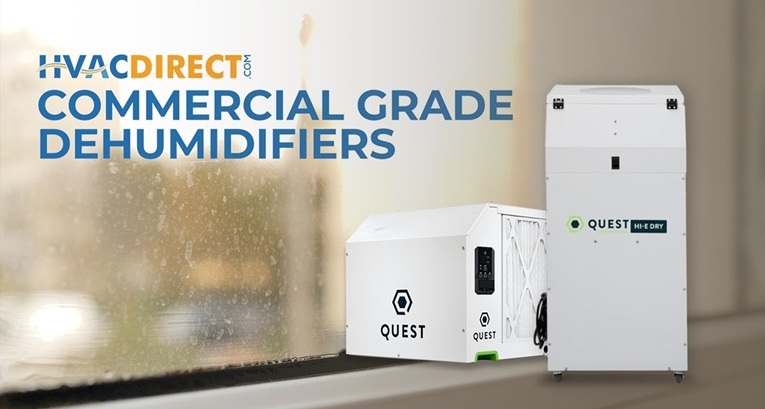
Commercial and industrial dehumidifiers are used across diverse commercial settings to remove moisture at rates that vary by model, from smaller commercial capacities to 700+ pints per day, or PPD, for larger applications while maintaining target relative humidity levels. These heavy duty systems protect building materials, raw inventory, and commercial assets from moisture damage and mold growth.
Flood Restoration: Commercial dehumidifiers extract 150 to 500 pints of water per day from saturated materials after major water damage events. This rapid drying process helps lower humidity during restoration, but drying time depends on the water damage, materials, airflow, and equipment capacity.
Inventory Protection: These units pull excess moisture out of large warehouse spaces to protect paper products, electronics, and cardboard packaging. Keeping relative humidity below 50% prevents cardboard boxes from collapsing and stops metal goods from rusting during storage.
Construction Drying: A heavy duty dehumidifier speeds up the curing time for newly poured concrete, fresh plaster, and drywall joint compound. Removing gallons of ambient moisture allows trade workers to apply paint and install flooring days faster than natural airflow alone allows. This can help crews complete jobs faster.
Condensation Control: High capacity systems lower the dew point in indoor swimming pool rooms and refrigerated storage facilities to eliminate surface sweating. Eliminating damp moisture on cold walls, windows, and pipes helps reduce condensation that can damage surfaces and create slippery floors.
Process Drying: Industrial facilities use targeted dehumidification to ensure consistent ambient conditions for pharmaceutical manufacturing and food processing lines. Maintaining strict moisture thresholds of 30% to 40% preserves product freshness and prevents powdered raw materials from clumping together during production.
Humidity Stabilization: Commercial spaces like commercial greenhouses rely on continuous moisture control to balance heavy transpiration produced by plants. Maintaining steady indoor relative humidity between 40% and 50% protects building structural integrity and ensures consistent indoor air quality.
Selecting the proper commercial unit capacity depends on total cubic volume, daily moisture generation, and specific target relative humidity goals. An oversized unit may cost more than needed, while an undersized unit may run continuously without meeting the humidity target.
Commercial and industrial dehumidifiers are ideal for enclosed commercial spaces with high moisture loads, such as warehouses, pools, storage areas, and production facilities that require continuous moisture control. These heavy duty systems process high airflow volumes from 250 to over 2,000 cubic feet per minute to remove moisture accumulation in demanding commercial environments. Controlling moisture in these specific spaces prevents costly material rot, metal corrosion, and structural decay.
Warehouses: Large open warehouse spaces require commercial dehumidifiers to prevent moisture from damaging stored inventory, cardboard packaging, and wooden pallets. Powerful overhead or ducted units remove moisture at rates that vary by model, but up to 700+ PPD to keep large inventory storage areas below 50% relative humidity.
Manufacturing Facilities: Production plants rely on industrial dehumidifiers to stabilize air moisture around sensitive assembly lines and automated machinery. Continuous humidity control stops raw metal components from rusting and prevents raw product powders from clumping during processing.
Indoor Pools: Indoor pool enclosures generate extreme evaporation rates that can quickly corrode structural metal trusses and stain wall surfaces. High capacity units with corrosion resistant coils extract massive amounts of daily water vapor to help stop condensation and dripping.
Commercial Basements: Below grade commercial spaces naturally trap damp soil moisture that migrates through concrete foundation walls and floor slabs. High output basement dehumidifiers help prevent mold growth and eliminate musty odors across subterranean commercial square footage.
Storage Facilities: Self storage buildings and records archives require continuous dehumidification to preserve delicate paper documents, furniture, and personal property. Maintaining a consistent humidity level protects climate controlled storage units from fungal growth and moisture degradation.
Data Centers: Server rooms and data facilities utilize precision industrial dehumidification to safeguard high voltage server racks and networking equipment from moisture condensation. Removing excess moisture can reduce condensation and corrosion on cold surfaces.
Choose a dehumidifier by matching the space’s moisture load, room volume, target humidity, and required PPD capacity. Inadequate moisture removal capacity leads to constant equipment operation without achieving target humidity levels, while proper duct integration maximizes overall air distribution efficiency.
Selecting the right commercial and industrial dehumidifier depends on room size, operating temperature, and specific moisture extraction needs. Businesses choose from portable units, ducted setups, and specialized desiccant or low-grain refrigerant systems to maintain proper humidity control.
Portable Dehumidifiers: Portable dehumidifiers offer flexible spot treatment with heavy duty casters and handles for easy transport across job sites. These units extract 130 to 330 pints of moisture per day and feature built-in pumps for automatic water discharge.
Ducted Dehumidifiers: Ducted dehumidifiers connect directly into existing HVAC ductwork to distribute dry air evenly across large commercial spaces. They work well in concealed ceiling spaces or mechanical rooms to treat multiple areas without taking up floor space.
Refrigerant Dehumidifiers: Standard refrigerant dehumidifiers pull damp air over cold evaporator coils to condense moisture into liquid water. These cost-effective units operate best in warm environments with temperatures above 65 ºF and high relative humidity levels, though some Santa Fe equipment operates as low as 49°F.
Desiccant Dehumidifiers: Desiccant dehumidifiers use a moisture-absorbing desiccant wheel rather than cooling coils to extract water vapor from the air. This design allows them to operate effectively in unheated spaces below 32 ºF and achieve extremely low target humidity levels below 30%.
Low-Grain Refrigerant: Low-grain refrigerant units use advanced heat exchange technology to cool air before it hits the evaporator coil. This process supports deeper drying in lower-humidity restoration environments, depending on the model and job conditions.
Whole-Building Systems: Whole-building systems integrate into central HVAC layouts to process high air volume continuously across entire commercial facilities. These systems can provide high daily moisture removal, with capacity chosen by the facility’s total moisture load. They prevent mold growth and protect structural assets.
Choosing the wrong system type leads to higher energy bills, frozen coils, or inadequate moisture removal. Matching equipment configurations to operating temperatures and daily pint capacities ensures efficient long-term humidity management.
Key features when buying commercial and industrial dehumidifiers include pint capacity ratings that range from light-commercial models to 700+ PPD units for larger, high-moisture applications. Evaluating these core specifications ensures your facility receives proper moisture extraction while minimizing long term operational costs.
Pints Per Day/PPD Moisture Removal Capacity: Daily pint ratings measure how many pints of water a unit can remove over 24 hours under stated test conditions in demanding commercial environments. Selecting an appropriate system guarantees adequate capacity for your specific room square footage and moisture load.
Automatic Humidity Control Settings: Built-in digital humidistats automatically monitor room air and cycle the compressor on or off to maintain relative humidity between 40% and 50%. This automatic operation prevents continuous energy waste while protecting building materials from dampness.
Corrosion-Resistant Housings: Heavy duty steel or rotomolded polyethylene cabinets protect internal components from harsh chemical exposures and physical impacts on job sites. Specialized coil coatings also prevent corrosion when units operate in chlorine-rich indoor pool environments or damp crawl spaces.
Easy-Access Filters: Many units use washable or replaceable air filters, but filter type and MERV rating vary by model. Slide-out filter slots allow maintenance staff to inspect and clean filters quickly to maintain high airflow volume.
Remote Monitoring Capability: Digital control terminals and mobile applications allow facility operators to track operating hours, ambient humidity levels, and system diagnostics offsite. Integrated alert systems notify staff immediately if humidity levels rise above target thresholds.
Energy Efficiency Ratings: Some high-efficiency models, such as the Quest 225, list efficiency ratings up to 8.9 pints per kilowatt hour (kWh) of electricity consumed. Selecting energy efficient equipment lowers monthly utility expenses while delivering maximum daily moisture extraction.
Prioritizing durable cabinet materials and high energy efficiency ratings prevents premature component failure in harsh commercial environments. While units with advanced remote controls cost more initially, their automated operation prevents costly water damage and lowers long term labor costs.
When selecting a commercial or industrial dehumidifier, evaluating total room volume, air movement specs, power ratings, and installation constraints prevents purchasing an underpowered or incompatible unit. Facility managers must assess daily moisture generation alongside these additional physical and operational parameters to select the correct hardware setup.
Extraction Capacity: Daily extraction capacity measures how many total pints or gallons of moisture a unit extracts under standardized 80 ºF and 60 % relative humidity testing conditions. Facilities generating heavy moisture loads require large-capacity equipment rated between 150 and 500 PPD to maintain dry air levels.
Airflow Requirements: High airflow volume measured in cubic feet per minute, or CFM, determines how rapidly a dehumidifier moves moist air across its internal coils. Selecting a unit that delivers 250 to over 2,000 CFM ensures consistent air turnover across large open commercial floor spaces.
Operating Temperature: Operating temperature ranges define the extreme heat or cold limits where internal refrigeration components can safely extract moisture without freezing. Standard refrigerant models require ambient temperatures above 40 ºF, while hot gas bypass systems operate in harsh environments down to 33 ºF.
Available Power Supply: Electrical power supply requirements vary from standard 110-volt (V) or 120V-15 amp (A) circuits up to dedicated 208V, 230V, 240V, or 277V high-voltage lines. Verifying panel breaker capacity and outlet voltage prevents electrical overloads during continuous 24/7 commercial operation.
Drainage Access: Continuous moisture removal requires direct access to gravity drain lines or built-in condensate ejector pumps. Check the pump’s maximum lift height and hose length before planning a drainage route. If necessary, extra condensate pumps are available to purchase to uphold drainage over time.
Maintenance Requirements: Routine maintenance tasks include regularly cleaning or replacing MERV air filters to keep dust from blocking intake airflow. Facility staff must also inspect drain hoses and access water pumps periodically to ensure continuous water discharge.
Matching these technical requirements to your facility layout avoids operational downtime, frozen evaporator coils, and early equipment failure. Confirm power, drainage, airflow, placement, and service access before ordering the unit.
Quest, Santa Fe, Innovative Dehumidifier Systems, and Clean Comfort offer dehumidifiers for commercial, industrial, and whole-building moisture control. These manufacturers supply specialized units built for agriculture, warehouses, commercial basements, and ducted HVAC integration.
Quest Dehumidifiers: Quest builds high-capacity commercial units engineered for indoor grow rooms, manufacturing plants, and large warehouses. This company offers high-capacity models for grow rooms, warehouses, and other high-moisture commercial spaces with industry-leading energy efficiency ratings and overhead mounting options.
Santa Fe Dehumidifiers: Santa Fe produces heavy-duty commercial and crawl space dehumidifiers with steel cabinets and MERV 13 air filtration. This company’s products’ capacities, coverage areas, and operating temperatures vary by model. For example, HVACDirect lists the Ultra205 at 205 PPD for spaces up to 5,000 square feet. Santa Fe dehumidifiers are also used in residential spaces and are commonly used to treat smaller spaces (compared to Quest).
Innovative Dehumidifier Systems: Innovative Dehumidifier Systems designs compact in-wall and crawl space dehumidifiers for space-conscious commercial layouts. Their specialized models provide quiet moisture removal to protect building foundations and lower mold risks.
Clean Comfort Dehumidifiers: Clean Comfort manufactures ducted whole-building dehumidifiers that integrate directly into existing central HVAC ductwork. Models like the DV098 provide ducted dehumidification. Confirm ventilation-air capability separately for the exact installation.
Selecting the right brand depends on your layout requirements, operating ambient temperatures, and daily moisture removal goals. High-capacity overhead units suit massive agricultural facilities, while in-wall or ducted models fit compact commercial spaces and central HVAC systems.
Total costs can reach $1,700 to $12,000 when factoring in professional HVAC installation, electrical work, and duct integration. Commercial dehumidifiers typically cost between $1,200 and $8,800 for the equipment alone, depending on daily moisture removal capacity and advanced features.
Prices shown here and below are planning estimates, not guaranteed costs. Equipment prices reflect current HVACDirect.com listings, where buying direct may save up to 70% on HVAC equipment versus local company pricing. Installation, labor, energy, maintenance, and service costs vary by system size, efficiency, installation complexity, local contractor and utility rates, climate, and location. For an accurate project estimate, consult a qualified local HVAC professional or an HVACDirect.com specialist to point you in the right direction.
Price by Capacity: Lighter dehumidifiers start from $1,200, while high-capacity systems can rise up to nearly $9,000.
Installation Costs: Portable roll-in units cost $0 for DIY installation, whereas dedicated ducted systems or overhead commercial installations cost between $50 and $3,000 for professional installation, depending on the system type.
Energy Consumption Costs: Continuous operation adds approximately $100 to $250 per month to utility bills, depending on unit wattage and local electrical kilowatt-hour rates. Monthly operating cost depends on unit wattage, runtime, local electricity rates, and the moisture load.
Maintenance Expenses: Annual maintenance budgets range from $150 to $350 to clean internal coils, inspect drain pumps, and clear condensate discharge lines.
Filter Replacements: Replacement MERV air filters cost between $15+ and $40+ each and need replacement every 3 to 6 months to maintain high airflow.
Investing in a high-efficiency model reduces daily air conditioner workload and lowers monthly utility bills. A properly sized unit can help reduce moisture-related risks, but the financial return depends on the building, moisture source, and maintenance plan.
Buying commercial and industrial dehumidifiers from HVACDirect.com gives businesses direct access to wholesale equipment pricing and saves customers up to 10% or more compared to traditional contractor markups. Purchasing directly online eliminates high retail price increases while providing dedicated technical guidance and full factory warranty protection.
Expert Sizing And Product Guidance: In-house HVAC technicians help calculate exact daily moisture loads in PPD based on square footage, ceiling height, and occupancy levels. These trained specialists guide facility managers to the exact unit capacity needed to prevent equipment undersizing and energy waste.
Wide Selection Of Trusted Brands: The catalog features top industry brands like Quest and Santa Fe that supply moisture removal capacities from 70 to over 700 PPD. Facility managers can easily compare overhead, ducted, and portable configurations across major manufacturers in one place.
Fast Nationwide Shipping: Strategically placed warehouses across the United States ensure fast delivery times directly to commercial job sites. Free shipping applies to most equipment orders, with optional freight lift gate services available for heavy commercial units.
Competitive Pricing: A 110% lowest price guarantee ensures customers receive the best price online by beating qualifying competitor offers by 10% of the difference. Selling direct-to-consumer skips middleman fees so buyers stay on budget.
Responsive Customer Support: Experienced support agents and technical staff provide assistance over the phone or online before and after every order. Representative teams answer installation questions, build custom shopping carts, and assist with equipment setup.
Manufacturer-Backed Warranties: Commercial dehumidifiers include factory coverage protecting compressors and refrigeration components for up to 5 years or more. Optional extended warranty plans cover electrical defects and mechanical repairs to secure long-term system reliability.
Ordering commercial moisture control equipment directly online prevents thousands of dollars in unnecessary contractor markups. Partnering with a specialized supplier helps clarify accurate sizing calculations, verified warranty coverage, and reliable long-term equipment performance for any facility.
Lorem ipsum dolor sit amet, consectetur adipiscing elit. Integer vitae justo sed lorem tincidunt facilisis. Sed elementum, neque non malesuada tempor, risus erat fermentum nulla, vitae por:
Lorem ipsum dolor sit amet, consectetur adipiscing elit. Integer vitae justo sed lorem tincidunt facilisis. Sed elementum, neque non malesuada tempor, risus erat fermentum nulla, vitae por.
Lorem ipsum dolor sit amet, consectetur adipiscing elit. Integer vitae justo sed lorem tincidunt facilisis. Sed elementum, neque non malesuada tempor, risus erat fermentum nulla, vitae por:
Lorem ipsum dolor sit amet, consectetur adipiscing elit. Integer vitae justo sed lorem tincidunt facilisis. Sed elementum, neque non malesuada tempor, risus erat fermentum nulla, vitae por.

To calculate the correct size for commercial and industrial dehumidifiers, you must calculate the total daily moisture load in pints per day based on room cubic volume, ceiling height, occupancy levels, and internal moisture sources. Standard commercial spaces typically require 1 to 2 PPD for every 1,000 cubic feet of room volume, plus an additional 0.3 to 0.5 pints per hour for each active person in the facility. Matching this combined calculation to a unit with the proper moisture extraction rating prevents continuous equipment operation and protects your building assets from excess humidity. Send us an email or Contact our customer service team and we'll be happy to help you out.
Commercial and industrial dehumidifiers should remove between 100 and 500 pints of water per day depending on room square footage, relative humidity levels, and daily moisture generation. Smaller commercial spaces like laboratories or compact offices typically need units rated for 70 to 150 pints daily, whereas large warehouses, indoor pools, or restoration job sites require heavy duty systems rated for 200 to 500 pints per day. Operating an appropriately sized unit prevents continuous equipment running, lowers monthly energy usage, and helps maintain steady indoor relative humidity below 50%.
Yes, many commercial and industrial dehumidifiers are built to operate continuously 24 hours per day when connected to a dedicated gravity drain line or an automatic condensate pump. These systems feature heavy duty commercial compressors and integrated digital humidistats that automatically adjust cooling cycles to maintain the selected humidity setting. Continuous operation prevents harmful humidity spikes across large commercial facilities without requiring manual water bucket emptying.
Commercial and industrial dehumidifiers are highly energy-efficient when properly sized and maintained. For example, HVACDirect lists the Quest 225 at up to 8.9 PPD per kWh. Modern high efficiency models utilize multi-coil refrigeration technology to extract maximum moisture while using up to 50% less electrical power than standard residential units. Dehumidifiers with higher energy factor ratings allow large commercial facilities to maintain relatively-low humidity while reducing overall building cooling costs.
Whether a commercial or industrial dehumidifier requires professional installation depends entirely on the system type, configuration, and electrical power setup. Portable plug-and-play units with standard 115-volt power cords and gravity drain hoses require zero professional installation, whereas hardwired high-voltage units or ducted whole-building systems require a licensed HVAC technician and electrician. Attempting to DIY install complex ducted setups can void manufacturer warranties, violate local building codes, and cause improper airflow distribution across your facility.
Commercial and industrial dehumidifiers typically last between 10 and 15 years when properly maintained and operated under normal facility conditions. Their durable construction features heavy-gauge steel cabinets, commercial-grade rotary or scroll compressors, and long-term manufacturer warranties usually spanning 5 to 6 years. Routine maintenance like replacing air filters, inspecting drain lines, and ensuring proper equipment sizing prevents excessive component wear and extends operational life.
Yes, commercial and industrial dehumidifiers can operate in cold temperatures, provided you choose a unit equipped with hot gas defrost systems or desiccant technology. Some standard refrigerant units feature automatic defrost controls that melt frost build-up down to 33°F, while industrial desiccant models use desiccant wheels that function effectively in sub-freezing conditions well below 32°F to remove water vapor from the air. Installing specialized low-temperature dehumidifiers prevents evaporator coil icing and ensures continuous moisture extraction in unheated basements, cold storage warehouses, and unconditioned crawl spaces.
Commercial and industrial dehumidifiers typically produce noise levels between 45 and 65 decibels (dB) during active operation. For context, 45 dB is equivalent to a quiet library or modern dishwasher, while 55 to 65 dB is comparable to moderate background conversation or standard commercial HVAC system operation.
Yes, commercial and industrial dehumidifiers can connect directly to existing HVAC systems through dedicated duct collars and supply/return duct integration. Connecting a ducted commercial dehumidifier to your central HVAC network allows drier air to be distributed throughout your entire facility using your building's existing ductwork and ventilation fans.
Commercial and industrial dehumidifiers typically include multi-year manufacturer warranties ranging from 1 to 6 years, structured into layered coverage for general functional parts versus major refrigeration components. Initial full-unit coverage usually lasts 1 to 2 years to protect against factory defects and electrical failures, while core refrigeration components, such as the compressor, evaporator coils, and condenser, receive extended coverage for 5 to 6 years through major brands like Quest and Santa Fe. Optional third-party extended protection plans (such as CPS coverage) can be added to cover technician labor and shipping costs beyond the standard factory terms. To maintain valid warranty coverage, owners must install the system according to local building codes, operate it within specified temperature limits, and complete product registration within 30 to 90 days of purchase.