Your cookie preferences
We use cookies to remember your preferences and understand how shoppers use our site, helping us improve your shopping experience.
Read our privacy policy
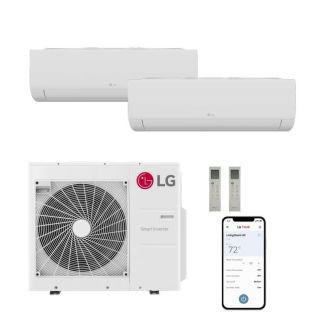

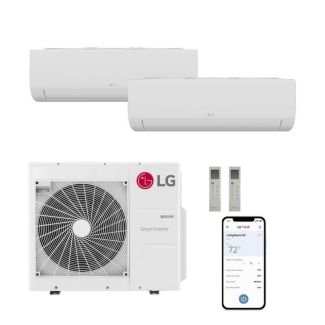
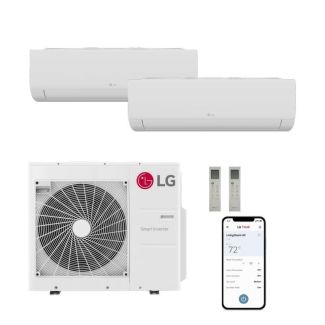
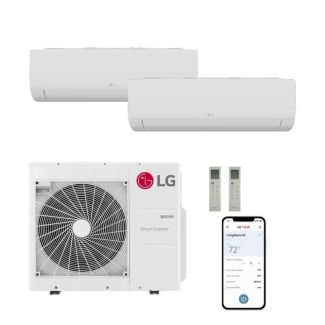

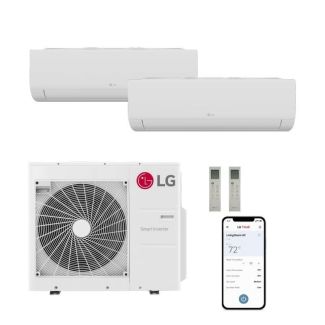
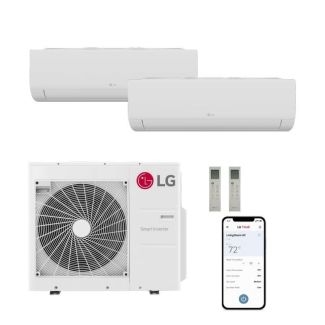
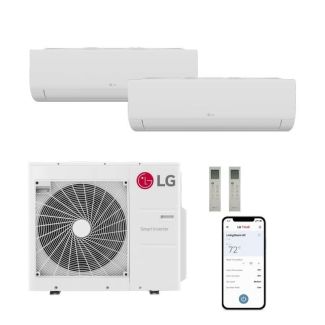


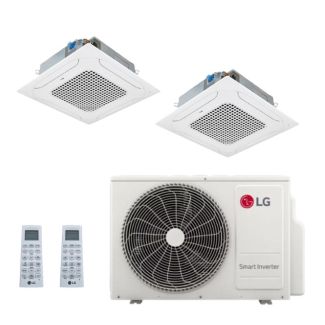
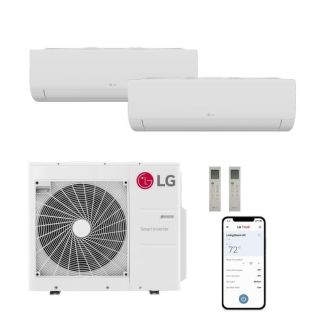
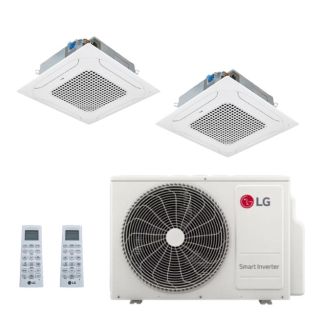
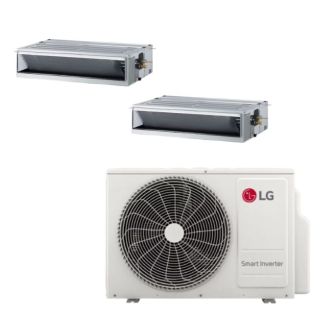
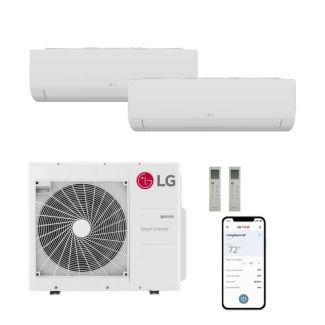


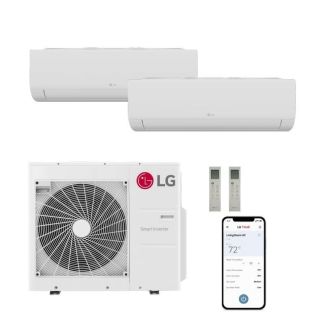
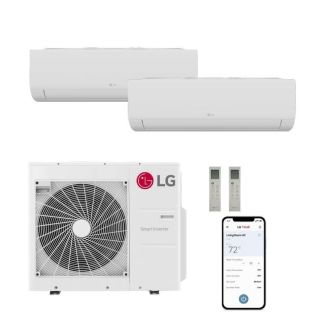
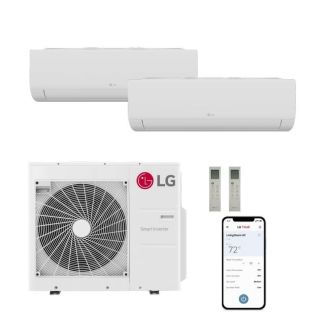
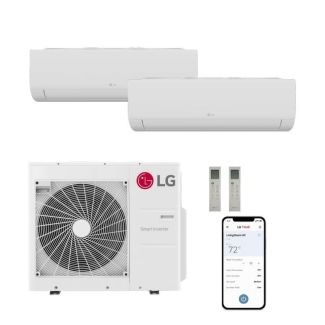

LG dual zone mini split systems are ductless heating and cooling units designed to service two independent rooms or zones, covering a combined area of 600 to 3,000+ square feet.
Manufactured by LG, these systems work by using an outdoor condenser unit to transfer refrigerant through line sets to two indoor air-handling units, which heat or cool the air and distribute it to their respective living areas. Compared to other HVAC brands, LG strikes a unique balance between sleek style, smart functionality, and strong price value.
Large, combined areas and two-room layouts are best for LG dual zone mini split systems, with each air handler unit placed in each separate space. Here are some common examples:
Living and Dining Room Combos: Some open-concept homes have combined living room and dining room areas that are too spacious for a single zone mini split to effectively heat and cool. An LG dual zone mini split system can efficiently pump cold or heated air through two separate air handlers, one for each end of the space.
Two Bedrooms on Upper Level: LG dual zone mini splits work well in two-bedroom setups on the upper level of a multi-story home, which often become uncomfortable during summer months due to heat naturally rising. A dual zone system can keep each upstairs bedroom at a consistent temperature, which can be independently adjusted to each occupant’s liking. An added bonus is that you can control each zone remotely with the LG ThinQ® smart controls app – whether you’re across the room or across the country.
Detached Guest Houses: Small guest houses consisting of two rooms or a large studio setup would be good candidates for an LG dual zone mini split with one air handler per room or zone.
Two-room Home Additions: Because LG dual zone mini splits are ductless, they work well for double-room additions built onto a previously existing house, as they typically aren’t connected to the central air system. Examples include a home office and sunroom or an extra bedroom suite.
Converted Garage: A dual zone system would be a suitable solution for a garage converted into an extra bedroom and workspace area since the space is likely excluded from the central air duct network.
Environmental factors such as excessive heat gain, high humidity, poor insulation, frequent door openings, and uneven temperature loads can cause an LG dual-zone mini split system to work harder and operate less efficiently. For this reason, spaces such as large multi-room home additions, large duplexes, bathrooms, single-room offices, and small studio apartments are not recommended because they have too much or too little conditioned space to justify a dual-zone mini split system for heating and cooling.
LG manufactures dual zone mini split systems with a BTU capacity ranging between 18,000 and 60,000 BTU total (600 to 3,000+ square feet):
18,000 BTU (600 to 1,000 sq. ft.): Two small bedrooms, offices, sunrooms, dens, or any combination of two small or standard-sized rooms can be serviced by an LG mini split of this size.
24,000 BTU (1,000 to 1,500 sq. ft.): A primary bedroom and adjacent nursery, living room and small home office, or two standard bedrooms are examples of configurations for a 24,000 BTU LG mini split.
30,000 BTU (1,250 to 1,750 sq. ft.): An LG system of this size could heat and cool two large open-concept living spaces, dual master suites, or a commercial office space.
36,000 to 42,000 BTU (1,500 to 2,400 sq. ft.): Dual-zone LG mini splits could provide heating and cooling for two-bedroom additions, shared office suites, split-level living areas, master suite and large living room, or any combination of two large living spaces.
48,000 BTU (2,000 to 2,700 sq. ft.): Two large adjacent rooms, open-concept great room and primary bedroom, detached guest houses, mother-in-law suites, or finished basements are examples of configurations for a 48,000 BTU LG mini split.
54,000 to 60,000 BTU (2,500 to 3,000 sq. ft.): Light commercial spaces, large open-concept great room and large master suite, or detached multi-car garages are examples of configurations appropriate for an LG system of this size.
Because these systems are specifically designed for two separate zones, you must ensure that the condenser has a BTU capacity that is able to supply both air handlers. For example, if you need to heat and cool a 900 square foot living room with an 18,000 BTU wall-mounted air handler and a 300 square foot office with a 6,000 BTU wall mounted air handler, you need to pair them with a 24,000 BTU condenser that can supply both with enough power.
Depending on the condenser and air handlers selected, an LG dual zone mini split system can cost between $4,000 to $10,000 to fully install:
Equipment Cost: LG systems typically sell for between $3,000 and $7,000 and include one condenser unit and two indoor air handlers. Line sets may or may not be included depending on the package.
Installation and Labor Cost: These can vary depending on where you live, but in general, it costs between $1,000 to $3,000 to have an LG dual zone mini split professionally installed by a certified HVAC technician.
Operation and Maintenance: Annual tune-ups cost around $100 to $300 per visit. Operating costs can vary widely depending on your climate but typically range from $20 to $120 per month.
Surge protectors, disconnect boxes, and line covers are often required and not included in standard packages. Budget an additional $150 to $250 for these critical accessories.
No, you cannot install an LG mini split yourself. LG does not produce DIY-compatible systems, and handling refrigerant requires a certified HVAC license:
DIY installation: Not permitted for uncertified homeowners. Attempting to self-install could also void your LG manufacturer warranty.
Professional installation: Licensed HVAC professionals can install your mini split system and ensure it’s operating effectively and efficiently. If you choose an LG Pro Contractor, who is trained specifically to install LG systems, your system can be eligible for an exclusive 12-year limited warranty on parts and compressors for residential and light commercial HVAC installations. LG Pro Contractors often offer pre-negotiated, consumer-friendly financing programs as well.
HVAC contractors will usually obtain all the necessary permits needed for installation, and you may need to hire a licensed electrician to manage the electrical requirements for the system.
LG dual zone mini split systems are compatible with five indoor air handler styles: wall mount, ceiling cassette, concealed duct, floor mount, and one-way ceiling cassette:
Wall Mount: Mounted high on the wall, these are the most common type of LG air handler and come with various features and in several sizes. LG offers some stylish choices, such as the ARTCOOL® series, that discreetly blend in with the decor in your home.
Ceiling Cassette: These square-shaped units are recessed into the ceiling and direct airflow in four directions. Because they’re equipped with four-way controlled louvres, LG ceiling cassette models are ideal for even air distribution in large, open spaces. They come in both standard heat pump and LGRED° (can deliver reliable heating in temperatures as low as -13°F) options.
Concealed Duct: These air handlers are discreetly located above ceiling level or behind walls with only a simple grille visible from the living space. Airflow is directed through short duct runs into each individual room or zone. LG offers both high-static and mid-static ducted air handlers to fit a range of ductwork lengths, as well as standard heat pump and LGRED° models.
Floor Mount: Also called low wall consoles, these units look and feel similar to radiators and are a popular choice for rooms with little available wall space. Some value-added features on LG low wall console air handlers include Jet Cool / Jet Heat rapid heating and cooling, compatibility with wired or wireless control accessories, and refrigerant leak detection sensors.
One-way or Slim Ceiling Cassette: Sometimes called slim ceiling cassette, these air handling units are recessed into the ceiling, but unlike standard ceiling cassette units, they can fit between standard ceiling joists and only direct airflow in one direction. A popular choice for high-ceiling installations, LG air handlers of this type come with several useful auto features to maximize efficiency, programmable operation schedules, and on/off timer control.
Most LG air handler models can be controlled remotely through the ThinQ® smart control app through your phone, tablet, or even Alexa or Google Assistant, adding an extra layer of convenience and peace of mind.
LG dual-zone mini split systems typically require a dedicated 208/230V single-phase circuit with the correct breaker, wiring, and a weatherproof disconnect box installed according to the unit’s nameplate specifications and National Electrical Code requirements. Electrical requirements can vary depending on the LG condenser selected, but some general guidelines are:
Voltage: Dual zone mini splits require 208/230 V, single-phase, 60 Hz power on a dedicated circuit. Ensure the voltage rating listed on your unit’s nameplate matches exactly.
Amperage and Breaker Size: Dual zone mini splits need a 20 to 30 amp (A) dual-pole breaker. You can confirm the Maximum Overcurrent Protection (MOCP) and Minimum Circuit Ampacity (MCA) by checking your unit’s nameplate.
Disconnect Box: A dedicated electrical disconnect box must be installed within line of sight of the outdoor condenser unit, per the National Electrical Code. The box should be outdoor-grade, weatherproof, and properly sized to the unit’s specifications.
Wiring Size: Most LG mini splits use 14 AWG to 12 AWG stranded copper wire for the power lines and 16 AWG to 18 AWG for communication lines.
For all power requirements, it’s mandatory to comply with the Maximum Overcurrent Protection (MOCP), Minimum Circuit Ampacity (MCA), as listed on your unit’s data plate. Have a licensed electrician confirm all requirements are met before any electrical work begins.
LG Wiring Requirement
LG requires a 14/5 cable connecting the outdoor unit to the indoor unit. Power wiring must be a minimum of 14 AWG, 3-conductor cable rated for 600V. Communication wiring must be at least 18 AWG, 2-conductor, twisted, stranded, and shielded cable.
Always follow the installation manual for your specific LG model.
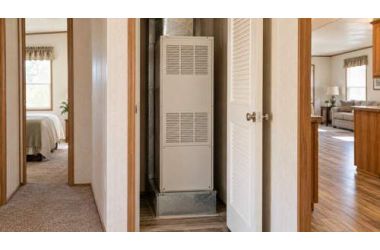
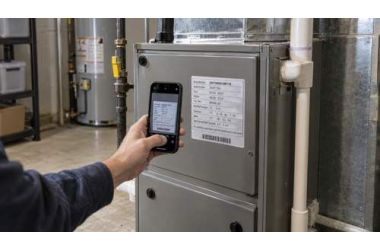
Yes, LG dual zone mini split systems are highly energy efficient, with SEER2 ratings of 20 to 22, significantly higher than the average of 14 for most new central air systems. The improved efficiency is primarily due to the inverter-driven technology that constantly adjusts the speed of the compressor to match the temperature demands. This variable speed feature can result in significant utility cost savings over the life of your HVAC system.
LG HVAC products are made by LG Air Conditioning Technologies, a division of LG Electronics, which is headquartered in Seoul, South Korea. Known for products with modern design, technological convenience, and high quality at affordable prices, LG Air Conditioning Technologies is based in Alpharetta, Georgia, and specializes in both residential and commercial HVAC products.
No, LG does not produce DIY-compatible dual zone mini split air conditioning systems. Because these systems use regulated refrigerants that require certification to handle, professional installation by a licensed HVAC contractor is mandatory.
LG HVAC products come with a 10-year limited manufacturer warranty on the parts and compressor if the equipment is installed by a licensed contractor and the product is registered within 60 days of installation. Extended warranties offering additional coverage beyond 10 years may be available through your HVAC contractor or LG directly. Ask at the time of purchase for current options.
Yes, most LG dual zone mini split systems can heat and cool since they are designed to operate as heat pumps as well. In heating mode, the refrigerant cycle reverses to absorb heat energy from outdoor air and transfer it indoors, even in cold temperatures. LG mini splits with LGREDⓇ heat technology can heat at 100% capacity at 5°F and deliver continuous heating in external temperatures down to -13 °F.
If installed properly and regularly maintained, LG dual zone mini splits typically last between 15 and 20 years. LG systems in particular are known for their durability and longevity, due in part to their patented Gold Fin™ coating, which protects condenser coils from corrosion and rust. To maximize your system's lifespan, clean filters every four to six weeks and schedule a professional inspection annually.
Yes, LG dual zone mini split indoor air handlers operate at just 26 to 35 dB, as quiet as a whisper, thanks to their Dual Inverter™ technology that continuously adjusts compressor fan speed to match temperature demand.
Yes, all LG mini splits include a “dry mode” that allows them to pull excess moisture out of the air without actually cooling the air. Because dry mode runs the compressor at lower capacity than full cooling mode, it consumes less energy and is ideal for mildly warm, humid days when full air conditioning is not needed.
Every four to six weeks, it’s recommended to check the air filter and clean it if needed. You should also inspect the exterior of the air handlers and condenser unit at least once per season, clearing away any dirt, leaves, or debris that has accumulated. Additionally, many LG mini split systems have an auto-cleaning feature on the condenser that significantly reduces odors, mold, and mildew buildup.
LG dual zone mini splits are designed exclusively for two independent zones. For three or more rooms, you would need a multi zone (three zone or greater) mini split system.
