Key Takeaways
- Choose the fuel routine you can maintain. Pellet stoves use manufactured fuel and automatic feeding; wood stoves use split firewood and manual loading.
- Plan for electricity. Most pellet stoves need power for feeding, controls, and fans. Many freestanding wood stoves can produce heat without a blower, but verify the exact model.
- Installation is not interchangeable. Hearth protection, venting, clearances, and outside-air requirements must match the appliance and local requirements.
- Neither is maintenance-free. Both require safe ash handling, cleaning, and professional inspection.
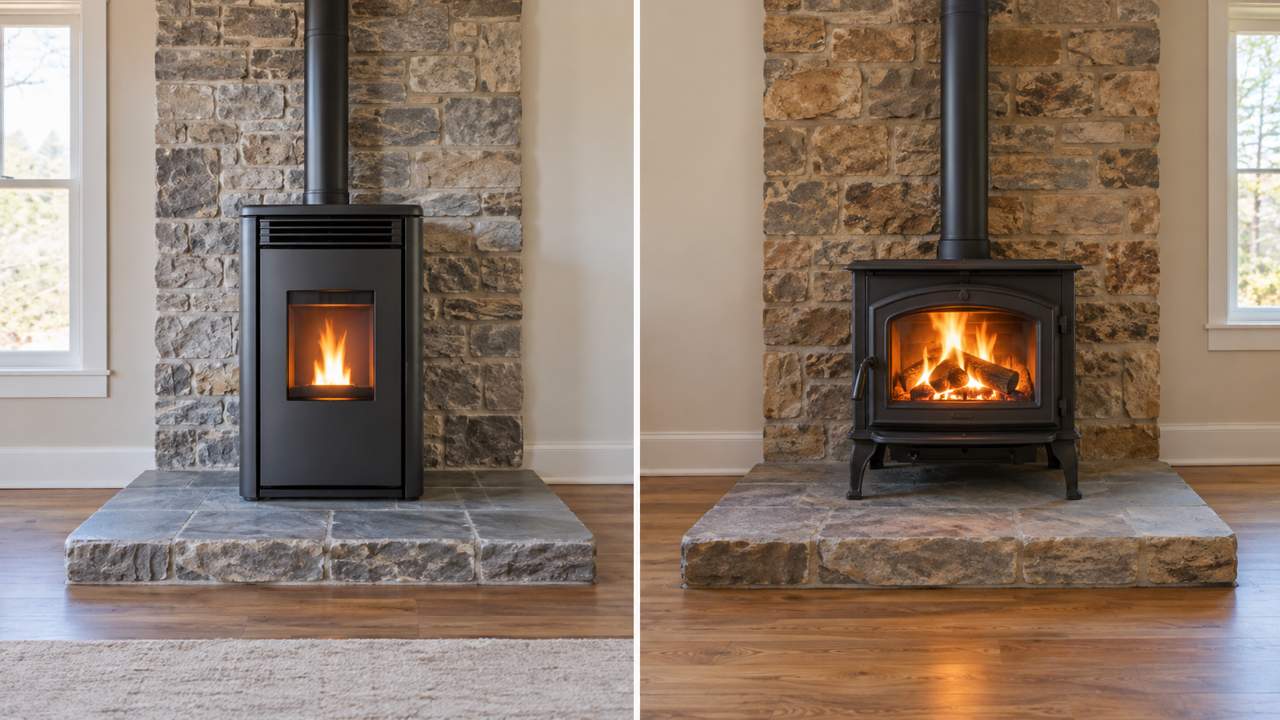
A pellet stove offers controlled fuel feeding and convenient heat adjustment, while a wood stove offers the familiar routine of loading split firewood and tending a fire. The better choice depends on your fuel supply, electricity needs, installation, and willingness to handle routine maintenance—not simply which stove has the largest advertised heating area.
Start with the room or zone you want to heat. Then compare specific models, including their usable heat-output range, approved fuel, installation manual, and service requirements. A stove that fits your home and daily routine is more useful than one selected on maximum BTU output alone.
Pellet Stove vs Wood Stove: Quick Comparison
| Consideration | Pellet stove | Wood stove |
|---|---|---|
| Fuel | Manufacturer-approved pellets stored in a dry area | Dry, seasoned split firewood in the approved size |
| Daily routine | Fill the hopper and maintain the burn system | Load logs, start the fire, and adjust operation as instructed |
| Electricity | Usually required; exceptions and backup options are model-specific | Many models heat without a powered blower; confirm the model |
| Sound | Feed motors and fans can be audible | A non-blower model avoids fan noise; optional blowers add sound |
| Cleaning | Burn pot, ash, passages, and venting need scheduled attention | Ash, firebox, baffles or catalyst where fitted, and chimney need attention |
Fuel Availability and Storage Can Decide the Choice
Pellets: Convenient Packaging, Dry Storage Required
Pellets are manufactured fuel, often purchased in bags. Confirm which fuel the stove permits rather than assuming every pellet or biomass product is compatible. A dry storage location and reliable local supply matter, especially if the stove will run often.
Handling bags still takes effort. Consider the path from delivery to storage and from storage to the hopper. Hopper capacity can affect refill frequency, but actual runtime changes with heat setting, pellet characteristics, and the appliance.
Firewood: More Preparation and Handling
Wood heat can be a practical option when suitable firewood is readily available. Account for buying or processing logs, splitting, seasoning, carrying, and protected storage. Wet fuel makes good operation harder and can increase smoke and chimney deposits.
Use a moisture meter and the appliance instructions to evaluate firewood; appearance alone is unreliable. Burn only approved fuel. Do not use the stove to dispose of treated lumber, trash, or materials prohibited by the manufacturer.
Will a Pellet Stove Work During a Power Outage?
Most pellet stoves require electricity for their feed mechanism, controls, and fans. Losing power can stop normal operation. Non-electric designs exist, but do not assume a particular stove is one of them.
If outage heating is a priority, ask about manufacturer-approved backup arrangements and shutdown behavior before buying. Battery runtime depends on the equipment and operating conditions. Any generator connection must use appropriate equipment and installation; never run a fuel-powered generator indoors or in an attached garage.
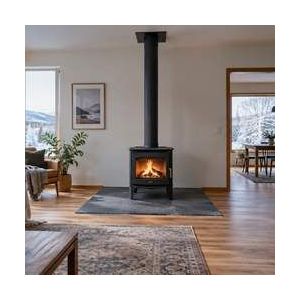
Many wood stoves provide radiant and natural-convection heat without an electric blower. That does not make every installation suitable for unattended outage heating. Verify operating requirements, ventilation, smoke and carbon-monoxide alarms, and the exact model's instructions.
Heat Output, Controls, and Room Comfort
Pellet appliances often offer adjustable feeding and thermostat-based control, depending on the model. A wood stove requires more direct attention to fuel loading and the manufacturer's operating method. Both can overheat the immediate room when oversized or used in a space that cannot distribute the heat effectively.
Do not treat a square-foot coverage claim as a whole-house sizing calculation. Insulation, outdoor temperatures, ceilings, layout, and heat movement between rooms all affect results. Compare minimum as well as maximum output. For a closer look at fit, read how to choose a wood stove size.
Compare efficiency ratings on the same basis and for the exact models. Fuel quality, maintenance, and operating practices also matter. Neither stove type guarantees lower heating bills in every home.
Both Stove Types Need Regular Cleaning
A pellet stove's burn pot and internal passages need attention at the intervals specified in its manual. Ash buildup can affect operation, and moving parts or electronic components can eventually need service. Confirm that local service and replacement parts are available.
A wood stove also needs ash management and inspection of the firebox and any baffles, gaskets, or catalyst fitted to that model. Have the chimney or vent system inspected and cleaned by a qualified professional as required by its condition and applicable instructions. Creosote and other deposits are not something to ignore.
Let equipment cool and follow the manual before cleaning. Put ashes in a suitable metal container with a tight-fitting lid and keep it outdoors away from combustible materials on a noncombustible surface. Ashes can conceal hot embers. Do not vacuum hot ashes or bypass safety controls.
Installation and Total Cost: Look Beyond the Stove Price
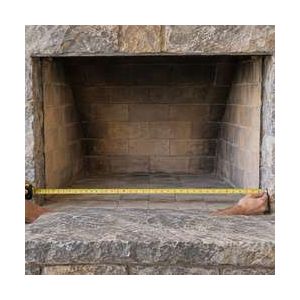
Get an installation assessment before ordering. Existing venting is not automatically reusable, and a pellet vent is not interchangeable with a wood-stove chimney. The required system depends on the appliance listing, manual, building, and local rules.
- Confirm floor protection, wall clearances, and safe access for loading and service.
- Assess the complete vent route, termination, chimney condition, and any outside-air requirements.
- Check permits, local restrictions, insurance requirements, and any electrical work.
- Include delivery, installation, fuel storage, annual service, and replacement parts in the budget.
Operating cost depends on local pellet or firewood prices, the quantity used, actual efficiency, and any electricity consumption. Compare a realistic seasonal fuel budget rather than assuming bagged pellets or locally sourced wood will always be cheaper.
Which Stove Fits Your Household?
Consider a pellet stove if you prefer automatic fuel feeding, have dry pellet storage and reliable supply, and are comfortable with electrical dependence and mechanical maintenance.
Consider a wood stove if you have suitable firewood and storage, accept manual loading and cleanup, and want to evaluate models that can deliver heat without a powered blower.
For either choice, confirm the installation first. If heating several closed-off rooms is the goal, also evaluate whether a central heating system or another properly sized solution would distribute heat more effectively.
Frequently Asked Questions
Can you burn logs in a pellet stove?
Use only the fuel approved for the exact appliance. A pellet stove is not a log-burning wood stove, and substituting fuels can be unsafe.
Is a pellet stove easier to maintain?
Automatic feeding can simplify daily operation, but it does not eliminate cleaning. Compare each model's cleaning schedule and service needs rather than assuming one fuel type is maintenance-free.
Can a pellet stove use my existing wood-stove chimney?
Possibly only as part of an approved installation assessed for the exact appliance. A qualified installer must determine whether the chimney, liner, connections, and termination meet the required specifications.
Which is better for a small room?
The model's output range and your room's heating needs matter more than the fuel label. An oversized stove can make a small room uncomfortable even if the advertised coverage sounds attractive.
Before choosing a pellet or wood stove, gather your room dimensions, fuel-storage plan, installation photos, and outage-heating priorities so the appliance and venting can be matched to your home.