Key Takeaways
- Permanent, Self-Contained Cooling: Through-the-wall units mount directly into an exterior wall and require no outdoor condenser or ductwork, making them a clean, long-term solution for rooms central air cannot reach.
- Multiple Heating Options Available: Through-the-wall units are available in cooling-only, electric heat, and heat pump configurations. Always verify which heating option your specific model includes before purchasing.
- Sizing and Installation Requirements Matter: Matching BTU capacity to your room size and confirming wall sleeve, grille, and electrical requirements upfront prevents costly mistakes and ensures the unit performs the way it should.
Article Contents
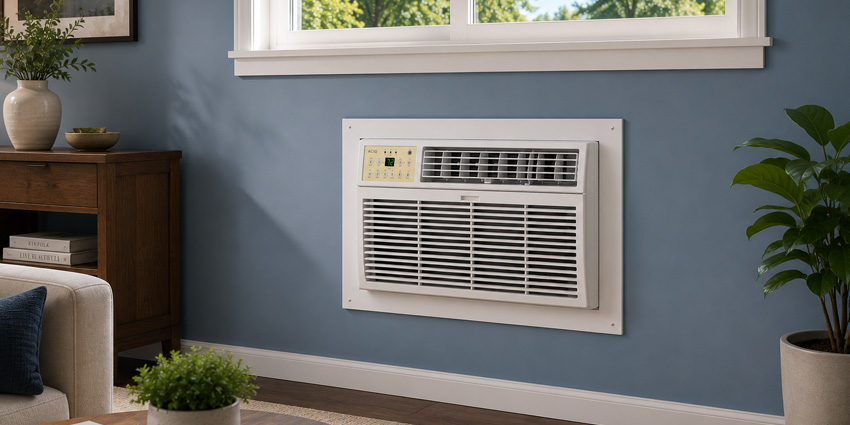
A through-the-wall (TTW) air conditioner mounts permanently inside an exterior wall sleeve. It provides dedicated room-by-room comfort without requiring ductwork or an outdoor condenser. Depending on the model, these systems can provide cooling only, electric heat, or heat pump heating and cooling.
You may also see these products referred to as through-the-wall units or mini PTACs. These terms are often used interchangeably to describe self-contained heating and cooling systems installed directly into an exterior wall.
How Do Through-the-Wall Units Heat?
Through-the-wall units are available in three primary configurations:
- Cooling Only: These models provide air conditioning but do not include any heating capability.
- Electric Heat: These units use built-in electric resistance heat strips to provide supplemental heating during colder weather.
- Heat Pump: These models reverse the refrigeration cycle to provide both heating and cooling. Many heat pump models also include electric backup heat for extremely cold temperatures.>/li>
When outdoor temperatures fall below the operating range of the heat pump, models with supplemental electric heat automatically switch to backup heat to maintain indoor comfort.
How It Works: System Modes
Through-the-wall units can cool, heat, and ventilate a room, though the available features depend entirely on the model you purchase.
- Cooling Mode: The unit pulls warm indoor air across internal cooling coils, filters it, and blows cooled air back into the room while venting heat outdoors.
- Heating Mode: Depending on the model, the unit either activates electric heat strips or operates as a heat pump to provide heating.
- Fan Mode: The compressor and heating elements remain off while the fan continuously circulates and filters the room's air. Not all models include every operating mode.
Always review the manufacturer's specifications to verify the exact heating and cooling capabilities before purchasing.
Key Requirements for Installation
Proper installation requires structural support, safe electrical access, and adequate outdoor clearance.
- Exterior Wall Required: These units must be installed on an exterior, or perimeter, wall. They cannot be installed on an interior wall because they must vent heat outdoors.
- No Obstructions: The wall cavity must be free of plumbing, electrical wiring, and wall studs before cutting the opening.
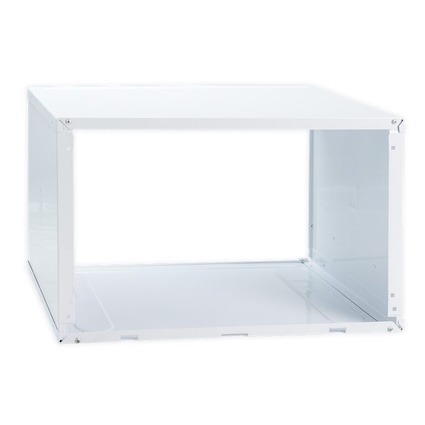
- Wall Sleeve: Every new installation requires a metal wall sleeve to support the unit's weight and protect the surrounding wall. If you are replacing an existing through-the-wall unit, the sleeve can often be reused if it is the correct size and in good condition.
- Exterior Grille: A grille covers the unit's exterior, protecting it from debris, pests, and weather while allowing proper airflow. Existing grilles can often be reused if they fit the new unit and remain in good condition.
- Clearance: The outdoor side of the unit should remain free of shrubs, fences, decks, or other obstructions that could restrict airflow.
Once these installation requirements are met, through-the-wall air conditioners can provide efficient heating and cooling for a wide variety of residential and light commercial spaces.
Common Use Cases
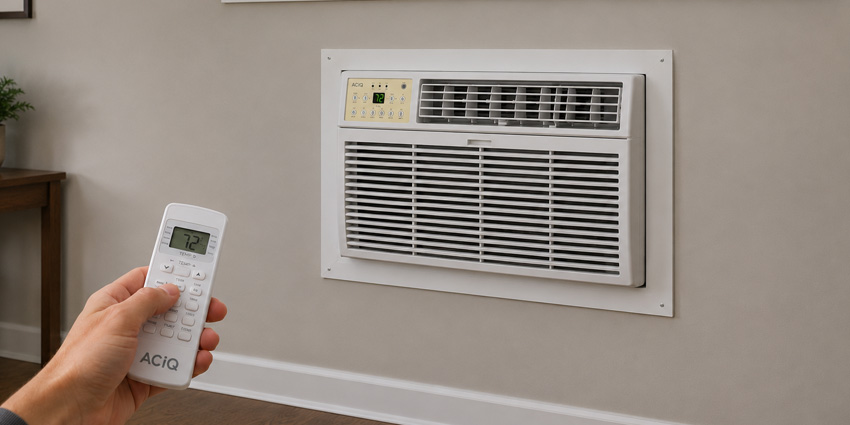
Through-the-wall units work best in rooms that need dedicated heating and cooling without extending ductwork or installing a full mini split system. Here are some of the most common places homeowners install them:
- Garages: Attached and detached workspaces heat up quickly and are rarely connected to central ductwork. A wall unit creates a comfortable year-round space for automotive work, fitness, or carpentry without a major structural overhaul.
- Home Additions: Additions rarely have existing ductwork, and extending your current system is expensive and often undersized for the added load. A wall unit is a cleaner, more cost-effective solution.
- Converted Basements: Basements run cold in winter and damp in summer. Models with both cooling and heating modes help handle both problems without adding separate equipment.
- Guest Bedrooms and Home Offices: There is no reason to condition a room around the clock if it is only used part of the day. Room-by-room control lets you adjust settings the moment the space is in use.
- Small Commercial Spaces: These units also work well in offices, retail shops, breakrooms, and server rooms, provided the installation requirements are met.
These systems are a permanent solution for any space that doesn’t require any outdoor equipment and covers about 600 to 800 square feet.
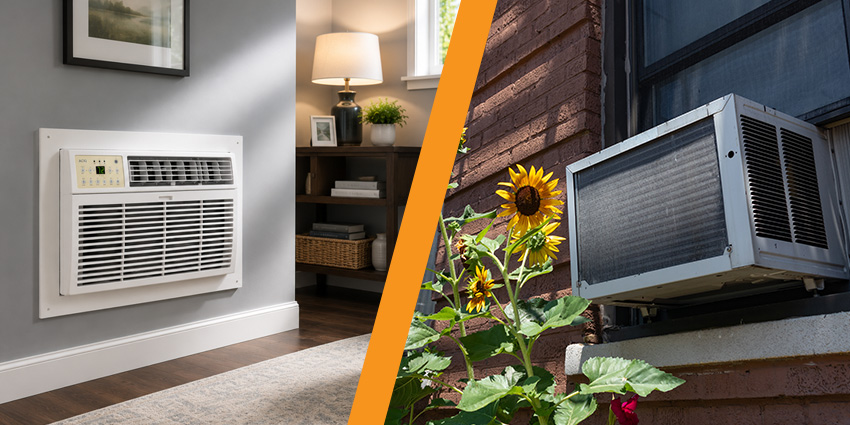
Both systems cool individual rooms, but they differ in installation, venting, and long-term convenience.
- Installation: Window units sit in an open window and can be put in or taken out by one person in under an hour. Through-the-wall units require a hole cut in an exterior wall and a permanently installed wall sleeve. While window units are removable, through-the-wall ones are permanent. Both get power from a standard outlet.
- Venting: Window units vent out the back and sides, while through-the-wall units vent only out the back. This is why a standard window unit should never be installed in a wall sleeve without first checking vent placement. Blocked side vents cause overheating and can void the warranty. Some GE and Amana models feature a slide-out chassis, making them compatible with both installation types.
- Everyday Practicality: Window units block natural light, interrupt airflow when you want to open the window, and must be stored somewhere every fall. A through-the-wall unit keeps all your windows completely free year-round, and the tight fit of the wall sleeve reduces air infiltration, giving it a slight efficiency edge over most window installations.
If you want a permanent solution that leaves your windows untouched and requires no seasonal setup, a through-the-wall unit is the stronger choice. If you rent, move frequently, or just need something temporary, a window unit still gets the job done.
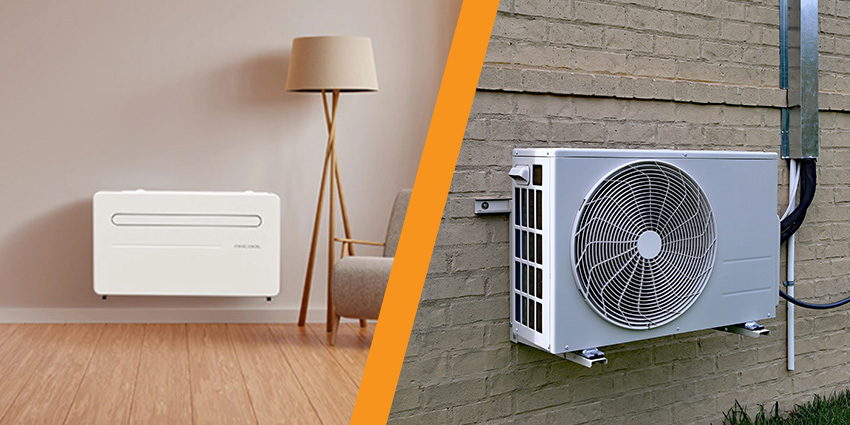
Both systems heat and cool rooms beyond the reach of central HVAC, but they differ in installation, cost, and the number of spaces they can condition.
- Installation: You need an outdoor condenser unit for a mini split, plus refrigerant line sets, and in most cases, a licensed HVAC technician to handle the refrigerant work. A through-the-wall unit is simpler, needing just a single wall opening, a sleeve, and an electrical outlet, and is typically cheaper upfront.
- Zoning and Flexibility: Mini splits are ideal for conditioning multiple rooms from a single outdoor unit, while through-the-wall units are designed to heat and cool one room at a time.
- HOA and Condo Restrictions: Because through-the-wall units have no outdoor equipment, they are a strong option for condos, apartments, and HOA communities where outdoor condenser units are prohibited. Mini splits require an outdoor condenser, which is not always allowed or practical.
If you are conditioning one specific room and want a clean, simple installation without outdoor equipment, a through-the-wall AC is likely the better fit. If you need to cover multiple rooms or want a more powerful long-term system, a mini split is worth the added investment.
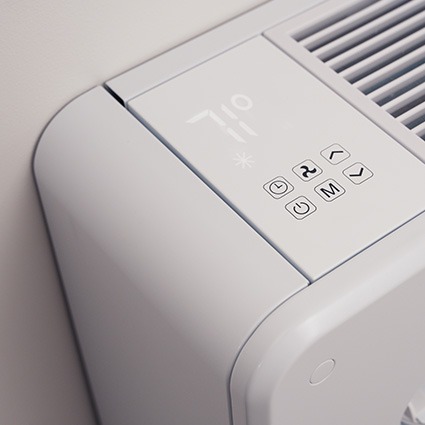
Choosing the right unit starts with cooling capacity. An undersized unit will struggle to keep up, while an oversized one short-cycles and leaves excess humidity behind. Measure your room and use the guidelines below:
- 8,000 BTU (0.7 Ton): Ideal for rooms between 300 and 350 sq. ft.
- 9,000 BTU (0.75 Ton): Ideal for rooms between 350 and 400 sq. ft.
- 10,000 BTU (0.8 Ton): Ideal for rooms between 400 and 450 sq. ft.
- 12,000 BTU (1 Ton): Ideal for rooms between 400 and 600 sq. ft.
- 14,000 BTU (1.2 Ton): Ideal for rooms between 600 and 800 sq. ft.
You also need to account for sun exposure, poor insulation, and tall ceilings when sizing this system, as rooms with these features may need a higher capacity.
Other Features to Look For
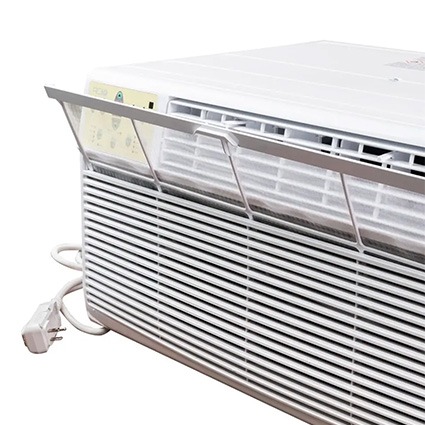
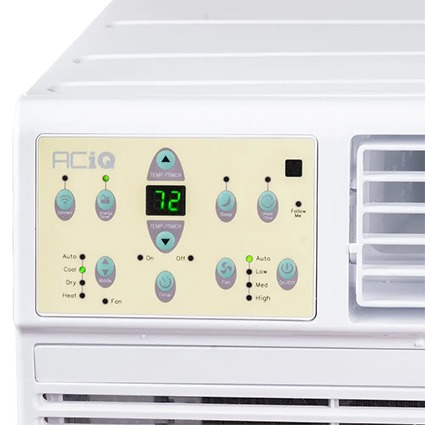
Beyond BTU capacity, compare the features that affect comfort, efficiency, installation, and day-to-day convenience.
- Cooling-Only vs. Heating and Cooling: Cooling-only models are ideal for spaces that only need summer comfort. If you want year-round climate control, choose a model with supplemental electric heat or a heat pump. ACiQ and Amana both offer models with built-in supplemental heat.
- Energy Efficiency: Look for a higher EER rating, Energy Star certification, eco modes, programmable timers, or inverter technology to help reduce electricity costs over time.
- Electrical Requirements: Most residential through-the-wall units operate on standard 115V power, while larger models may require a dedicated 230V circuit. Always verify the voltage requirements before purchasing.
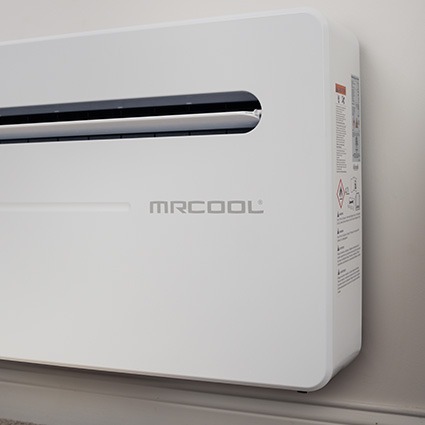
- Remote Control and Wi-Fi: Most modern units include a remote for adjusting settings from anywhere in the room. Some models, such as the MRCOOL Monoblock, also offer Wi Fi connectivity for smartphone control and scheduling.
- Refrigerant: These systems are available with either R410A and R32 refrigerant.
- Programmable Timer and Auto Restart: A programmable timer lets you cool the room before you arrive, and the unit shuts off automatically when it is not needed. Auto restart restores the previous settings after a power outage.
- Washable Filter and Sleep Mode: Washable filters reduce maintenance costs by eliminating frequent filter replacements, while sleep mode lowers fan speed and operating noise overnight.
By choosing the right capacity and features for your space, you can enjoy more efficient operation, lower energy costs, and reliable comfort for years to come.
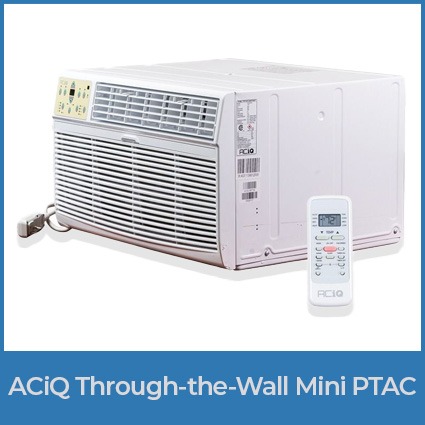
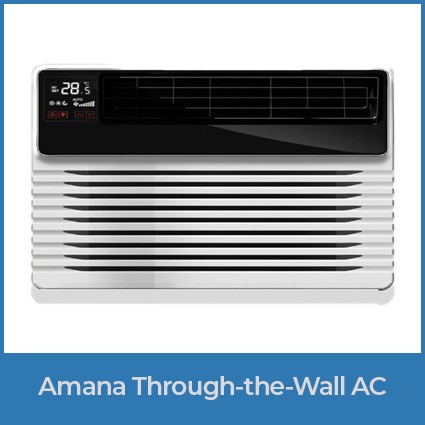
There are several reputable manufacturers offering through-the-wall air conditioners, each with slightly different features and installation options.
- ACiQ: ACiQ's through-the-wall mini PTAC lineup runs from 8,000 to 14,000 BTU, covering bedrooms, home offices, and larger living spaces. Many models include supplemental electric heat, quiet operation, and a standard remote control.
- Amana: Amana is a dependable choice from an established HVAC manufacturer. Compatible wall sleeves, exterior grilles, and replacement parts are widely available.
- GE: GE produces reliable through-the-wall units with select models featuring a slide-out chassis that allows installation in either a window or a wall, depending on the application.
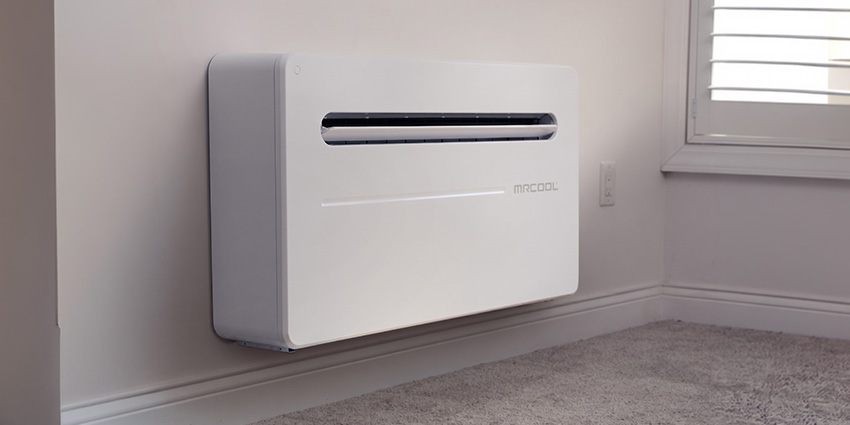
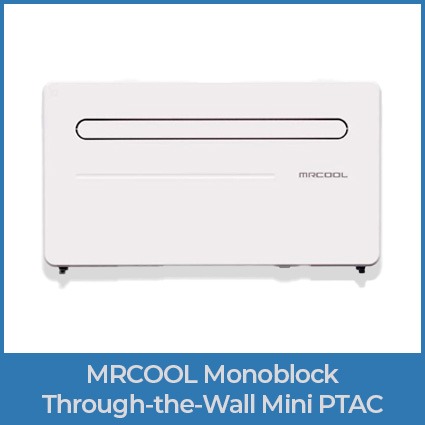
- MRCOOL Monoblock: MRCOOL takes a different approach by using two small circular wall penetrations instead of one large opening, minimizing exterior impact. Includes inverter technology, Wi-Fi connectivity, and runs on standard 115V power.
Each of these brands offers dependable through-the-wall cooling, so the right choice comes down to the size of your space, the features you want, and the type of installation you prefer.
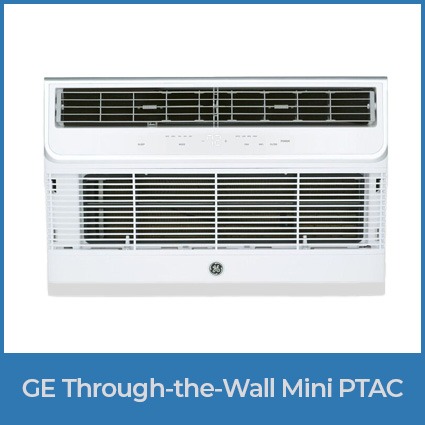
A through-the-wall mini PTAC is one of the most practical upgrades a homeowner can make for a room that central air cannot reach. Browse the ACiQ, Amana, GE, and MRCOOL Monoblock options at HVACDirect.com to find the unit that fits your space. If you need any help, our HVAC-experienced customer service can help!
Through-the-Wall ACs Frequently Asked Questions
No. Through-the-wall and monoblock units house the main heating and cooling components in one indoor unit, so they do not require a separate outdoor condenser.
Many models include supplemental heat, either through electric heat strips or a heat pump, and often include a dedicated heating mode. These units are designed for room-level comfort and can work well in spaces that need extra warmth in winter.
With regular maintenance, most units last about ten to fifteen years. Keeping the filter clean and the wall sleeve and exterior grille in good condition can help extend the life of the system.