We use cookies to make your experience better. To comply with the new e-Privacy directive, we need to ask for your consent to set the cookies. Learn more.

1-800-397-1392
Today's Hours 8am - 11pm est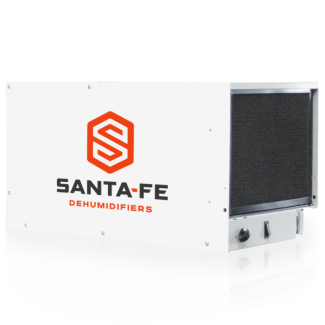
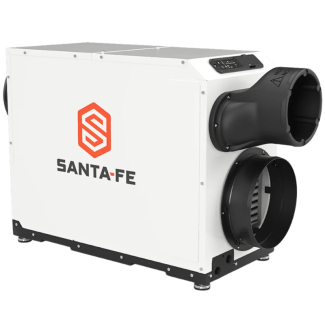
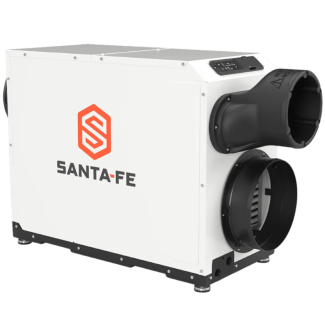
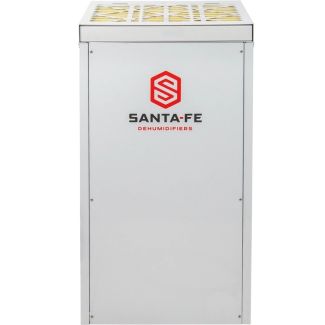

A basement dehumidifier removes excess moisture from the air to keep basements dry, since below-ground spaces trap humidity more than other rooms. The right one can also help protect stored belongings, finished surfaces, structural materials, and other parts of your home from long-term moisture problems.
These systems work by pulling humid air across a cold coil, where the moisture condenses into water and drains into a bucket, hose, or condensate pump. The unit then returns drier air to the basement and cycles on again when its humidistat detects rising humidity.
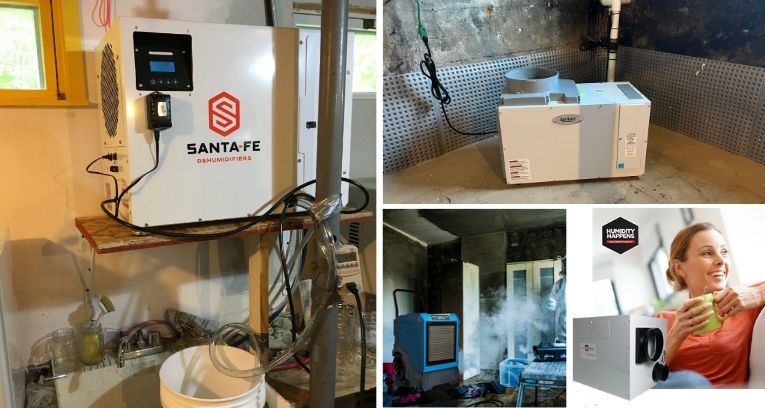
You can use a basement dehumidifier to dry damp areas, control condensation, protect stored items, reduce odors, and support moisture cleanup. These benefits are most effective after leaks, seepage, and other active water sources have been fixed.
A dehumidifier manages moisture in the air, but it cannot repair foundation leaks, broken pipes, or poor exterior drainage. These issues should be addressed before adding a dehumidifier to your basement to ensure the unit does not have to work harder and increase energy costs.
Finished and unfinished basements, basement crawl spaces, basements used as storage and utility rooms, and underground basements are all types of basements that can benefit from a dehumidifier. The best units for each type depends on the space size, layout, and humidity level.
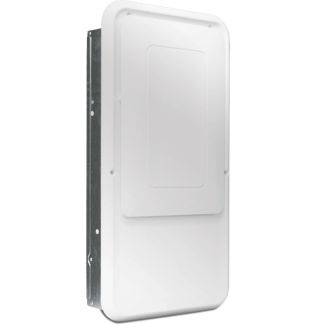
Finished Basements: Dehumidifiers help protect flooring, drywall, furniture, and electronics in finished living spaces. Quiet in-wall or ducted models can fit into finished basement walls, such as the Innovative IW25, and can control humidity without taking up much floor space.
Unfinished Basements: Even without finished walls, a standalone dehumidifier can be used to help control any moisture released from or collected in exposed concrete, foundation walls, and open framing. A great standalone dehumidifier that can handle this basement humidity is the Santa Fe Classic.
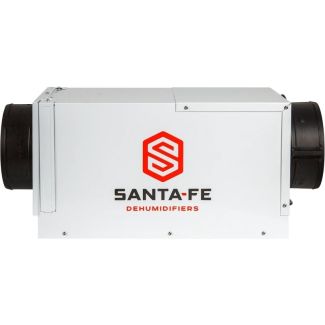
Basement Crawl Spaces: Basements that are crawl spaces with low walls require compact units that fit within low-clearance areas. Models such as the Santa Fe Compact70 can be placed on the floor, suspended, or connected to compatible ductwork in tight spaces.
Storage Rooms: Dehumidifiers keep your seasonal decorations, important documents, and clothing from getting musty or ruined by dampness. Since enclosed spaces lack airflow, you should set up a dedicated unit or use fans to keep the air circulating.
Utility Rooms: Utility rooms often provide access to outlets, plumbing, floor drains, and HVAC ductwork. This can make them a practical location for a whole-basement dehumidifier when proper airflow clearance is available.
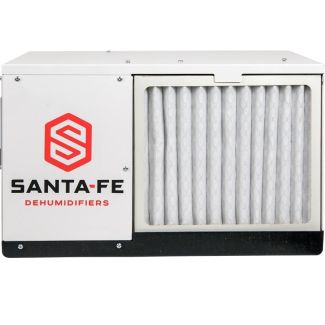
Underground Garages: Below-grade garages act as subterranean moisture traps, collecting water via soil seepage, concrete capillarity, and poor drainage along with wet vehicles and cold, dense walls that lock moisture in. A rugged portable or high-capacity model, such as the Santa Fe Ultra, can help protect tools, equipment, and stored materials.
Open basements may be controlled by one properly sized unit, while divided spaces may need ductwork, additional air circulation, or multiple dehumidifiers.
The type of basement dehumidifier you need for your space depends on the size of the space, moisture severity, drainage access, and whether you want portable or permanent humidity control, with types including portable, whole-basement, crawl-space, pump-equipped, drain-hose, and ducted dehumidifiers. Larger or consistently damp basements generally need more capacity than small spaces with seasonal moisture.
Portable Dehumidifiers: These work well for small or moderately damp basements. A Perfect Aire residential unit just plugs into a regular outlet, and since it's portable, you can wheel it from room to room to treat multiple wet spots in different areas.
Whole-Basement Systems: If you're dealing with a large space or humidity that just won't quit, you'll want something with more muscle: higher capacity and stronger airflow. The Innovative WH Series and the Santa Fe Classic and Oasis105 are good examples of units built for that kind of heavy lifting.
Crawl-Space Units: Basement crawl-space dehumidifiers are built low and slim so they can squeeze into tight, awkward spaces. The Santa Fe Compact70 is a good example. It's compact enough for a crawl space, but it also holds its own in a small basement or under low-hanging ductwork.
Pump-Equipped Models: Not every basement has a floor drain conveniently placed under the unit, so these models come with a built-in pump that pushes the collected water up or across the room to wherever it needs to go.
Drain-Hose Models: Gravity-drain basement dehumidifiers send water through a hose into a floor drain, sump basin, or another approved location. The hose must slope downward from the unit without raised sections or kinks.
Ducted Dehumidifiers: Instead of treating one room at a time, ducted models pull in humid air and push drier air out through grilles or your existing HVAC ductwork. They're a smart choice for basements that are split into separate rooms or areas that don't share airflow well on their own.
Portable units are best for localized or occasional moisture, while whole-basement and ducted systems are better for ongoing humidity control.
The most important basement dehumidifier features are automatic humidity control, dependable drainage, low-temperature protection, accessible controls, and remote monitoring. These features allow the unit to operate with less daily attention.
Built-In Humidstat: This measures the humidity in your basement and kicks the unit on once moisture climbs past whatever level you've set. It's a nice way to get steady, consistent control without making the unit run nonstop.
Automatic Drainage: Instead of collecting water in a bucket you have to empty, continuous drainage sends it out through a hose. This is a real time-saver in basements where the unit is often running unattended.
Condensate Pump: This pushes water up or over to a drain that's higher up or farther away. Some units come with a pump built right in, while others let you add one on as an optional accessory.
Auto Defrost: In cooler conditions, ice can build up on the internal coil. Auto defrost catches this and temporarily adjusts how the unit runs until the frost clears, preventing damage and keeping the unit running without issue.
Digital Controls: These make it simple to dial in your humidity level, tweak the fan settings, and keep an eye on any system alerts. A clear, easy-to-read display also helps homeowners track how basement humidity levels change from season to season.
Smart Connectivity: With Wi-Fi controls, you can check humidity levels and adjust the system from your phone, no matter where you are. That's especially handy for second homes, rental properties, crawl spaces, or basements you don't visit very often.
Automatic features are particularly valuable because basement humidity can rise even when the space is not being actively used.
Additional factors include basement size, moisture severity, drainage access, operating temperature, and electrical requirements. Evaluating these conditions helps prevent choosing a unit that is too small or unsuitable for the installation.
Basement Square Footage: Measure every connected area that will share air with the dehumidifier. Things like high ceilings, extra rooms, and connected crawl spaces can all push up the capacity you actually need.
Moisture Severity: A basement that's just a little damp now and then doesn't need nearly as much muscle as one with wet walls, constant condensation, or a history of water damage. If humidity is regularly sitting above 70% or 75%, you most likely need a high-capacity, professional dehumidifier.
Drain Availability: Figure out where the water is actually going to go before you buy anything. If there's a floor drain nearby, gravity drainage might do the job. If you're stuck draining up into a sink, you'll likely need a condensate pump instead. Most units come sold with an included drain hose.
Operating Temperature: Check the manufacturer’s approved temperature range for unheated basements and crawl spaces. A low-temperature model with auto defrost is better suited to spaces that become cold in winter. For example, most Santa Fe ones operate at temperatures as low as 49°F and as high as 95°F, except for the Oasis105 operating in temperatures as high as 115°F.
Electrical Requirements: Check what voltage, amperage, and plug type the unit needs, and make sure your circuit can actually support it. Bigger restoration-grade units sometimes need a different kind of electrical service than what a typical residential model requires. Basement unit voltage is typically 115V or 120V.
Sizing should account for moisture severity as well as square footage because two basements of the same size may have very different moisture loads.
Santa Fe and Innovative Dehumidifier Systems make the most purpose-built basement dehumidifiers. The best brand depends on whether the homeowner needs permanent humidity control, temporary drying, or flood-recovery equipment.
Santa Fe Dehumidifiers: Santa Fe specializes in professional basement, crawl-space, and whole-home humidity control. The Compact70 pulls 70 pints a day and tucks neatly between floor joists in tight crawl spaces. The Oasis105 steps up to 105 pints with digital controls and horizontal airflow for larger basements, while the Ultra Series ties into existing ductwork for whole-house coverage. The Classic tops out at 110 pints a day and can handle spaces up to 3,500 square feet.
Innovative Dehumidifier Systems: IDS offers in-wall, standalone, and ducted residential dehumidifiers. The IW Series works well in finished rooms, while WH Series models serve larger basements and connected spaces. The IW Series mounts in or on the wall, pulls up to 40 pints a day, and drains straight into existing plumbing, with bi-polar ionization thrown in to help clear the air. The WH Series steps up to 60 to 85+ pints a day in a compact, ducted design built for central HVAC systems.
If a permanent installation isn't what you need, brands like Americool, Namco, and Perfect Aire make solid low- and high-capacity portable options. These are great for quick fixes: drying out a space after a leak, tackling a damp spot temporarily, or handling flood recovery without committing to something built into the wall.
All in, homeowners can expect to spend anywhere from a few hundred dollars for a basic portable unit to over $10,000 for a high-capacity whole-house system once installation and monthly operating costs are factored in. Here’s a breakdown of the costs:
Entry-Level Prices: Portable dehumidifiers typically start at about $1,000, such as the Namco 110 Pint, though it is mainly for commercial use. A portable basement dehumidifier from a retail store usually costs several hundred dollars, but may struggle to handle the humidity levels in basements.
Premium Model Costs: Professional systems from Santa Fe and Innovative Dehumidifier Systems commonly start above $1,200 and can cost several thousand dollars. Higher prices generally reflect stronger airflow, higher capacity, and more durable components. Whole-house dehumidifiers used for basements can cost as high as $5,000 for large capacity ones.
Installation Expenses: Portable units may only need an outlet and drain hose. Ducted, in-wall, suspended, and whole-home systems may add costs for labor, ductwork, drainage, controls, and electrical work that can range from $50 to over $5,000.
Energy Consumption: Operating costs range from $0.06 to $0.35 per hour, or roughly $15 to $85 per month depending on run times and local electric rates. Santa Fe Dehumidifiers use between 492 watts (e.g., Ultra70) and 840 watts (e.g., Ultra120). Innovative Dehumidifiers, specifically the IW25 in-wall model, use around 370 watts.
When installing a whole-house dehumidifier that will extend into a basement, you can expect to add $50 to $200 per electrical, plumbing, or mechanical permit needed, depending on your city. Portable ones that plug into a wall will typically not have these fees.
Homeowners should buy basement dehumidifiers from HVACDirect.com for its broad product selection, knowledgeable guidance, reliable shipping, and competitive pricing. The site also provides access to professional-grade systems that may not be available at local retail stores.
Wide Selection of Dehumidifiers: HVACDirect.com carries portable, crawl-space, in-wall, ducted, whole-home, and commercial dehumidifiers. This makes it easier to compare products for different basement layouts and moisture levels.
Expert Buying Guidance: The HVACDirect.com team can help homeowners compare capacity, drainage options, electrical requirements, and installation configurations. Our tech team has years of experience in the HVAC industry that they can use to answer any of your questions and help you select the right size for your space.
Fast, Reliable Shipping: HVACDirect.com ships dehumidifiers and compatible accessories directly to customers throughout the continental U.S. We have warehouses located across multiple states. If your product arrives damaged you can call or email us within 3 business days to ask for a replacement.
Competitive Pricing on Top Brands: Customers can compare products from Santa Fe, Innovative Dehumidifier Systems, Americool, Namco, and Perfect Aire in one place. Product pages also make it easier to review specifications, warranties, and accessory options. We offer wholesale prices on all our products by eliminating middleman fees.
Buying from an HVAC-focused retailer is especially useful when persistent basement moisture requires more than a basic portable appliance.


A properly sized basement dehumidifier can begin lowering humidity within a few hours, but there is no set time for reaching the selected level. Capacity is measured by how many pints of moisture the unit can remove over 24 hours under specific testing conditions, not how quickly it will dry every basement. Large spaces, saturated materials, cool temperatures, and ongoing water intrusion can extend the process to several days.
Basement dehumidifiers can run continuously year-round as long as the space stays within the unit's rated temperature range, generally somewhere between 30°F and 115°F, depending on the brand and technology. Most Santa Fe units operate between 49°F and 95°F, though the Oasis105 can handle temperatures up to 115°F, while Ivation's compressor models run from 41°F to 90°F and their desiccant models go as low as 33°F. If your basement frequently drops below 50°F, a standard compressor-based unit can lose efficiency and freeze up, so a low-temperature-rated model is the better choice for continuous, year-round use in colder spaces.
Basement dehumidifiers should be positioned near the center of the area they serve or where air can move freely throughout the space. Many portable models require approximately 8 to 12 inches of clearance, while the Santa Fe Compact70 requires at least 1 foot around its intake and exhaust. Place the unit near a suitable drain when using continuous drainage, and keep doors open between rooms unless the system is ducted.
Not usually, if it's a portable model that just needs a grounded outlet and a bucket or gravity drain hose. It's a different story for ducted, suspended, in-wall, pump-equipped, or HVAC-connected systems, where professional installation is a good idea. The Santa Fe UltraMD33, for instance, is a hardwired 120V in-wall unit rather than something you just plug in.
Basement dehumidifier filters should be cleaned or replaced according to the manufacturer's operating-hour or calendar-based schedule. Perfect Aire models may display a cleaning reminder after 250 operating hours, which equals about 10 days of nonstop use, while Santa Fe recommends checking and replacing certain MERV filters every 3 to 6 months. Dehumidifiers in dusty unfinished basements, workshops, and renovation areas may require more frequent attention.
They can, as long as the surrounding temperature stays within what the manufacturer allows. The Santa Fe Compact70 is rated for 49°F to 95°F, while the Classic is rated a bit tighter at 56°F to 95°F. Innovative Dehumidifier System units typically run on a similar range of 45°F to 95°F, so in an unheated basement that drops much below that, moisture-removal capacity will fall off and the unit may kick into defrost mode more often as it nears its lower limit.
Most run somewhere between 45 and 60 dBA, depending on the unit's size and cabinet design. On the quieter end, the Santa Fe UltraMD33 sits around 45 dBA and the Ultra98 around 47.5 dBA, while IDS's IW-25-5 in-wall model comes in at a similarly quiet 47 dBA, about on par with a running refrigerator. Larger units run louder, like the Compact70 at 55 dBA and the Classic at 60 dBA, so if noise is a concern, a utility room placement or a ducted setup can help keep the sound out of your finished living space.
Basement dehumidifiers can help prevent moisture-related wood damage by maintaining a drier environment around joists, beams, subflooring, stairs, and wall framing. Keeping relative humidity below 60%, and ideally between 30% and 50%, reduces conditions that support mold and material deterioration. A dehumidifier cannot repair existing rot or protect wood from an active foundation or plumbing leak, and wet materials should ideally be dried within 24 to 48 hours.
Basement dehumidifiers typically last about 5 to 10 years. Actual service life depends on equipment quality, operating hours, moisture load, filter maintenance, drainage care, and whether the unit is correctly sized. A system that runs nonstop because it is undersized or has restricted airflow may wear out sooner.
Basement dehumidifiers do not always require a dedicated circuit, but the product manual may require one based on the unit's electrical load. The Santa Fe Compact70 draws approximately 3.7 amps but calls for access to a 115V outlet on a circuit with at least 15-amp capacity. Larger systems can require more power, such as the Santa Fe Ultra205, which draws 13.2 amps and requires a dedicated 20-amp circuit.
Basement dehumidifier warranties typically run anywhere from about 1 to 5 years, though it varies by brand. Current Santa Fe units, including the Compact70 and Classic, come with a 5-year limited warranty (some retailers list up to 6 years with extended component coverage), and IDS offers 60 months of coverage on select models like the WH60. Most portable units sold through retailers like HVACDirect.com also come with some form of warranty, though the length varies by model.