Your cookie preferences
We use cookies to remember your preferences and understand how shoppers use our site, helping us improve your shopping experience.
Read our privacy policy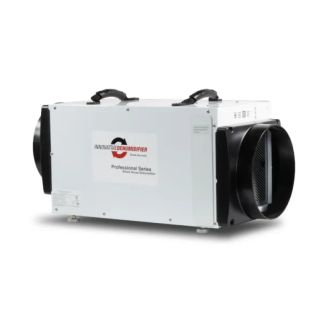
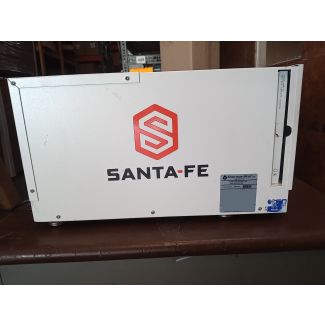

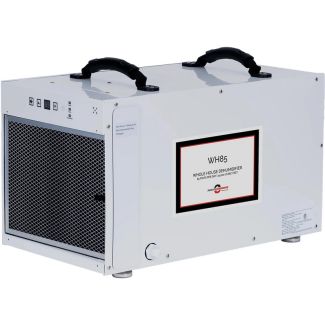
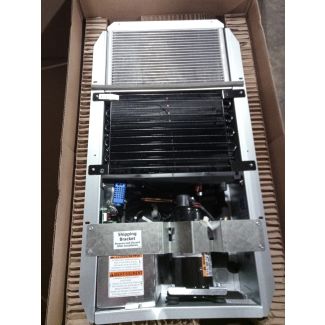
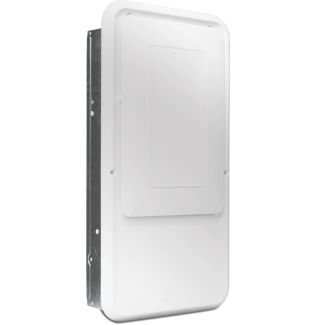
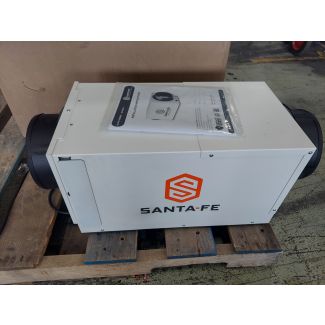
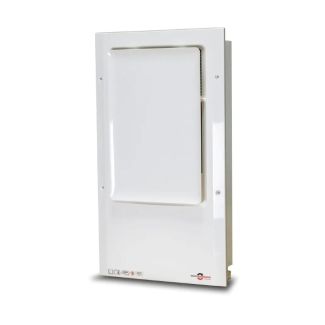
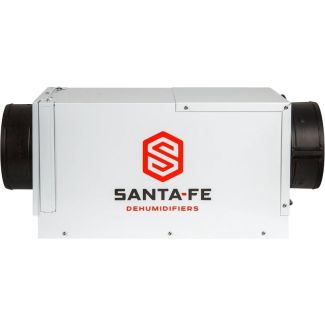
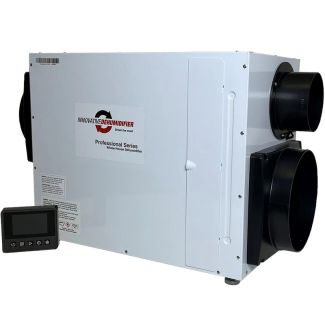
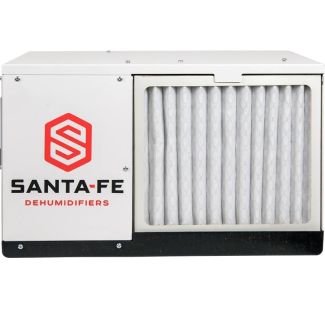
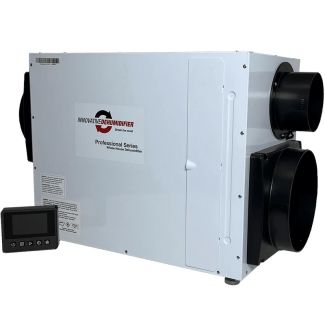
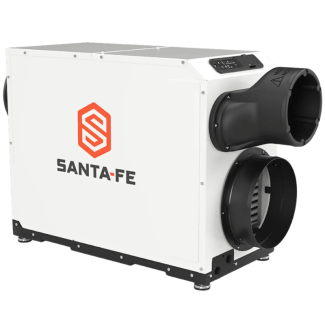
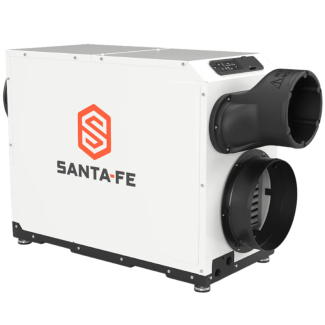
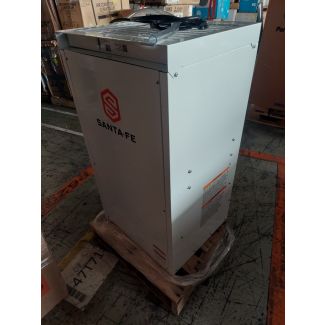
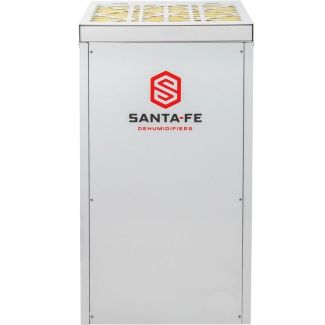

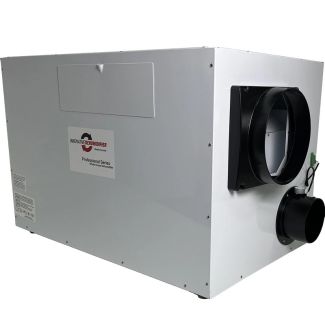
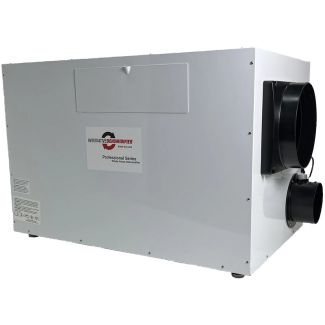
A whole house dehumidifier manages humidity throughout the home rather than treating a single room or isolated space. These systems are typically installed with or alongside your HVAC ductwork to provide more consistent humidity control across multiple rooms.
It works by pulling humid air across a cold evaporator coil, causing water vapor to condense into liquid, then sends that collected water out through a drain line while circulating the drier air back through the home's ductwork or open living space. Most models pair with a humidistat that cycles the system on and off automatically to hold a target humidity level.
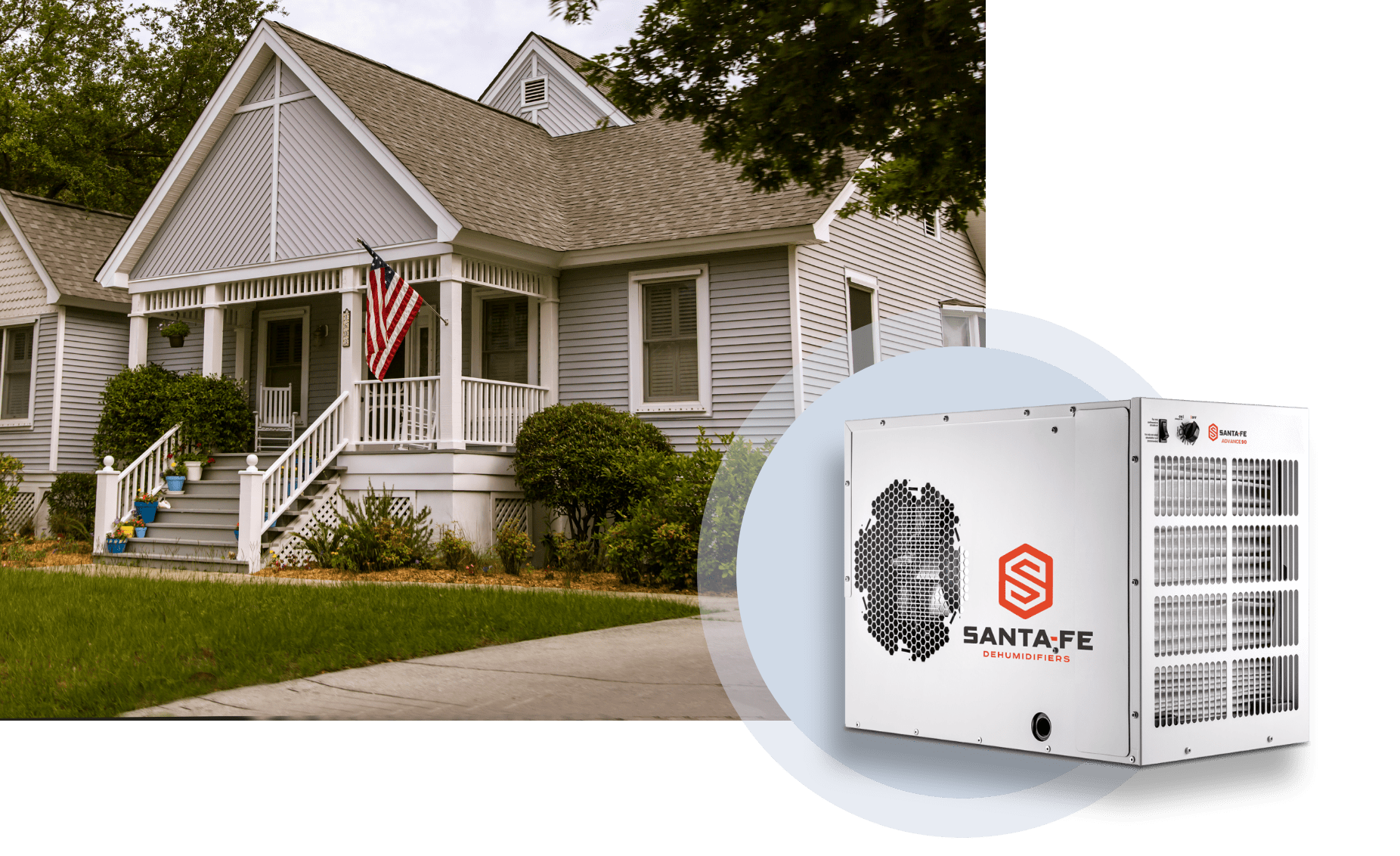

Beyond simple comfort, whole house dehumidifiers affect a home's air quality, structural health, and how well its HVAC system performs overall.
Moisture Control: A whole house dehumidifier manages humidity across every connected room rather than just one space. This keeps the entire home within a healthy humidity range instead of leaving some areas damp while others stay dry. High-capacity residential systems can remove substantially more moisture than small room units; for example, HVACDirect.com's Innovative WH60 removes up to 60 pints per day, while the WH200 reaches 200 pints per day for much larger moisture loads.
Mold Reduction: A dehumidifier does not remove existing mold, but lowering indoor moisture makes conditions less favorable for continued mold growth and keeps your home and family healthier. The EPA recommends controlling moisture as the primary way to control indoor mold and keeping indoor relative humidity below 60%, ideally around 30% to 50% when possible.
Allergen Management: Lower humidity also reduces the conditions dust mites and mold spores need to thrive. This can make a real difference for household members with allergies or respiratory sensitivities. Current Santa Fe Ultra70 and Ultra V100 models use MERV-13 filtration, while Innovative WH-series models such as the WH85 use MERV-10 filters.
Odor Prevention: Persistent musty smells are often caused by damp conditions and microbial growth. By removing excess water vapor, a whole-home system can address the underlying humidity that contributes to these odors instead of simply masking them, making your entire home smell cleaner.
Condensation Control: Reducing humidity cuts down on the water vapor that condenses on cool surfaces like pipes, ductwork, and windows. This helps protect building materials that would otherwise stay damp for extended periods.
HVAC Support: A dehumidifier takes some of the moisture-removal burden off your air conditioner, since AC systems aren't designed to manage humidity independently of temperature, though they do remove some naturally through the cooling process. This can improve overall comfort without forcing the AC to run longer than necessary just to dry the air. This may reduce wear on your cooling system.
A whole house dehumidifier is therefore most useful when excess humidity is a persistent home-wide problem rather than a short-term moisture issue in one isolated room.
Whole house systems are most useful in residences where excess moisture affects a large area or several connected rooms. They can be used in most home layouts, including smaller and multi-level homes.
Dehumidifiers for Single-Family Homes: Ducted whole-home systems can control humidity across bedrooms, living areas, kitchens, and other connected rooms from one centralized unit. For example, HVACDirect.com lists the Santa Fe Ultra V100 for homes up to approximately 2,300 square feet, while larger-capacity models like the Oasis105 and Classic Dehumidifier can cover spaces approaching 3,000 square feet.
Dehumidifiers for Large Basements: Basements tend to run more humid than the rest of the home, especially in older or unfinished spaces. A higher-capacity unit is often needed here to keep up with the larger air volume and more persistent moisture load. A whole-home dehumidifier can be useful especially if your basement has multiple rooms. If you have a smaller basement, a standalone unit may be a better choice.
Dehumidifiers for Crawl Spaces: A crawl-space installation can control moisture below the home while also limiting the amount of humid air that can migrate upward. Low-profile systems are particularly useful where clearance is limited; the Santa Fe Ultra70 measures only 12 inches high and can operate independently or connect to ductwork.
Dehumidifiers for Multi-Level Homes: Homes with multiple floors often see humidity settle unevenly, with lower levels running more humid than upper floors. A ducted whole-home system helps balance that difference rather than leaving one level noticeably damper than another.
Dehumidifiers for Apartments: Smaller apartments may not require a large central dehumidifier, especially if there is no accessible central duct system. Compact residential systems or in-wall equipment can be more practical; HVACDirect.com carries the Innovative IW 25-6, which installs in or on a wall and covers up to approximately 1,500 square feet.
Dehumidifiers for Condos: Condos face similar space constraints to apartments. Compact ducted or in-wall equipment can provide centralized or localized moisture control without requiring a large floor-standing unit in the living area. Checking building rules on modifications is worth doing before installing anything permanent.
The physical installation location does not necessarily define the area being dehumidified; a unit located in a basement or mechanical room can still serve living spaces elsewhere when it is properly ducted.
Selecting the optimal dehumidifier involves balancing home layout, air distribution methods, and energy efficiency goals, spanning options from portable units to whole-home, duct-integrated systems. The final choice hinges on weighing upfront costs and fixed-output efficiency against advanced, multi-stage performance for tailored humidity control.
Portable Dehumidifiers: These stand alone and can be moved between rooms, making them a flexible option for homes without ductwork or for treating one problem area at a time. They generally have less capacity than a ducted system and need manual placement to be effective. HVACDirect.com carries portable options such as the Perfect Aire 70-pint residential model as well as higher-capacity portable equipment.
HVAC-Integrated Dehumidifiers: These units connect to an existing HVAC system or dedicated ductwork to circulate dry air through several rooms. The Santa Fe Ultra V100 uses 10-inch duct connections and is designed for centralized whole-home use, while Innovative WH models also include duct adapters for HVAC integration.
Single-Stage Dehumidifiers: These run at one fixed output level, either fully on or fully off, according to the humidity setting. They are less expensive than multi-stage ones upfront, but are less efficient.
Multi-Stage Dehumidifiers: These adjust output based on how far humidity is from the target level, running lower when close and ramping up when humidity spikes. This improves efficiency and comfort compared to a single-stage system that only has one operating speed.
To maximize your investment, look for Energy Star-certified models sized specifically for your home's total square footage to efficiently maintain the ideal 30% to 50% relative humidity range.
Whole house dehumidifiers can differ considerably in how they sense humidity, drain water, filter the air, and handle colder conditions. Some also have special features, such as built-in humidistats and automatic drainage. Features should be compared alongside capacity because they affect how much day-to-day attention the system requires.
Built-In Humidistat: A humidistat allows the system to monitor relative humidity and cycle automatically around a selected set point. Innovative WH-series systems such as the WH60 and WH85 include built-in digital humidity controllers, eliminating the need to manually switch the equipment on and off as humidity changes.
Automatic Drainage: Whole-home systems generally route collected condensate directly to a drain instead of storing several gallons of water in a bucket. The Innovative WH85 uses continuous gravity drainage, and the Santa Fe Ultra V100 also supports a continuous condensate drain connection.
Air Purification: Whole house dehumidifiers include filtration, like MERV-13 filters, that trap fine airborne particles alongside standard moisture removal. This adds an air quality benefit on top of humidity control. Each dehumidifier model usually lists what filters are compatible with it in the specifications. For example, Santa Fe's Ultra70 and Ultra V100 include MERV-13 filters, while the Innovative WH85, WH100, WH120, WH150, and WH200 use MERV-10 inlet filtration.
Smart Connectivity: Remote control capability is not standard on every whole-home unit. Innovative offers a wall-mounted remote control package for compatible whole house systems that provides remote humidity sensing and setpoint adjustment, while app-based Wi-Fi capability should be verified on the specific unit if that feature is important.
Automatic Defrost: Frost can form on a dehumidifier's cold coil when it operates in lower temperatures. Models equipped with automatic defrost can temporarily manage that condition and resume normal moisture removal; HVACDirect.com lists automatic defrost on the Santa Fe Ultra70, which is rated for operation from approximately 49°F to 95°F.
Drain Hose and Pump: Gravity drainage works when a suitable drain sits below the unit, but some installations require water to be lifted or moved farther away. For those situations, HVACDirect.com offers compatible condensate pump accessories; the Santa Fe Ultra V100 currently offers an optional pump kit alongside its standard continuous-drain capability.
These features become particularly important when the dehumidifier will be installed somewhere that is difficult to access regularly, such as a crawl space, attic, or remote mechanical area.
Capacity, drainage, ducting, and electrical requirements can determine whether an otherwise suitable product can actually be installed. Before purchasing, you should confirm that the dehumidifier can handle the home's actual moisture load and physically work with the planned installation.
Home Square Footage: Manufacturer coverage provides a useful starting point, but homes with high ceilings, substantial air leakage, or unusually high moisture loads may need more capacity. Measure every connected area the system needs to cover, including rooms that share air through open doorways or ductwork, and take into account the house’s average humidity level.
Moisture Removal Capacity: A home with occasional dampness needs less capacity than one with a history of standing water or persistent humidity above 70%. Capacity is measured in pints of water removed over 24 hours under specified test conditions, so when matching capacity to your space look at both square footage and moisture levels. You can use HVACDirect.com’s Dehumidifier Sizing Guide or call one of our experts for sizing help.
Ductwork Compatibility: Check inlet and outlet sizes before purchasing equipment or planning transitions. For example, the Santa Fe Ultra70 uses 8-inch round duct collars, while the higher-capacity Ultra V100 uses 10-inch collars, so swapping capacities may also affect the required duct connections. There are some accessories that can help if the duct sizes do not match up.
Professional Installation: HVAC-integrated systems require the airflow path, duct connections, control wiring, drain, and equipment placement to work together correctly. This generally requires a licensed technician, especially for electrical or ductwork connections. Skipping professional installation on these systems is one of the more common ways homeowners void a warranty.
Drainage Requirements: Identify where condensate can go before deciding where the dehumidifier will sit. Gravity drainage requires a continuous downward path, while installations without a nearby lower drain may require a condensate pump. You can also choose to have it drain into a sump pump as long as the drain is connected properly.
Electrical Requirements: Verify voltage, phase, amperage, and the available circuit before ordering. Many current residential models use standard 115V or 120V single-phase power; the Santa Fe Ultra70 is rated at 115V single phase, while the Innovative WH150 also uses 115V single-phase service.
Capacity should not be selected from square footage alone; the home's humidity level, air leakage, climate, layout, and installation method all influence the amount of moisture the equipment ultimately needs to remove.
Santa Fe and Innovative Dehumidifier Systems make the strongest direct fits for residential whole house applications in HVACDirect.com's current assortment. HVACDirect.com also carries several portable dehumidifier brands that can provide targeted moisture removal in a single space but can be moved around as needed.
Santa Fe Dehumidifiers: Santa Fe specializes in professional-grade, high-capacity units for basements, crawl spaces, and whole-home applications, with models like the Ultra V100 and Classic tying directly into ducted HVAC systems. They are known for their durable construction and American-made design.
Innovative Dehumidifiers: IDS offers in-wall and ducted whole-home options, including the WH Series, which connects to central HVAC to manage moisture across multiple rooms. Their in-wall IW Series is a strong option where floor space is limited but ducted integration isn't available.
Outside of these two, HVACDirect.com offers other brands, including Namco, Perfect Aire, Americool, and Airrex, whose products are primarily portable units rather than dedicated whole-home systems. They are a better fit for treating a single room but can be moved throughout the entire house.
The total cost for a whole house dehumidifier is about $1,500 to $7,000 when factoring in both equipment and installation costs. Costs depend heavily on moisture-removal capacity and installation complexity. Here’s a typical breakdown:
Price by Capacity: $1,500 to $4,700, depending on whether the system is portable or whole house and on its capacity. For example, the Innovative WH85 and Santa Fe Ultra70 cost about $1,600, while the higher-capacity Innovative WH200 costs about $4,700.
Installation Costs: Ducted or in-wall systems require professional installation for electrical work, drainage, and ductwork connections, which can add anywhere from a few hundred to several thousand dollars depending on complexity, typically ranging from $500 to $2,000. A portable unit needs little more than an outlet and a drain hose, keeping installation close to $0.
Operating Expenses (Maintenance): Monthly operating costs generally run $15 to $85 depending on the unit's size, run time, and local electricity rates. Higher-efficiency, Energy Star certified models tend to cost less to run per pint of moisture removed than standard portable units. Depending on the unit, filter replacements and cleaning supplies can run anywhere from $100 to $300+ annually.
If your installation requires structural or electrical modifications, permit costs ranging from $50 to $200 may also need to be factored in.
HVACDirect.com carries both dedicated residential whole house dehumidifiers and alternative portable configurations, making it possible to compare capacity, installation style, filtration, controls, and accessories from one source. Product listings also include specifications and installation resources that help homeowners and contractors check compatibility before ordering.
Competitive Pricing on Top Brands: We sell Santa Fe, Innovative Dehumidifiers, and other trusted brands at wholesale prices, backed by our Lowest Price Guarantee. Because we sell directly to the consumer, our prices do not have middleman markups either.
Expert Guidance: Our team can help you compare capacity, configuration, and installation type to find the right whole-home system for your specific space. This matters most when deciding between a portable unit and a ducted system. All of our support members have years of experience in the HVAC-industry and can help with both pre- and post-sale questions.
Fast Reliable Shipping: Most orders ship quickly, and free shipping is included on most products. Warehouses located across the country mean your order ships from whichever location is closest to you.
Warranty Support: We help with manufacturer documentation and warranty registration once your unit arrives, so you're not left tracking down paperwork on your own. This is especially useful for units like Santa Fe's, which require registration to activate full coverage.
Wide Selection of Trusted Brands: From dedicated whole-home systems like Santa Fe and IDS to portable options from Namco, Perfect Aire, and Americool, we carry equipment across the full range of budgets and use cases. You can compare prices and specifications right on one website from the comfort of your own home.
Reviewing the dehumidifier with your installer and our tech experts before ordering can help confirm that its capacity, dimensions, duct collars, drain configuration, controls, and electrical requirements match the planned installation.
Lorem ipsum dolor sit amet, consectetur adipiscing elit. Integer vitae justo sed lorem tincidunt facilisis. Sed elementum, neque non malesuada tempor, risus erat fermentum nulla, vitae por:
Lorem ipsum dolor sit amet, consectetur adipiscing elit. Integer vitae justo sed lorem tincidunt facilisis. Sed elementum, neque non malesuada tempor, risus erat fermentum nulla, vitae por.
Lorem ipsum dolor sit amet, consectetur adipiscing elit. Integer vitae justo sed lorem tincidunt facilisis. Sed elementum, neque non malesuada tempor, risus erat fermentum nulla, vitae por:
Lorem ipsum dolor sit amet, consectetur adipiscing elit. Integer vitae justo sed lorem tincidunt facilisis. Sed elementum, neque non malesuada tempor, risus erat fermentum nulla, vitae por.


Yes, when properly sized for the space and installed correctly, whole house dehumidifiers effectively lower and maintain humidity across connected rooms. Undersized units or poor ductwork integration are the most common reasons a system underperforms.
A whole house dehumidifier is typically installed with return and supply duct connections so air can be pulled through the unit and redistributed after moisture is removed. The installation also requires electrical power, a condensate drain, adequate service clearance, and compatible humidity controls; some models can instead use dedicated ductwork rather than connecting directly to the main HVAC system.
Yes, a properly sized ducted system connected to central HVAC can manage humidity across an entire home from one unit. Coverage depends on the model's capacity and how well the existing ductwork distributes air to every room. HVACDirect.com's dehumidifiers for entire houses typically cover 1,000 to 3,000+ square feet. Send us an email or Contact our customer service team and we'll be happy to help you out.
A portable, plug-in unit is generally simple enough for most homeowners to set up themselves. A fully HVAC-integrated installation is more complex because duct sizing, airflow, drainage, controls, and electrical requirements must all work together, so professional installation is generally the safer choice for a permanent whole-home setup.
Start with the home's square footage or volume and the unit's rated moisture-removal capacity in pints per day, then account for how damp and tightly sealed the home is. Pint capacity represents the amount of moisture removed in 24 hours under standardized test conditions, so two homes of the same size can require different capacities if one experiences substantially greater moisture infiltration. For example, a home with occasional dampness needs less capacity than one with a history of flooding or persistent humidity above 70%, so both factors should be weighed together.
Not universally, but professional installation is recommended when the unit is being incorporated into an HVAC system or requires new ductwork, drainage, controls, or electrical modifications. Standalone ducted or portable units can sometimes be simpler, depending on the specific product and installation location.
A dehumidifier commonly lasts around 5 to 10 years, although actual service life varies with equipment quality, runtime, operating conditions, installation, and maintenance. Keeping filters and coils clean and ensuring condensate drains properly can help reduce unnecessary stress on the equipment. Higher-end units like Santa Fe often last toward the longer end given their heavier-duty construction.
Filter intervals vary by brand, but many manufacturers recommend checking or replacing filters every 3 to 6 months. It will also depend on the model and grade of the filter. Whole-home models use different filtration systems. For example, Santa Fe's Ultra70 and Oasis105 use MERV-13 filters, while Innovative WH-series models commonly use MERV-10 filters.
Yes, whole house dehumidifiers are particularly valuable in humid climates where outdoor moisture consistently pushes indoor humidity higher. They are particularly useful for houses where the air conditioner cannot remove enough moisture during normal cooling cycles. Homes in these regions often benefit from higher-capacity units that can keep up with a heavier, more constant moisture load.
Yes, many whole house dehumidifiers can drain into an existing sump pit as long as the drain line is properly routed and the sump pump can handle the added water volume. This is a common drainage solution when a floor drain isn't available near the unit. Models such as the Santa Fe Ultra70 and Innovative WH-series support continuous drainage, while optional pumps are available when gravity drainage is not practical.
