We use cookies to make your experience better. To comply with the new e-Privacy directive, we need to ask for your consent to set the cookies. Learn more.

1-800-397-1392
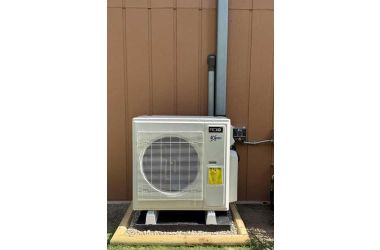
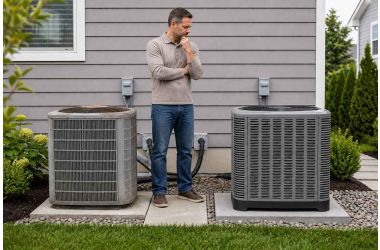
Today's Hours 8am - 11pm estAn air conditioner condenser unit is the large steel cabinet that houses the outdoor components of a split HVAC system. Its main functions are to expel heat from indoors using a fan to blow it outside through the top of the unit and to pump refrigerant throughout the HVAC system’s copper tubing.
This unit works by housing the compressor, a small pump located inside the unit, which moves refrigerant through the condenser coil, also located inside the unit. The condenser coil then feeds cooled refrigerant into either a furnace or indoor air handling unit(s), which distribute cooled air inside the space being conditioned. In short, the condenser handles the outdoor heat exchange, while the indoor components deliver that conditioned air throughout the home.
An air conditioner condenser unit is the large steel cabinet that houses the outdoor components of a split HVAC system. Its main functions are to expel heat from indoors using a fan to blow it outside through the top of the unit and to pump refrigerant throughout the HVAC system’s copper tubing.
This unit works by housing the compressor, a small pump located inside the unit, which moves refrigerant through the condenser coil, also located inside the unit. The condenser coil then feeds cooled refrigerant into either a furnace or indoor air handling unit(s), which distribute cooled air inside the space being conditioned. In short, the condenser handles the outdoor heat exchange, while the indoor components deliver that conditioned air throughout the home.

By itself, an AC condenser unit can be used as a replacement or upgrade for the part of an existing HVAC system responsible for cooling. The most common use cases include:
Condensers are typically sold as part of a full HVAC system, but for the replacement and upgrade scenarios above, buying a standalone unit is a practical and cost-effective option.
The type of condenser unit you need, usually rated in tonnage, will depend primarily on the square footage of the space or building being cooled. This area will correspond with a specific tonnage, the measurement of how much power your HVAC system can output, which ranges from 1.5 to 5 tons (600 to 3,200 square feet):
Aside from square footage, there are several other factors that can affect the type of condenser needed for your space, such as ceiling height, insulation quality, condition of ductwork, home layout, and heavy sunlight exposure. It’s recommended to have a licensed HVAC contractor conduct a professional sizing review to take all these factors into account before purchasing a condenser unit.
The most significant features of these units are capacity, efficiency, technology, and system compatibility. Here is an explanation of the variance of each and why it matters:
It’s critical to consider all four of these features carefully and intentionally before purchasing your new air conditioner condenser to ensure the most worthwhile investment and avoid issues down the road, such as expensive repairs and limited replacement options. Often, paying slightly more upfront for better quality equipment will pay off more in the long run, while choosing mismatching equipment just to save money will likely cause more problems than it solves.
In addition to the main determining factors, you should also take into account these secondary ones for each option:
Most condenser units last from 10 to 15 years if regularly well maintained, but the brand and quality of material used can also impact the durability and longevity of your condenser unit.
Condensers can be used to cool both residential and light commercial spaces ranging from 600 to 3,200 square feet, including these common applications:
Central air condenser units are typically not a good fit for homes with no existing ductwork, large commercial facilities, or home expansions added onto older homes because preparing these kinds of spaces often requires installing ductwork and subsequently making expensive modifications to the space prior to installation.
HVACDirect.com carries condensers made by ACiQ, Goodman, and Trane, all of which are reputable brands that produce high quality air conditioner condenser units and offer excellent warranty coverage.
HVACDirect.com has a wide selection of new, unopened condenser units at wholesale prices from ACiQ, Goodman, and Trane, plus several open box units at even lower prices.
To replace a central air conditioner condenser unit only, the total cost ranges from $1,500 to $6,500, including professional installation. Here is a detailed breakdown of each cost category:
Before installation, be sure to obtain the necessary permits from your local zoning authority or confirm that your contractor is able to do so. These permits usually cost around $250 to $400.
HVACDirect.com offers wholesale pricing, a versatile product catalog, and quick up-front lead times, advantages most local retailers can't match. Here are the top benefits:
When buying HVAC equipment online, be sure to choose a retailer like HVACDirect.com that specializes in heating and cooling. Unlike generic retailers with little knowledge of heating and cooling equipment, our expertly trained support staff are dedicated to matching you with the right condenser unit to fit your needs, as well as answering any questions you may have before, during, and after your purchase.
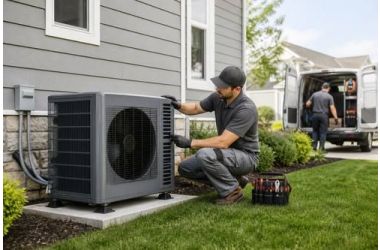

It’s recommended to clean your condenser at least twice per year by disconnecting the power and clearing debris such as leaves, dirt, and branches from the exterior by hand. Next, you’ll remove the top grille or fan assembly, remove any debris inside, and then spray the condenser coil with a foaming coil cleaner before letting the solution break down dirt and grease that has accumulated. After waiting 10 to 15 minutes, you can finish the process by gently rinsing the unit with a garden hose. Some AC units, such as ACiQ models, actually come with a convenient self-cleaning feature that makes it much easier to maintain than a traditional AC unit.
For minimal noise, choose a larger-diameter fan so it can run at lower speed while still moving sufficient air. Also ensure proper installation (tight hardware, clean blades, minimal obstructions) for best results.
Yes, these units are energy efficient to varying degrees with SEER2 ratings from 13.4 to 17. Standard single-stage units only operate on 100% capacity, so they typically have ratings around 14.3 SEER2, which is the federal minimum (or 13.4 in certain regions). Variable-speed condenser units with inverter technology can adjust fan speed based on cooling demands and have ratings between 15 and 17 SEER2.
To replace a standard, single-stage condenser unit usually costs around $1,500 to $5,500, depending on tonnage capacity, consistent with the full cost breakdown above. If your unit is still covered under warranty, you would only need to pay labor costs for a professional installation, which would run around $300 to $1,500.
Most condensers last about 10 to 15 years if properly maintained. If your current condenser unit is around this age, it’s recommended that you replace your entire HVAC system, including air handlers and condenser unit, rather than replacing the AC condenser alone. The main reason is that older units use refrigerants that have been phased out under recent government regulations, and pairing a significantly older system with a newer, more efficient condenser unit may negatively impact the new system’s ability to function as efficiently.
Yes, an AC condenser unit can be repaired, but it doesn’t always make financial sense to do so. If the unit only needs minor fixes, such as replacing a bad capacitor, swapping a faulty fan motor, or clearing blocked coils, then repair can be a reasonable option. However, if the compressor has failed or the coils are leaking, it’s best to simply replace the condenser unit or the entire HVAC system. You can get easy confirmation on what your best path forward is by calling HVACDirect.com’s expert sales team.
Warning signs that your AC condenser unit is bad include indoor vents blowing out warm air during a cooling season, frequent short cycling, loud noises coming from the condenser unit, or a completely dead system.
The size of an AC condenser unit is measured in tons of cooling capacity, which is determined roughly by the square footage of the space being cooled:
| AC Size | Area Cooled |
|---|---|
| 1.5 tons | 600 to 1,000 sq. ft. |
| 2 tons | 1,000 to 1,300 sq. ft. |
| 2.5 tons | 1,300 to 1,600 sq. ft. |
| 3 tons | 31,600 to 1,900 sq. ft. |
| 3.5 tons | 1,900 to 2,200 sq. ft. |
| 4 tons | 2,200 to 2,600 sq. ft. |
| 5 tons | 2,600 to 3,200 sq. ft. |
However, square footage is not the sole determining factor of the size unit you’ll need. The climate you live in, the quality of your home’s insulation, air leakage in your ducts, ceiling height, home layout, and sunlight exposure are all factors that can warrant sizing up your unit.
No, it’s not necessary to cover your condenser unit in the winter because it’s made from durable materials designed to withstand harsh outdoor conditions year-round. Placing a full size cover over the unit during winter can actually trap moisture and attract pests. If falling debris like branches or icicles pose a problem, you can place a top-only shield-style covering, such as mesh or plywood, over the top of the unit. Covering your condenser unit may be useful in the event of heavy snowfall or especially harsh weather conditions.
Yes, AC condensers must be placed level on a flat surface to ensure proper operation, high performance, and longevity. You can place the unit on a level concrete pad, plastic mounting pad with sturdy legs, or support brackets secured to an exterior wall.