We use cookies to make your experience better. To comply with the new e-Privacy directive, we need to ask for your consent to set the cookies. Learn more.

1-800-397-1392
Today's Hours 10am - 6pm estThese 3 zone ACiQ wall mounted mini split systems are an efficient and minimalistic way to heat and cool 3 rooms or zones of your home or space. The wall mounted air handlers are designed to be easily mounted and discreet in appearance. Check out our selection below!
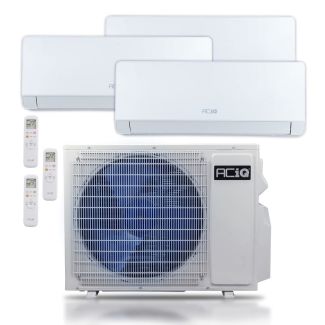

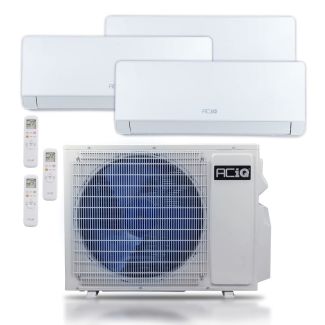
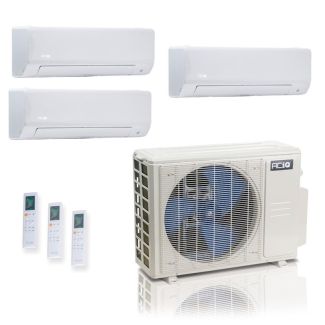

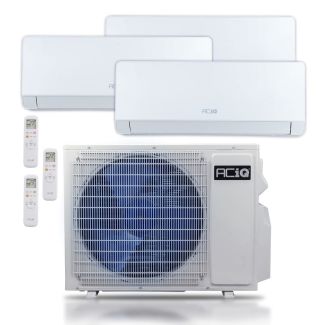
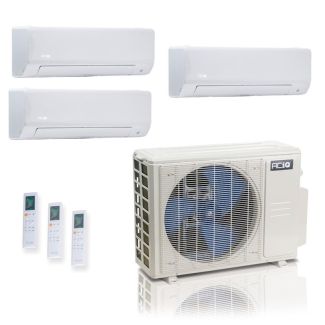
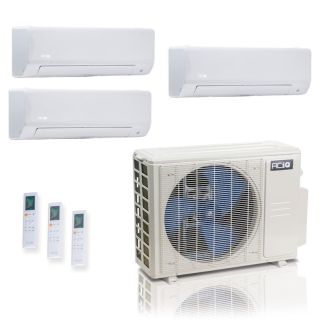
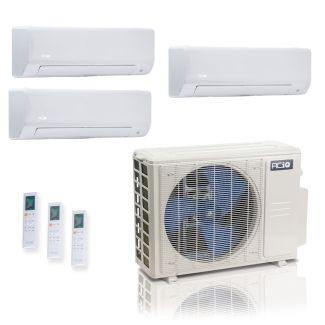
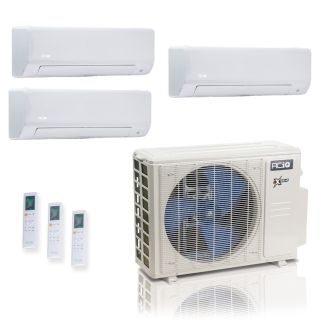

An ACiQ 3 zone mini split system connects one outdoor condenser to three indoor air handlers, providing independent heating and cooling for three average-sized rooms, such as bedrooms or home offices, with individual temperature control in each space.
These systems work by transferring heat between the outdoor condenser and indoor units through refrigerant lines. An inverter-driven compressor adjusts its output based on demand from all zones, maintaining consistent temperatures while using less energy than traditional HVAC systems.
ACiQ 3 room mini splits are ideal for homes with three independent spaces totaling approximately 600 to 3,000 square feet, assuming 8-foot ceilings, average insulation, and typical residential heating and cooling loads. They're best suited for homes where multiple rooms require different temperature settings throughout the day and are not adequately served by a central ducted HVAC system.
Three Bedrooms: One of these systems is great for heating and cooling three different bedrooms used by different people. They are an excellent alternative to central HVAC when each bedroom has different occupancy patterns or temperature preferences, allowing everyone to sleep comfortably without affecting the rest of the home.
Open-concept Main Living and Dining Space: While open floor plans appear to be one large room, they often include multiple living areas with different heating and cooling demands. Features like kitchens, vaulted ceilings, fireplaces, and partial walls can make it difficult for a single indoor unit to distribute air evenly. A 3 zone mini split provides targeted comfort where it's needed most, helping eliminate hot and cold spots throughout the space.
Home Expansions: If you've added a sunroom, finished the basement, or converted the garage, one of these systems can heat and cool one or more additions without extending ductwork.
Split-Level Homes: Heating and cooling a multi-story home evenly can be challenging because temperatures naturally vary from one floor to another. An ACiQ system allows you to independently condition the basement, main floor, and upper level, eliminating many of the hot and cold spots that are common with a single thermostat controlling the entire home's ducted HVAC system.
Homes with Dedicated Activity Spaces: Zones can help regulate temperature in three different areas with unique schedules, like home offices, gyms, and workshops. One of these ACiQ systems lets you tailor conditions to each area's specific needs and heat and cool them only when you are using the room.
Even with three independently controlled zones, factors like poor insulation, high ceilings, frequent door openings, and extreme outdoor temperatures can increase heating and cooling demands. Choosing the right capacity for each indoor unit is essential for maintaining balanced comfort across all three spaces.
The systems are available in capacities ranging from 18,000 BTU to 55,000 BTU, covering a total square footage of 600 to 3,000 sq. ft. across all three spaces. Each of the three individual air handlers has a capacity between 6,000 BTU and 36,000 BTU, covering a wide variety of layouts. Here are some common sizes:
18,000 BTU (600 to 1,000 sq. ft.): This is the smallest ACiQ 3 zone system and is typically paired with three 6,000 BTU indoor units. It's a good fit for homes with three small bedrooms, home offices, nurseries, or other compact spaces that don't require a lot of heating or cooling capacity.
24,000 BTU to 27,000 BTU (1,000 to 1,500 sq. ft.): A 24,000 BTU to 27,000 BTU system gives you more flexibility by supporting a mix of indoor unit sizes. A common setup for a 27k ACiQ system is with 6,000 + 9,000 + 12,000 BTU air handlers, making it a practical choice for a bedroom, home office, and larger living room or family room.
36,000 BTU (1,500 to 2,000 sq. ft.): If one or two of your rooms are larger, stepping up to 36,000 BTU often makes sense. Indoor unit configurations such as 9,000 + 9,000 + 18,000 BTU or 12,000 + 12,000 + 12,000 BTU work well for homes with a spacious living area alongside two average-sized bedrooms.
48,000 BTU (2,000 to 2,700 sq. ft.): This capacity is designed for homes with three larger zones that place a greater demand on the system. For example, you might pair a 24,000 BTU indoor unit in an open-concept living space with 12,000 + 12,000 BTU units in two bedrooms or a home office.
55,000 BTU (2,500 to 3,000 sq. ft.): ACiQ's largest 3 zone system is intended for homes with substantial heating and cooling needs. Popular air handler combinations include 18,000 + 18,000 + 18,000 BTU or 24,000 + 18,000 + 12,000 BTU, making it well suited for large great rooms, finished basements, bonus rooms, or homes in more demanding climates.
It's important to avoid both undersizing and oversizing your ACiQ 3 zone mini split. An undersized system can struggle to maintain the desired temperature in each room, while an oversized system may cool or heat the space too quickly without running long enough to properly control humidity.
An ACiQ mini split for three rooms usually costs anywhere from $4,000 to $10,000+, depending on capacity, indoor air handler type, and complexity of the installation. Here is a typical breakdown of the costs:
Equipment Cost: $2,500 to $8,000, depending on capacity and indoor air handler type. It also depends on the series, with Essentials being the most budget-friendly and basic option, Standard costing a bit more, and the Extreme series being the most expensive because of its cold-climate features.
Installation and Labor Cost: $1,500 to $2,000+, depending on the complexity of the installation and local labor rates. Three zones mean three separate line set runs, three wall penetrations, and three indoor unit installations, so labor is meaningfully higher than a single zone job.
Operation and Maintenance Cost: Monthly operating costs depend on how many zones are running and at what load, but a rough estimate for regular peak-season use across all three zones is $50 to $100 per month. Filters are usually washable and cheap to replace if needed. An annual professional cleaning and maintenance check usually costs anywhere from $150 to $500.
To complete the setup, you should also account for additional costs for critical accessories such as line sets, electrical disconnects, and mounting brackets, which normally add $150 to $800 to your total project.
ACiQ mini splits for 3 zones must be installed by a licensed professional and are not DIY-friendly. Although homeowners can complete certain tasks, including prep work like mounting, you must have a professional connect the outdoor and indoor units and handle the refrigerant.
DIY Installation: ACiQ does not offer DIY for multi zone systems, including those for three different spaces. You should not try to install one of these units yourself. If you do, even if you install it correctly, you risk voiding your manufacturer's warranty.
Professional Installation: These systems must be installed by a licensed HVAC professional, with the best option of having a contractor that is part of the ACiQ Dealer Program install it for you. A licensed HVAC contractor is required for refrigerant work, system evacuation, and startup on all ACiQ 3 room systems, and for guaranteeing warranty coverage.
Permits are required for these mini splits, varying by city and county. In addition, all electrical work must be handled by a certified technician regardless of any part of the installation done by the homeowner.
ACiQ 3 zone mini split systems are available with several indoor unit styles, including wall mount, ceiling cassette, slim ceiling cassette, concealed duct, floor mount, and central zoned, allowing homeowners to customize each of the three zones based on the room layout, available installation space, and desired appearance. Here are some details on each option:
Wall Mounted: Wall mount units are available in every indoor BTU size compatible with these systems, making them the most versatile option in the lineup. Offered across the Essentials, Standard, and Extreme series, they're the easiest style to mix and match with other indoor units when designing a custom three room ACiQ system.
Ceiling Cassette: Available with 18,000 BTU and larger ACiQ systems for 3 zones, ceiling cassette units install flush with the ceiling and distribute conditioned air in multiple directions. They're a popular choice for larger living areas, kitchens, and open-concept spaces where wall mounted equipment isn't practical or desired.
Slim Ceiling Cassette: These are available with slim ceiling cassette air handlers on all model sizes. Their lower-profile design fits into tighter ceiling cavities, making them a practical choice for bedrooms, home offices, finished basements, and remodels with limited ceiling depth.
Concealed Duct: Concealed duct air handlers install above the ceiling and distribute heated or cooled air through short duct runs to adjacent rooms, leaving only the supply and return grilles visible. They're a great option for homeowners who prefer a traditional look while still enjoying the efficiency and zoning flexibility of an ACiQ mini split.
Floor Mounted: Floor mounted units are installed low on the wall and work well in rooms with large windows, knee walls, sloped ceilings, or limited upper wall space. They're often combined with wall mounted or ceiling mounted units in mixed-layout ACiQ systems for three zones.
Central Zoned: ACiQ's central zoned air handler connects to short duct runs to condition multiple nearby rooms or a larger open area from a single indoor unit, similar in concept to a mini ducted system. It is usually paired with one or more wall mount air handlers. This is the least common type of air handler, as it removes the ductless feature of a mini split that makes them popular.
For most ACiQ 3 zone installations, wall mount units are the preferred option due to their versatility and availability across the full product lineup. Central zoned and concealed duct units are less common, but they provide an excellent solution when aesthetics or existing room layouts make ductless wall units less desirable.
ACiQ 3 zone mini splits require a dedicated 208/230V circuit, with breaker sizing and wire gauge determined by the MOCP and MCA values on the outdoor unit's nameplate. The electrical requirements will vary by model and local code, so have both your licensed electrician and HVAC technician verify all requirements before installing. Here are some general requirements:
Voltage: Almost all ACiQ 3 zone mini split systems operate on 208/230V, single-phase, 60 Hz power. A standard 120V household circuit is not compatible.
Amperage and Breaker Size: Breaker sizing for ACiQ 3 zone systems is strictly governed by the Maximum Overcurrent Protection (MOCP) listed on the unit's data plate. For most ACiQ 3 zone systems covering 18,000 to 36,000 BTU, the MOCP generally falls between 20 and 35 amps. Exceptionally large configurations at 48,000 BTU and above may require a 40- to 50-amp breaker. Always use the MOCP on your specific unit's nameplate rather than these general ranges.
Dedicated Circuit and Disconnect: Every ACiQ 3 zone system requires its own dedicated electrical circuit and a weatherproof disconnect installed within sight of the outdoor condenser. No other appliances or HVAC equipment should share the same circuit.
Wiring Size: Wire gauge must follow the unit's Minimum Circuit Ampacity (MCA) rating and comply with the National Electrical Code. For 20- to 25-amp circuits, use 12 AWG copper wire. For 30 to 40-amp circuits, use 10 AWG copper wire. For 45-amp circuits, use 8 AWG copper wire. The chosen wire must have an ampacity rating equal to or greater than the MCA.
Always confirm the MCA and MOCP values on the unit's nameplate before any electrical work begins, as those are the only authoritative numbers for sizing the circuit. A licensed electrician must also confirm wire gauge, breaker sizing, and disconnect placement for your specific installation before any work begins, as local code requirements and run lengths can affect the final specifications beyond what the nameplate alone dictates.

ACiQ 3 room mini split systems are very energy efficient with some models reaching up to 23.8 SEER2 and 10.5 HSPF2, which is much higher than the federal minimum efficiency standard. These systems use inverter-driven compressors that adjust output continuously, meaning they consume less electricity while keeping temperatures steady. Individual zone control also reduces energy waste by letting you heat or cool only the rooms you’re using.
ACiQ 3 zone mini split systems are manufactured by Midea, one of the world's largest HVAC equipment manufacturers. Midea produces heating and cooling equipment for numerous well-known brands around the globe, while ACiQ systems are built to ACiQ's specifications and backed by U.S.-based support and warranty coverage.
ACiQ multi zone systems, including those for 3 rooms, are designed for professional installation and require refrigerant line connections, vacuuming, pressure testing, and system commissioning to ensure proper performance and warranty coverage. These units are not DIY-friendly, and installing one yourself may void the manufacturer's warranty.
ACiQ 3 zone mini split systems typically include a 12-year compressor warranty and 7-year parts warranty when registered according to the manufacturer's requirements. If the system is not registered, coverage typically defaults to a 5-year compressor warranty and 5-year parts warranty. Because warranty terms can vary by model, it's always a good idea to verify the coverage for the specific system you're purchasing.
ACiQ mini splits for 3 spaces are typically all heat pumps, meaning they can provide both heating and cooling from the same system. Essentials systems provide reliable heating and cooling in moderate climates, operating from -13°F to 122°F. Standard systems are also rated for -13°F to 122°F, while offering higher efficiency and additional features. For the harshest climates, Extreme systems continue heating in temperatures as low as -22°F and can cool in outdoor temperatures up to 129°F, making them ACiQ's best choice for year-round comfort in severe weather.
With proper installation and routine maintenance, an ACiQ three room mini split can typically last 15 to 20 years. Regularly cleaning the filters, scheduling annual professional maintenance, and addressing minor issues early can help maximize system lifespan. They also have Gold Fin® anti-corrosion coating on the outdoor condenser coils that makes them more durable.
These systems are much quieter than regular central HVAC units or window air conditioners, with some indoor units operating at sound levels as low as 19 decibels, which is similar to a whisper, on certain models when set to low fan speeds. Inverter technology also helps lower outdoor compressor noise by reducing the frequent on and off cycling. Depending on the model and fan speed, indoor sound levels typically range from about 19 to 49 decibels. The outdoor unit typically only produces a low humming sound and will not disturb you or your neighbors.
These mini splits remove moisture from the air naturally when they run in cooling mode, helping keep indoor spaces more comfortable during humid weather. Many models also have a special “Dry Mode” that targets humidity reduction with little cooling. While these systems can dehumidify, they are by no means a replacement for a dedicated dehumidifier.
The filters in each of the three indoor units should be cleaned every 2 to 4 weeks to maintain good airflow and efficiency. You just need to remove the filter, rinse it with water, allow it to dry fully, and reinstall it. Beyond routine filter cleaning, you should consider an annual professional cleaning and tune-up for the entire system, including all indoor units and the outdoor condenser.
This system conditions three rooms, one per indoor air handler, each with its own independent controls. Sometimes, open-concept spaces with shared natural airflow can be covered by one head in one of the three zones, which could extend effective coverage beyond three physical rooms. However, most of the time if you need to heat and cool a fourth zone, you should upgrade to an ACiQ 4 zone system rather than trying to stretch the 3 zone beyond its design.