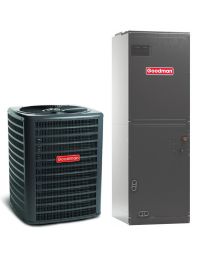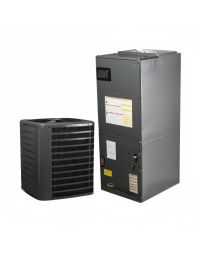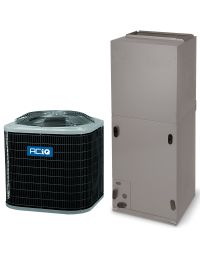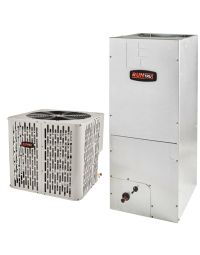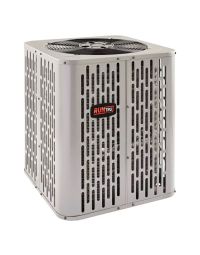
This buying guide is for consumers deciding on the right air conditioner for their home, whether that means replacing an existing condenser or installing a brand new central air conditioning system. There are lots of sizes, features, and brands to consider, and this guide will help you determine which product is the right fit for your home, understand which features are worth investing in, and avoid common buying mistakes.
For consumers whose home is already equipped with a central air conditioner system and ductwork, replacing an underperforming or older system with an updated one is the most common choice with the best long-term benefits. First-time installation of a new central air system is a preferable option for consumers with a recently built or renovated home with built-in ductwork already put in.
Let’s get started by examining major buying considerations to keep in mind while making your decision.
Key Takeaways
- Proper Sizing Matters Most: Selecting an AC with the correct cooling capacity, commonly referred to as size, is the most critical deciding factor and must be determined first before you can start narrowing down your choices based on features, efficiency, etc. If you're replacing an existing cooling system, your new system should be the same size/capacity as your existing one, unless your home's size or layout has been significantly modified since your original HVAC system was installed.
- Matched Systems Perform Best: It's key to understand that an air conditioner system contains multiple components that must work together properly in order to effectively cool your home. With central air systems, these paired components are typically either a condenser unit & furnace or a condenser unit & heat pump. Purchasing a matching equipment set of the same size capacity and made by the same manufacturer is typically the preferred option and usually results in optimal performance.
- Higher SEER2 Can Reduce Operating Costs: An air conditioner's efficiency is measured by its seasonal energy efficiency rating (SEER2). For central air systems, this rating usually ranges between 13.4 and 17 with higher numbers indicating superior efficiency. Higher efficiency results in less energy consumption, which then translates into decreased utility costs. If long-term cost savings is a top goal for you, choosing an AC with a high SEER2 rating is ideal.
- Professional Sizing is Recommended: If you're installing central air for the first time, you'll have to look at factors such as square footage, insulation quality, number and style of windows, number of stories, and more to pinpoint which size your home warrants. To get started, you can use HVACDirect.com's easy-to-use sizing tools, which will walk you through the basics of sizing your system, but before you buy, it's highly recommended to have a licensed HVAC contractor conduct professional sizing for your system.
What Is a Central Air Conditioner?

A central air conditioner cools a home by removing indoor heat and releasing it outdoors using refrigerant flowing through copper lines. The outdoor condenser unit houses the compressor and coil that dispel this heat outside. System setups include split systems, which divide components between an outdoor condenser and an indoor evaporator coil and blower, and packaged units, which house all components in a single outdoor cabinet.
The split system AC is by far the most common in residential applications. Here are the components, as well as their main functions:
- AC Condenser Unit: The outdoor component of a split system, this large square-shaped steel cabinet houses the condenser coil, compressor, electrical components, and a fan. This unit takes the hot, pressurized refrigerant gas pumped from the compressor and cools it down, expelling the heat absorbed from indoors into the outdoor air.
- Evaporator Coil: The evaporator coil is located indoors adjacent to a furnace or inside an air handler. As warm indoor air passes over this copper coil, the cold refrigerant inside absorbs heat and moisture, cooling the airflow before the blower circulates conditioned air back through the house. During this process, the refrigerant evaporates from a cold liquid into a gas and flows outside to the compressor to restart the cycle.
- Thermostat: This is an indoor electronic control panel used to set the desired temperature level inside the house. It's connected to both the indoor and outdoor components through electric communication wiring.
- Ductwork: This is a network of insulated channels that directs airflow throughout the home. It pulls hot indoor air into the duct network through return vents and forces cooled air indoors through supply vents located throughout the house.
- Refrigeration Lines: Refrigeration lines, or the line set, are insulated copper pipes that connect the indoor and outdoor units. Refrigerant flows through these lines between the indoor evaporator coil and outdoor condenser coil to continuously transfer heat outside.
For a visual representation of the HVAC system and how all the components fit together, refer to the graphic below.

How Does a Central Air Conditioner Work?
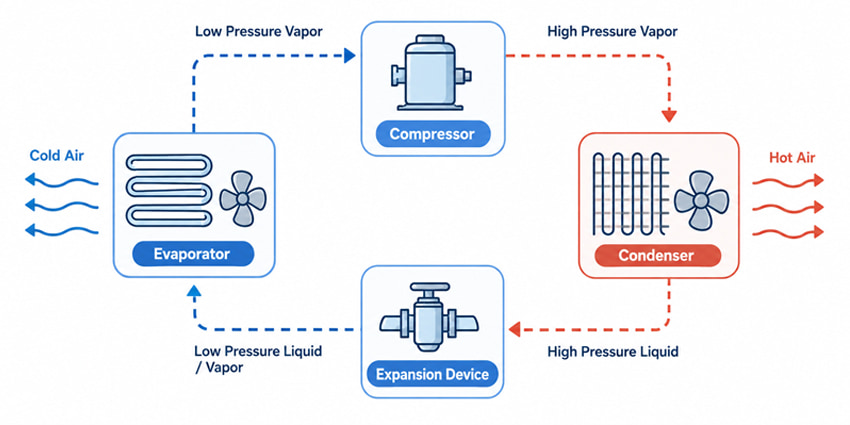
A central AC works by circulating refrigerant through a circuit of copper tubing, a process called the refrigeration cycle. Here are the steps of this process in more detail:
- Compressor Increases Refrigerant Pressure: The compressor, a powerful pump inside the outdoor condenser unit, takes in cool, low-pressure refrigerant gas that has absorbed heat from indoors. It compresses this gas, turning it into a hot, high-pressure gas, and pumps it directly into the condenser coil.
- Condenser Coil Releases Heat Outside: As the hot gas refrigerant runs through the condenser coil, its heat transfers to the outdoor air with the assistance of the condenser fan blowing air across the coil. As it rejects heat, the refrigerant condenses into a subcooled, high-pressure liquid.
- Metering Device Reduces Refrigerant Pressure: Next, a small metering device attached to the indoor evaporator coil lowers the pressure of the warm liquid refrigerant fed from the condenser coil outside. The refrigerant pressure drops and is then fed into the evaporator coil.
- Evaporator Coil Produces Cooling Effect: When the cold, low pressure liquid refrigerant is moved across the evaporator coil, it vaporizes/boils and absorbs heat, creating a cooling effect. Moisture is also extracted from inside the house due to the coil being so cold that the moisture in the home condenses on the coil, similar to how a cold can of soda "sweats" while sitting on the counter. The super-heated, low-pressure refrigerant is then suctioned back toward the condenser unit outside and feeds back into the compressor, starting the cycle all over again.
The graphic below illustrates the refrigeration cycle, also known as the cooling cycle.
Is a Central Air Conditioner Right for Your Home?
Whether or not a central air conditioner is a good fit for your home depends on several factors, including your home's construction characteristics, your comfort goals, your homeowner situation, and long-term plans. Here are some common examples to consider:
- Homes with Ductwork: If your home already has ductwork integrated into its construction and layout, central air conditioning is the most economical and logical way to cool it. Because central AC became widely standardized in the 1950s and 60s, most homes built during this time period or later were intentionally constructed with ductwork for this reason. However, homes built in the 1930s or earlier most likely lack this feature. While it's not impossible to install ductwork in these older homes, the cost of installation and structural modifications necessary to implement central air cooling poses a significant barrier and expense.
- Whole-Home Cooling: Central AC is the most common solution for keeping an entire home comfortably cool in hot weather because it's designed to serve several rooms at the same time through forced air movement. If one comprehensive cooling solution is what you're looking for, central AC is the way to go, as long as your home is already equipped with a duct network throughout.
- Gas Furnace Applications: In most cases, if your home is already outfitted with a gas furnace and ductwork, adding a central air conditioner is a practical, cost effective way to upgrade your home comfort. In addition to installing a compatible central AC condenser unit outside, this upgrade also involves adding an evaporator coil to the plenum on top of the furnace, running refrigerant lines between the furnace and condenser, and updating wiring to the thermostat to control both heating and cooling.
- Long-Term Ownership: If you're planning on remaining in your home long-term, investing in a central air conditioning system will most likely be a worthwhile investment, paying dividends over time in the form of utility cost savings, optimized comfort, and increased property value. Even if you eventually decide to sell your home, installing central air will certainly make it more attractive to potential buyers and possibly increase the selling price.
- Quiet Operation: Because central air condensers are located outside, noise levels indoors are more discreet, normally around 40 to 50 dB or similar to a quiet library or soft background hum. This contrasts with window AC units, which are usually louder, up to 65 dB, and can be heard in closer proximity.
Central air conditioning is not recommended when individual room temperature control is a primary goal, ductwork is too difficult or expensive to install, or in small living spaces where other methods of cooling are more efficient and/or cost effective.
What Size Air Conditioner Do You Need?
The size of air conditioner you need depends heavily on your home's total square footage and insulation quality, typically requiring anywhere from 1 to 5 tons. Keep in mind, an oversized system cools your home too quickly without running long enough to remove humidity, resulting in uneven temperatures, clammy indoor air, and increased wear on the equipment. An undersized system runs continuously and may struggle to keep up during peak summer temperatures.
Proper sizing is based on these primary factors:
- Square Footage: The square foot area of your home is the primary deciding factor. The higher the square footage, the higher tonnage your central AC system should be. For example, in a moderate climate zone, a house with 1,000 to 1,300 sq. ft. of living space would likely need a 2 ton central AC system. For more help with sizing, check out HVACDirect.com's sizing calculator or reach out to our experienced support team.
- Ceiling Height: Standard square foot calculations assume a ceiling height of 8 feet, so ceilings that are higher than 8 feet require increased cooling capacity. This means you may need to choose the next tonnage size up to compensate for the extra vertical space.
- Insulation: The quality and amount of your home's insulation can impact your cooling load, or the amount of energy required to keep your home comfortably cool. Homes with poor insulation don't retain cooled air as well and therefore require a central AC with higher tonnage or upgraded insulation.
- Window Orientation: Larger windows let in more sunlight, increasing the cooling load, and the direction your windows face can also make a difference. Windows facing south and west capture intense heat during midday and afternoon, whereas windows facing east let in mild heat early in the day and north-facing windows add minimal heat gain.
- Local Climate: The general climate and seasonal temperature ranges common in your region play a role in the sizing process, especially if summers in your area are intense. For example, if you live in the Southern US states, such as Alabama, Georgia, or Florida, where summers are extremely hot and humid, you'll need a higher tonnage central air conditioner that can handle higher cooling loads. In contrast, states in the northern part of the country, like Wisconsin, Minnesota, and the New England states, have shorter, milder summers, where standard tonnage AC systems are usually sufficient.
- Air Leakage: No central air conditioning system is completely airtight. In fact, most systems lose between 20% to 30% of conditioned air through leaks, cracks, or unsealed joints in the ductwork. This percentage may be even higher if your ductwork is old or has been poorly maintained over several years. You may need to repair your ductwork or get a system to compensate for this.
- Occupancy: If you have a large family living in your home or you frequently have guests, your occupancy patterns will be higher than a residence for two people. More occupancy and activity equals a higher cooling load.
If you're updating or replacing an existing central air system, most often you'll want an air conditioner with the same cooling capacity, or tonnage. However, if your existing system never cooled well, don't automatically assume it's the right size for your new one. In this instance, the most accurate approach is to hire a professional to complete a Manual J load calculation, which is also used to determine the cooling load of newly constructed homes.
Understanding SEER2 Ratings
In the US, a central air conditioner's efficiency is measured by its seasonal energy efficiency rating (SEER2), which is the total heat removed from the conditioned space during the annual cooling season. This rating system is region-specific, taking into account the higher cooling loads required in southern regions of the United States. For central AC split systems, the minimum rating required to comply is 14.3 SEER2 in the South and Southwest regions and 13.4 SEER2 in northern regions.

In general, the higher a central AC system’s SEER2 rating, the higher the initial price tag is, but you can also expect more long-term savings on utility costs. Vice versa, equipment with minimum SEER2 ratings requires less upfront cost, but your utility cost savings will be minimal. Below is a comparison chart showing examples of how utility cost savings can add up over time.
| AC Tonnage | SEER2 Rating Upgrade | Savings Per Year | 5-Year Savings | 10-Year Savings | 15-Year Savings |
|---|---|---|---|---|---|
| 1.5 Ton | 14 to 17 | $35 | $174 | $349 | $523 |
| 2 Ton | 14 to 17 | $47 | $232 | $465 | $697 |
| 3 Ton | 14 to 17 | $70 | $349 | $697 | $1,046 |
| 4 Ton | 14 to 17 | $93 | $465 | $930 | $1,394 |
| 5 Ton | 14 to 17 | $116 | $581 | $1,162 | $1,743 |
*Data points were sourced from the SEER Energy Savings Calculator, estimated savings going from an AC with 9 SEER rating to an AC with 14.3 SEER2 rating.
What Type of Air Conditioner Should You Buy?
The efficiency of an air conditioner mostly depends on the compressor technology used inside the condenser unit. Here are the three different types:
- Single-Stage - Reliable and Budget Friendly: A single-stage AC has a compressor with only one speed setting, 100% capacity. This means whenever the unit turns on, it's running full blast, regardless of how much cooling is needed. It's a traditional, reliable option that's also the most affordable.
- Two-Stage - Increased Efficiency for Mid-Range Prices: This type of AC can run on one of two speeds, usually 70% capacity for mildly warm weather days or 100% for extremely hot periods. This costs more than a single-stage model but improves the energy efficiency of your AC and can lower your monthly utility bills.
- Variable Speed (Inverter) - Max Efficiency and Long-Term Savings: A variable stage AC's compressor continuously adjusts fan speed to meet your home's cooling demand in real time. This is the most energy efficient type of AC, and although it requires a higher upfront cost than other options, it will also save you the most money on energy costs in the long run.
While cost and efficiency tend to be front and center, you should also consider how important added benefits are as you make your decision. For example, choosing a variable stage model can provide more consistent temperatures, better humidity removal, and improved comfort. These factors may or may not be worth the higher price tag to you, but it's a good concept to think through before deciding.
What Features Matter Most?
Choosing the right central AC for your home requires you to prioritize which features matter most, besides just price and efficiency. You can get started by evaluating the importance of:
- Quiet Operation: If you spend lots of time outside on your patio or deck, keeping outdoor noise minimal may be a big deal for you. This could make a variable speed or two-stage AC a more attractive option that is worth the extra upfront cost.
- Smart Thermostat Compatibility: Being able to adjust the thermostat from your phone or tablet may be a convenience worth spending more on a brand or model with smart thermostat compatibility.
- Corrosion-Resistant Coils: Some higher price models have coils with gold fin or blue fin coating to protect them from rust and corrosion. If durability and longevity are especially important factors in your decision, investing in a model with this ultra-durable quality makes practical sense.
- Communicating Controls: An HVAC system with communicating controls uses a continuous wireless connection between all system components that shares performance data with the thermostat, resulting in optimal efficiency and consistent comfort. Common in variable speed models, this is another added bonus for those seeking maximum efficiency in their new system.
- Warranty: Purchasing a new central air system is a big investment, and having excellent warranty coverage is important for peace of mind. Most manufacturers offer a limited parts warranty between 5 to 10 years, which covers major components including the compressor. Comparing warranties between the brands and models you're looking at is a good way to narrow down your choices.
When you begin prioritizing, it helps to make two lists, one list of deal-breaker features your choice must have (or not have) and another list of features you are more flexible with. From there, you can determine which central air conditioners are your main contenders and continue to whittle down your options through comparison.
Should You Replace the Entire System?

There is no cut and dried answer, but rather, it's a matter of what makes the most sense, practically and financially. More often than not, buying a matched system is going to give you the most value for your investment, better efficiency, and minimal operational issues. However, there are also instances in which replacing only the condenser is a preferable option.
- Condenser Only Replacement: If your HVAC system is relatively new, 8 years old or less, there are some scenarios where replacing only the condenser is the smarter choice. For example, if your condenser fails and is still under warranty, any covered components will be paid for by the warranty, leaving you to only pay for labor costs rather than spending significantly more to buy a new matched HVAC system.
- Matched System Purchase: If your central AC is 10 years or older, buying a new matched set is likely the best option because it will pay off better in the long run. Choosing a pre-matched set made by the same manufacturer helps ensure that your air conditioner works with the equipment, usually a furnace or air handler, that it is matched with. However, you can pair equipment from different manufacturers as well as long as they are rated by the Air-Conditioning, Heating, and Refrigeration Institute (AHRI).
- Refrigerant Compatibility: In order to function, every component in your HVAC system must use the same refrigerant. Due to recent regulatory changes, newly produced HVAC equipment must use newer refrigerants, making it increasingly difficult to obtain condenser unit replacements for systems using phased-out refrigerants like R-410A.
- Warranty Considerations: If your existing AC system is older or no longer covered under warranty, purchasing a new system can be advantageous because your equipment will be automatically covered under a new warranty. This can potentially save you money if you encounter any issues with your equipment or require repairs.
The choice to replace your whole HVAC system set or just the condenser unit is ultimately yours, but be sure you're aware of all the risks, both practical and financial, before making your final decision.
Choosing an Air Conditioner Brand
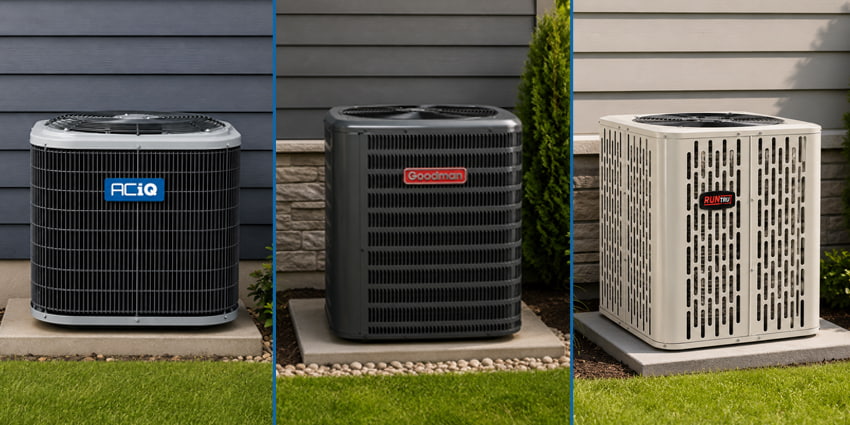
Every HVAC brand has certain differentiators or strengths, and it's up to you to decide which ones best meet your needs or preferences. Here are some considerations to get you started:
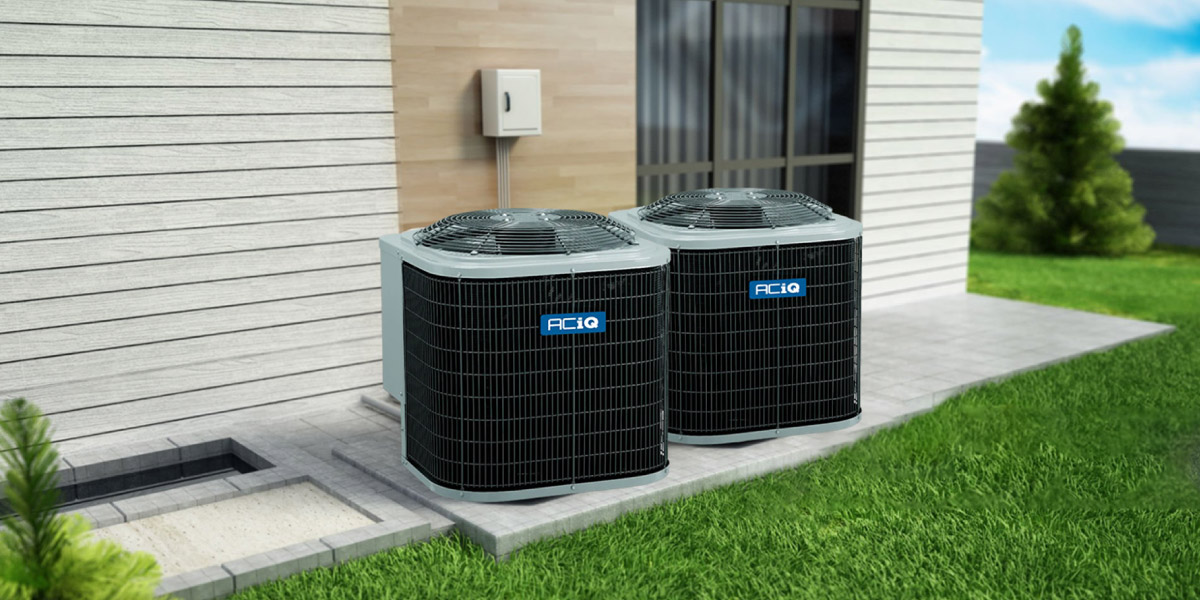
- Budget: Everyone has a budget, obviously, but for some, this is the primary deciding factor. If this is you, do careful research on the brands you're considering and see what customer reviews reveal. With brands like ACiQ, it's possible to buy high quality heating and cooling equipment without breaking the bank.
- Efficiency: Energy efficient air conditioner equipment comes at a higher price but will also save you more on utility costs in the long-term. ACiQ offers several affordable choices with inverter-driven central AC systems that consume less energy and are more environmentally friendly than standard options.
- Warranty: Some brands offer better manufacturer warranties than others, and a few will even extend coverage if you follow certain stipulations. ACiQ, Goodman, and Trane are all known for their excellent warranty coverage that can offer additional peace of mind for your purchase.
- Parts Availability: If you do need parts or service for your central air system in the future, choosing a manufacturer who can get you back up and running quickly will certainly pay off. Again, reference reviews from previous customers to see how their experience was resolving parts or service issues. HVACDirect.com's customer service team is friendly, attentive, and knowledgeable on all things HVAC.
- Installer Familiarity: Brands like Goodman are widely used throughout the HVAC industry, and most certified contractors have previous experience installing and servicing them. This can make for a smoother installation process and potentially lower labor costs.
Determining the right brand for you is not an objective process, so simply ranking brands based on price and/or quality is not usually the right approach.
Buying Checklist
Before you proceed with purchasing a central air conditioner system, use the list below to ensure you've done your due diligence:
- Correct Size: Confirm you've selected the right size for your home or application. If you're unsure, contact a certified HVAC contractor or reach out to HVACDirect.com via email or phone for support.
- Matched Indoor Coil: Make sure your indoor coil is an AHRI-approved match with the condenser unit and furnace (if applicable). You can check the manufacturer's website or contact them directly for approved pairings for your central AC system equipment.
- Compatible Furnace/Air Handler: Verify that your condenser unit is compatible with the furnace or air handler(s) being installed. Again, check with the manufacturer that the equipment is pre-matched to operate together.
- Electrical Requirements: Most homes with an existing central air conditioning system already have the appropriate electrical setup for a replacement unit. However, if your home is older, does not currently have central AC, or has an unusual electrical configuration, confirm that the electrical service can support the new system. Central AC condensers typically require a dedicated 208/230–240V circuit and an outdoor disconnect, with breaker and wire sizing determined by the specific equipment.
- Refrigerant Compatibility: Confirm with your installer that all AC equipment, including the condenser unit, line sets, and evaporator coil, will be using the same refrigerant. Mismatching refrigerants in the system is not allowed and will ruin your equipment.
- Thermostat Compatibility: Check whether your AC system requires a specific manufacturer-approved thermostat or works with standard 24-volt thermostats. Systems with standard controls generally give you more flexibility to choose from conventional, programmable, or compatible smart thermostats, while some communicating systems require proprietary controls to access all system functions and features.
- Warranty Registration: Ensure you know how and when to register your AC equipment as required by the manufacturer for warranty coverage. Most warranties have a time limit, such as within 60 days of installation, when you can register your warranty.
- Installation Plan: Discuss with your installer what to expect before, during, and after installation, and ask if you should prepare anything in advance. Make sure all the materials and/or equipment will be available and make a game plan for installation.
The list above does not have to be done in any particular order, but purchase and installation will go smoother if all steps are completed beforehand. Here is a printable list for your use:

Related Buying Guides
When you buy a central AC system, you'll likely be considering other related equipment and how it may integrate with your chosen system. Here are some resources to help:
- Heat Pump Buying Guide: For those living in a climate with mild cold weather in the winter, a central air conditioner/heat pump combination may be the best choice. These systems use air handling units to distribute conditioned air indoors.
- Furnace Buying Guide: If a traditional HVAC solution is what you're looking for, a central air conditioner and furnace system is the most common. This guide will help you compare the furnace options available to you to choose the right fit.
FAQs About Air Conditioner Condenser Buying
Most central air conditioners have an expected lifespan of 15 to 20 years with proper installation and regular maintenance. It's recommended to have a licensed HVAC professional do a tune up at least once per year, and you should inspect your AC condenser unit once per cooling season for buildup of any debris such as leaves, dirt, etc.
System size depends on your home's heating and cooling load, not simply its square footage. A Manual J calculation provides the most accurate sizing. See "What Size Air Conditioner Do You Need?" section above for more details.
For homeowners with high cooling demand or long-term ownership plans, higher-efficiency equipment can reduce operating costs over time. The additional upfront cost can be worthwhile in the long run as cost savings stack up.
Yes, you can just replace the outdoor condenser unit, but it doesn't often make practical or financial sense to do so. Because of new refrigerant regulations and older AC systems falling out of compliance, it's becoming more and more common to replace the entire matched set of AC equipment.
If your furnace is 10 years or older and you have room in your budget, replacing your furnace may be worthwhile, as purchasing a matching air conditioner and furnace set can give you the most value for your investment in the long-term. However, it's not necessary to replace your furnace if it's still operating well and heating your home properly.
A smart thermostat is not required when installing a central air conditioner system. However, you should ensure before installation that your thermostat is compatible with the HVAC equipment you've chosen.
No, it's not recommended to install a central air conditioning system yourself because only licensed HVAC professionals are permitted to handle refrigerants. Installing or replacing AC equipment is also a complex process that can be dangerous for those unfamiliar with it.